Alberta Rules for a 10-Year-Old Rider
A 10-year-old may be keen to ride, but age is only one part of the decision. In Alberta, where the machine is used matters, and public-land riding comes with supervision and safety requirements. Here’s how to tell what applies, choose a suitable machine and prepare for a ride without treating adult supervision as a substitute for good judgment.
When a 10-year-old can ride in Alberta
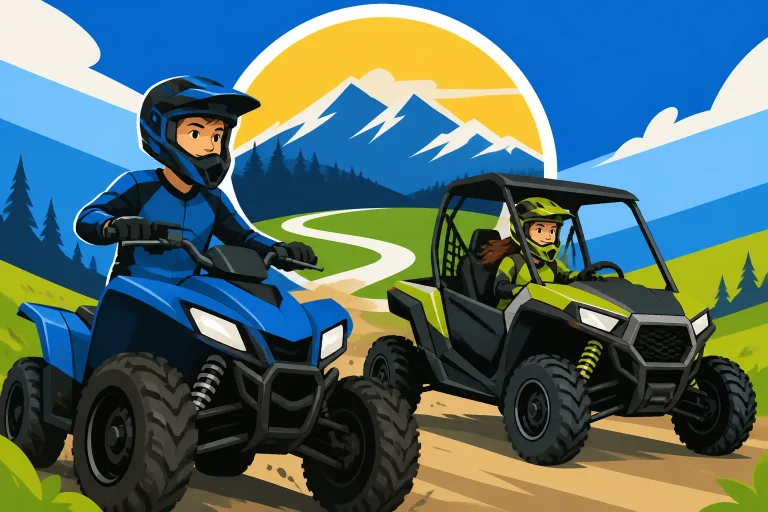
On Alberta public land, a rider under 14 must be supervised by an adult who is at least 18. That means a 10-year-old cannot ride public land alone. The adult needs to be close enough to actively supervise, not simply somewhere else in the riding area. For more on what that means in practice, see Alberta Supervision Rules Under 14 and Close Supervision of a Young Rider.
Supervision does not make every ride appropriate. The adult should be able to see how the child is handling the machine, communicate with them and step in if the route or conditions become unsafe. A child riding far ahead, out of sight, or beyond the adult’s ability to respond is not being meaningfully supervised.
Alberta does not have a general operator’s licence requirement just for riding an OHV off highway. That does not remove the under-14 supervision rule or other requirements. If a route involves a highway, road or ditch, additional restrictions apply. Do not assume that a public road is open to ATVs or UTVs just because an adult is riding with the child. Local bylaws and other rules determine whether a particular route is permitted. See Can You Ride an ATV on the Road in Alberta? before planning a route that touches a road.
The rules may differ on private property. Get the landowner’s permission, and check whether local bylaws apply. Permission to ride on private land does not automatically authorize the child to continue onto a public trail or road. Alberta Rules for Riding Private Land explains that distinction.
| Where the child rides | What to check |
|---|---|
| Public land | An adult aged 18 or older must supervise a rider under 14. Check registration, insurance, helmet and equipment requirements. |
| Private land | Get the landowner’s permission and check local rules. Don’t assume public-land routes are part of the permission. |
| Road, ditch or other highway area | Do not assume riding is allowed. Check the applicable bylaws and route restrictions first. |
A farm or ranch setting can make the rules less straightforward, especially if the machine is used for work. Some exemptions are limited to specific circumstances; they are not a blanket exception for a child’s recreational ride. Check the details rather than assuming that land ownership or farm use makes the usual requirements disappear.
Choose a machine the child can control
A child’s age alone cannot tell you whether a particular ATV is suitable. Consider the child’s size, strength, coordination, attention and experience, along with the machine’s weight and power. Manufacturer guidance for the specific model is a useful starting point, but it cannot account for every child or riding condition.
The child should be able to reach and operate the controls, sit in a stable riding position and understand how the machine responds. They should also be able to stop safely and follow instructions consistently. If they cannot manage the controls comfortably in a stationary check, a trail is not the place to find out whether they can manage them under pressure.
An ATV and a UTV present different challenges. An ATV requires the rider to balance and control the machine while seated, and the child needs to be capable of handling it without relying on an adult to take over. A UTV may have a steering wheel and seat belt, but it is still a heavy, powerful vehicle. Its size does not automatically make it easy for a child to operate.
If the 10-year-old will be a passenger rather than the operator, check the machine’s passenger capacity and the manufacturer’s instructions. Never add a passenger to a seat designed for one person. A child should be able to sit securely in the intended position and use the required restraint. For more, see Alberta Rules for Passengers on a Quad.
Before riding, have the child show that they can:
- Identify the throttle, brakes and any shut-off control.
- Start and stop the machine as instructed.
- Keep a safe distance from other riders.
- Follow signals to slow down, stop or turn back.
- Explain what they should do if they lose control or become separated from the adult.
These checks are not a substitute for supervision. They help reveal whether the child is ready for a short, simple ride. If the child is tired, upset, distracted or uncomfortable, postpone it. A machine that feels manageable in a driveway may feel very different on uneven ground, in mud or around other riders.
Safety gear and public-land requirements
A helmet is a central part of preparing a child for public-land riding. Alberta requires helmets on public land, subject to specific exemptions, and the helmet must meet the applicable standard. Choose one that fits the child properly and is in good condition. A loose helmet can shift, while one that is too tight may be uncomfortable enough that the child tries to remove it. Check Alberta Helmet Law on Public Land and Buying a CSA-Approved Helmet Before an Alberta Ride for more detail.
A helmet is only one part of the safety setup. Wear eye protection, gloves, long sleeves, long pants and sturdy footwear suited to the ride. Clothing should not hang loose near moving parts. A UTV’s seat belt and other restraints should be used as designed, and everyone should sit in a manufacturer-designated seat. Do not use a seat belt or rollover protection as a reason to carry more passengers than the machine allows.
Public-land rides also require attention to the machine’s paperwork and equipment. A machine generally needs to be properly registered and insured for use on public land, and riders must be able to produce the required documents if asked. A farm-use exemption or private-land arrangement should not be treated as proof that a recreational public-land ride is covered. See Alberta Insurance Requirements on Public Land and Alberta Registration Before Riding Crown Land.
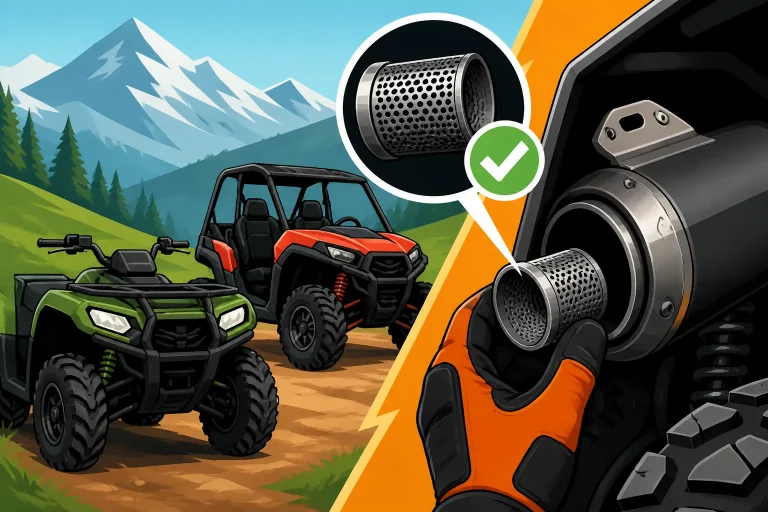
Other equipment requirements may apply to the machine, including requirements related to lighting, a spark arrestor and exhaust. Confirm what is required for the particular OHV and riding area using Alberta Equipment Required on Public Land. Carrying the right papers and checking the machine before leaving can help avoid turning a family outing into a compliance problem.
A rider course is a sensible option, especially if the child is new to riding or the adult supervising is not confident teaching the basics. A course can provide structured practice in control, stopping and safe decision-making. Alberta does not require every rider to take a safety course, but that is not a reason to skip instruction. See Alberta Youth Rider Courses for options to consider.
Plan a short ride and supervise actively
A first ride should be simple, short and suited to the child’s ability. Choose an appropriate riding area, check current access information and make sure the adult can keep the child in view. Avoid difficult terrain, steep slopes, fast group rides and routes where the child might be pressured to keep up with larger or more experienced riders.
Before starting, agree on basic signals and rules: where the child should ride in relation to the adult, when to stop, and what to do if they cannot see the adult. Keep the group small enough that the adult can focus on the child. If the ride includes other people, ask them not to crowd, race or encourage the child to go faster.
Conditions matter as much as the route. Mud, loose gravel, poor visibility, darkness and fatigue can make a manageable ride harder. Stop if the child is struggling or if the weather or surface changes. Do not stretch a ride just because the route is already underway. Turning back early is a practical safety decision, not a failure.
Before leaving, check the machine, safety gear and paperwork. Confirm that the route is open to the vehicle and that the adult understands the supervision responsibility. For a public-land ride, review the applicable local and provincial requirements rather than relying on what was allowed on a previous trip. The key points are straightforward: a 10-year-old needs adult supervision on public land, the machine must suit the child, and the ride should stay within the child’s ability.
Disclaimer
This article is for general informational purposes only and does not constitute professional advice. Laws, prices and regulations vary by location and change over time. Consult a qualified professional for guidance on your specific situation.