Alberta Parent Riding With a Child
Riding with a child in Alberta means answering two different questions: may the child operate the machine, and may they ride as a passenger? The rules and risks differ. This article explains how to think about supervision, helmets, passenger limits and riding locations, so you can choose a setup that is lawful, suitable for the child and manageable for the adult.
First decide whether the child is driving or riding as a passenger
A child operating an ATV or UTV and a child sitting as a passenger are not the same situation. The machine’s design, the child’s size and maturity, and the riding location all matter. Start by deciding which role is appropriate before loading up or heading to a trail.
On public land, Alberta has rules for supervising riders under 14. A parent or other supervising adult should check the current requirements before the ride and remain close enough to supervise effectively. The adult’s presence does not make an unsuitable machine or passenger setup safe.
For more detail on the age rule, see Alberta’s Minimum Age of 14 on Public Land and Alberta Supervision Rules for Young Riders. These rules are about operating an OHV; they do not mean every child is ready to drive simply because an adult is present.
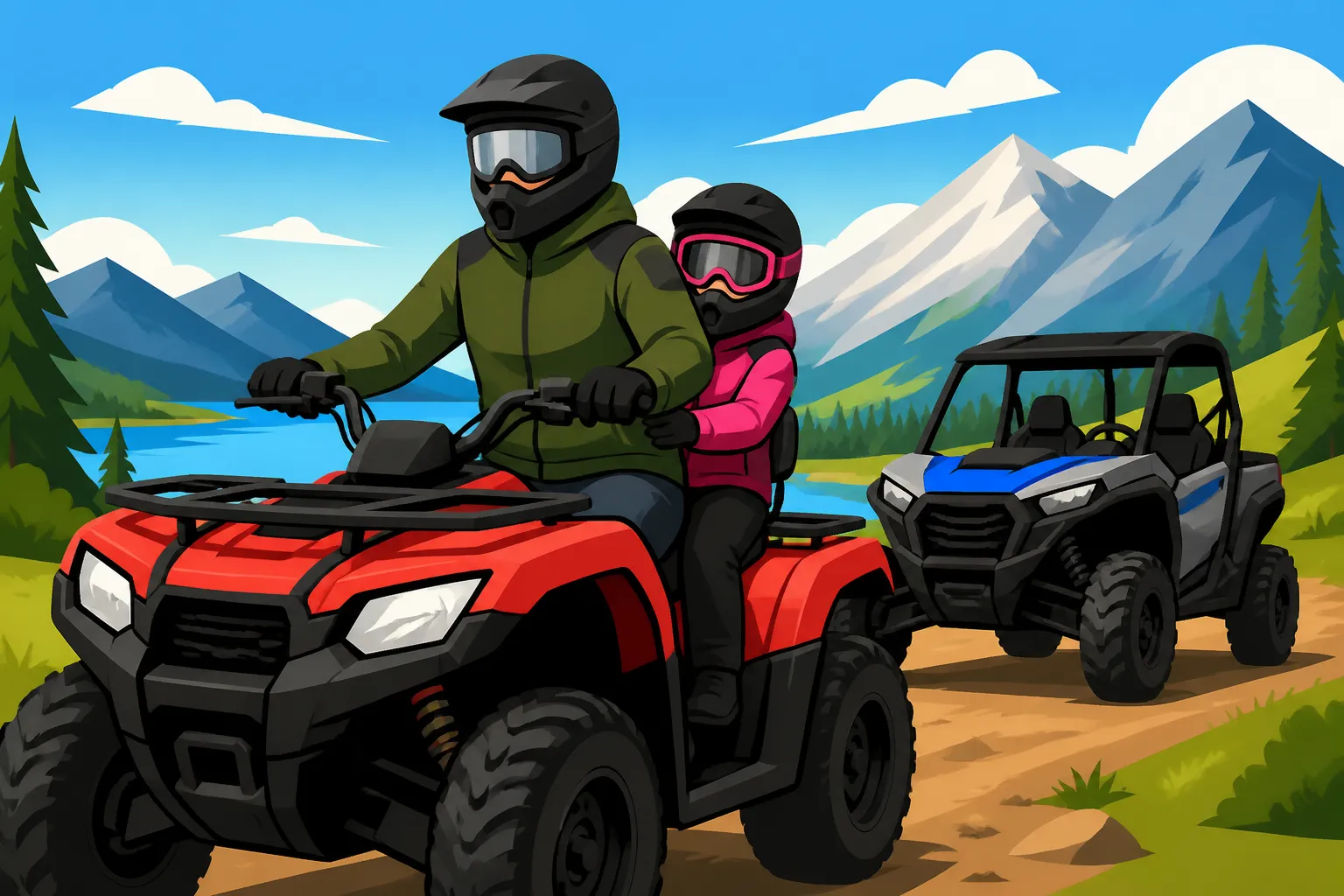
A child riding as a passenger needs a seat and restraint arrangement designed for a passenger. Do not carry a child on a single-seat quad, on a rack, or in a position where they must hold onto the driver or machine to stay aboard. A passenger who cannot sit securely, reach the intended footrests, and use the machine’s restraints properly may not be ready for that ride.
Check the machine’s manual and labels rather than relying on a general age guideline. Passenger capacity and occupant-size limits can differ by model. A machine with two seats is not automatically appropriate for every child, and an adult’s ability to hold on to a child is not a substitute for a proper passenger position. See Alberta Rules for a Child Passenger and Alberta Passenger Limits by Manufacturer when checking the passenger rules and the machine’s own limits.
| Riding arrangement | What to check before setting out | Main concern |
|---|---|---|
| Child operates an OHV | Applicable age and supervision rules, machine size, controls, and the location’s access rules | The child must be able to control the machine and follow instructions |
| Child rides as a passenger | A passenger seat, footrests, restraints where fitted, and the manufacturer’s passenger limit | The child must remain properly seated and protected |
| Child rides on private land | The landowner’s permission, hazards, boundaries, and any rules that apply there | Private land does not remove the need to manage risk |
| Child rides on public land | Supervision, required equipment, registration and insurance rules, and area-specific access | Requirements can depend on the land and route |
A youth-sized machine can still be too powerful or heavy for a particular child. Consider whether the rider can reach the controls, use the brakes, steer smoothly, and stop without help. If they cannot, choose a different activity or machine rather than treating close supervision as a fix for poor fit. For a passenger, ask whether the child can stay in position and follow directions throughout the ride, including when the trail becomes bumpy or tiring.
Supervision, helmets and the limits of an adult’s responsibility
When a child operates an OHV on public land, the supervising adult needs to do more than be somewhere in the group. Keep the child within sight and close enough to give directions or respond if the machine stalls, tips, or approaches a hazard. The route and pace should make that supervision practical. If the child gets too far ahead, the adult cannot supervise effectively.
The safest arrangement is often one adult dedicated to the child while another adult leads or follows the group. That is not a substitute for checking the legal standard, but it can prevent the supervising parent from having to drive, navigate, manage other riders and monitor a young rider at the same time. Choose a route with room to stop and regroup, and agree on simple instructions before starting.
A helmet is a central part of riding preparation. Alberta requires helmets for OHV riders on public land, subject to specific exemptions. Check Alberta Helmet Law on Public Land for the rules, and make sure the helmet is the correct type, fits the child securely and is fastened as intended. A helmet that is loose, sits incorrectly, or can be pulled off easily is not a good fit. Do not assume a borrowed helmet will fit just because it is the right general size.
Other protective gear matters too. Gloves help with grip and hand protection; sturdy footwear protects feet and ankles; eye protection reduces problems from dust, branches and debris. A jacket and long pants help protect skin from scrapes and weather. Gear should allow the child to move and use the controls without getting caught or interfering with a seat belt.
For a child riding in a side-by-side, use the seating position and restraints specified for that machine. A belt that is not adjusted for the child may not hold them correctly. Follow the manufacturer’s instructions for seat belts, doors or nets, and any rollover protection. Do not let a child lean out, stand while the machine is moving, or move between seats.
On a quad, a passenger needs to be able to use the passenger footrests and hold on in the intended way. Do not carry a child in front of the driver, on the back rack, or squeezed onto a seat that is designed for one person. Review Alberta Rules for Passengers on a Quad and the manual before carrying anyone.
Before a ride, explain what the child should do if the machine stops or the group separates. Set expectations about staying seated, keeping hands and feet inside the machine, following the adult’s directions, and not touching controls. If the child is frightened, tired, or struggling to keep their position, stop and reassess rather than pushing on to finish the route.
Check the riding location before you go
The rules for an Alberta ride can change with the land and route. Public land, private property, municipal roads and trails may have different access rules. Do not assume that a route is open to OHVs because it looks like a trail or because another rider is using it.
On public land, check the area’s current directions and restrictions before departure. Some locations limit riding to designated trails, restrict certain machine types, or close seasonally. A parent supervising a child still needs to obey the same land-use rules as other riders. Alberta Rules for Riding Crown Land is useful background, but check the specific area information as well.
Private property also needs careful planning. Get permission from the landowner, identify where the child may ride, and point out hazards such as steep ground, water, fences, farm equipment and active work areas. Permission to ride does not make the land risk-free, and a private-property setting should not be treated as an excuse to use a machine the child cannot handle. See Alberta Rules for Riding Private Land.
If you are visiting Alberta, do not assume that your home province’s registration or insurance arrangements settle every question. Visitors should confirm which requirements apply to their machine and how long they may ride under their home registration. Permits, registration and insurance are separate from supervision and passenger safety: meeting one requirement does not replace the others.
Before leaving home, confirm:
- Whether the intended trail or property allows the machine you plan to use.
- Whether the child will operate the OHV or ride as a passenger.
- Which supervision rules apply to a young operator at that location.
- Whether the machine is designed and equipped for the intended passenger.
- What registration, insurance and safety equipment are required.
- Whether there are temporary closures, restrictions or local bylaws to follow.
A route that is manageable for an experienced adult may be a poor choice for a child. Avoid terrain that leaves no room to stop, sections with steep drop-offs, deep mud, fast water, or busy shared routes if the child cannot confidently respond to changing conditions. Keep the first ride short and use a familiar, low-pressure route. Conditions can change during the day, so be willing to turn around.
Prepare the machine and the child for a controlled ride
A short check before departure can catch problems while the machine is still parked. Inspect the tires, brakes, steering, lights and controls. Check that the child’s seat, footrests, seat belt or other restraints are secure and usable. If a part is damaged or the restraint does not fit properly, do not carry the child until the problem is resolved.
Explain the ride in language the child understands. Point out where to keep hands and feet, how to sit, what to do if they want to stop, and how to respond to a hand signal or spoken instruction. If the child is driving, practise starting, stopping, turning and using the controls in a safe, open area before heading onto a trail. Keep the adult’s attention on the young rider; avoid adding distractions such as a complicated route, a large group or a demanding pace.
Set a conservative speed and leave generous space between machines. Dust, noise and bumps can make it difficult to communicate. Stop at safe locations to check that the child is comfortable and still following instructions. Do not assume silence means everything is fine; a child may be reluctant to say they are scared, cold or tired.
Pack for the conditions, including water, weather-appropriate layers and basic first aid supplies. A phone may not work in remote areas, so tell someone where you plan to ride and when you expect to return. Keep the child’s needs central when choosing the route and timing. A shorter outing that ends while everyone is still comfortable is usually a better introduction than a long ride that tests the child’s concentration.
Protective equipment can be purchased from general retailers, including Amazon, but fit and suitability matter more than the seller. Check sizing, safety labels and return details, and make sure the item is designed for the activity. When choosing a helmet or child restraint, the machine manual and applicable safety requirements should guide the decision.
Finally, have a clear stop rule. End the ride if the child cannot follow directions, becomes upset or fatigued, or if weather, trail conditions or visibility worsen. A parent’s job is not just to get the group to the destination; it is to recognize when the ride no longer suits the child or the conditions.
Disclaimer
This article is for general informational purposes only and does not constitute professional advice. Laws, prices and regulations vary by location and change over time. Consult a qualified professional for guidance on your specific situation.