Alberta’s Minimum Age of 14 on Public Land
It's incredibly common for parents who are new to the world of off-highway vehicles (OHVs) in Alberta, or even seasoned riders bringing up a new generation, to feel utterly confused about the rules for young riders. You just want to share the joy of the trails with your kids, but the legal landscape for age limits, supervision, and where they can actually ride can feel like navigating a maze. This comprehensive guide is here to untangle Alberta's age requirements for OHV riders, focusing specifically on the crucial 14-year-old minimum for public lands, and what that means for your family's adventures.
Understanding Alberta's Core Age Regulation for OHVs
Alberta's regulations around off-highway vehicles are designed with safety in mind, and that includes specific rules for younger riders. The most fundamental and often misunderstood rule revolves around age. It's not just about whether your child can physically reach the pedals; it's about legal maturity and the inherent risks of operating powerful machinery in varied terrains.
The Fundamental 14-Year-Old Rule for Public Lands
Let's cut right to the chase: in Alberta, you must be 14 years old to operate an off-highway vehicle on public land. This isn't a suggestion; it's a hard and fast rule outlined in the Off-Highway Vehicle Regulation (319/2002) under the Traffic Safety Act. When we talk about "public land," we're not just referring to vast, remote wilderness. This term encompasses a wide range of areas, including designated Public Land Use Zones (PLUZ), Crown land, forestry roads that aren't specifically restricted, and even road allowances, ditches, and unused portions of public highways. Yes, that means even a quick jaunt down the ditch beside your property could be considered public land, making the 14-year-old rule applicable.
The rationale behind this age limit is multi-faceted. Operating an OHV, whether it's an ATV, a side-by-side, or a dirt bike, requires a significant level of physical coordination, quick decision-making, and an understanding of risks. Younger children, while they might have surprising skill, often lack the mature judgment needed to react appropriately to unexpected obstacles, changing trail conditions, or encountering other users. They might not fully grasp the consequences of their actions, both for themselves and others. Imagine a 13-year-old on a family trip, excited to explore a new trail. If that trail is on public land, legally, they simply cannot operate the machine. It's a tough pill to swallow for eager kids and parents, but it's a rule designed to protect them from situations they may not be equipped to handle. Understanding [Alberta Rules for a 14-Year-Old Rider] is essential before heading out.
Distinguishing Public Land from Private Property
Now, here's where things get a little different and often cause confusion. The 14-year-old rule for operating an OHV applies only to public land. This means that if you own private property, or have explicit permission from a private landowner, the provincial age restriction does not apply. This distinction is incredibly important for families living in rural areas or those with access to acreages, farms, or leased land.
For example, if you live on a large acreage and your 10-year-old has their own youth-sized quad, they can legally ride it on your property. The same applies if you're visiting a relative's farm, and they've given your child permission to ride within the boundaries of their land. Many young riders get their start and develop their skills in these controlled, private environments. It allows them to learn the basics of throttle control, steering, and braking without the added complexities and legal scrutiny of public trails. This is often where children gain confidence before they ever think about venturing out when they are old enough to operate an OHV on public land. However, even on private land, parental supervision remains paramount. While the law might not dictate the specific age, common sense and safety certainly do. This distinction also ties into the [Alberta Farm and Ranch Work Exemption] which allows for some operational flexibility for those actively involved in agricultural work, but the general 14-year-old rule for recreational riding on public land still holds firm.
The Role of Supervision for Young Riders (Under 14)
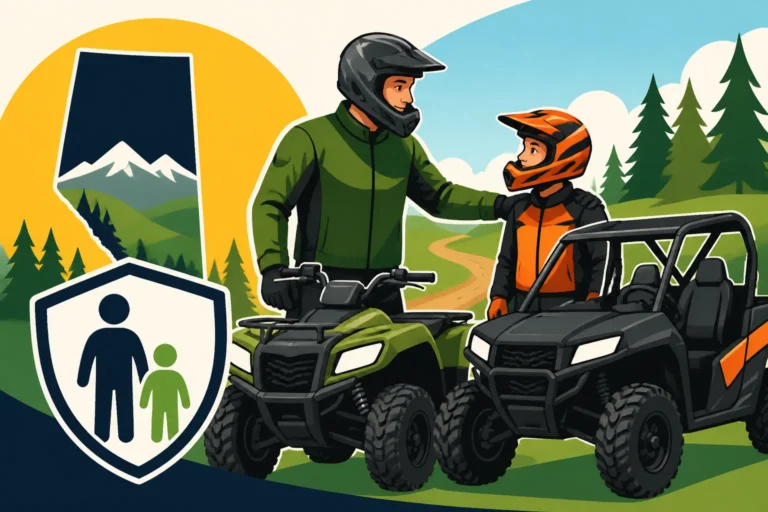
Even though the 14-year-old rule prevents younger children from riding on public land, the concept of supervision is still incredibly relevant, especially when they're learning and riding on private property. Proper supervision isn't just about watching them; it's about actively managing their safety and learning environment.
When Close Supervision is Mandatory
While Alberta's Traffic Safety Act doesn't mandate supervision for riders under 14 on private land, it's an unspoken rule of responsible parenting and OHV ownership. Think of it this way: allowing a young child to operate machinery without direct oversight is a recipe for potential disaster, regardless of where they're riding. "Close supervision" generally means the supervising adult is within sight and sound of the rider, and critically, is able to intervene immediately if something goes wrong. This isn't about hovering, but about being actively aware and present.
For instance, if your 8-year-old is learning to ride their youth quad in a large field on your private land, you should be out there with them. You should be able to see their entire riding path, hear if they get into trouble, and be close enough to run over and help if they get stuck or, worse, have an accident. Allowing a child under 14 to ride unsupervised, even on private land, can lead to serious injuries, and in a worst-case scenario, could raise questions of negligence if an incident occurs. There's a big difference between trusting your child and leaving their safety to chance. The goal is to build their skills and confidence in a controlled environment, and that simply can't happen effectively without close, attentive supervision. This level of oversight is key for anyone under the legal age, and while not a specific public land rule, it sets the stage for future safe riding.
Who Qualifies as an Adult Supervisor?
The term "adult supervisor" isn't just about someone who happens to be older; it implies responsibility and capability. Generally, a supervising adult must be 18 years of age or older. This age is typically chosen because it's the age of legal majority, meaning that person is legally responsible for their actions and, by extension, for the safety of those they are supervising.
The supervising adult should also be competent and experienced enough to understand the risks involved in OHV operation. They should ideally be an experienced rider themselves, capable of operating an OHV, and able to assess and manage hazards. Imagine a scenario where a 16-year-old older sibling is left to supervise a 10-year-old on an ATV. While the older sibling might be well-meaning, they are not legally an adult and might lack the full judgment or experience to handle an emergency or effectively teach proper riding techniques. Furthermore, they would not be the legally responsible party if an incident occurred. The spirit of the law, even when applied to private land through common sense, suggests that the supervisor should be someone who can shoulder the full burden of responsibility. For public land, the age limit of 14 means youth can generally ride independently, but the principle of having a responsible adult present on a trip still applies. For specifics on adult age, you might find more general guidance in articles like [Alberta Adult Supervision at 18].
Machine Size and Suitability for Young Riders
Beyond the legal age limits, another critical factor for young riders is ensuring the machine they are operating is appropriate for their size, strength, and skill level. This isn't just about comfort; it's a significant safety consideration that manufacturers take very seriously.
Manufacturer Age Guidance and Its Importance
Every reputable ATV and UTV manufacturer provides age recommendations for their machines. These aren't arbitrary suggestions; they are based on extensive research, engineering, and safety testing. The recommendations consider factors like the machine's weight, engine size, top speed, physical dimensions (seat height, handlebar reach), and overall handling characteristics. A machine designed for an adult, even a smaller one, will have different balance points, throttle response, and braking power than a youth-specific model.
Putting a child on a machine that is too large or too powerful for them is incredibly dangerous. They might not be able to comfortably reach the controls, properly shift their weight for turning, or effectively manage the throttle, leading to a loss of control. For example, a full-size 4×4 ATV, while perhaps easy for an adult to maneuver, could easily overpower a 12-year-old, leading to serious accidents. These manufacturer guidelines are there to prevent injuries and should be strictly adhered to, regardless of a child's perceived riding prowess. It's a proactive step in ensuring safety long before any legal age limit comes into play for public lands. You can also find some helpful information when considering [Alberta Rules for a 12-Year-Old Rider].
Matching the Rider to the Machine Safely
Matching the rider to the machine safely involves more than just glancing at the manufacturer's age label. It requires an honest assessment of the child's physical attributes, maturity, and actual riding skill. Can they comfortably sit on the seat with their feet touching the ground or footrests? Can they easily reach and operate the brakes, throttle, and steering? Do they have the physical strength to turn the handlebars and recover from a wobble?
Beyond physical fit, a child's maturity and judgment are crucial. Do they follow instructions? Do they understand basic safety rules and the potential dangers? Have they had proper training? Many parents opt for youth-specific OHV models that are designed with smaller engines, reduced speeds, lighter weight, and ergonomic controls tailored for younger bodies. These machines often have features like throttle limiters, which allow parents to gradually increase speed as the child's skills develop. Investing in proper training, such as a youth rider course, can also significantly enhance a child's ability to safely operate their machine. While the 14-year-old rule for public land is rigid, these considerations about machine suitability are vital for all ages, everywhere. When it comes to keeping any OHV in top shape, especially for a parent supervising or a teen now old enough to ride public land, having robust components is key. Brands like SuperATV offer a range of aftermarket parts designed to enhance durability and performance, which can contribute to a safer, more reliable machine.
Passenger Rules and Children on OHVs
While the focus is often on the age of the operator, rules regarding passengers, particularly children, are equally important. Many OHVs are designed for a single rider, and adding a passenger can significantly alter the machine's handling and stability, creating a dangerous situation.
When a Child Can Be a Passenger
The general rule of thumb for OHVs is that if a machine is designed for one person, only one person should ride it. Trying to squeeze a child onto the seat in front of or behind the driver, or having them sit on the fender or cargo rack, is incredibly unsafe and, on public land, illegal. These positions can obstruct the driver's view or control, throw off the machine's balance, and offer no protection to the passenger in case of a sudden stop, turn, or rollover.
However, many modern side-by-sides (UTVs) are designed with multiple seats and seatbelts, explicitly allowing for passengers. Some ATVs are also built as "two-up" models, featuring an extended seat, passenger handholds, and separate footrests specifically engineered to safely accommodate a second rider. If you're planning to carry a child as a passenger, ensure the machine is explicitly designed for it. Check the manufacturer's specifications and weight limits. This is where understanding [Alberta Passenger Limits by Manufacturer] becomes critically important. Never assume a machine can safely carry a passenger just because there seems to be space.
Age and Size Considerations for Child Passengers
Even on an OHV designed to carry passengers, the age and size of a child passenger still warrant careful consideration. While there isn't a specific minimum age for a child to be a passenger if the machine is designed for it, common sense and safety guidelines prevail. A young child must be old enough to understand and follow instructions, strong enough to hold on securely to the grab handles (if applicable), and tall enough for their feet to reach the designated passenger footrests, allowing them to brace themselves during bumps and turns.
For very young children, even in a side-by-side with a seatbelt, their small size might mean the seatbelt doesn't fit properly, or their head and neck aren't adequately supported for off-road conditions. Always ensure the child is wearing appropriate safety gear, including a properly fitted helmet, just as the operator would. Consider the terrain you'll be riding – challenging trails are not suitable for young or inexperienced passengers. The goal is to make the experience enjoyable and safe, and that sometimes means waiting until a child is a little older and physically capable of being a secure passenger. More detailed advice can be found in [Alberta Rules for a Child Passenger]. Good suspension and steering are paramount for control, whether you're navigating technical trails or just keeping pace with a younger rider. Some riders look to specialized components from companies like SuperATV to fine-tune their vehicle's handling, which can be particularly beneficial when carrying passengers or navigating challenging terrain.
Safety Gear and Training for Young Riders
When it comes to OHV riding, safety gear and proper training are non-negotiable, especially for young riders. Alberta has specific laws regarding helmets, and beyond that, there are best practices that can significantly reduce the risk of injury.
Mandatory Helmet Laws for All Riders
Alberta has a clear and unambiguous helmet law for OHV riders: if you are riding on public land, you must wear an approved helmet. This law applies to everyone, regardless of age, and includes both operators and passengers. There are no exceptions for youth. A properly fitted helmet that meets recognized safety standards (such as CSA CAN3-D230-M85, Snell, or ECE) is absolutely vital. It's the single most important piece of safety gear for protecting against head injuries in the event of a crash or rollover.
A helmet that's too loose can shift during an impact, failing to provide adequate protection. One that's too tight can be uncomfortable and distracting. When purchasing a helmet for a child, ensure it fits snugly, is comfortable, and doesn't obstruct their vision. Beyond helmets, other essential gear includes eye protection (goggles or a visor), sturdy gloves to protect hands and improve grip, over-the-ankle boots to support feet and ankles, and long pants and long-sleeved shirts to protect against scrapes, branches, and sun. Don't forget that if an officer asks, you'll need to show you are compliant. [Alberta Helmet Law on Public Land] and [Alberta CSA Helmet Standards] provide more in-depth information on this crucial topic.
The Value of Rider Training Courses
While Alberta does not currently mandate a safety course for OHV operators of any age, participating in a rider training program is highly, highly recommended, especially for young riders. These courses, often offered by organizations like the Canada Safety Council, are specifically designed to teach safe riding practices, build essential skills, and promote responsible attitudes.
Youth-focused courses cover everything from pre-ride inspections and basic controls to advanced turning techniques, emergency braking, and navigating obstacles safely. They teach riders how to assess terrain, understand their machine's capabilities, and react defensively to potential hazards. These courses don't just teach kids how to ride; they teach them how to ride safely and responsibly. This instills good habits from an early age, helping them make better decisions on the trail as they gain experience. Even for children who are not yet 14, taking a course on private land can build a strong foundation for when they are legally allowed to ride public trails. Investing in a course is investing in your child's safety and confidence. While [Alberta Has No Mandatory Safety Course], the benefits are immeasurable. You can explore options like [Alberta Youth Rider Courses] to find a program near you. Regular maintenance and ensuring all parts are in good working order is not just about performance, it's about safety for everyone on the trail. Investing in quality parts, whether OEM or from reputable aftermarket suppliers like SuperATV, helps ensure your machine is always trail-ready and safe for all approved riders.
Navigating Common Misconceptions and Legal Realities
Despite the clear rules, it's easy to fall into common traps or misunderstandings when it comes to age limits for OHV riding. Understanding the legal realities can help you avoid costly mistakes and ensure everyone's safety.
The "Just Five Minutes" Fallacy
Perhaps one of the most common misconceptions parents have is the "just five minutes" fallacy. This is the idea that it's okay for an underage child to quickly ride an OHV on public land, "just around the corner," or "just across the ditch," because it's only for a short period and the risk seems minimal. This thinking is dangerous and incorrect. The law doesn't have a "time limit" on its application. If an underage rider is operating an OHV on public land for five minutes or five hours, they are breaking the law.
The consequences can be significant. If an enforcement officer observes an underage rider on public land, they can issue fines to the supervising adult or even the parent if they are present or deemed responsible. In more serious situations, particularly if there's an accident or repeated violations, the OHV itself could be seized. Furthermore, if an accident occurs, insurance coverage could be jeopardized if the operator was underage and illegally riding on public land. It's simply not worth the risk, both legally and in terms of safety. Rules are rules for a reason, and a brief moment of perceived convenience can lead to long-lasting repercussions. You can learn more about general enforcement in [What an Alberta Officer Can Ask to See] and penalties like [Alberta Penalties for No Helmet].
Local Bylaws and Their Impact on Age Rules
Alberta's provincial regulations set the baseline for OHV age limits on public land, and local municipal bylaws generally do not override these provincial rules. This means that if a county, city, or town has a bylaw pertaining to OHVs, it will typically focus on where you can ride (e.g., opening certain roads or limiting access), but it won't change the provincial 14-year-old minimum age for operation on public land.
For example, a county might pass a bylaw that allows OHVs on specific designated roads within its jurisdiction. This bylaw opens up new riding opportunities for legal OHV operators. However, it does not mean that a 12-year-old can now ride on those designated roads, because the provincial age restriction of 14 for public land still applies. It's crucial for riders, especially parents of youth, to always check both provincial regulations and any local municipal bylaws before riding. Bylaws can be quite specific about zones, times of day, and types of roads. While they define the space for riding, they generally don't change the who (age) of riding. Always do your homework to avoid surprises. [Alberta ATV Road Rules: Bylaws Decide] and [Alberta Counties With OHV Bylaws] are excellent resources for understanding the complexities of local regulations.
Practical Tips for Parents of Young Riders
Navigating the world of OHVs with children can be incredibly rewarding. By following some practical tips and fostering a strong sense of responsibility, you can ensure their journey into the sport is safe, enjoyable, and compliant with Alberta's regulations.
Starting Small and Building Skills Safely
The best way to introduce children to OHV riding is by starting small and building their skills gradually. Begin with age-appropriate, youth-sized machines in controlled environments, such as a large, flat, private field or an approved training area. Focus on fundamental skills first: understanding how the throttle works, controlled braking, smooth turning, and maintaining balance.
Use throttle limiters on youth machines to keep speeds low until your child demonstrates consistent control and judgment. Practice basic maneuvers repeatedly until they become second nature. As they master these basics, you can slowly introduce more complex terrain and increase the speed. The goal is to develop confidence and competence before ever considering public trails, which, as we know, requires them to be at least 14 years old. This slow and steady approach minimizes risk, maximizes learning, and helps them build a strong foundation for a lifetime of safe riding.
Fostering a Culture of Safety and Responsibility
Ultimately, the most important thing a parent can do is to foster a strong culture of safety and responsibility. This means more than just enforcing rules; it means openly discussing why these rules exist, why safety gear is crucial, and why respecting the environment and other trail users is paramount.
Model safe riding behavior yourself: always wear your helmet, stick to designated trails, and never ride impaired. Talk to your children about the potential hazards of OHV riding, how to react in emergencies, and the importance of knowing their limits and the limits of their machine. Teach them about [Alberta Trail Etiquette Locals Expect] and the impact their riding can have on wildlife and the land. Encourage them to ask questions and provide a supportive environment for learning. By instilling these values from a young age, you're not just teaching them to ride an OHV; you're teaching them to be responsible, conscientious outdoor enthusiasts. This approach will serve them well, both on and off the trail, throughout their lives.
Here's a quick overview of Alberta's age guidelines for OHV operation:
| Category | Description | Key Rules |
|---|---|---|
| Public Land | Crown land, PLUZ, designated trails, road allowances, ditches | Minimum Age: 14 years old to operate any OHV. Helmet mandatory for all. |
| Private Property | Farm, acreage, leased land with owner permission | No provincial minimum age to operate. Owner's discretion. |
| Supervision | For riders under 14, especially on private land | Mandatory "close supervision" by an adult (18+) highly recommended. |
| Machine Fit | Matching rider to machine | Adhere to manufacturer's age/size recommendations. Avoid oversized machines. |
| Passengers | Carrying children on OHVs | Only on machines explicitly designed for passengers. Follow manufacturer limits. |
| Safety Gear | Helmets and other protective gear | Helmet mandatory for all riders/passengers on public land. Always wear appropriate gear. |
| Training | Rider training courses | Voluntary but highly recommended for all ages, especially youth. |
Disclaimer
This article is for general informational purposes only and does not constitute professional advice. Laws, prices and regulations vary by location and change over time. Consult a qualified professional for guidance on your specific situation.