Alberta Rules for a Child Passenger
There's nothing quite like sharing the joy of an off-highway adventure with your kids in Alberta's beautiful landscapes. But if you're a parent or guardian, you know the worries that bubble up: "Is my child actually allowed to ride as a passenger on my quad or side-by-side?" The rules can feel like a maze, leaving many of us scratching our heads about what's legal, what's safe, and what might land you a ticket. This guide is here to clear up that confusion, diving deep into Alberta's regulations for child passengers on ATVs and UTVs, so you can ride with confidence and keep your little ones safe.
Understanding the Fundamental Difference: ATV vs. UTV for Passengers
Before we even get to specific age rules, it's absolutely crucial to understand the fundamental design difference between an All-Terrain Vehicle (ATV), often called a quad, and a Utility Terrain Vehicle (UTV), more commonly known as a side-by-side. This distinction isn't just about semantics; it's the bedrock of passenger safety and legality in Alberta. Many parents, perhaps remembering a time when kids just hopped on the back, don't realize how strictly these vehicle types are differentiated by law and design when it comes to carrying extra people, especially children.
ATVs Are Almost Always Single-Rider Machines
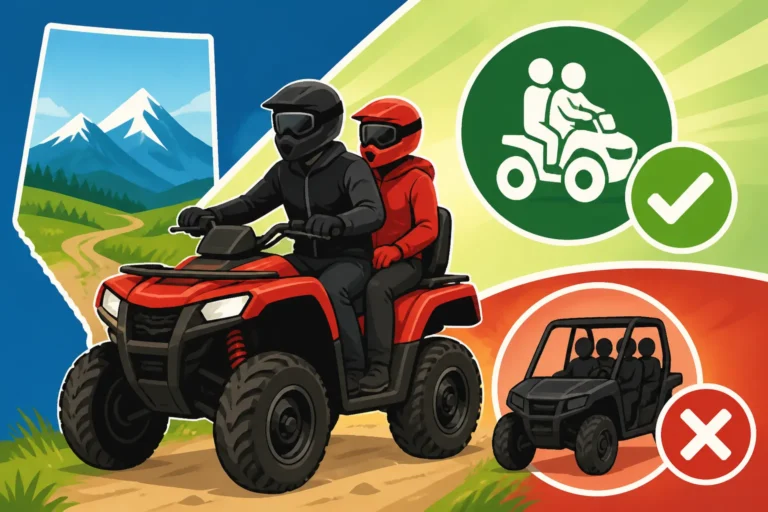
When you look at most ATVs, you'll notice one thing: they have a single, long seat designed for one operator. There aren't usually separate footrests or handholds for a second person, and critically, the balance and handling dynamics of an ATV are engineered for one rider. Trying to carry a passenger, especially a child, on a standard ATV is not only incredibly dangerous but also largely illegal on public land in Alberta. The machine simply isn't built to safely support the weight and shifting balance of an extra person, which can lead to instability, loss of control, and serious accidents, particularly on uneven or challenging terrain. The manufacturer's intent is very clear on these machines, and Alberta's regulations reinforce that intent to prevent injury.
You might see "two-up" ATVs on the market, which are specifically designed with an extended seat and separate footrests for a second rider. These are the only ATVs that are generally permissible to carry a passenger. However, even with these models, you must still adhere to the manufacturer's specified passenger limits and any age or size recommendations. For a child passenger, this means ensuring they can properly reach the footrests and hold on securely, without interfering with the operator's ability to control the machine. It's not enough to simply have an extended seat; the entire setup must be designed for a passenger's safe accommodation, and the operator needs to be fully aware of the changed handling characteristics.
UTVs (Side-by-Sides) Are Designed for Multiple Passengers
In stark contrast to ATVs, UTVs, or side-by-sides, are explicitly designed to carry multiple occupants. These machines typically feature bucket seats or bench seating, roll cages, and seatbelts, much like a small car. This design makes them a far safer and legally compliant option for transporting children as passengers on off-highway excursions. Because UTVs offer a more stable platform, with passengers seated within the frame of the vehicle and secured by restraints, the risks associated with carrying multiple people are significantly reduced compared to an ATV.
When considering a UTV for family rides, it's paramount to respect the vehicle's specific seating capacity as determined by the manufacturer. If your side-by-side has two seats, you carry two people. If it has four seats, you carry four. Just because there might seem to be a little extra room doesn't mean you can squeeze in an additional child. Overloading a UTV compromises its stability, braking, and overall safety, negating the very advantages it offers over an ATV. Always check the manufacturer's guidelines, often found in the owner's manual or on a sticker affixed to the machine itself, for exact passenger limits and any recommendations regarding the age or size of child passengers. Many reputable aftermarket companies, like SuperATV, offer a vast range of accessories for UTVs, but even when considering enhancements, the core safety design for passengers should always be respected and never compromised.
Alberta's Legal Framework for Child Passengers
Now that we've established the critical difference between ATVs and UTVs in terms of passenger capacity, let's dive into the specifics of what Alberta law has to say about child passengers. The province's legal framework is primarily laid out in the Traffic Safety Act and the Off-Highway Vehicle Regulation, and these documents provide clear guidance on what's expected of riders and their machines, especially when it comes to the youngest adventurers. Disregarding these rules isn't just risky; it can lead to fines and potentially severe consequences if an accident occurs.
Manufacturer Passenger Limits are Law
One of the most straightforward and often overlooked rules regarding passengers on off-highway vehicles in Alberta is that you must adhere to the manufacturer's specified seating capacity. This isn't just a recommendation; it's a legal requirement. Section 112(1)(a) of Alberta's Off-Highway Vehicle Regulation states that "no person shall operate an off-highway vehicle if there are more persons on the off-highway vehicle than the off-highway vehicle was designed to carry." This means if your ATV is designed for one rider, only one person can be on it. If your side-by-side is a two-seater, only two people can be in it. It's that simple, and it applies equally to adults and children.
Parents sometimes believe that because a child is small, they don't count towards the capacity limit, or that they can simply sit on an adult's lap. This is a dangerous misconception and a direct violation of the regulation. Every person on the OHV, regardless of age or size, counts towards the manufacturer's design capacity. Trying to squeeze an extra child into a side-by-side that's already at its limit, or putting them on an ATV not designed for passengers, significantly alters the vehicle's handling, balance, and braking capabilities, making it far more prone to rollovers or collisions. Always check your machine's owner's manual or the safety decals for the exact passenger capacity. This is your first and most important rule for taking a child as a passenger. You can find more details on this topic in [Manufacturer Passenger Limits on a Side-by-Side].
Mandatory Helmet Use for All Ages on Public Land
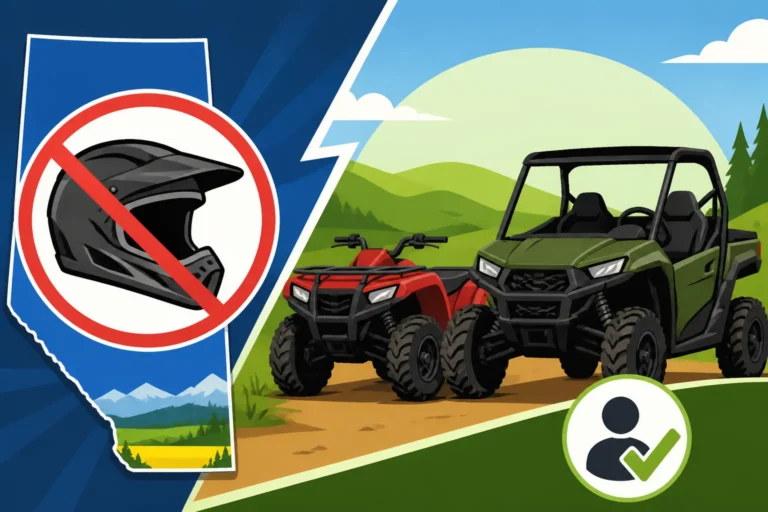
This rule cannot be stressed enough: every single person, regardless of age, riding an off-highway vehicle on public land in Alberta must wear an approved helmet. This includes child passengers, no exceptions. The helmet law came into effect in May 2017, and it's a critical safety measure designed to protect against head injuries, which are tragically common in OHV accidents. A helmet isn't just a good idea; it's the law, and failure to comply can result in fines for the operator.
For children, it's essential that their helmet fits properly. A helmet that's too big can shift around during a ride, obstructing vision or providing inadequate protection in a crash. One that's too small will be uncomfortable and might not cover all the necessary areas. Look for helmets that meet recognized safety standards, such as CSA, Snell, or ECE. When purchasing, measure your child's head circumference and try on various sizes to ensure a snug but comfortable fit. The chin strap must always be securely fastened. Don't cheap out on helmets, as your child's brain is priceless. You can learn more about proper helmet fit and the legal requirements in [Alberta Helmet Law on Public Land] and [Buying a CSA-Approved Helmet Before an Alberta Ride].
Seatbelts and Footrests for Passenger Safety
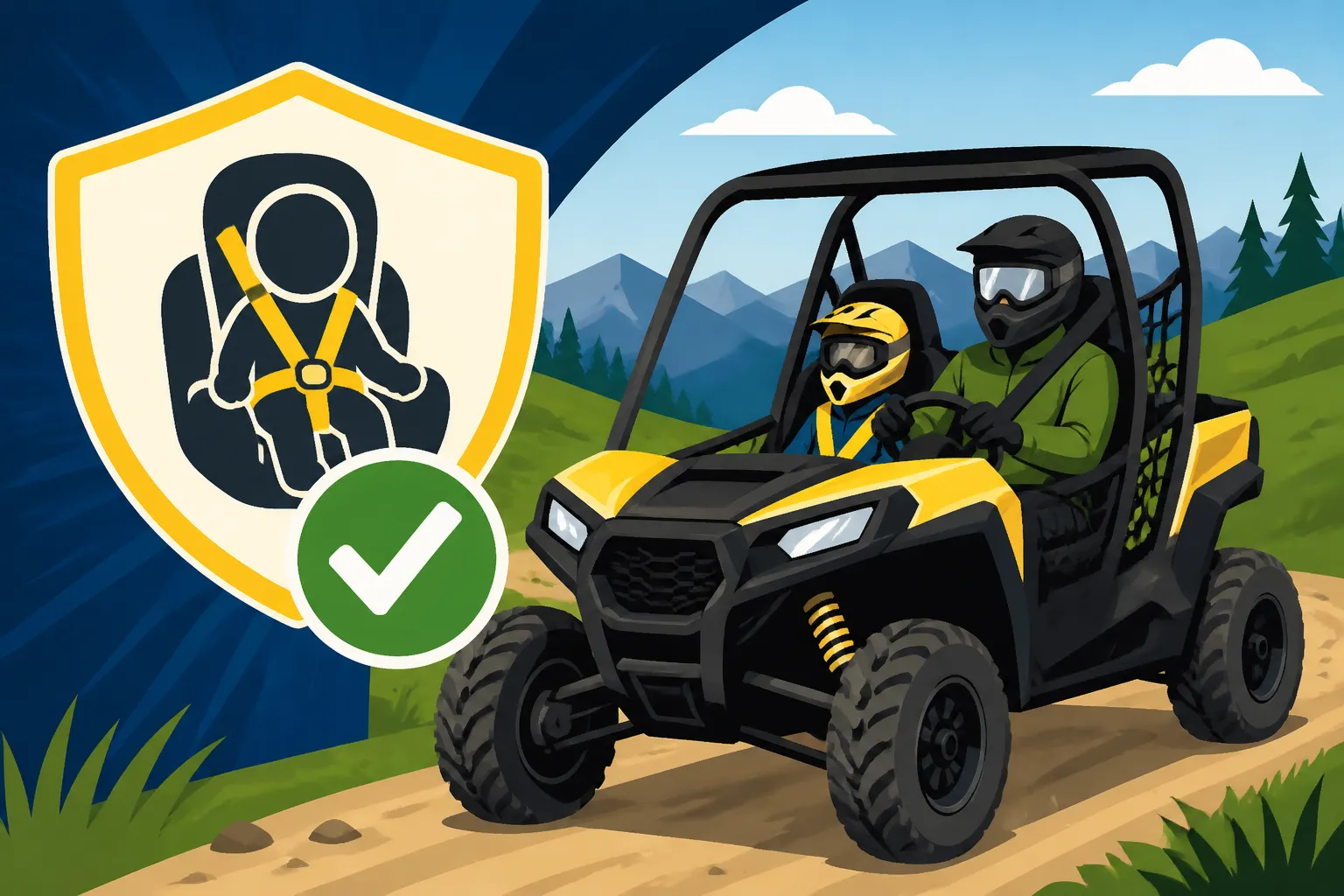
While helmets are universal, specific safety equipment for passengers depends heavily on the type of OHV. For UTVs (side-by-sides), seatbelts are a non-negotiable safety feature, and every passenger, including children, must be properly secured. UTVs are equipped with seatbelts from the factory, and these must be used at all times while the vehicle is in motion. These aren't just for comfort; they're designed to keep occupants contained within the safety of the roll cage in the event of a rollover or sudden impact. Allowing a child to ride without their seatbelt fastened is incredibly dangerous, as they could be ejected from the vehicle, even at low speeds or during minor bumps.
For both ATVs (if they are approved two-up models) and UTVs, it's crucial that any child passenger can properly reach and keep their feet on the designated footrests for the entire ride. Dangling feet can get caught, dragged, or injured. If a child's feet can't reach the footrests, they are not appropriately sized for the machine as a passenger, regardless of other factors. This indicates they are either too small for that specific machine, or the machine itself is unsuitable for carrying a child of that size. Ensuring proper foot placement helps maintain the child's stability and prevents them from shifting uncontrollably during acceleration, braking, or turns.
Practical Considerations for Safe Child Passenger Riding
Beyond the letter of the law, there are many practical steps and considerations you, as the operator and guardian, need to take to ensure the absolute safest experience for your child passenger. Riding off-highway vehicles carries inherent risks, and it's your responsibility to minimize those risks through preparation, judgment, and adherence to best practices. Thinking through these details beforehand can make all the difference between a memorable family adventure and a regrettable incident.
Matching the Child to the Machine (and Vice Versa)
This isn't just about manufacturer limits; it's about common sense. Is your child physically able to be a safe passenger on your specific OHV? For UTVs, can they sit upright comfortably for the duration of the ride, with their back against the seat and their feet firmly on the floor or footrests? Can they easily reach and hold onto any grab handles if available? For the rare two-up ATV, can they maintain their balance independently, hold onto the designated handholds, and keep their feet on the footrests without hindering your operation? These are crucial questions to ask.
It’s also important to consider the child’s maturity and attention span. A younger child might get restless quickly, start fidgeting, or even fall asleep, all of which can compromise their safety and the operator’s concentration. Ensure they understand the importance of staying seated, keeping their hands and feet inside the vehicle, and not distracting the driver. A pre-ride briefing, explaining the rules and why they're important, can go a long way. Remember, even with aftermarket modifications like specialized child seats, you must ensure you're not exceeding the vehicle's design limits or compromising its safety features. Brands like SuperATV offer robust components, but always verify compatibility and legal compliance for passenger-carrying applications.
Operator Skill and Responsibility
As the operator of the OHV, you carry the ultimate responsibility for the safety of your child passenger. This means you need to be an experienced and competent rider, capable of handling the machine safely, especially with the added weight and dynamics of a passenger. Your riding style must be adjusted significantly when carrying a child. Aggressive manoeuvres, high speeds, or tackling overly challenging terrain should be avoided entirely. The goal is a smooth, controlled, and predictable ride.
Consider the trail conditions: is it too rough, too steep, too muddy, or too technical for a child passenger? If there’s any doubt, err on the side of caution. Even on familiar trails, unexpected obstacles can appear. Always drive defensively, anticipate hazards, and maintain a safe following distance if you're riding in a group. Furthermore, being prepared for emergencies is part of your responsibility. This includes carrying a first-aid kit, knowing how to use it, and having a communication plan in case of an incident, especially if you're riding in areas with limited cell service. Remember, [Alberta Rules for a Supervising Adult] cover not just age, but also the critical role of the adult in ensuring overall safety.
Proper Gear and Pre-Ride Checks
Beyond the mandatory helmet and seatbelts (for UTVs), ensure your child is dressed appropriately for the weather and riding conditions. This means sturdy closed-toe footwear, long pants, long-sleeved shirts, and gloves to protect against scrapes, branches, and sun exposure. Eye protection, such as goggles, is also highly recommended to shield their eyes from dust, debris, and insects. Don't forget layers for fluctuating temperatures, as mountain weather can change quickly.
Before every ride, conduct a thorough pre-ride inspection of your OHV. Check tire pressure, brakes, fluid levels, lights (especially if you might be out at dusk), and ensure all safety equipment, including seatbelts and passenger handholds, are in good working order. Make sure there are no loose parts or obvious damage that could jeopardize safety. This meticulous approach is an essential part of responsible OHV operation, particularly when children are on board. You can find useful guidance on what officers look for during checks in [Alberta Equipment Checks by Officers].
Here's a quick summary of key considerations for child passengers:
| Feature/Aspect | ATV (Single-Rider) | ATV (Two-Up Design) | UTV (Side-by-Side) |
|---|---|---|---|
| Passenger Legality | Generally illegal on public land. | Permissible if manufacturer-designed for two. | Always permissible up to manufacturer's capacity. |
| Helmet Required | YES (for both operator and passenger) | YES (for both operator and passenger) | YES (for all occupants) |
| Seatbelts | Not applicable (unless factory equipped on a "two-up") | Only if factory-equipped. | YES, mandatory for all occupants. |
| Footrests | Must be present and reachable for passenger. | Must be present and reachable for passenger. | Must be present and reachable for passenger. |
| Child Size/Fit | Child must be able to hold on and reach footrests. | Child must be able to hold on and reach footrests. | Child must sit upright, feet on floor/rests, secured. |
| Operator Skill | Must be highly skilled, aware of altered dynamics. | Must be highly skilled, aware of altered dynamics. | Must be skilled, aware of passenger weight distribution. |
| Key Risk Factor | High risk of instability, loss of control, ejection. | Reduced risk compared to single-rider, but still high. | Significantly lower risk due to roll cage, restraints. |
| Alberta Regulation | Violates OHV Regulation 112(1)(a) if single-rider. | Must meet manufacturer design. | Must meet manufacturer design. |
Age-Specific Nuances for Young Riders and Passengers
While Alberta law doesn't specify a minimum age for a passenger (it focuses on the operator's age and the machine's design capacity), understanding the broader context of age limits for OHV operators is important for guardians. This helps reinforce the responsible approach to having children on or in these machines at any capacity. The provincial rules emphasize competency and safety, which directly impacts decisions about carrying young passengers.
No Minimum Age for Passengers, But Common Sense Prevails
It's a common point of confusion: "What's the youngest age my child can be to ride as a passenger?" Alberta's Off-Highway Vehicle Regulation does not define a minimum age for a passenger. Instead, it relies on the manufacturer's design capacity and the mandatory use of safety equipment (like helmets and seatbelts). This means if your UTV is designed for a passenger, and your child can properly wear a CSA-approved helmet, reach the footrests, and be securely buckled into a seatbelt (if applicable), then from a strict legal standpoint, they could be a passenger.
However, legal permissibility does not automatically equate to safety or good judgment. Very young children may lack the physical strength to hold on effectively, the neck strength to properly support a helmet's weight during bumps, or the cognitive ability to understand safety instructions. Many OHV manufacturers will include age or height recommendations for passengers in their owner's manuals, and these should be heeded above all else. For instance, a child too small to properly fit a helmet or reach the floor of a UTV simply isn't ready, regardless of the law's silence on minimum passenger age. When considering younger children, the advice in Alberta Rules for a Child Passenger often emphasizes manufacturer guidance and individual child readiness.
The Role of Operator Age and Supervision
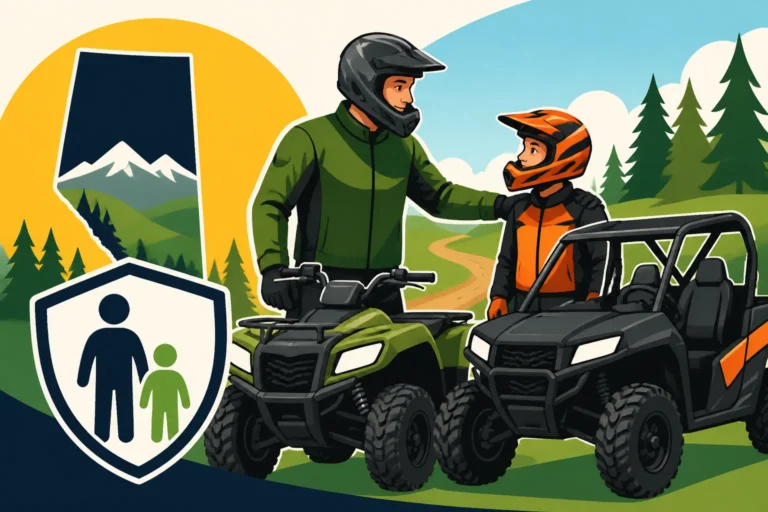
While this guide focuses on child passengers, it's worth briefly touching on operator age because it's part of the broader safety landscape for kids and OHVs. In Alberta, a person must be at least 14 years old to operate an OHV on public land without direct supervision by an adult. For operators under 14, they must be under the "close supervision" of a person 18 years or older. This rule is about ensuring that the person driving the machine has the maturity and judgment to do so safely.
If a young person (say, 14 or 15) is operating an OHV and carrying a child passenger, the responsibility for the passenger's safety falls heavily on that young operator. While legally allowed to operate solo on public land at 14, their ability to safely manage a passenger, especially a younger child, can be questionable. As a parent, you must assess not only if your child is ready to be a passenger, but also if the operator (be it you or an older child) is truly capable of ensuring that passenger's well-being on the trail. It's often safer for an experienced adult to be the one operating when children are passengers. You can delve into the rules for young operators in [Alberta's Minimum Age of 14 on Public Land] and [Alberta Rules for a 14-Year-Old Rider].
Remember, the spirit of Alberta's OHV laws is about safety first. While the regulations provide a framework, your personal judgment, adherence to manufacturer guidelines, and commitment to safe riding practices are what truly ensure your child has a fun, safe, and memorable off-highway experience.
Disclaimer
This article is for general informational purposes only and does not constitute professional advice. Laws, prices and regulations vary by location and change over time. Consult a qualified professional for guidance on your specific situation.