Alberta Passenger Rules on an OHV
There's nothing quite like hitting the trails on your off-highway vehicle (OHV) in Alberta, feeling the freedom of the open air and the rumble of the engine beneath you. But what happens when you want to share that experience with a friend, a partner, or your kids? This is where things get murky for a lot of riders, and the confusion around Alberta's passenger rules on an OHV can quickly turn a planned adventure into a stressful guessing game. This guide is here to clear up that confusion, diving deep into what you can and can't do when it comes to carrying passengers, ensuring your rides are not only fun but also legal and, most importantly, safe for everyone on board.
The Core Legislation: Understanding Alberta's OHV Passenger Rules
When we talk about carrying passengers on an OHV in Alberta, the fundamental principle boils down to "designated seating." It's not about how much space you think there might be, or how many people can squeeze on; it's about how the machine was designed by the manufacturer and equipped with specific safety features for a passenger. This can be incredibly frustrating for riders who just want to share their passion, but understanding this core concept is crucial.
The "Designated Seating" Principle
The legal bedrock for carrying passengers on an OHV in Alberta is simple: if a machine is designed to carry a passenger, it will have a designated seat for them. This isn't just a comfort feature; it's a safety and legal requirement. For a single-rider ATV, for instance, there's one seat, one set of footpegs, and controls designed for one operator. Adding another person throws off the balance, obstructs the operator's movement, and provides no secure place for the passenger to hold on or brace themselves.
You might look at a long ATV seat and think, "Sure, a second person could fit there!" But if the manufacturer didn't include separate footrests, handholds, and a seat designed to safely distribute the weight and provide stability for two, then it's legally and practically a single-rider machine. Ignoring this is where many riders get into trouble, not realizing that a quick trip with a buddy on the back could lead to a significant fine or, worse, a serious accident. The intent behind the design is key, and it directly influences the machine's handling characteristics when loaded.
Manufacturer Limits vs. Rider Expectations
Manufacturers spend countless hours designing and testing their machines to perform optimally and safely within specific parameters. This includes rider and passenger capacity. When a machine is designated for a single rider, every aspect—from the suspension and braking system to the engine power and frame rigidity—is calibrated for that single individual's weight and control. Adding a passenger, especially one without proper support or positioning, significantly alters these dynamics. The centre of gravity shifts, braking distances increase, and the ability to maneuver quickly or over rough terrain is severely compromised.
It's easy for us as riders to look at our powerful machines and believe they can handle more, especially when we see others doing it. But the manufacturer's recommendations in your owner's manual aren't just suggestions; they're based on rigorous safety engineering. Exceeding these limits isn't just a legal risk; it's a direct threat to the safety of everyone on board. Think of it this way: if your car is designed for five people, you wouldn't try to cram eight in, even if they could physically fit, because you know it compromises safety and performance. The same principle applies, perhaps even more so, to OHVs that operate in dynamic, often unpredictable environments.
The Legal Framework: What Officers Look For
When an enforcement officer, be it an RCMP officer, a Fish and Wildlife officer, or a park ranger, encounters you on the trails, they're not just looking for registration and helmets. They're also observing how your machine is being operated, and that absolutely includes how many people are on it and how they're positioned. They are trained to identify machines that are overloaded or carrying passengers improperly.
What an officer looks for is quite straightforward: Does the machine have clearly distinct, separate seating for the number of occupants? Are there appropriate footrests and handholds for each passenger? For a side-by-side, are all occupants securely buckled into their designated seats? If they see a second person perched precariously on a single-rider ATV, or someone standing in the back of a side-by-side, they will likely intervene. The visible signs of an improper passenger setup are usually quite clear, and the consequences can include fines for the operator. This isn't about being punitive; it's about preventing injuries that often occur when machines are operated outside their design limits.
Quads (ATVs): Single Rider, Mostly
For many riders, the classic image of an ATV is a rugged, go-anywhere machine, and it's not uncommon to see two people on one, especially in older photos or rural areas. However, for the vast majority of ATVs sold today and on public land in Alberta, that image is actually contrary to the rules and the machine's design.
The Standard ATV: One Operator Only
Let's be crystal clear: most ATVs are designed, engineered, and intended for a single operator. They are built for dynamic riding, where the operator shifts their weight to steer, absorb bumps, and maintain balance, especially through turns and over obstacles. When you add a second person to a standard ATV, even a small child, you immediately disrupt this critical balance. The extra weight, often high up and shifting independently of the operator, makes the machine harder to control, significantly increases the risk of tipping, and makes emergency maneuvers incredibly difficult.
Picture trying to corner quickly with a passenger on a single-rider ATV. The operator leans into the turn, but the passenger, having no controls, might lean the wrong way or simply be a dead weight, fighting the operator's input. This isn't just uncomfortable; it's dangerous. The absence of a separate seat, independent footpegs, and dedicated handholds on most ATVs should be a dead giveaway that they are not meant for two. This design focus ensures the machine responds predictably to the single operator's inputs, which is paramount for safe off-road navigation.
Two-Up ATVs: When a Passenger IS Allowed
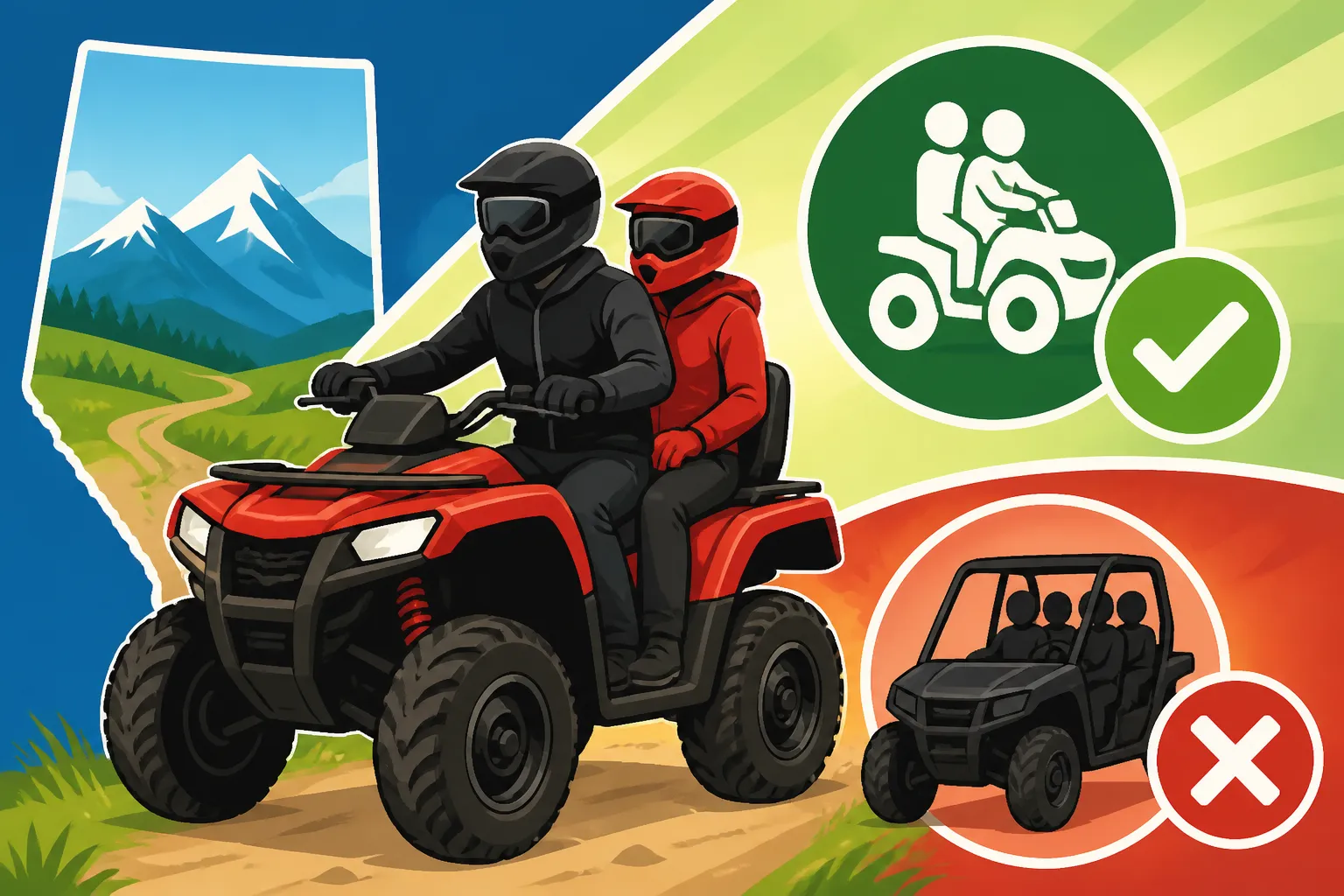
Now, there's an important exception to the "one operator only" rule: the two-up ATV, also commonly known as a "tandem" ATV. These machines are specifically designed from the ground up to safely accommodate a driver and one passenger. How can you tell the difference? It's usually quite obvious:
- Extended Seat: The most noticeable feature is a significantly longer seat, providing ample room for both individuals without crowding.
- Passenger Handholds: These machines will have sturdy, clearly defined handholds for the passenger, often integrated into the backrest or frame, allowing them to brace themselves independently.
- Separate Footrests: Crucially, there will be separate, raised footrests for the passenger, ensuring their feet aren't dangling or interfering with the operator's control, and providing a secure anchor point.
- Suspension and Frame: Two-up ATVs often feature a more robust suspension system and a reinforced frame to handle the increased weight and dynamic forces of two riders.
If your ATV has these distinct features, congratulations, you likely have a two-up machine and can legally carry a passenger. Always double-check your owner's manual to confirm the manufacturer's stated capacity. These purpose-built machines are a fantastic way to share the riding experience safely, as long as both riders follow all other safety guidelines, like wearing helmets.
Child Passengers on an ATV: A Grey Area with Big Risks
The temptation to bring your child along for a ride on your ATV can be strong, but this is a particularly complex and risky area. While specific rules like [Alberta ATV Age Requirements] dictate the minimum age for operating an OHV (14 years old for public land without direct adult supervision, and even then, often with restrictions), there aren't explicit age cutoffs for passengers in all contexts. However, the overarching principle of designated seating still applies.
Putting a child on a single-rider ATV, whether in front of you or perched precariously behind, is incredibly dangerous. They lack the core strength and coordination to hold on properly, their weight distribution is often unsuitable, and they are directly exposed to potential hazards without adequate protection or a secure seating position. The operator's ability to react, brake, and steer is severely hampered. Furthermore, if you're on a two-up ATV, while it's designed for a passenger, you still need to ensure the child can reach the footrests and hold the handholds securely. A child who is too small may not be able to brace themselves effectively. The manufacturer's guidelines for youth machines often state minimum age, height, and weight recommendations, and these should be heeded even for passengers. Always remember, a child's safety is paramount, and compromising it for a short ride is never worth the risk. [Alberta Child Passenger Rules] can be stringent, and proper [Alberta Riders Under 14 Need Supervision] is essential, even when they are passengers.
Side-by-Sides (UTVs): Built for More, But Still Limited
Side-by-sides, also known as UTVs or Utility Task Vehicles, have exploded in popularity precisely because they offer a more social, multi-passenger riding experience. With their car-like seating, steering wheel, and roll cages, they often feel much safer and more accommodating for groups. However, just like ATVs, they still have strict limits when it comes to passengers.
Designated Seating in a Side-by-Side
The beauty of a side-by-side is that it comes with multiple, clearly designated seats, often arranged much like a car, side-by-side (hence the name!). These machines are built with the intention of carrying more than one person, typically two, four, or even six passengers, each with their own seat. Crucially, each designated seat includes a seatbelt or harness system.
When an enforcement officer looks at a side-by-side, they'll count the factory-installed seats. If your machine has two seats, it's a two-seater. If it has four, it's a four-seater. It's not about how many people you can squeeze onto a bench seat, or how many kids you can cram into the cargo box. Every person must have their own designated, belted seat. This design ensures that each passenger has a secure place within the protective roll cage, mitigating the risk of ejection or injury during sudden movements or rollovers. [Manufacturer Passenger Limits on a Side-by-Side] are strictly enforced for very good reasons.
Seatbelts and Restraints: Non-Negotiable
If your side-by-side has a seat, it has a seatbelt, and that seatbelt must be worn. This isn't an option; it's a fundamental safety requirement and a legal obligation in Alberta. Just because a side-by-side has a roll cage doesn't mean you're invulnerable. In a rollover, an unbelted occupant can be violently thrown around inside the cage, or even ejected entirely, with devastating consequences. The seatbelt is your primary restraint system, designed to keep you safely inside the vehicle's protective shell.
It's common for riders to feel a false sense of security in a side-by-side, especially on smoother trails. But unexpected terrain changes, sudden braking, or even an evasive maneuver can cause serious injury if passengers aren't properly restrained. Some riders might explore aftermarket accessories from companies like SuperATV to enhance their machine's capabilities or comfort, but it's vital that any modifications never compromise the original safety features, especially the seatbelt system. If anything, enhancements should always reinforce safety, not detract from it.
Exceeding Capacity in a Side-by-Side: Why It's Dangerous
Even with the apparent roominess of a side-by-side, exceeding its designated passenger capacity is just as dangerous as overloading an ATV. Piling extra people into the cargo box, having kids share a single seat, or allowing someone to stand in the back might seem harmless, especially if you're just putting around a campsite. However, these actions significantly compromise the vehicle's safety and handling.
The side-by-side's suspension, braking, and stability systems are all calibrated for its intended number of occupants and a specific total weight. Overloading it throws off the centre of gravity, making the machine more prone to rollovers, especially on inclines or during turns. Braking distances will increase dramatically, and steering responsiveness will diminish. The protective roll cage is only effective if you are secured within it. If you're crammed in without a seatbelt, or riding in the cargo area, the roll cage offers little to no protection in an accident. Always stick to the designated seating capacity; it's there to keep you and your passengers safe, not to limit your fun unnecessarily.
Dirt Bikes and Snowmobiles: Single Rider by Design
While ATVs and side-by-sides often spark debate about passenger capacity, the rules for dirt bikes and most snowmobiles are much more straightforward. These machines are, for the most part, purpose-built for solo adventures.
Dirt Bikes: A Solo Pursuit
Let's be unequivocally clear: dirt bikes are designed for one rider and one rider only. Period. Their entire design—from the narrow seat and minimalist frame to the sensitive controls and balance requirements—is optimized for a single operator who is constantly shifting their weight and position to control the machine.
Attempting to carry a passenger on a dirt bike, even a small child, is extremely dangerous and illegal on public lands in Alberta. There are no designated passenger seats, no handholds, and no footrests. A passenger would severely interfere with the operator's ability to maintain balance, especially at low speeds or on technical terrain. They would also have no secure way to hold on, making them highly susceptible to falling off with any sudden bump or maneuver. While we understand the desire to share the thrill of dirt biking, it's simply not built for two.
Snowmobiles: The Occasional Two-Up
Similar to dirt bikes, the vast majority of snowmobiles are designed for single-rider operation. Like ATVs, snowmobiles require the operator to constantly shift their weight, stand, and move with the machine to navigate snow conditions and terrain effectively. A passenger on a standard snowmobile would severely hinder this crucial ability to balance and control.
However, just like ATVs, there are specific "touring" or "two-up" snowmobile models that are built to carry a passenger. These machines are easily identifiable by:
- Extended, Raised Passenger Seat: They feature a significantly longer and often slightly elevated passenger seat for comfort and clear visibility.
- Passenger Handholds: Sturdy handgrips are integrated into the rear of the seat or chassis for the passenger to hold on securely.
- Separate Footrests: Designated, often adjustable, footrests are provided for the passenger.
- Larger Engine and Suspension: Many two-up snowmobiles also come with larger engines and more robust suspension systems to handle the increased weight.
If you own a two-up snowmobile, you can enjoy sharing the winter trails with a passenger. However, the importance of proper passenger positioning and communication is magnified on snowmobiles. The passenger's movements and weight shifts directly impact the machine's stability and handling on slippery snow. Both riders must be actively engaged in maintaining balance and following the terrain.
Special Considerations and Exceptions
While the designated seating rule is broadly applied, there are a few scenarios that sometimes lead to questions or might offer very specific, limited exceptions. Understanding these can help you navigate nuanced situations.
Farm and Ranch Exemptions for Passengers
Alberta's legislation does make some allowances for OHV use in agricultural operations. For those actively engaged in farm or ranch work, there might be specific provisions that permit carrying an extra person for tasks directly related to the operation, even if the machine isn't a factory two-up. However, it's crucial to understand that these exemptions are typically very narrow and are explicitly for work purposes, not for recreational riding or simply moving people around casually on the farm.
This often applies to tasks like checking fences, herding cattle, or transporting a worker to a specific spot on private agricultural land. Even in these situations, safety should remain the top priority. The fundamental risks of overloading or improper seating don't disappear just because you're doing farm work. If you're a farmer or rancher, it's wise to review the exact wording of the relevant regulations or consult with a registry agent to understand the precise scope of these exemptions. Riding on your own land offers more flexibility, but straying onto public roads or Crown land generally brings you back under the strict public land rules. [Alberta Farmer-Owned Machines on Private Land] outlines some of these unique conditions.
Emergency Situations and Rescue
In a genuine emergency, human instinct and common sense generally prevail. If someone is injured on the trail and needs immediate transport to a safe location or to meet emergency services, you might find yourself carrying them on a machine not explicitly designed for a passenger. In such a critical situation, the priority shifts to saving a life or preventing further harm.
This is not a general allowance for passenger transport. It's an exception made out of necessity. An officer would typically understand the context of an emergency rescue. However, this scenario highlights the importance of safe riding practices in general, to hopefully avoid such situations, and always carrying a first aid kit and communication devices. This isn't permission to ride two-up "just in case" – it's an acknowledgement of dire circumstances where rules might bend for the sake of survival.
Road Crossings and Minimal Distance Travel
Even for very short distances, such as crossing a paved road to access another section of trail or riding briefly along a highway ditch, the passenger rules still apply. It's a common misconception that if you're only going "just a little ways," the rules are relaxed. This is simply not true. Alberta's Traffic Safety Act and Off-Highway Vehicle Regulation apply whenever you are operating on a "highway," which legally includes ditches, shoulders, and even private roads that are publicly accessible.
Therefore, if your ATV is a single-rider model, you cannot legally carry a passenger even for a 100-meter road crossing. The designated seating principle remains in effect. This can be frustrating when you're just trying to get from Point A to Point B, but the risk of an accident, especially involving other traffic, is arguably higher in these road-adjacent situations. Always ensure all passengers are on a machine with designated seating for them, even for the shortest legal maneuvers. [Alberta Rules for Crossing a Highway] clearly articulate how these rules extend to such situations.
Safety Gear and Best Practices for Passengers
Getting the passenger rules right is only half the battle. Once you confirm you can legally carry a passenger, ensuring they are properly equipped and prepared is just as critical for a safe and enjoyable ride.
Helmets: A Legal Must-Have
This cannot be stressed enough: in Alberta, every single person on an OHV on public land must wear a helmet that meets approved safety standards. This includes the operator and all passengers, regardless of age. There are no exceptions for passengers, even if they are just riding for a few minutes. [Alberta Helmet Law on Public Land] is very clear on this.
Failing to wear an approved helmet can result in a significant fine for the operator of the OHV, and more importantly, it leaves the passenger vulnerable to serious head injuries in the event of an accident. Helmets are the most crucial piece of safety gear, protecting against impacts that can happen even at low speeds or during unexpected rollovers. Always ensure your passenger's helmet fits snugly, is properly buckled, and meets recognized standards such as CSA CAN3-D230-M85. Don't let a missing helmet turn a fun ride into a tragic one. [Alberta Helmet Fines and How They Are Issued] are a real consequence. While SuperATV might offer fantastic accessories to improve your machine, they don't sell helmets, which are a personal safety purchase of the highest importance.
Protective Clothing: Beyond the Law
While helmets are legally mandated, other protective clothing is highly recommended for all riders, especially passengers. Passengers don't have the controls to brace themselves, making them potentially more exposed to impacts, scrapes, and flying debris. Encourage your passengers to wear:
- Sturdy Footwear: Boots that cover the ankles are ideal, protecting against rocks, branches, and the machine itself. Open-toed shoes or sandals are a definite no-go.
- Long Pants and Long-Sleeved Shirts: These provide a crucial layer of protection against scrapes, brush, and sunburn. Denim or other durable fabrics are preferred over light athletic wear.
- Gloves: Gloves protect hands from blisters, abrasions, and impact.
- Eye Protection: Goggles or safety glasses are essential to shield eyes from dust, insects, and debris, especially in a side-by-side where you might follow another machine closely.
This clothing forms a protective barrier, greatly reducing the severity of potential injuries from minor tumbles or contact with the environment. It's an easy way to significantly enhance passenger safety, well beyond what the law strictly requires.
Rider and Passenger Communication
Effective communication between the operator and passenger is vital, especially on dynamic trails. Before you even start the engine, have a chat with your passenger, particularly if they are new to OHV riding:
- Pre-Ride Briefing: Explain how the machine moves, what to expect on the trails (bumps, leans, turns), and where to hold on. Teach them basic hand signals if verbal communication will be difficult over engine noise or wind.
- Consistent Feedback: Encourage your passenger to communicate if they are uncomfortable, cold, or need to stop. The operator can't feel everything the passenger feels.
- Anticipate Movement: As the operator, try to verbally warn your passenger about upcoming bumps, turns, or changes in speed. A simple "bumpy section coming up" or "sharp turn to the left" can make a huge difference in how prepared and stable the passenger feels.
Clear communication builds trust and significantly enhances the passenger's comfort and safety. It ensures both individuals are working together, rather than against each other, in managing the ride.
Avoiding Penalties and Ensuring a Safe Ride
Nobody wants a ticket, and more importantly, nobody wants an accident. By understanding and adhering to Alberta's OHV passenger rules, you can enjoy the trails without legal troubles or safety concerns.
Know Your Machine's Limits
The most critical step in avoiding penalties and ensuring safety is to genuinely know and respect your specific OHV's design limits. Don't assume your machine can do more than it was built for. Every OHV comes with an owner's manual – read it! It will clearly state the machine's intended passenger capacity, weight limits, and specific safety instructions.
Visually inspect your machine for the "tells" of a multi-passenger design: a long, separate seat, distinct footrests for the passenger, and dedicated handholds. If these aren't present, assume it's a single-rider machine. We know it can be frustrating to see others seemingly get away with riding unsafely, making you wonder why you should bother following the rules. But remember, the rules are there for your safety and the safety of your passengers. Just because someone else isn't caught doesn't make their actions safe or legal. Personal responsibility is key to preventing accidents.
The Cost of Non-Compliance
Operating an OHV in Alberta with an unauthorized passenger is not just a safety risk; it carries legal penalties. While specific fine amounts can vary and change, expect to face a monetary fine if caught. These fines can quickly add up and dampen the fun of any ride. [Alberta Ticket Costs for a Riding Violation] can be substantial.
In more egregious cases, or in situations where other violations are present (like operating an unregistered or uninsured machine, or impaired operation), an officer has the authority to issue more severe penalties, including the seizure of your vehicle. [Alberta Vehicle Seizure for No Insurance] highlights how seriously enforcement takes compliance. It's far cheaper and less stressful to ensure you're riding within the law than to deal with the aftermath of a citation or, worse, an accident.
Here's a quick reference table for typical OHV passenger configurations:
| OHV Type | Standard Passenger Capacity | Key Identifying Features (for multi-passenger) |
|---|---|---|
| Standard ATV | 1 (Operator only) | Single seat, no separate footrests/handholds for passenger |
| Two-Up/Tandem ATV | 1 (Operator) + 1 (Passenger) | Extended seat, separate passenger footrests, dedicated passenger handholds |
| Side-by-Side (UTV) | 2, 4, or 6 (Operator + Passengers) | Multiple designated bucket or bench seats, seatbelts for each occupant, roll cage |
| Dirt Bike | 1 (Operator only) | Narrow, single seat, no passenger accommodations |
| Standard Snowmobile | 1 (Operator only) | Single seat, no dedicated passenger area |
| Touring Snowmobile | 1 (Operator) + 1 (Passenger) | Extended, often elevated passenger seat, dedicated passenger handholds, separate footrests |
Planning Your Group Rides
When planning an OHV outing with friends or family, think ahead about how many people will be riding and how many machines you'll have available. It's much better to bring enough machines for everyone to ride safely and legally than to try and cram extra people onto machines not designed for them.
If you have a large group, coordinate. Can some people carpool to the staging area, or ride in a support vehicle on paved sections? Perhaps some of your fellow riders have two-up ATVs or multi-seat side-by-sides. If you frequently find yourself needing more passenger capacity, it might be worth considering upgrading to a machine specifically designed for that purpose. Alternatively, look at options like a SuperATV cargo box or storage solutions for gear, so you're not tempted to use cargo space for people. Planning for safe passenger transport is just as important as planning your route or packing your lunch. It ensures everyone gets to enjoy the beautiful Alberta trails and returns home safely.
Disclaimer
This article is for general informational purposes only and does not constitute professional advice. Laws, prices and regulations vary by location and change over time. Consult a qualified professional for guidance on your specific situation.