Alberta Equipment Required on Public Land
It can be incredibly frustrating to get ready for a fantastic day of ATV or UTV riding on Alberta's breathtaking public lands, only to second-guess whether your machine is actually compliant with all the rules. Nobody wants to be stopped by an officer and find out they're missing a critical piece of equipment or have an illegal modification. This comprehensive guide is here to walk you through every piece of equipment your off-highway vehicle (OHV) needs to be legally ready for Alberta's public trails, ensuring you can ride with confidence and peace of mind.
The Foundation: Registration, Insurance, and Licensing
Before we even get to specific equipment, it’s absolutely crucial to remember that your machine’s fundamental legal status is the first layer of preparation. Think of it as the bedrock upon which all other equipment requirements are built. Without these basics, no amount of fancy lights or safety gear will save you from a potential ticket or worse. Many new riders, or even those returning after a long break, might overlook these administrative requirements in their excitement to hit the trails.
Your Machine's Legal Identity: Registration and Plates
First and foremost, if you plan to ride your ATV or UTV on any public land in Alberta, your machine must be registered. This isn't just a suggestion; it's a non-negotiable legal requirement. Public land includes everything from designated OHV zones like McLean Creek, to Crown land, provincial recreation areas, and even the ditches alongside public roads if local bylaws permit riding there. The registration process itself involves a trip to an Alberta Registry Agent, where you'll present ownership documents and pay the necessary fees. Once registered, you'll receive a registration certificate and a license plate, which is proof that your machine is recognized by the province.
That plate isn't just a souvenir; it has a specific purpose and must be displayed correctly. You can't just tuck it under your seat or zip-tie it to a frame member where it's obscured by mud or branches. The plate needs to be clearly visible from the rear of the machine, usually mounted horizontally. Officers need to be able to identify your machine quickly and easily. Not having a plate, or having one that's unreadable, is akin to not being registered at all in the eyes of the law. You can find detailed guidance on [Alberta Plate Placement on a Machine]. The process for [Alberta Registration Before Riding Crown Land] is the same regardless of where on public land you plan to ride. It’s also important to understand that your registration needs to be current. These aren't one-time deals; they expire and require renewal. Missing that renewal date can leave you riding illegally without even realizing it until it's too late.
The Safety Net: Mandatory Insurance
Beyond registration, another critical and often misunderstood requirement for riding on Alberta's public land is insurance. A lot of riders assume that if they’re not on a highway, insurance isn't necessary. However, under Alberta's Off-highway Vehicle Regulation, if you're operating your OHV on public land, you are required to have adequate liability insurance. This isn't just about protecting your machine; it's about protecting yourself and others in case of an accident. Imagine a scenario where you accidentally collide with another rider, damaging their machine or, worse, causing injury. Without liability insurance, you could be facing substantial personal financial ruin.
So, what does this mean for you? It means carrying proof of that insurance whenever you ride. Just like a driver's licence or vehicle registration for your car, you need to be able to [Producing Insurance on Demand] to a peace officer if requested. This could be a physical card, a digital copy on your phone, or a printout of your policy. Don't assume that because your OHV is parked at your cabin or stored on your farm, it automatically has the right coverage for public land use. Your existing home or auto insurance might not extend to OHV use on public land, so it’s essential to confirm with your insurance provider that you have the correct policy in place. This is a topic that can genuinely save you immense stress and financial hardship down the line. [Alberta Requires Insurance on Public Land] is one of those rules designed for everyone's protection.
The Rider's Credentials: Driver's Licence
While not a piece of equipment for your machine, it's impossible to discuss legal riding on public land without touching on the rider's requirements, specifically a driver's licence. In Alberta, you do not need a specific "OHV licence" to operate an ATV or UTV. However, the minimum age for unsupervised operation of an OHV on public land is 14 years old. If you're 14 or older, you need to possess a valid driver's licence (any class) or learner's permit. If you're operating on a learner's permit, you must comply with all the conditions of that permit, which typically includes being supervised by a fully licensed adult.
This requirement ensures a basic level of road knowledge and responsibility. An officer might ask to see your licence, just as they would if you were driving a car. Failing to produce a valid licence or operating underage and unsupervised can lead to significant penalties, including fines and potentially even the seizure of the machine. The focus of this article is machine equipment, but the rider's legal standing is so intrinsically linked to legal operation that it warrants a mention. Remember, the rules are in place for safety, and that includes ensuring competent operators are on the trails.
Essential Lighting for Visibility
Riding an OHV on Alberta’s public land isn't just a daytime activity for many of us. Whether you’re heading out for an early morning hunt, enjoying a twilight trail ride, or simply get caught out later than expected, proper lighting isn't merely a convenience – it’s a legal necessity and a critical safety feature. Visibility is key, both for you to see the trail ahead and for others to see you. Don't skimp on ensuring your lighting system is fully functional and compliant.
Seeing and Being Seen: Headlights and Tail Lights
According to Alberta's Off-highway Vehicle Regulation, every OHV operating on public land must be equipped with at least one headlight and one taillight. These lights aren't just for show; they need to be operational and turned on when conditions require them, such as during twilight, night, or any time visibility is reduced due to weather like fog, snow, or heavy rain. The headlight must emit a white light and be capable of illuminating the trail ahead, giving you enough warning to react to obstacles. The taillight must emit a red light and be visible from a certain distance to warn riders behind you.
Think about a common scenario: you're enjoying a crisp fall ride, and the sun dips below the horizon faster than you anticipated. Suddenly, the trail gets dim, and shadows stretch long. Without a working headlight, navigating roots, rocks, or unexpected turns becomes incredibly dangerous. Similarly, if you're pulling over to admire a view or dealing with a minor issue, a functioning taillight ensures that another rider approaching from behind can see you well in advance, preventing a rear-end collision. [Alberta Requires Working Head and Tail Lights] is a rule that genuinely saves lives by ensuring everyone can see and be seen. Always do a quick pre-ride check to make sure these essential lights are working.
Signalling Your Intent: Brake Lights
Beyond just seeing and being seen, other riders need to know what your machine is doing, especially when you're slowing down. That's where a functional brake light comes in. While the provincial regulation specifically mandates a taillight that emits red light, a brake light that illuminates when you apply the brakes is an essential safety feature, particularly for ATVs and UTVs that often travel in groups or on shared trails. Many modern machines come equipped with a brake light integrated into the taillight assembly, which becomes brighter when the brakes are engaged.
Imagine riding through a dusty section of trail with a few friends. The rider in front of you suddenly slows down for a rough patch. If they only have a static taillight, you might not realize they’re braking until you’re too close to react safely, especially in low visibility. A bright, responsive brake light gives following riders a clear signal that your speed is decreasing, allowing them to adjust their own speed and maintain a safe following distance. While the regulation focuses on the taillight, ensuring your brake light is also in top working order is a sign of a responsible rider and significantly enhances safety for everyone on the trail. Check those brake lights every single time you head out!
Reflectors and Additional Visibility
While headlights, taillights, and brake lights cover active illumination, passive visibility, like that provided by reflectors, also plays a role in keeping you safe on public land. Many ATVs and UTVs come from the factory with reflectors installed on the front, sides, and rear. These small, often overlooked pieces of equipment are designed to bounce light back to its source, making your machine more visible to other riders or vehicles even when your own lights are off or obscured. For example, if your machine is parked off to the side of a trail in dim light, a reflector might catch the beam of another rider's headlight, alerting them to your presence.
While the primary focus of the law is on powered lighting, maintaining your factory reflectors, or even adding more where appropriate, is a smart move. Think of it as an extra layer of protection, particularly if you're ever in a situation where your primary lights fail. Some riders also opt for reflective tape on their machines or helmets, especially if they ride in areas where they might encounter other traffic, such as forestry roads or shared pathways. Every little bit of extra visibility can make a difference, especially when you consider the varied terrain and conditions you might encounter on Alberta's vast public lands.
Muffler, Spark Arrestor, and Noise Regulations
Riding an OHV on Alberta’s public lands is a privilege, and with that comes a responsibility to respect the environment and other users. One of the biggest points of contention, and a common source of fines, revolves around noise and fire safety – specifically, your machine's exhaust system. It's not just about what sounds cool; it's about what's legal, environmentally conscious, and neighborly to wildlife and other outdoor enthusiasts.
Keeping it Quiet: Legal Mufflers
Alberta’s Off-highway Vehicle Regulation is pretty clear: every OHV operating on public land must be equipped with a muffler that is in good working order and effectively prevents excessive or unusual noise. What does "excessive or unusual noise" mean? Generally, it means your machine shouldn't be significantly louder than it was when it left the factory. Many riders, in an effort to gain a perceived performance boost or a "tougher" sound, will modify or replace their stock mufflers with aftermarket systems designed to be louder. This is a common mistake and a surefire way to attract the attention of a peace officer.
The intent behind this regulation is twofold: to minimize disturbance to wildlife and to reduce noise pollution for other users of public land, such as hikers, campers, and equestrians. Imagine trying to enjoy the peaceful solitude of the Kananaskis backcountry, only to have it shattered by an ear-splitting OHV roaring past. It diminishes the experience for everyone. A legal muffler keeps the peace and allows everyone to enjoy Alberta's natural beauty. It’s also about preventing damage to your own hearing over long rides. Always make sure your muffler is free from holes, loose baffles, or any other defects that could increase noise output.
Fire Prevention: The Spark Arrestor
Beyond noise, fire prevention is a huge concern in Alberta's dry conditions, especially in the forests and grasslands where many OHV trails are located. That's why a functional spark arrestor is an absolute must. A spark arrestor is a screen or chamber fitted to your muffler that traps incandescent carbon particles (sparks) that are expelled from the exhaust. Without one, these hot sparks could easily land on dry grass, leaves, or pine needles, igniting a wildfire. [Alberta Requires a Spark Arrestor] for all OHVs operating on public land. This is not optional; it's a critical safety device.
Most factory mufflers come with an integrated spark arrestor that meets U.S. Forest Service standards. However, if you've replaced your muffler with an aftermarket unit, you need to ensure that the new system also includes a certified spark arrestor. Some aftermarket pipes are sold without them, assuming the buyer will add one, or they are intended for closed-course racing only. If you're unsure if your machine has one, check your muffler for a stamp or label indicating "USFS Approved" or a similar certification. It's a small device with a massive impact on fire safety. Failing to have one can not only lead to a fine but, in the event you cause a fire, could result in far more severe legal consequences.
What Counts as a Modified Exhaust
This is where many riders get into trouble. A "modified exhaust" typically refers to any alteration of the original equipment manufacturer (OEM) exhaust system that increases noise output or bypasses the spark arrestor. This includes:
- Removing baffles: The internal components of a muffler that are designed to dampen sound.
- Drilling holes in the muffler: A misguided attempt to "uncork" the exhaust, which only makes it louder and potentially compromises spark arresting capabilities.
- Installing an aftermarket exhaust system not compliant with regulations: Many racing exhausts are incredibly loud and lack spark arrestors, making them illegal for public land use.
- Running a straight pipe: This is essentially no muffler at all and is highly illegal.
The issue isn't just the noise, as noted earlier, but also the potential for fire. Many aftermarket exhaust manufacturers, like SuperATV, produce performance exhaust systems. While SuperATV makes many fantastic products, riders need to be diligent about checking that any aftermarket exhaust they choose is specifically advertised as USFS-approved and compliant with noise regulations for public land use in Alberta. Don't assume. Always confirm.
Officers are well-versed in identifying illegal exhaust systems, often by sound alone. They might also visually inspect your muffler for modifications or the presence of a spark arrestor. Remember, [Alberta Bans Modified Exhausts] for a reason: to protect the environment and maintain peace for all public land users. A ticket for a modified exhaust can quickly dampen the fun of any ride.
Safety Gear for the Rider: Helmets and Beyond
While this guide focuses on equipment for your machine, it would be irresponsible to discuss public land riding in Alberta without addressing the absolute necessity of personal safety gear, particularly helmets. In Alberta, if you're riding an OHV on public land, wearing a helmet isn't just a good idea – it's the law. This rule exists because, despite all the machine's safety features, the rider is still the most vulnerable part of the equation.
Mandatory Helmet Standards
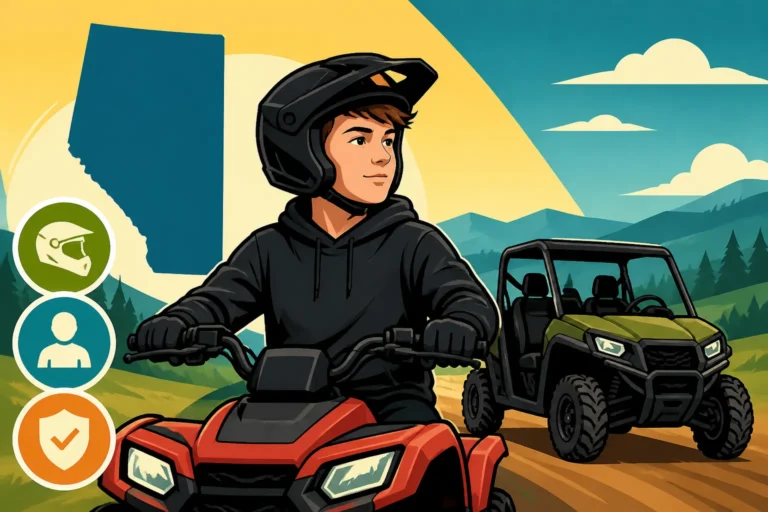
Since May 15, 2017, it has been mandatory for all OHV operators and passengers on public land in Alberta to wear a helmet that meets specific safety standards. This isn't just any helmet; it needs to be certified. The most common certifications you'll see are:
- CSA (Canadian Standards Association): A widely recognized Canadian standard.
- Snell: A highly rigorous independent testing standard.
- ECE (Economic Commission for Europe): A European standard gaining international recognition.
- DOT (Department of Transportation): A U.S. standard, often found on helmets sold across North America.
The helmet must be securely fastened, meaning the chin strap should be snug. A loose helmet is not much better than no helmet in a crash. Failing to wear a compliant helmet or wearing one improperly can result in a fine. This rule is universally applied across Alberta's public lands, from the remote trails of the Ghost PLUZ to designated riding areas near major cities. Your head is your most important asset, and protecting it is paramount. You can learn more about [Alberta Helmet Law on Public Land] to ensure you're fully compliant.
Eye Protection and Other Rider Essentials
While helmets are legally mandated, common sense and a strong desire for self-preservation should lead you to other essential safety gear. Eye protection is critical. Whether it's goggles worn with an open-face helmet, or the integrated visor of a full-face helmet, protecting your eyes from dust, debris, branches, insects, and even roost from other machines is non-negotiable. An errant branch or a flying rock can cause severe eye injury, compromising your vision and potentially leading to a dangerous accident.
Beyond helmets and eye protection, consider sturdy over-the-ankle boots to protect your feet and ankles, gloves to maintain grip and protect your hands, and long pants and long-sleeved shirts to guard against scrapes, sun exposure, and insect bites. Body armour, especially a chest protector, is also highly recommended, particularly for more aggressive riding or in areas with many trees. Think about the "all the gear, all the time" philosophy – it's much better to be over-prepared than under-protected in an off-road environment. Many brands, including those that specialize in aftermarket parts like SuperATV, also offer gear for riders, so explore your options for comfort and safety.
Exemptions to the Helmet Rule
While the helmet law is broad, there are a few very specific and limited exemptions. It's crucial to understand these thoroughly, as assuming you're exempt when you're not can lead to a ticket. Exemptions typically apply to:
- Occupational work: Individuals operating an OHV for farm, ranch, or other occupational work on private property (or sometimes within limited public land parameters if directly related to work).
- Specific cultural or religious headwear: For example, a person of the Sikh religion wearing a turban may be exempt.
- Machines with specific safety features: This primarily applies to side-by-sides (UTVs) that are equipped with a rollover protective structure (ROPS) and seatbelts, and occupants are properly secured by those seatbelts. In these specific cases, a helmet may not be required while inside the ROPS and belted in.
It’s vital to note that the ROPS exemption for side-by-sides does not apply to ATVs, even those with aftermarket cages. If you're on an ATV on public land, a certified helmet is always required. These exemptions are very narrow, so unless you fit squarely within one of them, plan on always wearing your helmet. When in doubt, wear the helmet. It's truly a no-brainer for your own safety.
Tires, Brakes, and General Machine Integrity
When you’re out on Alberta’s trails, your machine is subjected to incredible forces and diverse terrain. From rocky climbs to muddy bogs and fast-paced straights, your OHV needs to be in top mechanical condition. Beyond the lights and exhaust, the fundamental components that connect you to the ground and allow you to control your speed are paramount. Ignoring these aspects of machine integrity isn't just a risk for a breakdown; it’s a direct threat to your safety and the safety of those around you.
Grip and Control: Tires in Good Condition
Your tires are your only contact with the ground, and their condition directly impacts your traction, steering, and braking. Alberta regulations, under the Traffic Safety Act, generally require vehicles to be in safe operating condition. For OHVs, this means your tires need to have adequate tread depth and be free from significant damage. Bald tires, or those with deep cracks, bulges, or punctures, are a hazard. They won't provide the necessary grip on loose or slippery surfaces, leading to a loss of control, and they're more prone to catastrophic failure.
It's also about having the right tires for the conditions. While not explicitly mandated by law (beyond being "safe"), choosing tires with appropriate tread patterns for mud, rock, or general trail riding will significantly enhance your experience and safety. Running tires at the correct pressure for the terrain is also crucial for performance and preventing flats. Before every ride, give your tires a good once-over. Check for cuts, punctures, and ensure they're properly inflated. A blown tire far from the staging area is a miserable experience, and a loss of traction on a steep descent can be downright dangerous.
Stopping Power: Functional Brakes
What goes must stop, and when you're hurtling down a trail, your brakes are your lifeline. Just like tires, functional brakes are a non-negotiable safety requirement for any vehicle, including OHVs, operating on public land. Your ATV or UTV must have a braking system that is capable of safely bringing the machine to a stop. This means both your front and rear brakes, if equipped, should be working effectively, with adequate pad material and no signs of fluid leaks.
Regularly check your brake levers and pedals for proper feel – they shouldn't feel spongy or go all the way to the bar/floor. Listen for grinding noises, which can indicate worn pads. Imagine a steep, technical descent where you absolutely rely on your brakes to control your speed. If they suddenly fail or lose effectiveness, you could quickly lose control, resulting in a serious accident. Don't put off brake maintenance. It's one of the most critical safety systems on your machine. Parts from aftermarket specialists like SuperATV often include upgraded brake components, which can be a worthy investment for enhanced stopping power and reliability.
Maintaining Overall Machine Soundness
Beyond tires and brakes, the general integrity of your OHV is part of its "required equipment" in a broader sense. An officer pulling you over might not just check your plate; they'll also look for obvious safety deficiencies. This includes:
- Steering: Is your steering system tight and responsive, or is there excessive play? Loose steering components can make your machine unpredictable and hard to control.
- Suspension: While not all OHVs need to be race-ready, your shocks and springs should be intact and functional, absorbing bumps and keeping your tires in contact with the ground. Broken or leaking shocks can drastically affect handling.
- Driveline: Check your axles, U-joints, and drive belts for wear or damage. A failing driveline component can leave you stranded or, worse, cause a loss of power or control at an inopportune moment.
- Fuel System: Ensure there are no fuel leaks. A leaky fuel line or tank is a fire hazard, especially in dry conditions.
- Frame and Body: Look for cracks in the frame, loose body panels, or anything that looks like it could fall off while riding.
These might not be explicitly listed as "required equipment" like a spark arrestor, but a machine in poor mechanical condition is inherently unsafe and could still draw the attention of law enforcement for being operated in an unsafe manner. A pre-ride inspection checklist is always a good idea to catch these issues before you head out, ensuring your machine is robust enough for the demands of the trail.
Tools, First Aid, and Emergency Preparedness
While the regulations focus on what your machine must have to be legal, responsible riding on Alberta's public lands demands a broader approach to equipment. The vastness and often remote nature of Alberta's backcountry mean you can't always rely on cell service or quick assistance. Being prepared for minor mishaps, medical emergencies, or getting lost isn't just smart – it can be life-saving. Think of these items as your self-reliance kit, enabling you to handle unexpected situations yourself.
Basic Tools for Trailside Repairs
It's almost a rite of passage for OHV riders to experience a minor mechanical issue out on the trail. A loose bolt, a fouled spark plug, a flat tire – these small problems can quickly ruin a day if you're not equipped to handle them. Carrying a basic tool kit tailored to your machine is highly recommended. This might include:
- Pliers and wrenches: For tightening loose nuts and bolts.
- Screwdrivers: Both flathead and Phillips, for various fasteners.
- Spark plug wrench and spare spark plug: A common fix for sputtering engines.
- Tire repair kit: Plugs, CO2 cartridges or a small hand pump for flats.
- Duct tape and zip ties: The universal fix-alls for almost anything.
- Small knife or multi-tool: Always handy.
Imagine you're 20 kilometres deep into the Ghost PLUZ, and a rock knocks a battery cable loose. Without a wrench, you're looking at a long walk back. Even something as simple as a flat tire can become a major ordeal without a repair kit. Being able to make small repairs on the fly keeps your ride going and prevents unnecessary frustration and potential safety risks. You don’t need a full mechanic's chest, but a carefully curated selection of essentials makes a world of difference.
First Aid and Emergency Supplies
Medical emergencies can happen anywhere, and being prepared on the trail is paramount. A comprehensive first-aid kit is an absolute must. It should contain more than just a few band-aids; think about supplies for cuts, scrapes, burns, sprains, and even items for allergic reactions if anyone in your group has known allergies. Consider including:
- Pain relievers and anti-inflammatories
- Antiseptic wipes and bandages
- Gauze and medical tape
- Tweezers for splinters
- Space blanket for shock or warmth
- Any personal medications
Beyond medical supplies, general emergency items are crucial. A small flashlight or headlamp (even if you have good lights on your machine, a hands-free light is invaluable for repairs), a fire starter, and a whistle for signaling are all lightweight items that can offer significant assistance in an emergency. [Carrying Papers on a Long Alberta Ride] might also include your first aid and emergency contacts. These items aren't just for you; they could help another rider in distress.
Navigation and Communication Devices
It's easy to get turned around, especially in unfamiliar terrain or dense forest. While many trails are marked, signage can sometimes be sparse, damaged, or obscured. Reliable navigation tools are incredibly important.
- GPS device or smartphone with offline maps: Modern smartphones, loaded with apps like Avenza Maps or Gaia GPS and pre-downloaded trail maps, can be invaluable. However, don't rely solely on your phone, as battery life can be an issue in cold weather or with heavy use.
- Physical map and compass: Always have a backup! Learn how to use them. Batteries die; paper maps don't.
- Satellite messenger or SPOT device: These are game-changers for truly remote riding areas where cell service is non-existent. They allow you to send SOS messages with your location to emergency services and often check in with family.
Cell service is notoriously unreliable in many of Alberta's public land areas. Assuming you'll have signal to call for help is a dangerous gamble. A satellite messenger provides a lifeline when nothing else will. Even a simple fully charged power bank for your phone can extend its usefulness significantly. Being able to communicate your location or call for assistance transforms a minor inconvenience into a manageable situation rather than a full-blown crisis.
Specifics for Side-by-Sides: ROPS and Seatbelts
Side-by-sides (UTVs) have exploded in popularity, offering a more social and often more comfortable riding experience than traditional ATVs. However, their design, with multiple occupants and a higher centre of gravity compared to an ATV, introduces specific safety considerations and, consequently, specific equipment requirements in Alberta. If you're riding a side-by-side, understanding these differences is critical.
Rollover Protection Structures (ROPS)
One of the defining features of a side-by-side is its Rollover Protection Structure (ROPS), often incorrectly referred to as a roll cage. A ROPS is a factory-engineered system designed to protect occupants in the event of a rollover. These structures are built to specific standards to withstand significant forces and maintain a survival space for the occupants. It's crucial that your side-by-side's ROPS is intact and free from damage. Any bending, cracking, or unauthorized modifications to the ROPS can severely compromise its protective capabilities.
While many riders customize their side-by-sides with various accessories, it's vital to ensure that any additions or modifications do not weaken or interfere with the structural integrity of the ROPS. Welding on additional bars or components, or cutting into the existing structure without professional guidance and engineering, could render it ineffective. This isn't just about protecting your investment; it's about protecting lives. The ROPS, along with seatbelts, is what often allows side-by-side occupants to ride on public land without a helmet, provided they are properly secured within the structure. However, if the ROPS is compromised, that exemption becomes invalid, and you could be risking serious injury or a citation.
Securing Your Occupants: Seatbelts
Hand-in-hand with the ROPS are the seatbelts. For the helmet exemption to apply in a side-by-side, all occupants must be wearing their seatbelts properly. This means the seatbelt should be correctly latched and adjusted snugly, just as you would in a car. Loose or improperly worn seatbelts defeat their purpose and can allow occupants to be ejected from the machine during a rollover or collision, even if the ROPS remains intact. The seatbelts are designed to keep you within the protective zone of the ROPS.
Many side-by-sides come with three-point seatbelts, similar to those in cars. Some performance models, or those with aftermarket upgrades, may feature four-point or five-point harnesses, which offer even greater security. While SuperATV is known for offering a wide range of aftermarket parts, including performance accessories for UTVs, if you're upgrading seatbelts, ensure they are high-quality, properly installed, and designed for occupant retention in an off-road environment. Never bypass a seatbelt, and always insist that all passengers are properly buckled in before starting your ride. It's not just a rule; it's a fundamental aspect of side-by-side safety.
Passenger Seating Limits
Another critical aspect for side-by-sides is adhering to the manufacturer's specified passenger limits and seating configuration. A side-by-side is designed to safely carry a specific number of occupants, each with their own designated seat and seatbelt. Trying to cram more people into a side-by-side than it was designed for is extremely dangerous. Overloading can negatively impact the machine's handling, braking, and stability, making it far more prone to rollovers. Furthermore, unbelted or improperly seated passengers are at a massive risk of ejection in a sudden turn, bump, or accident.
The manufacturer's guidelines for passenger capacity are usually clearly stated in the owner's manual and often on warning labels on the machine itself. An officer observing an overloaded side-by-side will almost certainly intervene, as it represents a significant safety hazard. This also applies to children; ensure they are of appropriate size for the seatbelts and seats, and never allow them to stand up or move around while the machine is in motion. Adhering to these limits is not just a matter of avoiding a ticket; it's about safeguarding everyone on board.
Prohibited Modifications and What to Avoid
While customizing your OHV can be a fun part of ownership, it’s crucial to understand that not all modifications are legal, especially when riding on Alberta’s public lands. Some aftermarket parts, while popular or visually appealing, can actually violate provincial regulations, leading to fines, vehicle seizure, or even serious safety risks. Knowing what to avoid is just as important as knowing what's required.
Illegal Exhaust Systems
As discussed earlier, modified exhaust systems are a major culprit for legal issues. The allure of a louder, "meaner" sounding machine can be strong for some riders, but the province takes noise pollution and fire safety very seriously. Any modification that bypasses or removes the spark arrestor, or significantly increases the noise output beyond stock levels, is illegal for public land use. This includes:
- "Straight piping" your exhaust: Removing the muffler entirely.
- Baffles removed: Taking out the internal sound-dampening components.
- Aftermarket exhausts without USFS-approved spark arrestors: Many racing exhausts are designed for closed courses and are not compliant.
- Holes drilled into the muffler: This is often done to increase sound, but it's illegal and can compromise spark arresting.
An officer might issue a ticket for [Why a Modified Muffler Can Cost You a Ticket], and you might be required to rectify the issue before being allowed to continue riding. It’s simply not worth the risk to your wallet, the environment, or the reputation of OHV riders as a whole. Always opt for exhaust systems that explicitly state compliance with public land regulations.
Aftermarket Lighting That Breaks Rules
While adding auxiliary lighting to your OHV can enhance visibility for night riding, not all aftermarket light bars and pods are legal for use on public land while the machine is in motion. The key issue usually revolves around the brightness and beam pattern of these lights. Extremely bright, off-road specific light bars can be blinding to other trail users, especially if aimed improperly. While great for illuminating a wide area when you're the only one around, they can be a hazard in shared spaces.
Generally, auxiliary lights should be covered or turned off when encountering other riders or vehicles, or when operating in areas where they could cause glare. Some regulations even stipulate maximum allowable light output or specific conditions under which auxiliary lights can be used. For example, some provincial parks or designated OHV zones might have specific bylaws regarding light usage. When purchasing aftermarket lighting, brands like SuperATV offer a wide range of options. It's up to you as the rider to ensure that the lights you choose and how you use them comply with local and provincial regulations, preventing yourself from inadvertently creating a hazard or violating a bylaw.
Mods That Compromise Safety
Beyond specific regulated components, any modification that inherently compromises the safety or structural integrity of your OHV can draw legal scrutiny. This can be a broad category, but it often includes:
- Homemade suspension lifts or alterations: Poorly engineered lift kits can change the machine's center of gravity, making it unstable and prone to rollover. They can also put undue stress on other components, leading to failure.
- Frame modifications: Cutting, welding, or altering the factory frame without proper engineering can weaken the machine's structure, making it unsafe.
- Oversized tires that interfere with steering or suspension: While larger tires offer more ground clearance, if they rub against suspension components or restrict steering, they are a safety hazard.
- Removing or disabling factory safety features: This could include disabling warning lights, modifying speed governors (especially on youth models), or removing protective guards.
The Alberta Traffic Safety Act gives peace officers the authority to deem a vehicle unsafe if it has defects that could endanger the operator, passengers, or other users. If your modifications are judged to have compromised the safe operation of your machine, you could face fines, or your machine could be ordered off the trail until the issues are rectified. Always prioritize safety and consult reputable mechanics or manufacturers when considering significant modifications.
Summary of Alberta OHV Equipment Requirements
To help visualize the essentials, here’s a quick overview of mandatory versus highly recommended equipment for riding your ATV or UTV on Alberta’s public lands. This isn't exhaustive, but it hits the critical points we've covered.
| Category | Item | Mandatory (Alberta Public Land) | Highly Recommended (For Safety & Preparedness) | Notes |
|---|---|---|---|---|
| Legal Status | Registration Certificate & Plate | Yes | N/A | Plate must be clearly visible from rear. |
| Liability Insurance Proof | Yes | N/A | Carry physical or digital proof. | |
| Rider's Driver's Licence (14+ years) | Yes | N/A | Or Learner's permit with supervision. | |
| Lighting | Headlight (White, functional) | Yes | N/A | Required when visibility is poor. |
| Taillight (Red, functional) | Yes | N/A | Required when visibility is poor. | |
| Brake Light (Functional) | Yes (often integrated w/ taillight) | Yes | Critical for signalling intent to other riders. | |
| Reflectors (Factory) | Generally Yes | Yes (additional) | Enhances passive visibility. | |
| Exhaust & Noise | Legal Muffler (Good working order) | Yes | N/A | Prevents excessive/unusual noise; no modified exhausts. |
| Spark Arrestor (USFS Approved) | Yes | N/A | Essential for fire prevention. | |
| Rider Safety Gear | CSA/Snell/ECE/DOT Approved Helmet | Yes | N/A | Except specific ROPS/seatbelt UTVs & other narrow exemptions. Must be securely fastened. |
| Eye Protection | No (Legally separate from helmet) | Yes | Goggles/visor for debris, dust, and wind. | |
| Sturdy Footwear, Gloves, Long Clothing | No | Yes | Protection from injury, elements, and sun. | |
| Machine Integrity | Tires (Good condition, adequate tread) | Yes (safe operating condition) | Yes (appropriate for terrain) | No major damage, proper inflation. |
| Brakes (Functional, effective) | Yes (safe operating condition) | N/A | Able to safely stop the machine. | |
| Steering & Suspension (Good condition) | Yes (safe operating condition) | N/A | Responsive, no excessive play or major damage. | |
| UTV Specific | Rollover Protection Structure (ROPS) | Yes (factory spec) | N/A | Intact, no unauthorized modifications. |
| Seatbelts (Functional & Worn) | Yes | N/A | All occupants must be properly belted in (for helmet exemption). | |
| Adherence to Passenger Limits | Yes | N/A | No overloading; follow manufacturer's guidelines. | |
| Preparedness | Basic Tool Kit | No | Yes | For trailside repairs: wrenches, pliers, tire repair, zip ties, duct tape. |
| Comprehensive First Aid Kit | No | Yes | For cuts, sprains, burns, personal medications. | |
| Navigation (GPS/Offline Maps) | No | Yes | Digital maps + physical map/compass for backup. | |
| Communication (Satellite Messenger) | No | Yes (for remote areas) | Cell service often unreliable in backcountry. | |
| Flashlight/Headlamp | No | Yes | Essential for repairs or emergencies in low light. | |
| Fire Starter, Whistle, Space Blanket | No | Yes | General emergency preparedness. |
Disclaimer
This article is for general informational purposes only and does not constitute professional advice. Laws, prices and regulations vary by location and change over time. Consult a qualified professional for guidance on your specific situation.