Cattle on an Open Range
Many riders in Alberta hit the trails excited for adventure, only to find their path crossed by a herd of cattle. This can be a surprising and sometimes intimidating experience, leaving you wondering about your rights, responsibilities, and how to navigate these encounters safely without causing problems for the livestock or yourself. This guide will walk you through everything you need to know about riding your ATV or UTV where cattle roam free, from understanding what "open range" really means to practical etiquette and legal considerations.
Understanding Alberta's Open Range and Grazing Leases
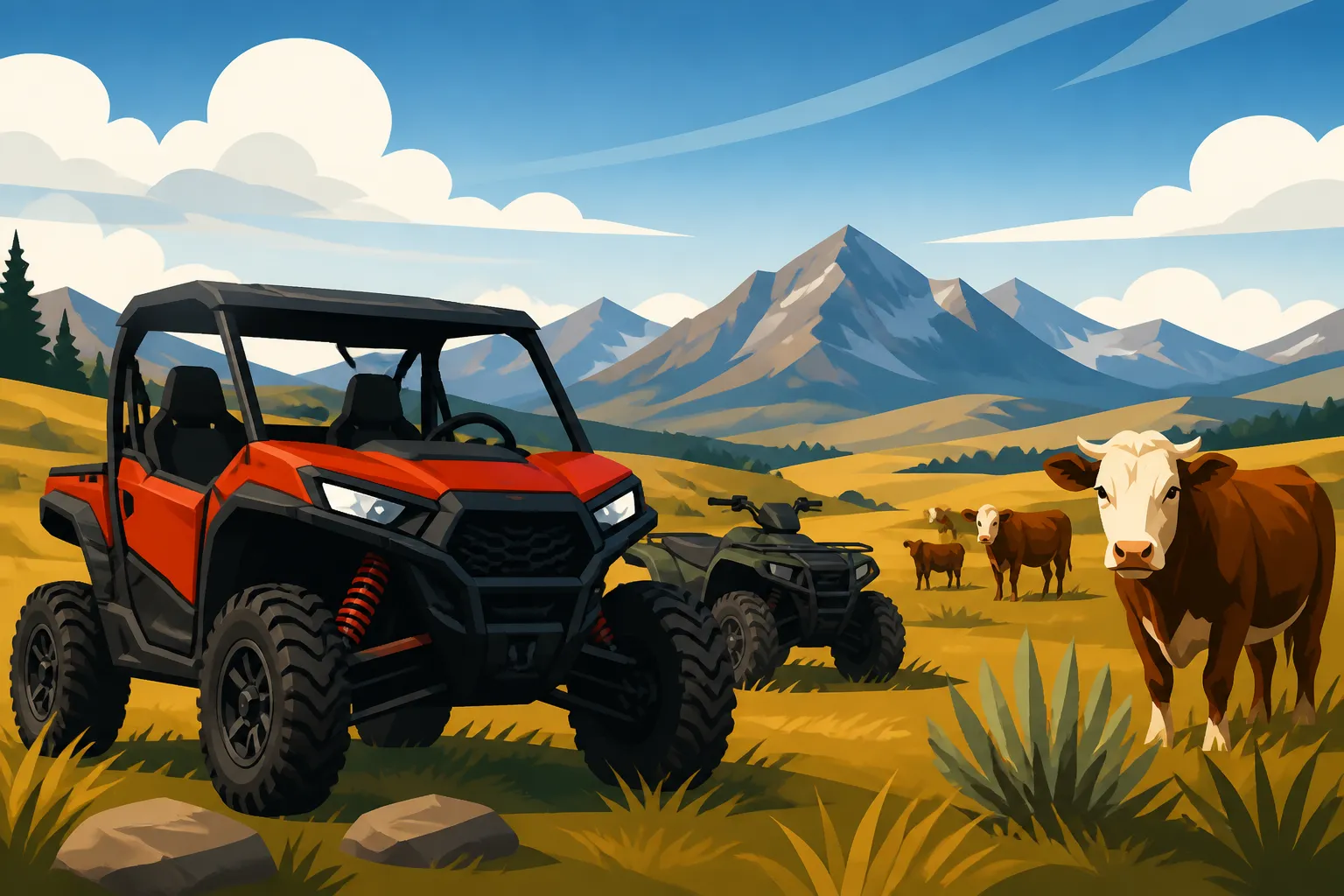
The concept of "open range" in Alberta can be a bit of a mystery for those who aren't familiar with rural land use. Essentially, open range means that livestock, typically cattle, are permitted to roam freely without being fenced in. This doesn't mean they can just wander anywhere; it means landowners or leaseholders are not required to fence them in. Instead, it's generally the responsibility of those who don't want livestock on their property to fence them out.
The Legal Framework of Open Range
Alberta's history is deeply intertwined with ranching, and the concept of open range is a holdover from those early days. While much of the land is now fenced, particularly private property, significant areas, especially Crown land under grazing leases, still operate under these principles. The Stray Animals Act in Alberta outlines the responsibilities of livestock owners and how stray animals are handled. It's important to remember that while cattle might seem to be "wandering," they are typically under the care of a specific individual or company. They aren't wild animals, and their presence on certain lands is entirely legitimate.
When you're riding your ATV or UTV, particularly if you're exploring areas outside of designated OHV parks, you need to be aware of the potential for encountering livestock. This is especially true in the foothills and eastern slopes regions, where vast tracts of Crown land are leased for grazing. These areas might not always be clearly marked as grazing leases, but the presence of cattle is a strong indicator. It's a different kind of "road rule" out here, one governed by respect for agriculture and the animals. Understanding [What the Traffic Safety Act Requires of Alberta OHVs] is your baseline, but then you layer on the unwritten rules of the range.
Grazing Leases and Your Access Rights
Many of the areas where you'll find cattle on open range are part of Crown land leased out for grazing. This can be confusing because Crown land generally implies public access. However, a grazing lease grants the leaseholder specific rights to use that land for agricultural purposes, primarily raising livestock. While the public generally retains access rights to Crown land, these rights come with the inherent responsibility to respect the leaseholder's operations and the livestock.
It’s crucial to understand that while you might have the right to ride on certain Crown land, that right isn't absolute and doesn't trump the leaseholder's agricultural use. This means being mindful of gates, fences, and of course, the cattle themselves. You can find more specific information on [Grazing Leases and Access], which often dictate how gates should be left – always as you found them! If you come across a closed gate, it's likely for a reason related to herd management or to keep livestock contained. Leaving a gate open that should be closed, or vice-versa, can cause significant problems for the rancher.
It’s a balancing act: enjoy the land, but be a good neighbour to those who make their living from it. This is why knowing the difference between [Crown Land as the Registration Trigger] for your machine and the actual access rules for that land is so important. Just because you can ride there doesn't mean you can ride any way you want. The livestock have precedence in these working landscapes.
Navigating Encounters with Cattle on Open Range
Riding responsibly on open range means being prepared for encounters with cattle and knowing how to behave to ensure safety for everyone involved, including the animals. These aren't obstacles to be overcome; they are part of the working landscape, and it's our job as riders to coexist respectfully.
Approaching and Passing Livestock Safely
The golden rule when you see cattle is to slow down, be predictable, and give them plenty of space. Cattle are creatures of habit and can be easily spooked by sudden noises or movements, especially from unfamiliar machines like ATVs and UTVs. A frightened herd can stampede, injure themselves, or even harm a rider.
Approach slowly, at a walking pace if necessary, and be prepared to stop. If the cattle are on the trail, try to guide your machine around them in a wide arc, maintaining a calm, steady presence. Avoid revving your engine, honking your horn, or making any sudden, loud noises. Sometimes, they'll simply move out of the way on their own. Other times, you might need to stop and wait patiently for them to clear the path. Remember, this isn't a race, and a few minutes' delay is a small price to pay for ensuring the well-being of the animals and your own safety. Riding on [Alberta Forestry Roads Worth Riding] or on a [Alberta Pipeline Right-of-Way] might seem like an open invitation for speed, but these areas can also traverse grazing lands.
Consider the time of year as well. Calving season in spring, for example, means cows will be particularly protective of their young. A cow with a calf might be more prone to defensive behaviour. Give these pairs an even wider berth. If you notice any cattle that appear agitated or distressed, it's best to back off and find an alternative route if possible. For machines that need to handle varied terrain and unexpected stops, ensuring your UTV or ATV is in top shape is key. Investing in reliable suspension components or heavy-duty winches, perhaps from a brand like SuperATV, can mean the difference between getting stuck and having to recover near nervous livestock, or navigating smoothly and minimizing disruption.
Minimizing Disturbance and Environmental Impact
Beyond direct interaction, responsible riding also means minimizing your overall impact on the grazing environment. The trails you ride are often critical access points for ranchers and part of the animals' foraging areas. Stick to established trails. Going off-trail can damage fragile vegetation, disrupt grazing patterns, and erode soil, which impacts the land's ability to support livestock. This is especially true near water sources, where sensitive riparian areas are often found.
Excessive noise is another factor. While the rumble of an ATV or UTV might be part of the adventure for you, it can be a significant stressor for livestock and local wildlife. Keep your machine in good working order, with a properly maintained exhaust system. Loud, modified exhausts are not only illegal on public lands in Alberta (where [What Counts as a Modified Exhaust on Public Land] is taken seriously), but they are also incredibly inconsiderate in areas where animals are trying to graze peacefully. A quiet machine shows respect for the environment and its inhabitants.
Think about water crossings, too. If you're crossing a creek or stream where cattle drink, do so carefully and cleanly. Avoid churning up mud or leaving behind any pollutants. These shared resources are vital for the health of the herd and the ecosystem. If you're riding through an area that also has [Alberta Random Camping Rules], be mindful that noise and disturbance carry far, affecting not just animals but other land users.
Addressing Issues and Reporting Concerns
Despite your best efforts, sometimes situations arise that require more than just careful riding. Knowing when and how to report issues, and understanding what to do in various scenarios, is part of being a responsible land user.
When to Report a Problem
There are several situations where you might need to report an issue related to cattle on the range.
- Injured or distressed livestock: If you come across an animal that appears to be injured, sick, or trapped, it’s important to report it. Do not attempt to help the animal yourself unless you are trained and it’s safe to do so. Approaching an injured animal can be dangerous for both you and the animal, potentially causing further stress or injury.
- Damaged fences or open gates: As mentioned, leaving [Gates on a Lease Road] open or finding fences that are down can be a huge problem for ranchers, leading to lost or wandering cattle. If you see damage, or a gate that is clearly left open inappropriately, report it.
- Aggressive animals: While rare, an animal might act aggressively, especially if it feels threatened or is protecting young. If you encounter an animal exhibiting aggressive behaviour, retreat slowly and safely, and report the incident.
- Irresponsible riders: If you witness other OHV users harassing cattle, driving recklessly through herds, or damaging property, it’s important to report them. Such behaviour gives all riders a bad name and can jeopardize access for everyone.
For reporting, you'll generally want to contact the local RCMP detachment (for serious issues like animal cruelty or reckless endangerment) or Alberta Environment and Parks (AEP) for issues related to Crown land and grazing leases. Local municipal district or county offices might also be able to direct you to the appropriate contact for specific areas. When reporting, provide as much detail as possible: location (GPS coordinates are excellent), time, description of the animal(s) or incident, and any other pertinent observations.
Avoiding Conflicts and Understanding Trespass
One of the best ways to avoid problems is to know where you're riding. While Crown land allows public access, private land does not, and [Trespass and Posted Land] rules apply vigorously. Sometimes, grazing leases can border or even integrate with private lands, making boundaries blurry. Always seek [Permission From an Alberta Landowner] if you are unsure about property lines or want to ride on private land. Respecting these boundaries is not just good etiquette; it's the law.
Remember that any damage caused by your machine or actions to a grazing leaseholder's operations, including stressing or injuring livestock, can have serious consequences. This could range from financial liability for damages to legal penalties under various provincial acts. Ensuring your machine is equipped for the terrain, with durable components, can help prevent breakdowns that might lead to accidental trespass or extended presence in sensitive areas. For instance, upgrading your machine's axles or control arms with heavy-duty options from a company like SuperATV can prevent costly failures in the backcountry.
Carrying proper documentation, including your OHV registration and proof of insurance, is always a good idea when riding on public land. An officer conducting [Alberta Officer Checks at a Staging Area] or on the trail might ask for it, and it proves you're a responsible operator.
Equipment and Preparedness for Range Riding
Riding in areas with open range means you need to be particularly well-prepared. These areas are often remote, with limited cell service and challenging terrain.
Machine Maintenance and Upgrades:
Before you head out, ensure your ATV or UTV is in top mechanical condition. Check your tires, brakes, fluids, and lights. A breakdown in a remote grazing area isn't just an inconvenience; it can be dangerous. Consider protective skid plates and a good winch. Having a reliable winch, perhaps a high-quality unit from SuperATV, can be a lifesaver if you get stuck in a muddy section near a watering hole. This not only gets you out of a jam but also minimizes the time you spend potentially disturbing grazing cattle. Remember, [Alberta Equipment Required on Public Land] goes beyond just the legal minimums when you're truly in the backcountry.
Safety Gear:
Always wear appropriate safety gear, including a CSA-approved helmet, eye protection, gloves, and sturdy footwear. Accidents can happen, and being properly protected is paramount. For a full rundown, refer to [Alberta ATV Helmet Law Explained].
Navigation Tools:
Carry a GPS device or a smartphone with offline maps. Knowing your precise location is crucial for both navigation and for reporting issues accurately. Many trail maps are available for download that can show public land use zones and potential lease areas.
Emergency Supplies:
Pack a first-aid kit, extra water, snacks, tools, a tire repair kit, and a communication device like a satellite messenger if you're venturing into areas without cell service. If you're going into bear country, which often overlaps with cattle grazing areas, carry bear spray and know how to use it.
Respectful Gear Choices:
When riding around livestock, think about visibility. While not always a "gear" item, your clothing choices can matter. Bright, contrasting colours can help you be seen by other riders and ranchers, but very flashy or flapping gear might startle animals if you get too close. The focus should be on steady, predictable movement rather than drawing undue attention. A robust windshield or durable fender flares, for example, could be considered enhancements from a brand like SuperATV that improve the longevity of your machine in dusty, open range environments, reducing maintenance needs that might delay your ride or require you to stop unexpectedly near cattle.
Being a good neighbour on Alberta's open range means balancing your enjoyment of the land with respect for the working landscape and the animals that call it home. Happy and responsible riding!
Disclaimer
This article is for general informational purposes only and does not constitute professional advice. Laws, prices and regulations vary by location and change over time. Consult a qualified professional for guidance on your specific situation.