Alberta Counties With OHV Bylaws
It's incredibly frustrating, isn't it, trying to figure out where you can legally ride your ATV or side-by-side in Alberta, especially when it comes to local roads and ditches? One county might seem completely open, while the next has rules so restrictive you feel like you need a law degree just to leave your driveway. This guide is all about cutting through that confusion, helping you understand why these differences exist, and giving you practical advice on how to navigate the patchwork of off-highway vehicle (OHV) bylaws across Alberta's many counties.
The Patchwork Quilt of Alberta OHV Laws
Navigating the rules for riding your ATV or UTV in Alberta can feel like trying to piece together a quilt made by a dozen different designers, each with their own idea of what looks good. Unlike some other provinces that might have a more uniform approach, Alberta gives a significant amount of power to individual municipalities – including counties, municipal districts, and even smaller towns and villages – to set their own rules regarding off-highway vehicle use on local roads. This means that what's perfectly acceptable in one area just a few kilometres down the road might land you a hefty fine in another. It's not designed to be difficult, but the sheer variety can certainly make it feel that way.
The provincial government, primarily through the Traffic Safety Act, lays down the foundational rules. Generally speaking, the Act prohibits OHVs from operating on provincial highways, which includes the paved surface, shoulders, and even the ditches alongside them. However, it also grants municipalities the authority to pass bylaws that allow OHV operation on roads under their jurisdiction, or even within those very ditches, under specific conditions. This legislative framework is why you can have such vastly different experiences when riding from one county to the next. It’s a system designed for local control, but it certainly puts the onus on the rider to do their homework.
Why Local Bylaws Matter So Much
The reason local bylaws are so crucial stems from the diverse nature of Alberta's landscapes and communities. A large, sparsely populated rural county with extensive agricultural operations and Crown land access might have very different needs and concerns than a smaller county bordering a major city, which could have more residential developments and environmental sensitivities. For instance, in a farming community, allowing farmers to use their quads on municipal roads to get from one field to another, or to access an outlying pasture, makes perfect sense and can be crucial for their livelihood. Farmers often have a practical need to use their machines for work, and counties generally recognize this in their bylaws, sometimes even with specific [Alberta Farmer-Owned Machines on Private Land] or exemptions for agricultural purposes.
Conversely, a county with a higher population density might prioritize public safety and noise reduction, leading to bylaws that restrict OHV use to specific designated trails or completely prohibit them from municipal roads. The goal is to balance the recreational and functional needs of OHV owners with the safety and quiet enjoyment of other residents. This often leads to highly localized decisions, meaning that while you might be able to ride your machine down a gravel road to a staging area in the County of Grande Prairie, you might face strict bans on even crossing a road in areas closer to the cities of Calgary or Edmonton. This variance can be a real headache for riders who simply want to explore different areas, adding an extra layer of planning to every trip.
The Challenge of Staying Informed
One of the biggest frustrations for riders is the dynamic nature of these bylaws. They aren't static; they can change with new council administrations, public feedback, or evolving community needs. What was permitted last year might be restricted this year, and vice versa. This constant flux means that relying on old information or hearsay from a friend's last trip isn't a reliable strategy. It's a bit like trying to hit a moving target when you're planning your ride.
For instance, a county might update its rules to introduce new restrictions on modified exhausts after receiving numerous noise complaints, or conversely, it might open up new sections of road to OHV traffic to support a burgeoning tourism industry. This places the burden squarely on the rider to stay current. Many riders recount stories of being pulled over for something that was legal just months prior, simply because they hadn't checked the latest updates. It’s not fair to expect everyone to check every county website every week, but the reality is that diligence is key to avoiding penalties. This is why resources that help you with [Alberta Bylaw Lookups Before You Ride] are so incredibly valuable.
Common Themes and Variations in County Bylaws
While the specifics of OHV bylaws can differ wildly from one county to the next, there are definitely some common themes and categories that tend to emerge. Understanding these general patterns can help you anticipate what kind of rules you might encounter, even before you dive into the nitty-gritty of a specific county's regulations. It's like knowing the general rules of a game before you learn all the special cards. These themes often reflect the underlying concerns of the county council – whether it's public safety, environmental protection, or supporting local industry.
Many bylaws are a response to specific local conditions or complaints. For example, a rash of accidents involving OHVs on municipal roads might lead to stricter speed limits or age restrictions. Conversely, a push from local businesses to encourage OHV tourism might result in bylaws that designate certain routes as legal for off-highway vehicles. It's always a balancing act, and these bylaws are the result of those ongoing discussions within the community.
What Bylaws Often Permit
When counties do permit OHVs on their roads, it’s usually under a specific set of circumstances designed to control usage and ensure safety. Often, these permissions are granted for access purposes – to allow riders to get to designated [Alberta OHV Trails: Riding Public Land], to reach their private property, or to conduct agricultural work. You might find bylaws that allow OHVs on gravel roads but prohibit them on paved surfaces, or only permit crossing a paved highway at a designated intersection. Many bylaws specify that OHVs are allowed only during daylight hours, or within certain speed limits lower than the posted limit for other vehicles.
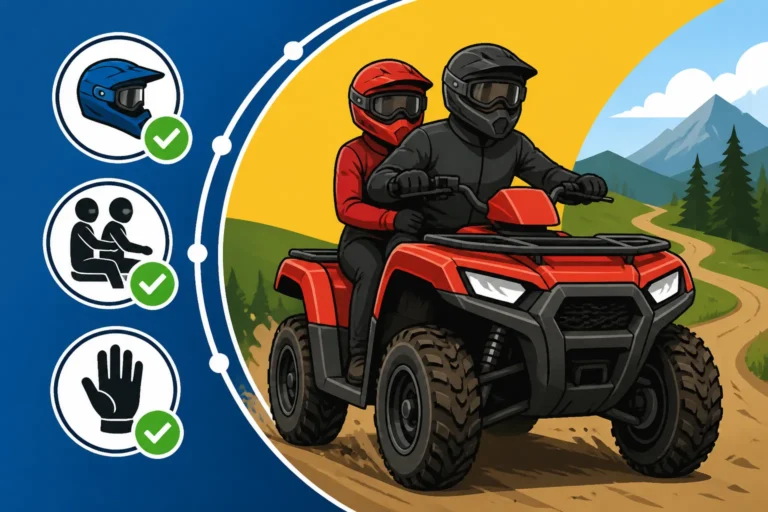
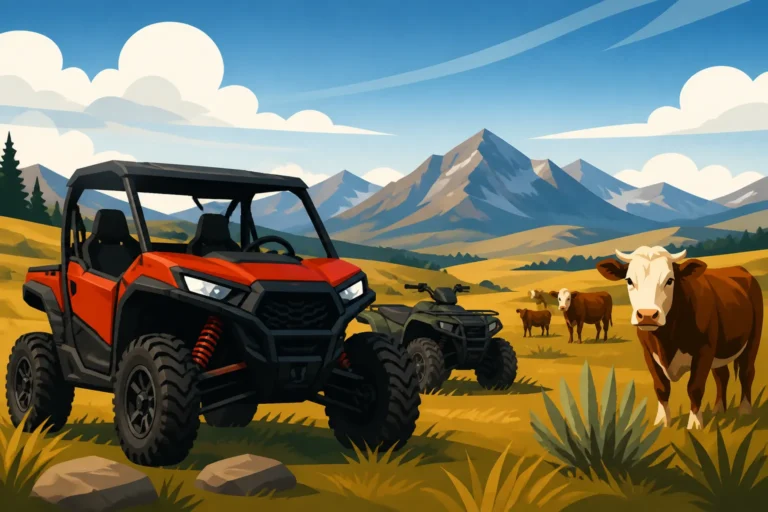
For example, many counties recognize the importance of allowing machines for agricultural use, such as herding cattle or checking fences, so long as the machine is registered and insured. Some bylaws might even explicitly allow OHVs on specific low-traffic roads to connect communities or provide access to remote areas, often with conditions like maximum speed, proper lighting, and wearing a helmet. [Alberta Helmet Law on Public Land] is a provincial rule, but specific county bylaws might reiterate or even expand on safety requirements. Furthermore, any machine operating on public land or a municipal road must be properly equipped. This often means having working head and tail lights, a functional brake light, and a spark arrestor. Many riders turn to aftermarket options from companies like SuperATV for reliable, high-performance lighting that ensures they meet these requirements and can ride safely, whether it's for work or recreation.
What Bylaws Often Prohibit
On the flip side, there are consistent prohibitions you'll find in most county bylaws regarding OHVs. The most common restriction is a ban on riding within the boundaries of hamlets, villages, or towns located within the county. These areas often have higher pedestrian traffic, closer residential dwellings, and a greater need for quiet enjoyment, making OHV use disruptive and potentially dangerous. You’ll rarely find a bylaw that permits joyriding through a residential subdivision. Speed limits are also a common area for prohibition; even on roads where OHVs are allowed, their speed might be capped significantly lower than for cars.
Another frequent prohibition concerns modified exhausts. Loud machines can be a major source of noise complaints, particularly in areas where residences are close to riding zones. Many bylaws explicitly state that OHVs must have a factory-standard muffler or one that meets specific sound level requirements. If your machine is roaring through a quiet area, it's not just annoying; it could be illegal. [Why a Modified Muffler Can Cost You a Ticket] is a very real concern for many riders. Riding on private land without explicit permission from the landowner is almost universally prohibited and falls under trespass laws, regardless of county bylaws. It's always crucial to obtain permission before entering someone else's property, and respecting those boundaries helps maintain good relationships between riders and landowners.
Spotlight on Specific Alberta Counties
Let’s dive into some hypothetical examples of how different types of Alberta counties might approach OHV bylaws. Remember, these are generalizations to illustrate common approaches, and the actual bylaws for any given county should always be checked directly. The province is vast and varied, and so are the local rules that govern how we interact with the land and our machines. Understanding these general approaches can give you a better framework for predicting what kind of rules you might encounter in different parts of Alberta.
Rural Counties and Access Needs
Many of Alberta's larger, more rural counties, especially those with significant agricultural activity or extensive access to Crown land, often adopt bylaws that are more accommodating to OHV use. Their residents frequently rely on these machines for work, land management, or accessing remote recreational areas like hunting grounds or fishing spots. For these communities, restricting OHVs too heavily would hinder local economies and lifestyles.
For example, a county like Brazeau County or the County of Wetaskiwin might have bylaws that permit OHVs on undeveloped municipal roads (often gravel or dirt) for the purpose of accessing agricultural land, or for travelling directly to designated [Alberta OHV Camping and Staging Areas]. These bylaws might specify that machines must be registered, insured, and operated by a licensed driver, and often include speed restrictions. In such regions, you might also find that the county has a vested interest in maintaining trail access, sometimes even collaborating with local OHV clubs. For those who frequently navigate rugged agricultural or remote terrain, having durable parts and accessories from a brand like SuperATV, such as heavy-duty axles or lift kits, can be essential for both performance and compliance with any local requirements for safe operation on designated routes. You can often find specific details for these areas by looking up [County of Wetaskiwin's OHV Bylaws in Alberta] or [Brazeau County's OHV Rules in Alberta].
Counties with Mixed or Restricted Access
In contrast, counties that are closer to major urban centres, or those with unique environmental sensitivities, often have more restrictive OHV bylaws. These areas typically experience higher traffic volumes, greater population densities, and a stronger focus on preserving natural habitats or maintaining quiet residential environments. The balance between recreational use and community impact shifts considerably in these settings.
Consider a county that encompasses both rural agricultural areas and popular recreational lakes or parklands. Their bylaws might be a complex blend: perhaps permitting OHV use on agricultural roads in one part of the county but completely prohibiting it in areas near campgrounds, provincial parks, or densely populated lakeshore communities. They might have very specific rules about where OHVs can be unloaded and staged, and strict penalties for straying off designated routes. Places like the Municipal District of Wood Buffalo or the MD of Lesser Slave River, with their diverse landscapes ranging from industrial sites to pristine wilderness, might have highly localized bylaws to manage these different zones. Riders heading to these areas should be particularly diligent in checking specific zone maps and bylaws. [Wood Buffalo's OHV Rules in Alberta] and [Lesser Slave River's OHV Rules in Alberta] would be essential reading before planning a trip to those regions. The general takeaway here is that the closer you get to people, the more rules you're likely to encounter.
How to Research Bylaws Before You Ride
The absolute best way to avoid a ticket, or worse, a collision, is to do your homework before you even load your machine onto the trailer. Relying on outdated information or making assumptions about local rules is a recipe for trouble. It's not about being a killjoy; it's about being a responsible rider and respecting the communities you're passing through. Imagine showing up to a new riding area only to find out you can't ride the roads you planned, or that you're missing a key piece of equipment required by local rules. It's a frustrating situation that's completely avoidable with a little proactive research.
This isn't just about legality; it's also about safety and etiquette. Many bylaws are designed with safety in mind, and adhering to them helps protect you and others. Furthermore, demonstrating respect for local rules helps to foster positive relationships between OHV riders and the wider community, which is crucial for maintaining and expanding access in the long run.
Your Pre-Ride Checklist
Before you head out, arm yourself with information. Your first stop should always be the official website of the specific county or municipal district you plan to visit or pass through. Look for sections on "Bylaws," "Off-Highway Vehicles," or "Traffic." Many municipalities will have a dedicated bylaw outlining OHV regulations. Don't be shy about contacting the county's administrative office directly if you can't find clear information online; a quick phone call can save you a lot of grief. They are usually happy to clarify their rules for visitors.
Beyond simply reading the text, try to find official maps that designate where OHV use is permitted or restricted. Some counties, especially those with popular recreational areas, provide these kinds of detailed maps. Websites like Alberta Parks or Alberta Environment and Protected Areas might also have information regarding OHV use on Crown land within certain regions that fall under county jurisdiction. Utilizing resources that help you [Finding a County Map of Roads Open to OHVs] is incredibly helpful for planning. It's a bit like mapping out your route for a road trip, but with more legal considerations.
Essential Documents and Equipment
No matter where you ride in Alberta, there are a few non-negotiables you should always have with you. First and foremost, ensure your OHV is properly registered with the province and that you have proof of this registration readily available. On top of that, you absolutely must carry proof of valid insurance. This isn't just a good idea; it's a legal requirement for riding on public land, and many county bylaws will explicitly require it for use on municipal roads. Remember, [Alberta Requires Insurance on Public Land], and a quick check by an officer might involve asking for [Alberta Proof of Insurance on Demand].
Beyond the paperwork, make sure your machine meets all provincial and any specific county equipment requirements. This includes having a properly mounted license plate that is clearly visible – consider how [Alberta Plate Placement on a Machine] can affect visibility. Your headlights, tail lights, and brake lights must all be in good working order. If you've modified your machine, double-check that any aftermarket parts, like a loud exhaust, comply with local noise regulations. For those looking to upgrade their machines to ensure compliance and enhance safety, companies like SuperATV offer a range of products, from brighter, more durable LED lights to robust protection components, that can help you meet these requirements and confidently tackle any terrain.
The table below provides a hypothetical overview of how different types of Alberta counties might approach OHV bylaws. Please remember this is for illustrative purposes only, and actual bylaws for any specific county must be consulted directly.
| Bylaw Category | Rural/Agricultural County (e.g., Brazeau) | Mixed Use County (e.g., Wetaskiwin) | Urban-Adjacent/Sensitive County (e.g., Near Calgary) |
|---|---|---|---|
| Road Access | Often permitted on gravel/dirt roads for access/work. | Limited access on specific roads, often for access only. | Generally prohibited on all municipal roads. |
| Speed Limits | Reduced speed limits (e.g., 40 km/h) on permitted roads. | Strict reduced speed limits (e.g., 30 km/h). | N/A (prohibited on roads). |
| Time of Day | Daylight hours only. | Daylight hours only. | N/A (prohibited on roads). |
| Agricultural Use | Exemptions or specific allowances for farm operations. | Specific allowances for farm operations in rural zones. | Very limited or no specific allowances. |
| Access to Trails | May allow direct road access to designated trails. | May allow limited road access to specific staging areas. | Typically requires trailering to designated OHV areas. |
| Residential Areas | Generally prohibited within hamlets/villages. | Strictly prohibited within hamlets/villages. | Strictly prohibited in all residential areas. |
| Equipment Req. | Standard provincial (lights, spark arrestor, etc.). | Standard provincial, potential for stricter noise rules. | Standard provincial (if applicable on private land). |
| Noise Levels | Generally enforced to provincial standards. | Often stricter enforcement due to proximity to homes. | Strict enforcement (if applicable). |
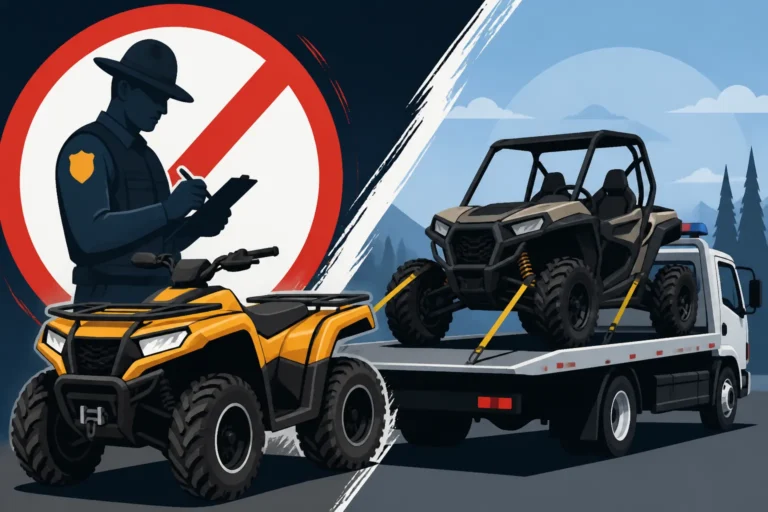
| Penalties | Fines for non-compliance. | Fines and potential vehicle impoundment. | Higher fines, vehicle impoundment, trespass charges. |
Disclaimer
This article is for general informational purposes only and does not constitute professional advice. Laws, prices and regulations vary by location and change over time. Consult a qualified professional for guidance on your specific situation.