Active Well Sites and Access
It's an all-too-common scenario for Alberta OHV riders: you're out exploring some beautiful Crown land, following a cutline or a lease road that seems to lead to nowhere, when suddenly you find yourself face-to-face with an active well site. That moment of uncertainty – "Can I ride here? Should I turn back? What happens if I keep going?" – is a real frustration. This guide is here to demystify what active well sites mean for your ATV or UTV access on Alberta's public lands, and how to navigate these areas safely and legally.
Understanding Active Well Sites on Public Land
Alberta's landscape is a mosaic of natural beauty, agricultural lands, and industrial operations, particularly in our resource-rich areas. For off-highway vehicle (OHV) enthusiasts, this means occasionally encountering infrastructure related to the oil and gas industry, including active well sites. It's crucial for every rider to understand what these sites are and why they typically come with restricted access.
What Constitutes an "Active Well Site"?
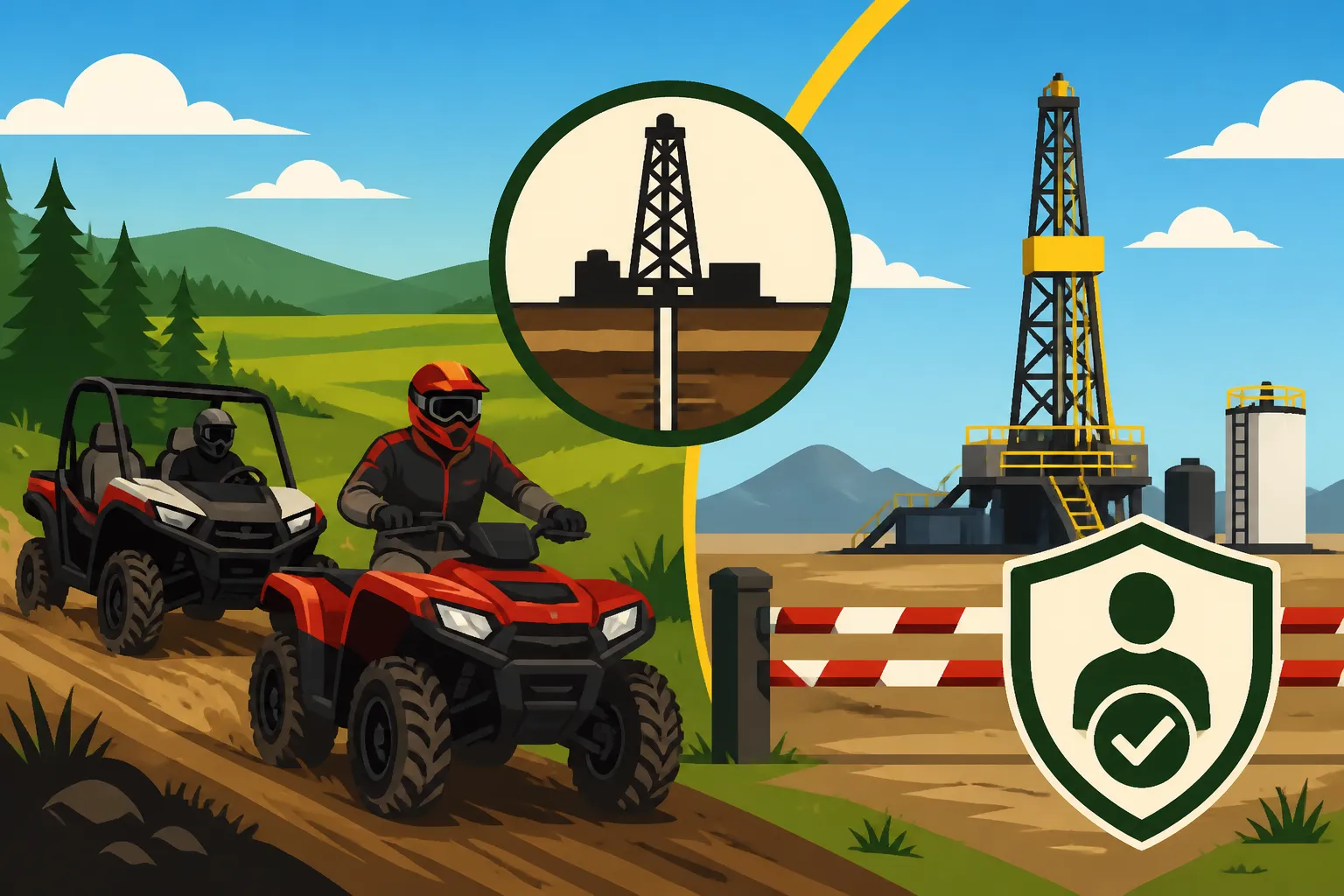
When we talk about an "active well site," it's more than just a pumpjack silently drawing oil from the ground, or a flare stack burning off excess gas. It encompasses the entire footprint of the operation: the wellhead itself, often surrounded by a fence, but also the access roads (commonly called lease roads), storage tanks, processing equipment, pipelines, and any associated buildings or temporary structures. These are dynamic environments where machinery might be operating, trucks could be moving, and personnel might be working at any time of day or night. It's a busy, active industrial zone, even if it looks quiet when you happen upon it. Think about the entire area around the well pad, not just the visible hardware. Even dormant or temporarily shut-in wells can still be considered active sites if they are maintained and awaiting future operations.
The "Why" Behind Restricted Access
The primary reasons for restricted access to active well sites are multi-faceted, revolving around safety, environmental protection, and operational integrity. First and foremost, safety is paramount. Heavy equipment, hazardous materials, and complex processes are all part of daily operations on these sites. An OHV rider, no matter how experienced, could inadvertently enter a dangerous situation – think about potential for spills, gas leaks, or collisions with industrial vehicles that aren't expecting recreational traffic. These are working zones, not recreational trails.
Secondly, there's the environmental aspect. These sites are often designed with specific containment measures and environmental protocols to prevent contamination. Unauthorized vehicles could disturb sensitive areas, damage vegetation, or interfere with reclamation efforts. Lastly, allowing uncontrolled public access creates liability risks for the operating companies and can disrupt their work. They have strict regulations to follow, and unexpected recreational traffic can compromise their ability to comply, potentially leading to costly delays or accidents.
Legal Frameworks Governing Access
In Alberta, access to public lands, including areas with industrial operations, is largely governed by the Public Lands Act. This Act outlines the rights and responsibilities of both land users and those with dispositions (like a well license or lease) for industrial use. Generally, a disposition grants the holder exclusive or preferential use of that land for their approved activities. For OHV riders, this means that while many lease roads might look like public access, they are often on land under a disposition, and therefore require explicit permission to enter or cross.
Without that permission, entering such an area, even unknowingly, can constitute trespass. [Alberta Trespass Law for Riders] makes it clear that being on private land without permission can lead to fines. While many well sites are on Crown land, the area leased for the well site essentially functions like private property for the duration of the lease. The Traffic Safety Act also plays a role, especially if your riding could be seen as reckless or dangerous near operational areas. It's not just about what's physically possible, but what's legally permissible.
Navigating Access Rules for OHV Riders
Riding an ATV or UTV in Alberta offers incredible freedom, but that freedom comes with the responsibility to understand and respect land access rules. When it comes to active well sites, this means knowing how to approach, or avoid, these areas legally.
The General Rule: No Unauthorized Access
Let's cut right to it: the general, iron-clad rule for active well sites is no unauthorized access. Unless you have explicit permission from the company operating the well, you should not be on their lease road, nor should you be attempting to cross their site. These aren't just suggestions; they're critical safety and legal boundaries. Many sites will have clear signage stating "No Trespassing," "Authorized Personnel Only," or other similar warnings. Even if there's no visible sign, the presence of a wellhead, tanks, or active equipment should be your cue to turn around.
It's common for riders to think that if a gate is open, or if there's no physical barrier, it means access is allowed. This is a dangerous assumption. Gates are often left open for operational access, not public recreation. Always assume that a well site, and its immediate access roads, are private industrial zones, even if they're situated on land that otherwise feels like open wilderness.
How to Seek Permission to Cross
Sometimes, a well site or its lease road might be the most direct route to another section of public land, or it might create a barrier to completing a loop you've planned. In such cases, your best (and only legal) option is to seek permission. But who do you ask? You'll need to identify the operating company of the well site. This information is often available on signage at the site itself, or sometimes through public land disposition maps. Once you know the company, contact their main office and ask to speak with their land access or community relations department.
Be prepared to provide details: your intended route, the date and time you plan to be there, and what kind of machine you're riding. Understand that permission is rarely granted for general recreational passage, due to the safety and liability concerns we discussed earlier. It might be possible for specific, non-disruptive crossings, but don't expect it to be a regular occurrence. In most cases, they'll simply advise you to find an alternative route. It's a long shot, but it's the only legitimate way to potentially gain access. Just like you'd get [Permission From an Alberta Landowner] to ride private property, you need similar approval for industrial leases.
Consequences of Trespassing on Well Sites
Ignoring "No Trespassing" signs or knowingly entering an active well site without permission can lead to a host of unpleasant consequences. First, you could face significant fines under the Public Lands Act for unauthorized entry. These aren't just minor tickets; they can be substantial. Beyond fines, there's the very real possibility of your OHV being seized. Law enforcement, or even company security, can detain you and arrange for your machine to be impounded. This means not only a headache but also impound fees and retrieval costs. [Alberta Penalties for Riding Unregistered] are bad enough, but trespassing adds another layer of legal trouble.
In some cases, especially if your presence causes a disruption to operations or creates a safety hazard, you could face more severe legal action or civil claims from the operating company. Imagine if your riding accidentally damaged a sensitive piece of equipment or interfered with a critical operation. The financial implications could be massive. Moreover, there's the inherent danger to yourself. You could be injured by moving equipment, fall into an unmarked trench, or be exposed to hazardous materials. It's simply not worth the risk.
Practical Tips for Riding Near Well Sites
Navigating Alberta's diverse landscapes safely and respectfully means being prepared for encounters with industrial infrastructure. While avoiding active well sites is the golden rule, knowing how to identify them and what to do when you're nearby can prevent problems.
Identifying Well Sites Before You Ride
Prevention is always better than a cure, especially when it comes to avoiding legal and safety issues around well sites. Before you head out on your adventure, take some time to plan your route using up-to-date maps. Online resources, including provincial land use maps or apps like Avenza, often mark industrial dispositions and lease roads. These can give you a heads-up about where you're likely to encounter oil and gas operations. [Alberta OHV Trail Maps Worth Downloading] can be invaluable here, as they often highlight approved trails separate from industrial areas.
While riding, keep your eyes peeled for visual cues. Beyond the obvious pumpjacks or flare stacks, look for gravel roads that seem newer or more maintained than typical backcountry trails, often leading to fenced-off areas. You'll also see signage – sometimes small, sometimes large – indicating lease names, operating companies, and "No Trespassing" warnings. Even without a sign, the presence of culverts, pipeline markers, or power lines leading into the wilderness can signal industrial activity. If you're unsure, err on the side of caution and choose a different path.
Respecting Industry Operations and Personnel
If you do find yourself riding close to an active well site, even if you're on a legal route, maintaining a respectful distance and exercising caution is paramount. Remember, these are workplaces. You might encounter industrial vehicles – large trucks, pickups, or specialized equipment – that are not expecting recreational traffic. Always yield the right-of-way to these vehicles. They might be operating on tight schedules or moving heavy loads, and sudden encounters can be dangerous for everyone involved.
Avoid making unnecessary noise that could disrupt workers or operations. Give any personnel you see plenty of space, and if they signal you to stop or turn around, comply immediately and respectfully. They are there to do a job, often in potentially hazardous conditions, and your cooperation helps ensure everyone's safety. Think of it as common courtesy: you wouldn't want someone disrupting your workplace, so extend the same consideration.
Gear and Machine Considerations for Industrial Areas
While you generally want to avoid well sites, if your ride takes you into areas where industrial activity is present, having the right gear and machine setup can enhance safety and prevent potential issues. For instance, good tires that can handle varied terrain, from muddy tracks to gravel lease roads, are a must. A reputable brand like SuperATV offers a wide range of tires and accessories, including heavy-duty skid plates and a-arm guards, that can protect your machine from unforeseen obstacles common in industrial zones, such as discarded materials or rougher road conditions. While these upgrades are fantastic for general tough riding, they don't give you a pass to trespass; they simply ensure your machine is robust enough for the demands of the Alberta backcountry.
Always ensure your machine is well-maintained, especially its lights and brakes, as you might need to stop suddenly or navigate in less-than-ideal visibility if industrial dust is present. Brightly coloured riding gear and a working horn can also increase your visibility to industrial traffic. Finally, always carry a communication device, like a satellite messenger, especially in remote areas where cell service is non-existent, should you encounter an emergency or need to contact someone for directions.
Alternative Riding Options and Designated Zones
Given the complexities and restrictions around active well sites, it's often far simpler and more enjoyable to focus your riding on areas explicitly designated for OHV recreation. Alberta boasts a fantastic network of trails and public lands where you can truly let loose without worrying about industrial interference.
Exploring Public Land Use Zones (PLUZ)
Alberta's Public Land Use Zones (PLUZ) are specifically managed areas on Crown land that balance various uses, including recreation, forestry, and energy development. Many PLUZs have designated OHV trail networks, providing miles of legal and maintained riding opportunities. Places like McLean Creek, Ghost PLUZ, and parts of the Eastern Slopes are well-known havens for ATV and UTV riders. These zones often have staging areas, clear signage, and maps indicating where you can and cannot ride.
By sticking to these designated trails within a PLUZ, you not only ensure you're riding legally but also help to minimize environmental impact and reduce conflicts with other land users or industrial operations. Before heading out, always check the specific rules for the PLUZ you plan to visit, as they can vary. [Alberta Public Land Use Zones Explained] is an excellent resource to understand these areas more deeply. Many PLUZs even have maps available for download to your phone, showing exactly where the approved trails are.
Utilizing Forestry Trunk Roads and Cutlines
Forestry Trunk Roads (FTRs) and many cutlines are another common feature of Alberta's landscape that OHV riders often encounter. FTRs are generally public roads, though they are often unpaved and see heavy industrial traffic from logging, oil and gas, and recreation. You can typically ride your OHV on these roads in many areas, but you must adhere to all traffic laws, including speed limits, and be acutely aware of large trucks. Always check local bylaws, as some counties might have specific restrictions on OHV use on FTRs.
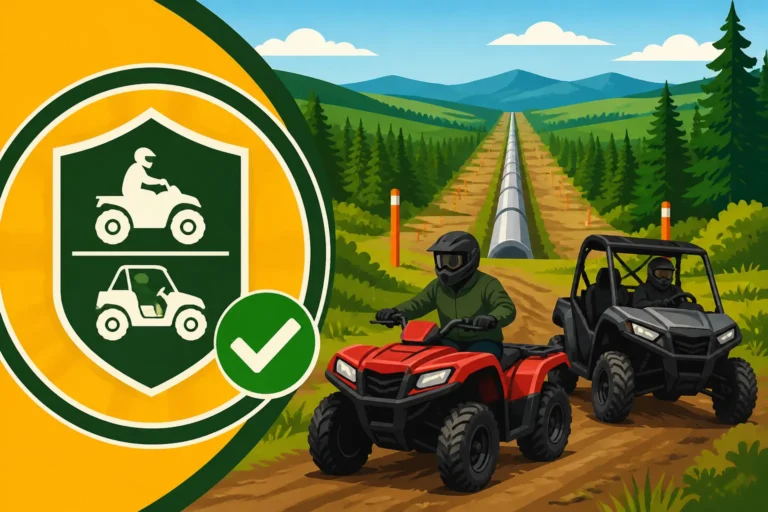
Cutlines, on the other hand, are linear clearings through forests, often created for seismic exploration or to delineate pipeline routes. While many cutlines are open for OHV use, some might lead directly to active well sites or cross land that is under a private disposition. Use caution and discretion. If a cutline looks like it's becoming an active industrial access route or is signed for restricted access, turn back. Think of it like this: a cutline is a path, but not always a designated trail. Always remember that [Alberta Rules for Riding a Cutline] might mean you need to be extra vigilant about where it leads.
Private Land Access: The Golden Rule
Just like with well sites, accessing any private land with your ATV or UTV always requires explicit permission from the landowner. This might seem obvious, but it's a rule that's too often overlooked. Riding on someone's fields, pastures, or forested property without their consent is trespassing and can lead to serious legal consequences and erode goodwill between riders and landowners.
If you know a specific landowner and want to ride their property, take the time to contact them personally. Explain what you want to do, and respect their decision. A simple phone call or conversation can save a lot of headaches and help build positive relationships. Many farmers and ranchers use OHVs extensively for their work, and they appreciate other riders respecting their property. [Permission From an Alberta Landowner] is a topic we've covered before, and it always comes down to simple courtesy and respect.
Do's and Don'ts Around Alberta Well Sites
Understanding how to act around active well sites is crucial for any responsible OHV rider in Alberta. Here's a quick summary of key actions.
| DO | DON'T |
|---|---|
| DO plan your route using maps. | DON'T assume an open gate means access. |
| DO look for "No Trespassing" signs. | DON'T ride on active lease roads. |
| DO yield to all industrial traffic. | DON'T disrupt workers or operations. |
| DO turn around if you're unsure. | DON'T take shortcuts through well sites. |
| DO seek explicit permission (rarely granted). | DON'T ignore official instructions from personnel. |
| DO stick to designated OHV trails. | DON'T risk legal penalties or injury. |
Remember, the goal is to enjoy your ride while respecting the land, its uses, and its owners. Choosing to ride in designated areas or obtaining proper permission ensures a safe, legal, and stress-free experience for everyone.
Disclaimer
This article is for general informational purposes only and does not constitute professional advice. Laws, prices and regulations vary by location and change over time. Consult a qualified professional for guidance on your specific situation.