Being Towed Behind a Machine
Getting stuck out on an Alberta trail is a frustrating, often embarrassing, experience that every off-highway vehicle (OHV) rider faces sooner or later. Whether your machine has bogged down in a bottomless mud hole, snapped a tie rod on a rocky climb, or simply decided to quit running kilometres from the nearest road, the reality is you're going to need a tow. But being pulled behind another machine isn't as simple as just hooking up a rope; there are legalities, safety concerns, and best practices you absolutely need to understand to ensure everyone gets home safely and without a ticket.
Understanding the Legality of Being Towed in Alberta
When your pride and joy breaks down far from the staging area, the first instinct is often to just get it moving, whatever it takes. But hold on a minute! Alberta's rules around off-highway vehicles, including what you can and cannot do on public land, are surprisingly detailed, and that includes how you can be towed or tow another machine. It’s not just about common sense; it’s about understanding the specific regulations to avoid fines and ensure everyone's safety.
What the Traffic Safety Act Says (and Doesn't Say)
The Traffic Safety Act is the big umbrella legislation in Alberta that governs vehicles, and while much of it focuses on paved roads and highways, its definitions often extend to off-highway vehicles, especially when they might interact with public roadways or ditches. When it comes to being towed, the Act doesn't explicitly lay out a detailed "how-to" guide for OHVs. However, it does define what constitutes a "vehicle" and what actions are considered "operating" that vehicle.
For instance, if your OHV is being towed, is it still considered "operated"? Generally, if it's under its own power or being steered and braked by someone, it's still treated as being operated. If it's merely a dead weight being dragged, the rules might shift. The lack of explicit rules for towing an OHV often means you fall back on general safety principles and the specific OHV Regulations. The most crucial takeaway here is that even when being towed, you or your machine could still be subject to rules about registration, insurance, and equipment, especially if you venture near a designated "highway" (which in Alberta's legal definition often includes ditches, shoulders, and even some public trails). Always consider what [What the Traffic Safety Act Requires of Alberta OHVs] implies.
Interpreting Off-Highway Vehicle Regulations for Towing
While the Traffic Safety Act provides the overarching framework, the specific details for OHVs come from the Off-Highway Vehicle Regulation (319/2002). This regulation outlines requirements for things like lights, spark arrestors, and general safe operation on public land. Again, direct instructions for "being towed" are not extensive, but the spirit of the regulation emphasizes safety and preventing damage to the environment and other users.
What does this mean for a broken-down quad? It means that if your machine is being towed, it should ideally still meet basic safety requirements where possible. For example, if you're being towed at dusk or night, do your tail lights need to be working? While the engine might be dead, if a battery-powered light could be affixed, it would certainly improve safety and demonstrate due diligence. Similarly, the person being towed should still be wearing an approved helmet if on public land, as they are still "on" an OHV. [Off-Highway Vehicle Regulation 319/2002] is a good resource to review. The key is to exercise extreme caution and consider what an enforcement officer would deem "safe" and "responsible" in the absence of explicit towing instructions.
When Towing is Strictly Prohibited
There aren't many situations where the act of towing an OHV itself is outright prohibited, assuming it's done safely and on appropriate land. However, there are scenarios where the reason for the tow or the state of the towed machine could lead to issues. For example, you cannot be towed if your machine is unregistered and uninsured on public land. Even if it's dead, it's still subject to those rules. An officer could still issue a ticket for [Alberta Penalties for Riding Unregistered] or [Alberta Vehicle Seizure for No Insurance].
Another prohibited scenario is if the towing or towed machine poses an undue risk to public safety. Imagine trying to tow a heavily damaged quad with sharp, protruding parts that could injure someone, or if the towing machine isn't powerful enough and struggles to maintain control. Such actions, while not explicitly illegal as "towing," could be deemed reckless or dangerous operation, leading to fines or orders to cease. Additionally, attempting to tow an OHV across a road or in a ditch where OHVs are generally prohibited might be an issue. Always check local bylaws for specific rules about [Can You Ride an ATV on the Road in Alberta?] or [Alberta Rules for Riding a Ditch] as these can dictate where towing is permissible.
Safety First: Mitigating Risks When You're Being Towed
Being towed is often a last resort, but it carries its own set of risks. It's not just about getting the machine moving; it's about doing so without causing further damage, injury, or frustration. A poorly executed tow can turn a minor breakdown into a major incident. Empathy is key here: both the person doing the towing and the person being towed need to be on the same page, acting as a synchronized team to navigate the trail safely.
Communicating with Your Towing Partner
This is probably the most critical aspect of safe towing, yet it's often overlooked in the urgency of the moment. Imagine you're stuck deep in a muddy rut, your buddy has thrown you a tow rope, and then they just gun it without warning. That's a recipe for disaster! Clear, concise, and constant communication between the towing machine operator and the person being towed is paramount.
Before starting, establish a set of hand signals. A thumbs-up for "ready," a flat hand waved up and down for "stop," and perhaps a circular motion for "slowly come forward." If you have two-way radios, even simple walkie-talkies, they are invaluable. If not, make sure you can see each other at all times, especially the person in front. The towing operator needs to know if the towed machine is struggling, if the rope is getting snagged, or if they need to slow down for an obstacle. The person being towed needs to signal if they are losing control, need a break, or if the tow rope is about to fail. This shared understanding prevents sudden jerks, potential rollovers, and keeps the whole process smooth and controlled.
Maintaining Control of the Towed Machine
Just because your engine is off doesn't mean you're a passive passenger. The person being towed has a vital role in maintaining control of their machine. This means steering, and if the brakes are still functional, using them judiciously. If your machine's steering is locked or severely damaged, or the brakes are out, then towing becomes significantly more dangerous and might require a different approach, like using a solid tow bar rather than a flexible rope.
When using a rope or strap, always try to keep it taut. A slack rope can suddenly yank tight, causing whiplash, frame damage, or throwing the rider forward. This requires the person being towed to constantly apply light brake pressure, or even gentle throttle if the machine can still move under its own power, to keep tension. You're essentially being guided, not dragged. Navigate obstacles by steering around them in sync with the towing machine. If you're on a multi-day trip, perhaps through [McLean Creek: Alberta's Best Known OHV Area], being towed can be a long journey, so maintaining focus is crucial.
Avoiding Common Towing Accidents
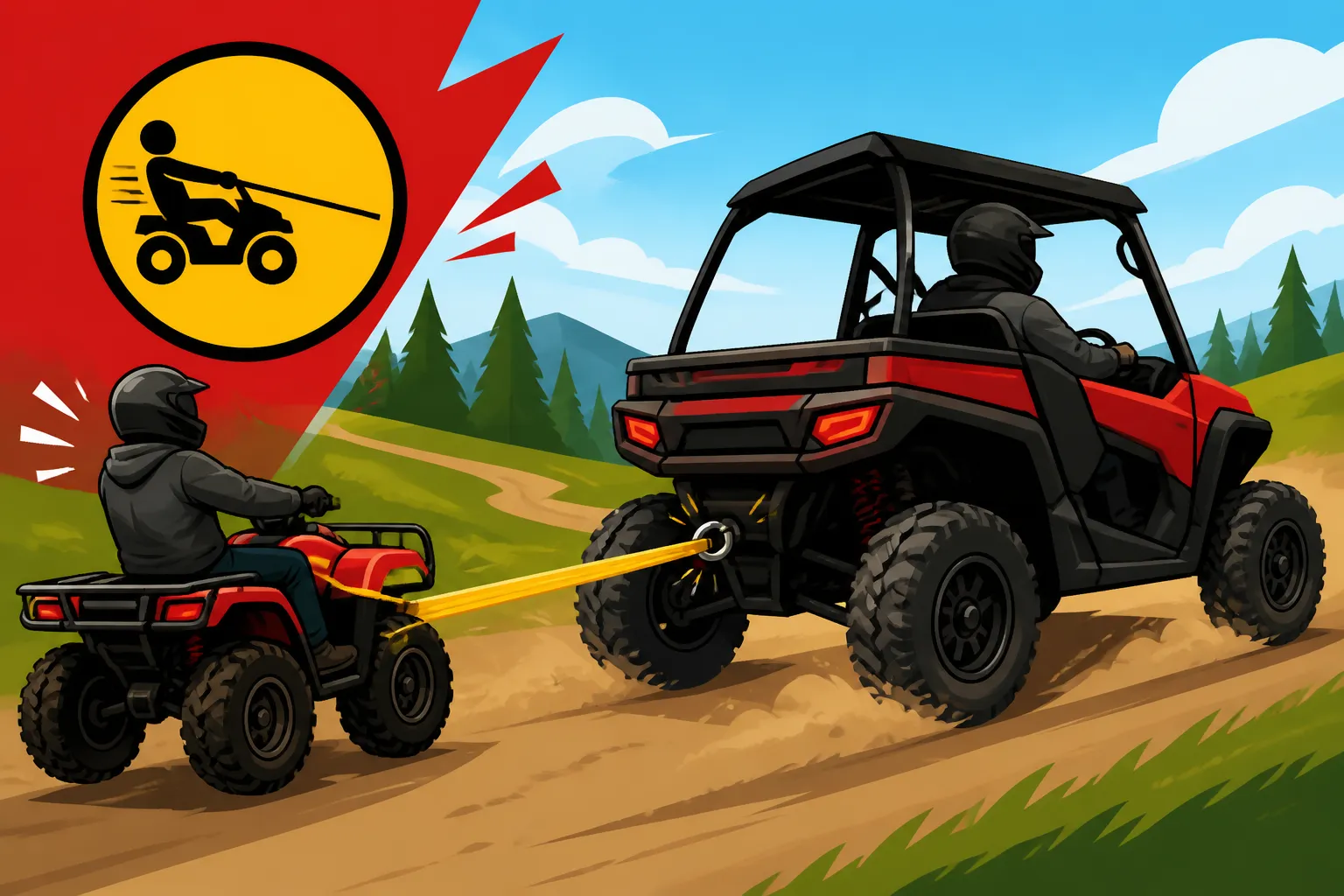
Many towing accidents are preventable. One of the most common issues is using an inadequate tow rope or strap that snaps under load. This isn't just an inconvenience; a snapping rope can whip back with incredible force, causing serious injury. Another common mistake is attempting to tow a machine that is simply too heavy or too deeply stuck for the towing vehicle's capacity. Trying to pull a full-size side-by-side out of a deep mud bog with a 300cc quad is asking for trouble for both machines and riders.
Improper attachment points are another huge hazard. Never attach a tow rope to suspension components, handlebars, or racks that aren't designed for towing. These can bend, break, or even cause the rope to detach dangerously. Always use dedicated tow points if available, or sturdy parts of the frame. Also, avoid towing at high speeds, especially on rough or uneven terrain. This increases the risk of loss of control, rollovers, and damage to both machines. Remember that [Alberta Helmet Law on Public Land] still applies to the person being towed, so ensure everyone is properly geared up.
The Right Gear for a Safe Tow
You wouldn't head into the backcountry without proper tires or enough fuel, and you certainly shouldn't attempt a tow without the right recovery gear. Having the correct equipment can mean the difference between a successful, safe recovery and a prolonged, frustrating ordeal that potentially causes more damage. This is where planning and investment in quality gear truly pay off.
Choosing the Right Tow Strap or Rope
This isn't the time to grab that old, frayed rope from the back of your truck. For OHV recovery, you need a high-quality tow strap or kinetic recovery rope designed for the job. Tow straps are typically made from nylon or polyester, often flat, with reinforced loop ends. They are designed for pulling and can have a significant breaking strength. Kinetic recovery ropes, often stretchy, are even better for getting stuck vehicles unstuck, as their elasticity stores energy and provides a smoother, less jarring pull, reducing shock loads on both vehicles.
When selecting a strap or rope, always check its breaking strength (often listed in pounds or kilograms) and ensure it's at least 2-3 times the Gross Vehicle Weight (GVW) of the heaviest machine you might need to tow. For example, if you're pulling a 1,500-pound side-by-side, you'd want a rope with a breaking strength of at least 3,000-4,500 pounds. Companies like SuperATV offer a range of robust recovery straps and ropes specifically designed for the demands of off-road use, ensuring you have reliable gear when you need it most. Avoid chains for towing, as they are rigid, heavy, and can cause significant damage or injury if they snap or come loose.
Secure Attachment Points and Techniques
Once you have the right strap, the next critical step is attaching it correctly. Improper attachment is a leading cause of towing failures and injuries. For the towing machine, use a dedicated receiver hitch, a robust bumper-mounted recovery point, or a solid frame point. Never attach to axles, suspension components, or anything that could bend, break, or interfere with steering or braking. For the towed machine, aim for similar strong, structural points. Many newer ATVs and side-by-sides have designated tow hooks or robust frame members designed for this purpose.
When attaching, use a D-ring shackle or soft shackle. Never loop a strap back through itself and attach it directly to a hitch ball; hitch balls are not designed for side loading and can shear off under stress. Ensure all connections are tight and secure, but not overtightened to the point of causing damage. If the rope has to cross over any part of the machine, ensure it's padded to prevent chafing, especially if it's a long tow. And always double-check your connections before any pull, making sure pins are secured and shackles are closed.
Signalling and Visibility for the Towed Machine
Being towed, especially if your machine is dark-coloured or the weather is poor, can make you less visible to other trail users. This is where having extra visibility measures comes into play. If your machine's lights are dead, consider attaching a bright-coloured flag or even a battery-operated flashing light to the rear of the towed machine, especially if you're on a trail that sees other traffic, such as some of the designated routes in [Alberta OHV Trails: Riding Public Land].
The tow strap itself should also be highly visible, preferably brightly coloured. Some riders even drape a small flag or piece of reflective material over the middle of the tow rope to make it stand out. This prevents other riders from accidentally running into a slack rope or getting tangled. Remember that even on trails, you might encounter other groups, hikers, or wildlife, so making both machines and the connection between them as obvious as possible is a critical safety step.
Real-World Scenarios and Best Practices
Theory is great, but the reality of a broken-down machine on a challenging trail is a different beast entirely. Knowing how to react in specific, common scenarios can make all the difference in a successful and safe recovery. These are the moments when experience and preparedness truly shine.
Being Towed Out of a Mud Pit or Stuck Spot
This is perhaps the most common reason for needing a tow. You've pushed your limits, misjudged a puddle, or simply found the bottomless bog from hell. The key here is not brute force, but finesse and strategy. First, assess the situation. Is the machine simply stuck, or is it high-centred, meaning its wheels aren't touching the ground? If high-centred, you might need to try and dig out some material from under the frame, or even use a jack to get the tires to make contact again.
When using a kinetic recovery rope, the towing machine should get a running start, building up momentum before the rope goes taut. This allows the rope to stretch and recoil, pulling the stuck machine out with a smooth, powerful surge rather than a sudden jolt. The person in the stuck machine should turn their wheels in the direction of the easiest exit and, if possible, gently apply throttle to assist. SuperATV winches are also invaluable in these situations, allowing for controlled, steady pulls without needing another vehicle to gain momentum, especially in tight spots where a run-up isn't possible. Always ensure onlookers are clear of the recovery area, as ropes and shackles can become dangerous projectiles if they fail.
Towing a Disabled Machine Back to the Staging Area
Sometimes it's not a simple stuck-and-unstuck scenario; your machine might be truly broken down – an engine failure, a transmission issue, or a critical suspension component broken. In these cases, you're not just recovering from a stuck spot; you're making a potentially long, slow journey back to your truck or trailer. This requires patience, planning, and attention to detail.
Before you start, remove any loose items from the disabled machine. If you have a damaged tire, consider if you can make a temporary repair or if the tire needs to be fully deflated to prevent further damage to the rim or machine. If the steering is severely compromised, using a solid tow bar is much safer than a flexible rope for long distances. If using a rope, keep it as short as legally and safely possible to minimize swing and improve control. Take frequent breaks to check the tow points, the rope, and the riders for fatigue. This is especially important if you're navigating challenging terrain like that found in [Ghost PLUZ Riding in Alberta]. Communicate constantly, calling out every bump, turn, and potential hazard.
Preparing for an Emergency Tow on the Trail
The best time to prepare for an emergency tow is before you ever leave your driveway. Just like you carry a spare tire for your truck, you should carry essential recovery gear for your OHV. This includes a robust tow strap or kinetic rope, D-ring shackles, and heavy-duty gloves. Some riders even carry a small folding shovel, a recovery board, or a high-lift jack adapted for OHVs.
Mentally run through potential scenarios: "What if I get a flat?" "What if my engine dies?" "What if I break an axle?" Thinking about these possibilities helps you pack the right tools and gear. It's also wise to ride with at least one other machine, as a solo rider with a breakdown has limited options. If you're heading out to a remote area, like some of the trails near [Alberta Riding Near Rocky Mountain House], consider carrying a satellite communication device or a SPOT tracker, even if just for calling for help if a tow isn't an option. Remember to check [Alberta Fire Bans and Riding] before you go, as fire bans can affect how you plan for emergencies, particularly if you're stuck somewhere remote.
Beyond the Tow: Avoiding Breakdowns and Getting Stranded
While knowing how to manage being towed is crucial, the ultimate goal is to avoid needing a tow in the first place. Proactive maintenance, smart riding habits, and carrying the right emergency kit can significantly reduce your chances of getting stranded. Think of it as investing in peace of mind.
Pre-Ride Checks and Maintenance
Before every ride, especially if you're venturing far from home, perform a thorough pre-ride inspection of your machine. This isn't just a casual glance; it's a systematic check that can uncover potential issues before they become trail-side disasters.
- Tires: Check air pressure and look for any cuts, bulges, or embedded objects.
- Fluids: Verify engine oil, coolant, brake fluid, and differential fluid levels.
- Brakes: Test both front and rear brakes for proper function and feel.
- Lights: Ensure headlights, tail lights, and brake lights are working. This is important for general safety and for [Alberta Equipment Required on Public Land].
- Steering & Suspension: Check for excessive play in steering components, and inspect shocks and springs for leaks or damage.
- Battery & Electrical: Confirm the battery terminals are tight and clean, and check for any frayed wires.
- Fasteners: Give a quick check to critical bolts on wheels, suspension, and engine mounts.
- Fuel: Always start with a full tank and consider carrying extra fuel in an approved container for longer rides.
- Spark Arrestor and Exhaust: Ensure your spark arrestor is clean and your exhaust is not modified, as required by [Alberta Spark Arrestor Rules] and [Alberta Bans Modified Exhausts].
Regular maintenance, following your manufacturer's service schedule, is the best defence against unexpected breakdowns. Change your oil, air filter, and other consumables as recommended. A well-maintained machine is a reliable machine.
Carrying Essential Repair Kits and Tools
Even with meticulous maintenance, things can break. Carrying a basic tool kit and some essential spare parts can empower you to make minor repairs on the trail and avoid a tow.
- Basic Toolkit: A small wrench set (metric and/or imperial, depending on your machine), a few screwdrivers, pliers, vice grips, and an adjustable wrench.
- Tire Repair Kit: Plug kit, small air compressor or CO2 cartridges, and a tire pressure gauge.
- Spare Parts: Spark plugs, drive belt (for CVT machines), extra fuses, zip ties, electrical tape, and perhaps a small length of wire.
- Duct Tape & Epoxy: The universal fix-alls for temporary repairs.
- First Aid Kit: Always, always carry a comprehensive first aid kit. Breakdowns can happen anywhere, and injuries can occur during recovery attempts. Familiarize yourself with [First Aid on a Backcountry Loop].
- Navigation & Communication: Maps, GPS, compass, fully charged phone, and possibly a satellite messenger for areas without cell service.
Pack these items securely in a waterproof bag or toolbox that is firmly attached to your machine. Nothing is worse than needing a tool only to find it bounced off the rack miles back.
Riding Smart to Minimize Risks
Beyond maintenance and gear, your riding style plays a huge role in preventing breakdowns. Aggressive riding, taking unnecessary risks, and riding beyond your skill level are prime contributors to machine damage and getting stuck.
- Pace Yourself: Don't push your machine or yourself beyond reasonable limits. Know when to slow down, especially on unfamiliar or challenging terrain.
- Scout Ahead: When approaching obstacles like deep mud, water crossings, or rocky sections, stop and assess them. Walk through if necessary to understand the depth, current, or stability.
- Know Your Machine's Limits: Understand your OHV's ground clearance, traction capabilities, and stability. Don't attempt climbs or crossings that are clearly beyond what your machine can handle.
- Avoid Solo Riding: Whenever possible, ride with at least one other person and machine. A riding buddy can be your towing partner, your lookout, and your moral support when things go south. This is also good [Alberta Trail Etiquette Locals Expect].
- Stay on Designated Trails: Venturing off-trail not only causes environmental damage but often leads you into unexpected hazards like hidden holes, swampy areas, or dense obstacles that can easily disable your machine.
By combining diligent maintenance, smart packing, and responsible riding, you'll significantly reduce the likelihood of ever needing to be towed, allowing you to focus on enjoying Alberta's incredible landscapes.
Towing Safely Checklist
Here's a quick reference for safe towing practices when you're being pulled or doing the pulling:
| Category | Action Item | Details |
|---|---|---|
| Preparation | Pre-Ride Inspection | Check tires, fluids, brakes, lights, and steering. Ensure all essential components are functional. |
| Pack Recovery Gear | Include a suitable tow strap/rope (kinetic preferred), D-shackles, gloves, and a basic tool kit. | |
| Assess the Situation | Before attempting to tow, evaluate the extent of the breakdown or how badly stuck the machine is. | |
| Communication | Establish Hand Signals | Agree on clear signals for "ready," "stop," "slow down," and "come forward" before beginning the tow. |
| Maintain Visual Contact | Ensure the towing and towed operators can see each other at all times, especially if no radios are available. | |
| Equipment | Use Correct Tow Strap/Rope | Ensure the strap's breaking strength is 2-3 times the GVW of the towed machine. Avoid chains. |
| Secure Attachment Points | Connect to dedicated tow points or robust frame components. Use D-ring or soft shackles. Never attach to hitch balls or suspension parts. | |
| Enhance Visibility | Use a brightly coloured tow strap. If possible, add a flag or battery-powered light to the rear of the towed machine, especially in low light. | |
| Execution | Smooth, Controlled Pulls | Avoid sudden jerks. For stuck vehicles, use kinetic ropes for a smoother, shock-absorbing pull. |
| Maintain Rope Tension | The towed machine should apply light brake pressure or gentle throttle (if able) to keep the rope taut and prevent slack. | |
| Steer the Towed Machine | The person being towed must actively steer and brake (if functional) to maintain control and navigate obstacles. | |
| Low Speed on Rough Terrain | Tow slowly, especially over bumps, rocks, or through mud. Increase speed only on smooth, open sections if safe. | |
| Clear Area of Onlookers | Ensure no one is in the line of fire of a snapping rope or flying debris during a recovery attempt. | |
| Frequent Checks | Stop periodically to check tow connections, the condition of the rope, and rider fatigue. | |
| Legal & Safety | Wear a Helmet | The person being towed should still wear a [Alberta Helmet Law on Public Land] approved helmet. |
| Check Local Bylaws | Be aware of where OHV towing is permitted, especially if near roads or restricted areas. | |
| Machine Compliance | Ensure the towed machine meets registration and insurance requirements, even if disabled, particularly if on public land. |
Disclaimer
This article is for general informational purposes only and does not constitute professional advice. Laws, prices and regulations vary by location and change over time. Consult a qualified professional for guidance on your specific situation.