A CSA CAN3-D230-M85 Label
There's nothing quite like the freedom of hitting Alberta's backcountry trails or cruising down a permitted rural road on your ATV or side-by-side. But that freedom comes with a big responsibility, especially when it comes to safety gear. Many riders in Alberta find themselves scratching their heads when they hear about specific helmet certifications, particularly the "CSA CAN3-D230-M85" label. It can feel like a mouthful of jargon, but understanding what this label means is crucial not just for your safety, but for staying on the right side of the law. This guide will demystify this standard, explain why it matters, and help you ensure your helmet meets Alberta's requirements for off-highway vehicle riding.
Unpacking the CSA CAN3-D230-M85 Standard for Alberta Riders
When you're out enjoying the vast landscapes Alberta has to offer, whether it's the winding trails of McLean Creek or the open spaces of the Ghost PLUZ, wearing the correct helmet isn't just a suggestion—it's the law. The specific standard, CSA CAN3-D230-M85, is one of the key certifications that Alberta recognizes for helmets used on off-highway vehicles. It sets a baseline for impact protection and structural integrity, ensuring that if you do have an unfortunate tumble, your head has the best possible chance of being protected. Without a helmet bearing this, or an equivalent recognized standard, you could face penalties, and more importantly, be putting yourself at serious risk.
What the CSA Label Means for Your Safety
The Canadian Standards Association (CSA) is a non-profit organization that develops standards in many different sectors, including safety. When a helmet carries a CSA label, it means that it has undergone rigorous testing to ensure it meets specific performance criteria. For OHV helmets, this isn't just about cushioning; it's about how the helmet absorbs impact energy, how well it resists penetration from sharp objects, and how securely it stays on your head during a collision. It's a testament to the fact that the helmet has been designed and manufactured to offer a high level of protection against the kinds of forces experienced in an ATV or side-by-side accident. It's not just a sticker; it's a promise of tested protection.
Imagine a sudden stop or a low-speed tip-over on a rocky trail. Your helmet is the first line of defense. The CSA standard ensures that the helmet’s shell can withstand punctures, the liner can effectively cushion your head from impact, and the chin strap will keep the helmet securely in place. This comprehensive testing helps reduce the risk of head injuries, which can range from concussions to more severe trauma. Choosing a helmet with this label isn't just compliance; it's a proactive step in safeguarding your most vital asset.
Historical Context: Why This Standard Became Law in Alberta
Alberta's commitment to rider safety has evolved over time. Before May 2017, helmet use on public land wasn't universally mandatory for all OHV users, leading to varying levels of protection and, sadly, preventable injuries. The introduction of the mandatory helmet law was a significant step forward, aligning Alberta with other jurisdictions that prioritize rider well-being. This shift recognized the inherent risks of off-highway vehicle operation and aimed to standardize safety measures across the province. You can find more details about this crucial change in [Alberta Helmets Required Since May 2017].
The specific adoption of standards like CSA CAN3-D230-M85 wasn't arbitrary. These standards are developed by experts, informed by accident data and biomechanical research, to ensure they address real-world dangers. By making these certifications mandatory, the province aimed to eliminate substandard helmets from public trails and roads, ensuring that every rider, from the seasoned veteran to the beginner, was protected by equipment that met a proven safety benchmark. It was a move driven by a desire to prevent tragedies and foster a safer riding culture for everyone.
Key Elements of the CAN3-D230-M85 Specification
So, what exactly does the CSA CAN3-D230-M85 standard demand from a helmet? It’s pretty comprehensive. This standard outlines requirements for impact attenuation (how well the helmet reduces the force of an impact), penetration resistance (how well it protects against sharp objects), and retention system strength (how well the chin strap and buckles hold the helmet on). It also specifies how the helmet must cover certain areas of the head, ensuring that critical zones like the temples and back of the head are adequately protected.
Furthermore, the standard covers factors like peripheral vision, ensuring the helmet doesn't unduly obstruct a rider's view, which is vital for situational awareness on trails. It also considers environmental factors, requiring helmets to perform reliably across a range of temperatures and conditions that Alberta riders might encounter, from hot summer days to chilly fall mornings. Every aspect is scrutinized to provide robust, reliable protection, ensuring that the helmet you wear isn't just comfortable, but genuinely effective when it counts most.
The Mandatory Helmet Law and Its Impact on OHV Riders
The day Alberta made helmets mandatory on public land was a game-changer for OHV riders. No longer could you assume that just any helmet would do, or that you could forgo one entirely. This law significantly impacted how riders prepare for their trips, emphasizing the need for compliant gear. It means that whether you're heading out for a casual ride, participating in a group event, or even just crossing a short section of Crown land, your helmet needs to meet the specified safety standards. This change was about safeguarding lives and reducing the strain on emergency services, reflecting a broader commitment to public safety.
Alberta's Helmet Law: A Timeline of Changes
The journey to the current mandatory helmet law in Alberta has been a progressive one. Prior to May 15, 2017, off-highway vehicle riders were not always required to wear helmets on public land. However, recognizing the severe injuries often associated with OHV incidents, the provincial government amended the Traffic Safety Act and the Off-highway Vehicle Regulation. This amendment made it compulsory for all OHV operators and passengers to wear a helmet that meets an approved safety standard whenever operating on public land. This legislative change was a direct response to injury statistics and a clear signal that rider safety was paramount.
This update effectively standardized the safety expectation across the province, ensuring consistency in enforcement and protection. It removed ambiguity and placed the onus on riders to equip themselves properly. While some initial adjustments were needed by the riding community, the long-term goal was always clear: fewer head injuries, safer trails, and more responsible recreation. For a deeper dive into the specifics, you can check out [Alberta ATV Helmet Law Explained].
Public vs. Private Land: Where the Rules Apply
Here's where it gets interesting for many riders: the distinction between public and private land. Alberta’s helmet law, including the requirement for specific certifications like CSA CAN3-D230-M85, applies to public land. This includes everything from provincial parks and Public Land Use Zones (PLUZs) like McLean Creek, to Crown land, designated trails, and even road allowances and ditches that are legally considered part of the "highway" for OHV purposes. So, if you're riding in one of these areas, a compliant helmet is non-negotiable.
However, the rules are different on private property. If you own a large parcel of land, or have explicit permission from a private landowner to ride on their property, the provincial mandatory helmet law does not apply. This is an important distinction, as many farmers and landowners use ATVs for work on their own land. Even so, it's always wise to wear a helmet, even on private property, as accidents can happen anywhere. Just because the law doesn't explicitly require it on private land doesn't mean the risk vanishes.
Who is Exempt from the Standard Helmet Requirement?
While the helmet law is broad, there are specific exemptions carved out to address unique situations. For instance, individuals operating an OHV on land that they own or lease and that is primarily used for farming or ranching operations might be exempt from the helmet requirement, as outlined in [Alberta Farm and Ranch Work Exemption]. Similarly, certain exemptions apply for First Nations and Métis Settlement members on their settlement lands, and for Sikh individuals wearing a turban, provided they meet specific criteria as detailed in [Alberta Turban Exemption for Sikh Riders].
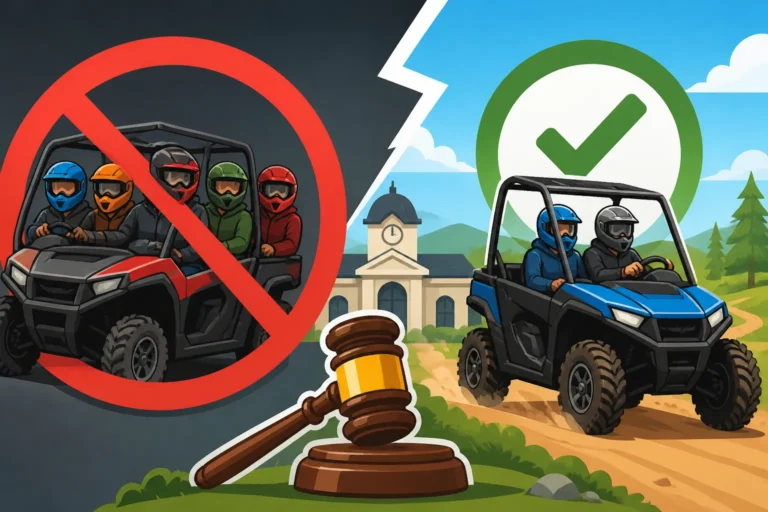
Another key exemption is for riders in a side-by-side (UTV) that is equipped with rollover protective structures (ROPS) and seatbelts. If these safety features are in place and being used, a helmet might not be required, though it is still highly recommended for optimal safety. These exemptions are carefully defined and not a blanket allowance, so it’s critical for riders to understand the precise conditions under which they apply to avoid penalties like [Alberta Helmet Fines and How They Are Issued]. When considering any modification to your UTV, like adding an aftermarket roof or windshield from a company like SuperATV, always ensure it doesn't compromise the existing safety features or create new hazards that would negate any helmet exemption.
Navigating Other Accepted Helmet Certifications in Alberta
While CSA CAN3-D230-M85 is a recognized standard, it's not the only one. Many riders, especially those who come from other regions or prefer specific helmet brands, might encounter helmets certified under different international standards. Alberta's law is pragmatic in this regard, recognizing several other widely accepted certifications. This flexibility ensures that riders aren't limited to a single brand or type of helmet, as long as the one they choose meets a similarly high level of safety scrutiny. It’s about the level of protection, not just the letters on the label.
Beyond CSA: Understanding Snell and ECE Certifications
Alberta's Off-highway Vehicle Regulation allows for several other recognized safety standards in addition to the CSA CAN3-D230-M85. The most common alternatives you'll encounter are:
- Snell: The Snell Memorial Foundation is a non-profit organization dedicated to helmet safety research and education. Snell certification is often considered one of the most stringent standards in the world, particularly for motorsports. Their testing procedures are incredibly thorough, often exceeding baseline requirements for other standards. Helmets carrying a Snell rating (e.g., Snell M2020) are widely accepted and trusted.
- ECE (Economic Commission for Europe): The ECE 22.05 (or newer ECE 22.06) standard is mandatory for all motorcycle helmets sold in over 50 countries, primarily across Europe. This standard is also very robust, involving comprehensive impact, abrasion, and retention tests. Helmets with an ECE certification are commonly found and fully accepted for OHV use in Alberta.
These alternative certifications provide riders with a wide array of choices, from various manufacturers and designs, while still ensuring they meet Alberta's safety expectations. You can read more about these and other alternatives in [Snell and ECE Alternatives].
The Importance of a Recognized Safety Standard
The core reason for requiring a recognized safety standard, regardless of whether it's CSA, Snell, or ECE, is consistency and reliability in protection. These standards are developed through extensive research, testing, and feedback from medical professionals, engineers, and accident investigators. They represent a consensus on what constitutes adequate head protection in the event of an impact. Without such standards, riders would be left to guess the quality of their helmets, potentially leading to tragic outcomes.
When you purchase a helmet with one of these certifications, you're not just buying a piece of gear; you're buying assurance. You're trusting that independent bodies have verified its ability to perform under stress, to absorb kinetic energy, and to mitigate the forces that could cause serious brain injury. This trust is fundamental to safe OHV riding, allowing you to focus on the trail ahead, knowing your head is protected by a proven design.
What to Look for When Buying an Imported Helmet
If you're considering an imported helmet, perhaps from a brand not widely distributed in Canada, it’s even more critical to scrutinize its certification. The key is to look for a clear, permanent label or sticker, usually inside the helmet shell, that indicates compliance with one of Alberta’s accepted standards. Be wary of helmets that only state "DOT approved" without a corresponding Snell or ECE rating. While DOT (Department of Transportation) is a US standard, it's a self-certification, meaning manufacturers declare compliance without mandatory third-party testing for every single model. While many DOT-certified helmets are perfectly safe, without an additional certification like Snell or ECE, their acceptance for OHV use on Alberta public land might be questioned by an enforcement officer.
Always err on the side of caution. If in doubt, consult the retailer, manufacturer, or Alberta's official regulations. A little extra research upfront can save you a fine and, more importantly, ensure you have genuine protection. Don't be swayed by aesthetics alone; safety certifications are the most important feature of any helmet.
Choosing and Maintaining Your Compliant OHV Helmet
Choosing the right helmet goes beyond just meeting the legal requirements; it's about finding one that fits comfortably, provides adequate ventilation for varying weather, and is robust enough to handle the demands of off-road riding. A compliant helmet that doesn't fit properly, or that you neglect to maintain, won't offer its full protective capabilities. This section helps you select and care for a helmet that will serve you well on Alberta's diverse trails.
Finding the CSA Label Inside Your Helmet Shell
When you're shopping for a helmet or checking an existing one, the certification label is usually found permanently affixed to the inside of the helmet shell, often on the polystyrene liner or on a sticker near the chin strap. For a CSA CAN3-D230-M85 helmet, you'll see those exact letters and numbers clearly printed. If it's a Snell-certified helmet, you'll see the Snell logo and the specific standard (e.g., M2020) printed on a sticker. For ECE, look for an "E" followed by a number in a circle, plus a series of numbers, typically on the chin strap or inside the lining. This label is your proof of compliance, and it's what an enforcement officer will look for if they conduct a spot check.
Don't accept a helmet where the label is missing, faded beyond recognition, or appears to be a removable sticker that could be easily transferred. The integrity of the label is just as important as the certification itself. Familiarize yourself with what these labels look like so you can confidently identify a compliant helmet. This is an essential step before you ride, as discussed in [Buying a CSA-Approved Helmet Before an Alberta Ride].
Fit, Comfort, and Features for Alberta Riding Conditions
Even if a helmet has the right certification, it won't protect you effectively if it doesn't fit correctly. A helmet should be snug, but not uncomfortably tight, with no pressure points. It shouldn't move independently of your head when you shake it side to side or nod up and down. The chin strap should be securely fastened, allowing only one or two fingers to fit underneath. Different manufacturers have different shell shapes, so trying on several brands and sizes is crucial to finding your perfect fit.
Beyond fit, consider features relevant to Alberta's riding conditions. Good ventilation is key for summer rides, while a removable, washable liner can help manage sweat and odor. Many OHV helmets come with a peak or visor, which is great for deflecting roost and sunlight. If you ride in dusty conditions, consider a helmet that works well with goggles. For side-by-side riders, ensuring the helmet doesn't restrict peripheral vision, especially when combined with a windshield (like those often offered by SuperATV), is vital for safety.
When to Replace Your Helmet: Understanding Its Lifespan
Helmets don't last forever, and even a compliant helmet needs to be replaced periodically. The general recommendation is to replace your helmet every five years from its manufacture date, or sooner if it has been involved in an impact, even a seemingly minor one. The protective materials inside, particularly the EPS (expanded polystyrene) foam liner, can degrade over time due to sweat, UV exposure, and general wear and tear, reducing its ability to absorb impact effectively.
If your helmet has been dropped, or if you’ve had an accident while wearing it, it absolutely needs to be replaced, even if there are no visible signs of damage. The foam liner compresses upon impact, and this compression is often irreversible, meaning it won't offer the same protection in a subsequent crash. Think of it as a single-use crumple zone for your head. Don't take chances with an old or compromised helmet; your brain isn't replaceable.
Enforcement, Penalties, and Staying on the Right Side of the Law
The rules surrounding OHV operation in Alberta are not just guidelines; they are enforceable laws with real consequences. Understanding what an enforcement officer looks for and the penalties for non-compliance can help you avoid unwelcome surprises on the trail. It's not about being afraid of the law, but about respecting it and ensuring everyone can enjoy Alberta's outdoor spaces safely.
What an Officer Looks for During an Inspection
When an Alberta Fish and Wildlife officer, RCMP officer, or a municipal bylaw officer stops you while you're riding an OHV on public land, they'll typically be looking for several things. Beyond checking for valid OHV registration, proof of insurance, and age restrictions for riders, they will absolutely be checking your helmet. They'll look for:
- Presence of a helmet: Is every operator and passenger wearing one?
- Proper fit: Is it securely fastened and not excessively loose?
- Visible certification label: Can they clearly identify one of the accepted safety standards (CSA, Snell, ECE) printed inside the helmet?
- Condition of the helmet: Is it severely damaged, cracked, or missing critical components?
They are not just looking for any helmet; they are looking for a compliant helmet in good condition. If your helmet looks like it’s been through a war zone, or if the certification label is missing, you could still be deemed non-compliant, even if you’re wearing something on your head. This is one of the [Alberta Equipment Checks by Officers] you should always be prepared for.
The Cost of Non-Compliance: Fines and Consequences
Riding without a compliant helmet on public land in Alberta can lead to significant penalties. A fine for not wearing an approved helmet is typically around $155. While this might seem like just a financial hit, repeat offenses or riding without any helmet could lead to more serious consequences, including further penalties or even potential vehicle seizure in extreme cases. It's a clear message from the authorities that helmet safety is taken seriously.
Beyond the immediate financial cost, there's the much higher cost of potential injury. A non-compliant or improperly worn helmet offers little protection. In the unfortunate event of an accident, a serious head injury could lead to lifelong medical challenges, lost income, and a devastating impact on your family. The price of a good, certified helmet pales in comparison to these potential costs.
Ensuring Your Passengers Are Also Compliant
It's not just the operator who needs to wear a compliant helmet; any passenger on an OHV on public land in Alberta must also be wearing one. This includes children. As the operator, you are responsible for ensuring that anyone riding with you is properly equipped. This means checking their helmet for certification, proper fit, and good condition. Don't assume a passenger will bring a suitable helmet; make sure you have extras or clearly communicate the requirements beforehand.
For youth riders, especially those under 14 who require adult supervision, ensuring they have a properly sized, certified helmet is paramount. A helmet that's too big won't offer adequate protection. When planning a family ride or bringing friends along, make helmet compliance a pre-ride checklist item for everyone, just like ensuring your machine has [Alberta Requires a Spark Arrestor] and working lights.
| Helmet Standard | Certification Body | Typical Regions | Key Features |
|---|---|---|---|
| CSA CAN3-D230-M85 | Canadian Standards Association | Canada | Rigorous impact attenuation, penetration resistance, retention strength tests. |
| Snell M2020 (or similar) | Snell Memorial Foundation | Global (especially North America) | Extremely stringent, often exceeds other standards; focus on multiple impacts. |
| ECE 22.05 / 22.06 | Economic Commission for Europe | Europe & 50+ countries | Mandatory in Europe; comprehensive impact, abrasion, retention tests. |
| DOT (FMVSS 218) | US Department of Transportation | United States | Minimum legal standard in the US; self-certified by manufacturers. |
Note: While DOT is a valid US standard, Alberta primarily recognizes CSA, Snell, and ECE for OHV use on public land. Relying solely on DOT without another recognized certification may lead to questions from enforcement.
Practical Tips for Helmet Care and Longevity
Your helmet is a critical piece of safety gear, and like any important equipment, it requires proper care to maintain its effectiveness. Neglecting your helmet can shorten its lifespan and, more importantly, compromise its ability to protect you when it matters most. A little routine maintenance goes a long way in ensuring your compliant helmet remains a reliable guardian on your Alberta adventures.
Cleaning and Storing Your Helmet Properly
After a dusty trail ride or a muddy excursion, your helmet will inevitably need a clean. The outer shell can be wiped down with a soft cloth and mild soap and water. Avoid harsh chemicals or solvents, as these can damage the helmet's finish or compromise the integrity of the materials. Many modern helmets feature removable and washable liners and cheek pads, which can be gently hand-washed with mild detergent and air-dried. Always ensure they are completely dry before reinserting them to prevent mildew.
Proper storage is equally important. Store your helmet in a cool, dry place, away from direct sunlight and extreme temperatures. UV rays can degrade the shell and liner materials over time. Avoid hanging your helmet by the chin strap, as this can stretch or damage the retention system. Ideally, keep it in a helmet bag or on a dedicated helmet shelf or rack. If you're a fan of SuperATV's various storage solutions for UTVs, consider how you might integrate proper helmet storage into your machine's setup to keep it protected while on the go.
Avoiding Damage That Compromises Safety
Be mindful of how you handle your helmet off your head. Avoid dropping it, even from a short distance onto a seemingly soft surface. As mentioned, even an unseen impact can compress the internal foam, reducing its protective capabilities. Don't use your helmet as a seat, a footrest, or a prop. Treat it with the respect it deserves as a life-saving device.
Be cautious with stickers, paint, or any modifications to the helmet shell. Some adhesives or chemicals in paints can react with the helmet's materials, potentially weakening the shell without visible signs. Most helmet manufacturers advise against painting helmets unless using specific, approved paints. When in doubt, always consult the helmet manufacturer's instructions.
Accessories and Modifications: What's Allowed?
Adding accessories to your helmet, such as communication systems, cameras, or visors, is generally acceptable as long as they don't impede the helmet's function or damage its integrity. However, always ensure any accessories are securely attached and do not obstruct your field of vision or create snag points that could cause rotational forces in a crash. For instance, a communication system that helps you stay connected with your riding buddies or even with a support crew using SuperATV's communication systems, should not interfere with the helmet's fit or structural integrity.
When it comes to the helmet itself, modifications beyond what the manufacturer intended are a big no-no. Drilling holes for ventilation or mounting points, trimming padding, or altering the chin strap system can severely compromise the helmet's ability to protect you and will almost certainly void its safety certification. Stick to manufacturer-approved accessories and resist the urge to customize your helmet in ways that could undermine its fundamental purpose. Your safety depends on it.
Disclaimer
This article is for general informational purposes only and does not constitute professional advice. Laws, prices and regulations vary by location and change over time. Consult a qualified professional for guidance on your specific situation.