Alberta Lighting Rules on Public Land
Navigating the rules for off-highway vehicles (OHVs) in Alberta can sometimes feel like trying to find your way through a dense forest at dusk, especially when it comes to specific equipment requirements like lighting. Many riders simply don't know the precise regulations, leaving them vulnerable to fines or, worse, safety hazards. This comprehensive guide is here to illuminate Alberta's lighting rules for ATVs, UTVs, and other OHVs on public land, ensuring you ride safely and legally.
Understanding the Core Lighting Requirements for Alberta OHVs
When you're out exploring Alberta's incredible landscapes, whether it's the winding trails of McLean Creek or the vast expanses of the Eastern Slopes, understanding your OHV's lighting requirements isn't just about avoiding a ticket—it's about staying safe and visible. The rules are designed to protect everyone sharing the trails, from fellow riders to hikers and wildlife. It can feel like a lot to remember, but once you break it down, it's pretty straightforward.
When Lights Are Mandatory
The most common question I hear is, "Do I always need my lights on?" The simple answer is no, not always, but often enough that it's good practice. Alberta's Off-highway Vehicle Regulation specifies clear conditions under which your lights must be on. This isn't just about nighttime riding; it also covers periods of reduced visibility during the day.
Specifically, the law mandates that your OHV must have its headlamps and tail lamps illuminated at any time between one hour after sunset and one hour before sunrise. This is the official "nighttime" riding window, and it's non-negotiable. If you're planning a sunset ride or an early morning adventure, make sure your lights are functioning perfectly. [Alberta Rules for Riding at Night] can shed more light on this.
Beyond the specific hours, your lights are also required whenever there isn't sufficient light to render persons or vehicles clearly discernible at a distance of 150 metres. This is where it gets a bit subjective but is absolutely critical for safety. Think about those heavily overcast days, thick fog, heavy rain, or even dense dust clouds kicked up by other riders. If visibility drops, your lights need to be on, regardless of the time of day. It's a judgment call, but always err on the side of caution.
Headlights and Tail Lights: The Essentials
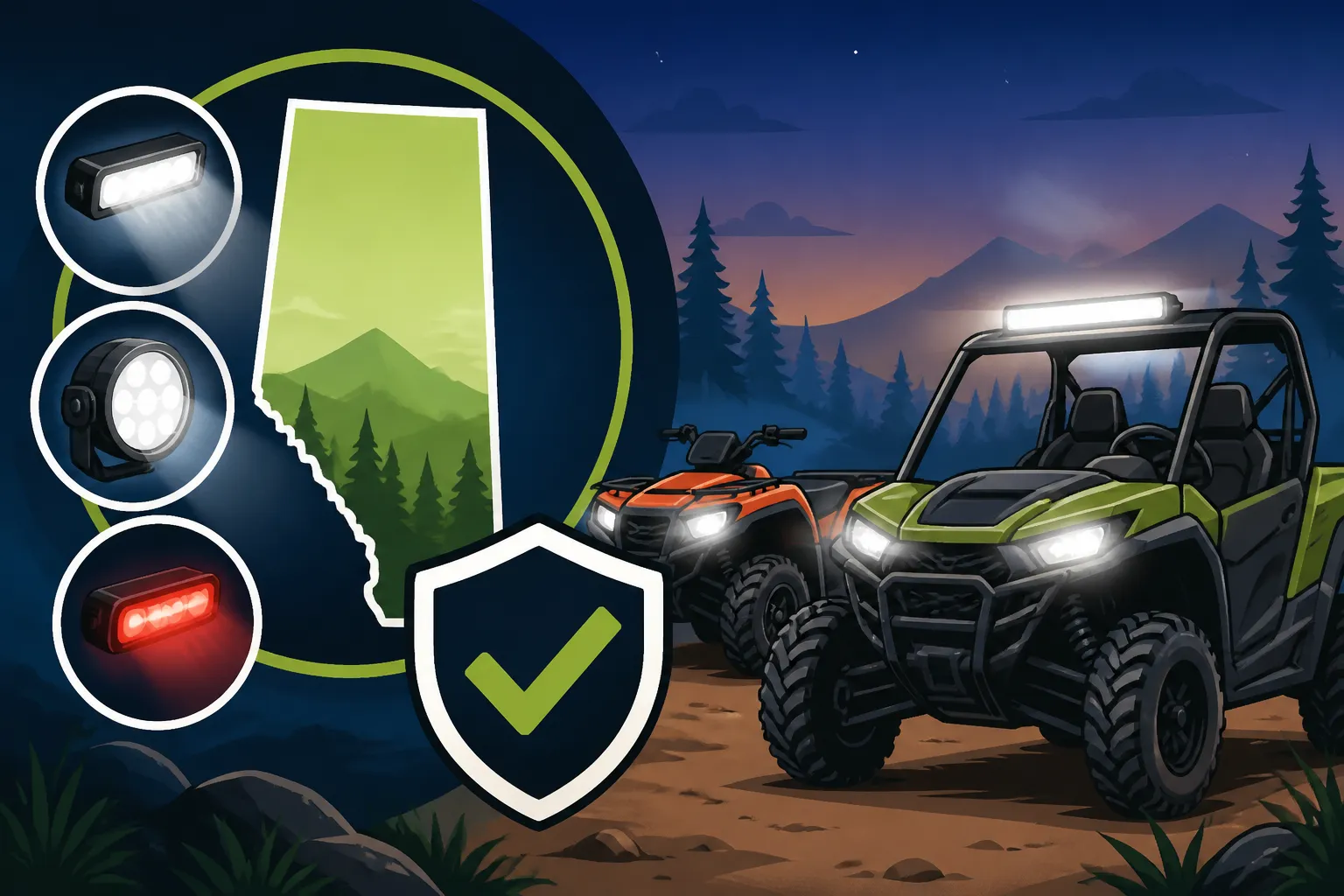
Let's talk about the specific lights your OHV must have. These aren't optional extras; they're fundamental safety equipment required by law for operation on public land. The standard setup includes a white or amber headlight at the front and a red tail light at the rear.
Your OHV must be equipped with at least one headlamp that emits a white or amber light, visible from at least 150 metres in front of the machine. This isn't just about seeing where you're going; it's about making sure others can see you. A dim, flickering headlight or one that's barely visible is simply not going to cut it, and an enforcement officer will likely agree. Many riders consider upgrading their stock headlights to brighter LED units, not just for compliance but for vastly improved trail visibility, especially on challenging terrain.
Similarly, your OHV needs at least one tail lamp that emits a red light, visible from at least 150 metres to the rear. This rear visibility is paramount for preventing collisions, particularly in group rides or when other vehicles might be approaching from behind. If you're using a utility quad for work on a lease site, imagine the safety risk of not being seen by heavy equipment operators. The law is clear: if you're on public land, these lights need to be there and they need to be working.
Plate Lighting for Your OHV
Beyond just headlights and tail lights, your OHV also has specific requirements regarding the illumination of your license plate. This often gets overlooked, but it's just as important for identification and legal compliance, especially during those low-light conditions when your main lights are required.
The Off-highway Vehicle Regulation states that if your OHV is required to have a registration plate, that plate must be illuminated by a white light whenever your headlamps are required to be lit. This means if you're riding after dark or in poor visibility, your plate light needs to be on and functional. This small detail ensures that your registration information is visible to enforcement officers or emergency personnel if needed.
The light source for your plate must effectively illuminate the entire surface of the plate without shining directly to the rear of the machine, which could be distracting or misleading to other riders. It's a subtle but important distinction. Many modern OHVs come with integrated plate lights, but if you have an older machine or have made modifications, it's crucial to double-check this. Make sure your plate is mounted correctly and the light is shining directly on it. [Where Your OHV Plate Must Sit to Be Seen] is a helpful resource for proper plate placement.
Navigating Aftermarket Lighting and Accessories
Once you've got the basics covered, many riders want to enhance their OHV's lighting, whether for better visibility on challenging trails or simply for aesthetic reasons. There's a huge market for aftermarket lights, from LED light bars to specialty rock lights. While these can greatly improve your riding experience, it's crucial to understand the rules of the road—or rather, the rules of the trail—before you install them.
Auxiliary Lights and Light Bars
Aftermarket auxiliary lights, often in the form of powerful LED light bars or spot/flood lamps, are incredibly popular among ATV and UTV enthusiasts. They offer significantly more illumination than standard factory headlights, which is fantastic for technical riding at night, spotting hazards, or navigating dense bush. Many riders swear by the extra confidence these lights provide.
However, these powerful lights come with a caveat: they aren't meant for all conditions, especially not when other riders or the public are present. While a high-intensity LED light bar from a company like SuperATV can turn night into day for you, it can be blinding and dangerous for oncoming traffic or riders you're following. The glare can disorient others, leading to potential accidents or confrontations.
The general rule of thumb for auxiliary lighting on public land is that it should only be used when conditions warrant it and when there is no risk of blinding other individuals. If you're riding alone on a remote trail where no one else is around, crank them up! But as soon as you approach another rider, a road crossing, or any area where people might be present, these powerful lights need to be switched off. Think of them like high-beams in your car – you wouldn't leave them on when facing another vehicle.
The Fine Line: Too Bright or Illegal Modifications
Beyond auxiliary lights, there's a definite line between enhancing your OHV's lighting and making illegal modifications that could lead to penalties. The law is quite specific about what is permissible, and ignorance is rarely accepted as an excuse.
One area where riders often get into trouble is with coloured lights. While you might see machines with blue, green, or other coloured accent lights at shows or on private property, these are generally not permitted for use on public land. The Traffic Safety Act and related regulations reserve specific colours for emergency vehicles or other authorized uses, and equipping your OHV with unauthorized colours can lead to tickets. Stick to white or amber for forward-facing lights and red for rear-facing lights that are part of your primary lighting system.
Another pitfall is having lights that are simply too bright for their intended purpose, even if they are white. While auxiliary lights are permitted with proper use, having a headlight system that emits an excessive glare or is improperly aimed can still be an issue. If your lighting system causes a hazard to others due to its intensity or poor adjustment, an enforcement officer could deem it an unsafe modification. Always consider the impact your lighting has on others, not just on your own visibility. Companies like SuperATV often design their products with varying beam patterns and intensities, so choose wisely for your typical riding environment.
Enforcement, Penalties, and Best Practices
Knowing the rules is one thing, but understanding the consequences of not following them and adopting best practices is another. Enforcement officers regularly patrol Alberta's public land use zones (PLUZs) and trails, and they're well-versed in OHV regulations, including lighting.
What an Officer Looks For
When an enforcement officer pulls you over or inspects your OHV, they aren't just looking for speeding or reckless driving. They're performing a thorough check of your machine's compliance with safety and registration requirements. Lighting is definitely on their checklist, especially if you're riding during low-light conditions.
Officers will specifically check for the presence and functionality of your headlamps and tail lamps. They'll want to see that they emit the correct colour (white/amber forward, red rear) and are visible from the required distance of 150 metres. A burnt-out bulb or a missing lens is a quick way to attract attention and receive a ticket. They will also look at your registration plate light, ensuring it properly illuminates your plate when your main lights are on. [Alberta Equipment Checks by Officers] details other common inspection points.
Beyond the basic requirements, officers will also assess your use of auxiliary lighting. If you're using a powerful light bar in an area where it could blind others, they will instruct you to turn it off and may issue a warning or a fine if they deem it a safety hazard. They're looking for common sense and responsible riding. If your machine looks like a Christmas tree with unauthorized coloured lights, expect to have a conversation about modifications.
Avoiding Fines and Ensuring Safety
The best way to avoid fines and, more importantly, ensure your safety and the safety of others, is to be proactive and informed. Regularly inspecting your OHV's lighting system should be part of your routine maintenance, just like checking your tires or oil.
Here's a simple checklist to keep in mind:
| Lighting Component | Requirement | Check Frequency |
|---|---|---|
| Headlamp(s) | White/Amber, visible 150m forward, functional. | Before every ride |
| Tail Lamp(s) | Red, visible 150m rearward, functional. | Before every ride |
| Plate Lamp | White, illuminates plate when headlamps are on, functional. | Before low-light rides |
| Auxiliary Lights | Functional, correct colour (white/amber), used only when no risk of blinding. | As needed, check aim |
| Wiring & Connections | Secure, free of damage, properly insulated. | Monthly / Seasonally |
| Lens Clarity | Clean, free of cracks or obstructions. | Before every ride |
Beyond the physical checks, always carry your proof of insurance and registration. An officer might ask to see it, and having it readily available can make any interaction smoother. [Producing Insurance on Demand] is a good read if you're unsure about this.
Finally, always ride defensively and with respect for the environment and other users. If you've invested in a fantastic light bar from SuperATV that really helps you see the trail, that's great! Just be mindful of when and where you deploy its full power. Responsible use of your OHV's lighting system is a cornerstone of safe and legal riding in Alberta.
Disclaimer
This article is for general informational purposes only and does not constitute professional advice. Laws, prices and regulations vary by location and change over time. Consult a qualified professional for guidance on your specific situation.