Alberta’s $93 Non-CSA Helmet Fine
There's nothing quite like the freedom of exploring Alberta's vast landscapes on your ATV or UTV, feeling the wind, and seeing sights few others do. But that sense of freedom can quickly turn into frustration – and a hefty fine – if you're not squared away on the rules, especially when it comes to something as seemingly straightforward as your helmet. Many riders have been caught off guard by Alberta's specific requirements, especially the not-so-friendly $93 non-CSA helmet fine. This guide is here to walk you through exactly what those requirements are, why they exist, and how you can ensure your gear keeps you safe and on the right side of the law, avoiding that unwelcome ticket.
Understanding Alberta's Helmet Law for Off-Highway Vehicles
Riding an Off-Highway Vehicle (OHV) in Alberta, whether it's a quad, dirt bike, or side-by-side, isn't just about horsepower and adrenaline. It's also about responsibility, and a big part of that is protecting yourself. The provincial government enacted specific helmet laws for OHVs to dramatically reduce serious injuries and fatalities. It's a critical piece of legislation that every rider needs to understand, not just to avoid fines, but to genuinely safeguard their well-being.
Why Helmets Became Mandatory in Alberta
For years, the rules around helmets for OHVs in Alberta were a bit of a patchwork, leading to confusion and, unfortunately, many preventable head injuries. It wasn't until May 15, 2017, that the province made it mandatory for almost all OHV riders and passengers on public land to wear an approved helmet. This change was a direct response to injury statistics and a recognition that these machines, while incredibly fun, carry inherent risks. Think about it: hitting a tree branch, taking a tumble on a rocky trail, or even a low-speed tip-over can result in severe head trauma if you're not properly protected. The goal was simple: protect riders from themselves and the unforgiving terrain.
This wasn't about making riding less fun; it was about making it safer for everyone. Prior to this, you might have seen riders in different areas wearing various types of helmets, or sometimes no helmet at all, which created a dangerous precedent. The standardized law removed the ambiguity and put rider safety front and centre. It meant that no matter if you were riding in McLean Creek or up in the Ghost PLUZ, the helmet expectation was the same. [Alberta Helmet Law on Public Land] came into full effect, creating a level playing field for safety.
The Specifics of CSA Approval
When the law came into effect, it didn't just say "wear a helmet." It specified that the helmet must be approved. In Alberta, the primary standard cited is the Canadian Standards Association (CSA) standard (CAN3-D230-M85). This isn't just a random acronym; it's a rigorous testing standard designed to ensure a helmet can withstand significant impact and penetration forces. Think of it as a quality assurance stamp for your head protection.
However, recognizing that many high-quality helmets are manufactured and certified under other globally recognized standards, Alberta also accepts helmets approved by certain international bodies. These include the Snell Memorial Foundation (Snell), the U.S. Department of Transportation (DOT), and the Economic Commission for Europe (ECE). So, if your helmet has a DOT sticker, an ECE rating, or a Snell certification, you're generally in the clear. The key is that the helmet has undergone independent, recognized testing to ensure it provides the necessary level of protection. It’s not just about covering your head; it’s about covering it with something proven to work. [A CSA CAN3-D230-M85 Label] is what many riders look for, but don't fret if yours has one of the other recognized ratings.
What an Officer Looks For
When an Alberta Fish and Wildlife officer, RCMP, or local peace officer stops you on the trail or at a staging area, they're not just checking your registration and insurance. Your helmet is absolutely on their checklist. They're primarily looking for a few key things. First, is there a helmet on your head? Second, does it appear to be in good condition, without obvious damage that would compromise its integrity? And third, and most crucially for avoiding that $93 fine, does it have a visible certification label?
This label is usually a sticker on the back or side of the helmet, or sewn into the lining inside. It clearly indicates the standard it meets, such as "DOT FMVSS No. 218," "ECE 22.05," or the CSA mark. Officers are trained to spot these, and if they can't find one, or if it looks like a cheap novelty helmet not designed for impact protection, you're likely to face questions and potentially a ticket. It's not about being nitpicky; it's about verifying compliance with a safety regulation. So, before you head out, do a quick check to make sure that label is present and readable. [Alberta Equipment Checks by Officers] often start with safety gear.
The Dreaded $93 Fine for Non-Compliant Helmets
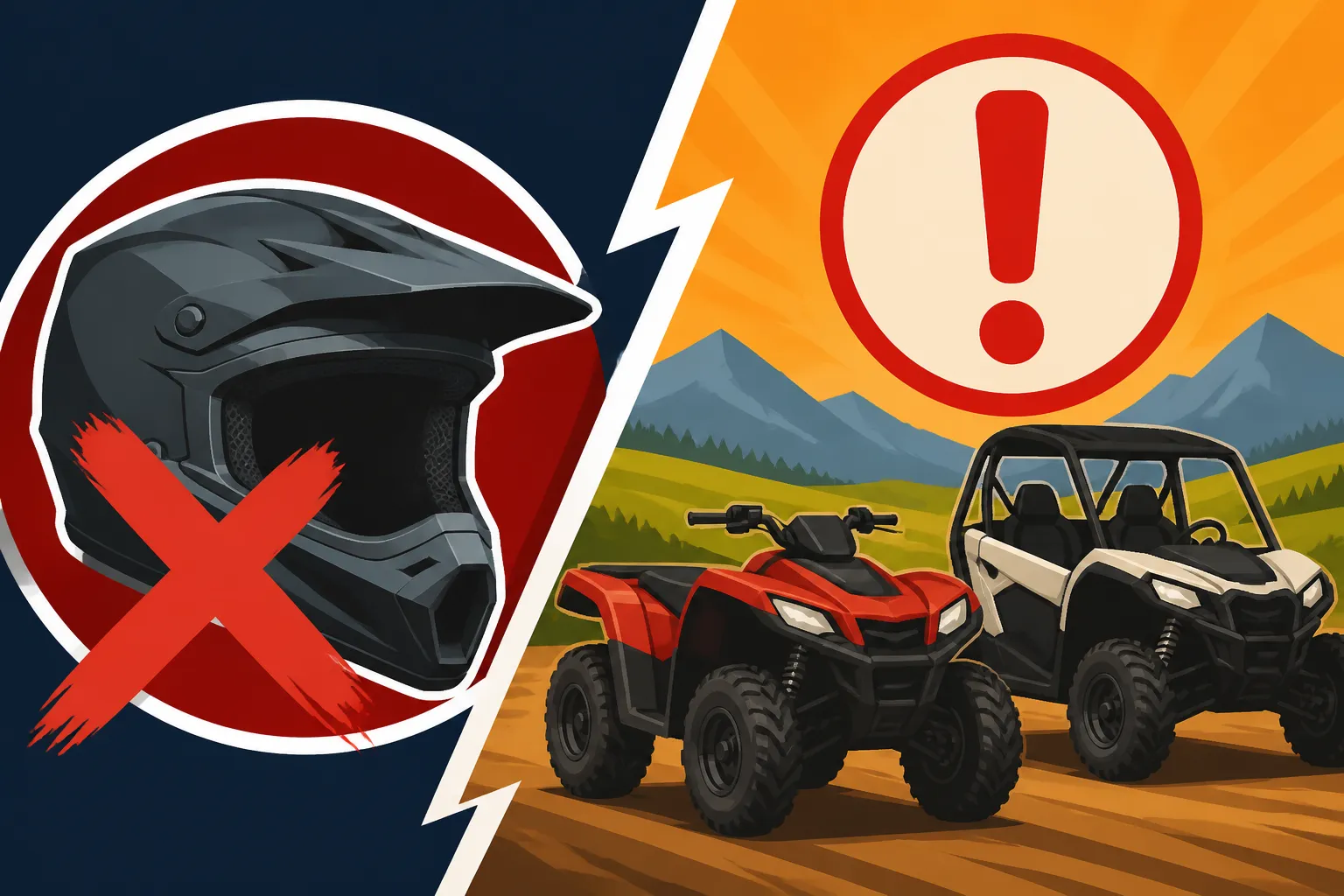
No one wants to receive a ticket, especially when you thought you were doing the right thing by wearing a helmet. But Alberta's law is specific, and the fine for wearing a non-compliant helmet is consistently set at $93. It's a frustrating amount because it feels like a slap on the wrist for something that seems minor, but it's a stern reminder that the province takes helmet safety seriously.
The Financial Sting of a Non-CSA Ticket
Imagine you're out enjoying a fantastic day exploring the backcountry near Rocky Mountain House or cruising through the vast landscapes around Fort McMurray. You're wearing a helmet, feeling responsible. Then, an officer pulls you over, and after a brief chat, they point out that your helmet doesn't have the proper certification. Bam – a $93 fine. It's not the biggest fine you could get, but it's enough to sour your day and feel like money wasted. This isn't just a hypothetical scenario; it happens to riders regularly who either didn't know about the specific requirements or assumed any helmet would do.
This specific amount is outlined in the regulations, making it clear and consistent across the province. It's designed to be a deterrent, a tangible consequence that makes riders think twice before hitting the trails with unapproved head protection. For many, it's an unexpected cost that could have been avoided with a simple check of their helmet's label before the ride. This fine, while not as severe as, say, an impaired riding charge, still carries weight and signals the importance of following all OHV regulations. [Alberta Helmet Fine Amount] is fixed, so there's no haggling over it at the side of the trail.
Beyond the Fine: Other Potential Consequences
While the $93 fine is the immediate financial hit, the consequences of wearing a non-compliant helmet can extend beyond just the ticket. In some serious situations, depending on the officer's discretion and any other violations, they might even choose to issue warnings or take further action. For instance, if an officer determines your gear is fundamentally unsafe, they could prevent you from continuing your ride until you rectify the situation, possibly requiring you to arrange transport for your machine. This could mean calling a friend to pick you up or leaving your OHV until you can bring a compliant helmet.
More importantly, riding with an unapproved helmet puts you at significantly greater risk of serious injury. These helmets haven't been tested to the same rigorous standards as CSA, DOT, ECE, or Snell-approved helmets. In the event of an accident, that non-compliant helmet might not offer the protection you assume it does, leading to more severe head trauma, concussions, or worse. The financial sting of a fine pales in comparison to the lifelong consequences of a preventable head injury. Safety is always paramount, and an unapproved helmet is a gamble you really shouldn't take.
Common Mistakes Riders Make
It's easy to make mistakes, especially when you're just trying to get out and ride. One of the most common errors riders make is using an old helmet that might have been certified years ago but is now past its useful life or has suffered unseen damage. Helmets aren't designed to last forever; the materials degrade over time, and even a single impact can compromise its protective capabilities, even if the damage isn't visible.
Another frequent mistake is wearing a helmet designed for other activities, like skateboarding or cycling, which simply don't meet the impact standards required for OHV use. While they might look sturdy, they aren't built to withstand the specific forces involved in an OHV crash. Some riders also fall for "fashion helmets" or novelty helmets that offer minimal protection and carry no safety certification. They might look cool, but they won't protect you or save you from a ticket. Always ensure your helmet is specifically designed and certified for motorized vehicle use, and if in doubt, check that internal label.
Ensuring Your Helmet Meets Alberta's Standards
The good news is that ensuring your helmet meets Alberta's standards isn't complicated. It mostly boils down to checking for the right labels and understanding when it's time for a replacement. Investing in a proper helmet isn't just about avoiding a fine; it's about investing in your own safety and peace of mind on the trails.
Checking for the CSA Label (or Approved Equivalents)
The easiest way to confirm your helmet is compliant is to look for the certification label. As mentioned, this is often a sticker on the back or side of the helmet, or a sewn-in tag on the inner lining.
Here's what to look for:
- CSA: The Canadian Standards Association mark (CAN3-D230-M85). This is the gold standard in Canada.
- DOT: The U.S. Department of Transportation certification (FMVSS No. 218). This is very common, especially if you bought your helmet from a large retailer or even if you're a [Alberta Registration for a Machine From Montana] or other US visitor.
- ECE: The Economic Commission for Europe standard (ECE 22.05 or ECE 22.06). Widely recognized internationally, these helmets are often praised for their balance of safety and weight.
- Snell: The Snell Memorial Foundation certification. Snell is a non-profit organization that performs even more stringent testing than many government standards, so a Snell-certified helmet is always a great choice. [Finding the CSA Label Inside Your Helmet Shell] or one of these other certifications is your first line of defense against a ticket.
If you can't find any of these labels, or if the label is illegible, it's time to seriously consider replacing your helmet. Don't guess; your brain isn't worth the risk.
When to Replace Your Helmet
Helmets are not lifelong investments. They have a finite lifespan, regardless of how well you care for them or how often you ride. Most manufacturers and safety organizations recommend replacing a helmet every 3 to 5 years from its manufacture date, even if it looks perfectly fine. The internal materials, like the EPS foam liner, degrade over time due to exposure to UV light, sweat, and general wear and tear, reducing their ability to absorb impact.
More critically, you absolutely must replace a helmet after any impact, even if it looks undamaged. The protective foam inside is designed to crush and dissipate energy during an impact, and it can only do this once effectively. Even a seemingly minor drop onto a hard surface can compromise its integrity. It’s impossible to tell if the internal structure is damaged by just looking at the outside. If you've been in a spill, no matter how small, treat your helmet as compromised and get a new one.
Proper Helmet Fit and Care
Even the most expensive, certified helmet won't protect you properly if it doesn't fit right. A helmet should be snug, but not uncomfortably tight. It shouldn't shift around on your head if you shake it side to side or nod up and down. If it wiggles freely, it's too big and won't stay in place during a crash. The chin strap should be securely fastened, allowing only one or two fingers to fit comfortably underneath it.
Caring for your helmet also extends its lifespan and effectiveness. Store it in a cool, dry place away from direct sunlight and harsh chemicals. Clean the exterior with mild soap and water, and regularly wash or replace the removable interior padding to keep it fresh and prevent material breakdown from sweat and oils. Proper care ensures your helmet remains in top condition, ready to protect you every time you hit the trails, whether you're navigating technical terrain or simply enjoying a leisurely ride.
Exemptions to Alberta's Mandatory Helmet Law
While the helmet law is broad, there are a few very specific exemptions that riders should be aware of. However, these are not loopholes to be exploited, but rather narrow circumstances where the requirement is waived. It's crucial to understand these distinctions, as assuming an exemption applies when it doesn't can still lead to that $93 fine.
Understanding the Limited Exemptions
Alberta's helmet law primarily applies to riders and passengers on public land. This is a critical distinction. If you are riding on private property that you own or have explicit permission to use, the provincial helmet law does not apply. This means if you're riding around your own acreage near Cochrane or on a friend's sprawling farm near Red Deer, you don't legally have to wear a helmet. However, even on private land, common sense and personal safety should always dictate your choices. A head injury is a head injury, regardless of where it occurs. [Alberta Private Property Helmet Exemption] exists, but safety should still be your priority.
Beyond private land, there are a few other specific exemptions related to the type of machine or the nature of the activity. It's not a blanket waiver, and these exemptions are interpreted quite narrowly by law enforcement.
Farm and Ranch Work Exemption Details
One notable exemption applies to individuals operating an OHV while actually engaged in "farming or ranching operations." This is often misunderstood. It's not a general pass for anyone who owns a quad and lives on a farm. The exemption is specifically for a person performing bona fide agricultural work. This could include checking fences, herding cattle, or transporting tools for farm maintenance.
The key here is "engaged in farming or ranching operations." If you're using your quad for recreational purposes on your farmland, or you're just driving it to the store down a public road, the exemption likely does not apply. The intent is to avoid hindering essential agricultural activities, not to provide a workaround for recreational riders. So, if you're checking cattle on your land, you might be exempt. If you're joyriding with your kids on the back forty, you likely are not. [Alberta Farm and Ranch Work Exemption] is specific, not general.
The Enclosed Cab and Rollover Protection Exemption
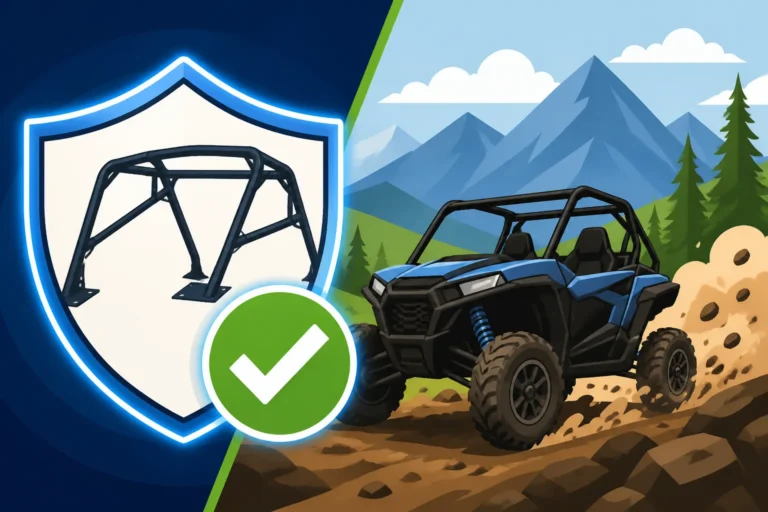
This is perhaps the most significant exemption for many side-by-side (UTV) owners. If your OHV is equipped with an "enclosed cab" and "rollover protective structure" (ROPS), and you are wearing a seat belt, you are generally exempt from the helmet requirement. This applies to many modern side-by-sides which come factory-equipped with full roll cages and seatbelts. The logic here is that the vehicle's design provides a level of protection similar to a car, making a helmet less critical for impact protection within the confined space of the cage.
However, be clear on what "enclosed cab" means. Simply having a roof and windshield might not be enough if the sides are completely open. Most vehicles like the popular Polaris RZR or Can-Am Maverick, with their full roll cages, generally qualify. It’s about the integrated safety system. Many riders enhance their UTVs with accessories from companies like SuperATV, adding elements like full doors or windshields. While these additions improve comfort and protection from elements, the core exemption hinges on the factory or professionally installed ROPS and the use of seat belts. Always ensure your seat belt is fastened securely, as this is a non-negotiable part of this specific exemption. [Do You Need a Helmet in a Side-by-Side?] clarifies this very point.
Rider Responsibility and Public Land Safety
Riding an OHV in Alberta is an incredible privilege, offering access to some of the most stunning natural environments. With that privilege comes significant responsibility, not just for your own safety, but for the safety of others and the preservation of the environment. Adhering to helmet laws is just one piece of this larger puzzle.
The Importance of Safe Riding Practices
While a compliant helmet is non-negotiable for public land riding, it's only one aspect of safe OHV operation. A helmet protects your head, but safe riding practices protect your entire body and prevent accidents in the first place. This includes understanding your machine's capabilities, riding within your skill level, and always being aware of your surroundings. Never ride impaired, always inform someone of your route and expected return time, and be prepared for changing weather and terrain conditions.
Think about it: even with the best helmet, riding too fast for conditions, taking unnecessary risks, or attempting stunts can lead to serious injury or even death. Riders under 14 years old also have specific supervision requirements, reinforcing the need for responsible adult oversight. [Alberta's Minimum Age of 14 on Public Land] means younger riders need proper guidance and supervision. Learning how to properly navigate different terrains, including creek crossings or steep climbs, is just as vital as strapping on that certified helmet.
What to Expect from an Officer on Patrol
Officers patrolling Alberta's public lands, whether it's Fish and Wildlife officers, RCMP, or local bylaw enforcement, are there to ensure everyone is having a safe and legal experience. When they stop you, they'll typically look for proof of registration, insurance, and proper identification. But they'll also visually inspect your machine for required equipment like a working spark arrestor and functional lights, and of course, check your helmet.
They're not trying to ruin your day; they're enforcing rules designed to keep everyone safe and preserve access to these incredible areas. Be polite, cooperative, and have your documents readily accessible. If they ask to see your helmet's certification label, be prepared to show it. A positive interaction can go a long way. Knowing your rights and responsibilities, like [Producing Insurance on Demand], will make any encounter go smoother.
Reporting Accidents and Remaining Accountable
Even with the best preparation and safest riding practices, accidents can happen. If you are involved in an OHV accident on public land that results in injury, significant property damage, or involves another party, you have a responsibility to report it. Knowing who to call (emergency services if there's injury, or local law enforcement/Fish and Wildlife for other incidents) is crucial.
Remaining accountable also extends to your actions after an incident. Leaving the scene of an accident, especially if someone is injured, can lead to much more severe legal consequences than a helmet fine. Your responsibility as a rider includes assisting others, securing the scene, and cooperating with authorities. This commitment to accountability helps maintain the integrity of the OHV community and ensures everyone can continue to enjoy Alberta's trails safely. [Alberta Accident Reporting on Public Land] outlines these duties.
Navigating the Broader Rules of Riding in Alberta
Beyond helmets, a comprehensive understanding of Alberta's OHV regulations is essential for any rider. The rules cover everything from where you can ride to what equipment your machine needs, ensuring both safety and environmental protection.
Understanding Public vs. Private Land Rules
This distinction is perhaps one of the most fundamental aspects of OHV riding in Alberta. As we've discussed, helmet laws differ between public and private land. But this extends to many other regulations as well. On private land, with the landowner's permission, you generally have more freedom regarding machine modifications, noise levels (though common courtesy should always prevail), and who can ride. [Alberta Farmer-Owned Machines on Private Land] often don't need registration if they never leave the property.
Public land, however, is managed by the provincial government, and it comes with a much stricter set of rules. This includes designated riding areas like Public Land Use Zones (PLUZs), Crown land, and even highway ditches, which are legally considered part of the highway system and thus public land. Riding on public land requires your OHV to be registered, insured, and equipped with specific safety features. Understanding [Crown Land as the Registration Trigger] is vital. Before you ride, always confirm the land status and the specific rules that apply. Ignorance of the law is not an excuse, and riding where you shouldn't, or without proper gear, can lead to fines and even vehicle seizure.
Age and Supervision Requirements
Alberta has clear rules about who can operate an OHV on public land. The minimum age for unsupervised operation is 14 years old. Riders under 14 must be under the "close supervision" of an adult who is at least 18 years old. "Close supervision" generally means the adult must be able to see and directly influence the younger rider's actions, often by riding on their own OHV nearby. This isn't about letting a child loose with an adult somewhere in the vicinity; it’s about direct, active oversight to ensure their safety and compliance with rules.
This also applies to passengers. Manufacturers often specify passenger limits for their machines, and these limits must be adhered to. A quad designed for one person should only carry one person. A side-by-side with two seats should only carry two, and so on. Overloading a machine not only puts passengers at risk but also impairs the operator's control, increasing the chance of an accident. [Alberta Rules for a 12-Year-Old Rider] are very clear on supervision.
Equipment Beyond the Helmet
While the helmet is crucial, your OHV also needs to meet other equipment standards when operating on public land. These are designed to minimize environmental impact, prevent fires, and ensure visibility:
- Spark Arrestor: All OHVs operating on public land must be equipped with a spark arrestor that is in good working order. This device prevents hot carbon particles from exiting the exhaust system and potentially starting a wildfire, a critical concern in Alberta's dry seasons. [Does Your Quad Need a Spark Arrestor in Alberta?] Absolutely, yes.
- Working Head and Tail Lights: If you're riding at dusk, dawn, or in low visibility conditions, your machine needs to have working headlights and taillights. This is for your safety and to ensure you're visible to others. Even in daylight, lights can improve visibility, and it's generally good practice to have them on. [Alberta Requires Working Head and Tail Lights] is a non-negotiable.
- Muffler/Exhaust System: Alberta has rules about modified exhausts. Loud, aftermarket exhausts that exceed acceptable noise levels are prohibited on public land. This isn't just about being annoying; excessive noise can disturb wildlife, other trail users, and nearby residents. Officers often check for modified exhausts, and if yours is too loud, you could face another ticket. [Why a Modified Muffler Can Cost You a Ticket] is something many riders learn the hard way.
- Other Accessories: While not strictly mandated by law, accessories like winches, skid plates, and robust tires (perhaps from a brand like SuperATV, known for durable aftermarket parts) are often essential for safe and enjoyable backcountry riding. These aren't about legal compliance but about practical safety and capability on challenging trails.
Always check provincial regulations and any specific bylaws for the area you plan to ride. Being well-informed is your best defense against fines and ensures a smooth, safe, and enjoyable OHV experience in Alberta.
Here's a quick reference on some key helmet certifications and requirements:
| Certification Standard | Origin/Type | Key Feature | Alberta Acceptance | Notes |
|---|---|---|---|---|
| CSA (CAN3-D230-M85) | Canadian Standard | Primary Canadian OHV Helmet Standard | Yes | Widely recognized in Canada, ensures rigorous impact protection. |
| DOT (FMVSS No. 218) | U.S. Department of Transportation | U.S. Motorized Vehicle Helmet Standard | Yes | Very common, often found on helmets sold across North America. |
| ECE (22.05 / 22.06) | Economic Commission for Europe | International (European) Standard | Yes | Known for balancing protection with lighter weight, common on imported helmets. |
| Snell | Snell Memorial Foundation | Non-profit, independent testing (more stringent) | Yes | Exceeds most government standards, often considered the highest level of protection. |
| None / Novelty | Uncertified/Fashion | No official safety testing | No | Will result in a $93 fine on public land, offers little to no real protection in an accident. |
| Cycling/Skateboarding | Activity-specific | Designed for lower impact speeds | No | Insufficient for OHV use, does not meet required impact standards for motorized vehicles. |
Disclaimer
This article is for general informational purposes only and does not constitute professional advice. Laws, prices and regulations vary by location and change over time. Consult a qualified professional for guidance on your specific situation.