Alberta Rollover Protection Exemption
It can be incredibly confusing to sort through all the rules and regulations for riding your off-highway vehicle (OHV) in Alberta, especially when it comes to safety equipment. You might hear talk of exemptions, but what do they really mean for your machine and, more importantly, your safety? This guide will cut through the jargon and explain Alberta's rollover protection exemption, helping you understand when it applies, what it entails, and how it fits into the bigger picture of safe OHV operation.
The Essential Role of Rollover Protection in OHVs
When you're out on the trails, whether you're tackling muddy ruts or cruising down a gravel path, the possibility of a rollover is always there. It's an inherent risk of off-highway riding, and that's precisely why manufacturers and regulators put so much emphasis on rollover protection. Understanding what these systems are and why they matter is the first step toward appreciating Alberta's specific exemption.
What is a Rollover Protective Structure ROPS?
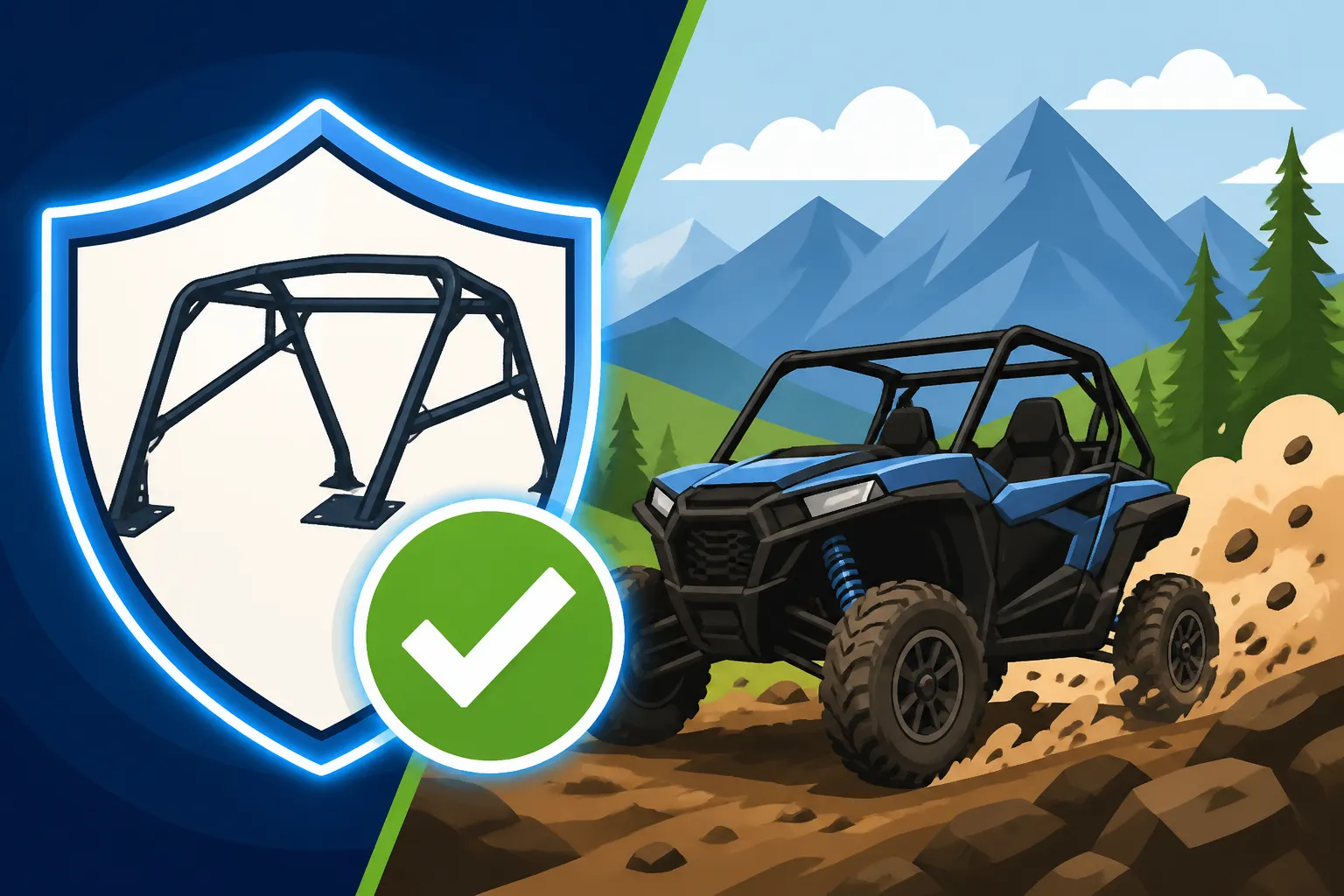
A Rollover Protective Structure, or ROPS, is essentially a cage-like frame built into the design of many off-highway vehicles, most commonly side-by-sides (UTVs). Its primary purpose is to create a protective zone around the occupants in the event the vehicle tips onto its side or rolls completely over. Think of it as a safety cell, designed to withstand significant force and prevent the roof or sides of the vehicle from crushing down on you and your passengers.
These structures are engineered with specific materials and construction techniques to absorb impact and maintain structural integrity. They're not just for show; they undergo rigorous testing to ensure they meet industry standards for strength and deflection. When you see a UTV with a sturdy overhead frame, that's often its integrated ROPS, providing a crucial layer of protection between you and the ground if things go sideways – literally. For most modern side-by-sides, the ROPS is an integral part of the chassis, designed right from the ground up to protect the occupants.
Why ROPS are Crucial for Rider Safety
The importance of a robust ROPS cannot be overstated. Rollovers are among the most serious types of OHV accidents, frequently leading to severe injuries or fatalities. Without a ROPS, occupants can be ejected from the vehicle, crushed by the machine, or suffer impacts from the ground and obstacles. The ROPS dramatically reduces these risks by maintaining space for the occupants and preventing the vehicle from collapsing inward.
Consider a scenario where you're traversing a steep incline, and a tire loses traction, causing your side-by-side to roll downhill. If your machine is equipped with a properly designed and intact ROPS, that structure is engineered to bear the brunt of the impact, protecting the occupant compartment. This protective barrier can mean the difference between a scary incident with minor injuries and a life-altering event. It's a silent guardian, always there, ready to perform its critical function if the unthinkable happens.
Differentiating ROPS from Falling Object Protective Structures FOPS
While closely related and often integrated, it's helpful to understand the distinction between ROPS and Falling Object Protective Structures (FOPS). As we've discussed, ROPS are designed to protect occupants during a rollover. FOPS, on the other hand, are specifically engineered to protect occupants from falling objects, such as rocks, trees, or debris that might come down from above.
Many heavy equipment vehicles, especially in construction or forestry, will have both ROPS and FOPS integrated into their cab design. For recreational side-by-sides, the standard overhead cage typically functions primarily as a ROPS. However, adding an aftermarket roof or windshield can enhance protection from smaller falling debris, even if it's not strictly certified as a FOPS. Companies like SuperATV offer accessories like heavy-duty roofs that complement the existing ROPS, adding another layer of security against minor impacts from above. While the primary concern for most recreational riders is the rollover, understanding that there are different types of overhead protection can inform your accessory choices.
Alberta's Stance on Rollover Protection Exemptions
Now, let's get into the nitty-gritty of Alberta's rules. It might seem counterintuitive that there's an exemption for something as critical as rollover protection, but it's important to understand the specific context in which this exemption applies. It's not a blanket pass to disregard safety, but rather a recognition of certain conditions where other safety measures come into play.
The Legal Framework: When and Why an Exemption Applies
Alberta's Traffic Safety Act and the Off-Highway Vehicle Regulation 319/2002 outline the rules for OHVs. When it comes to rollover protection, the exemption largely revolves around the use of a seatbelt in a machine that is already equipped with a ROPS. Essentially, if your OHV has a factory-installed ROPS and you are wearing a seatbelt, you are often exempted from the mandatory helmet requirement that typically applies to OHV riders on public land. This is a crucial distinction: the exemption isn't from having rollover protection, but rather an exemption from the helmet rule because you have effective rollover protection and are using other restraints.
The logic behind this is that the ROPS, combined with a seatbelt or other restraint system, provides a level of occupant protection that is considered comparable to or even exceeding that offered by a helmet alone in certain rollover scenarios, particularly within the confines of a side-by-side. It’s about creating a holistic safety system where one component can offset the need for another under specific circumstances. This provision acknowledges that a side-by-side with a full cage and seatbelts operates differently in a rollover than an open-air ATV.
Specific Conditions for the Rollover Protection Exemption
For this exemption to apply, several conditions must be met. First and foremost, the OHV must be equipped with a rollover protective structure (ROPS). This isn't about adding a roll bar yourself; it refers to the manufacturer-installed, tested, and certified ROPS that comes as standard equipment on most side-by-sides. If your machine doesn't have a ROPS from the factory, this exemption simply doesn't apply to you.
Secondly, and this is critical, you must be wearing a seatbelt or other restraint system that is part of the vehicle's original equipment or an approved aftermarket addition. The ROPS provides the protective cage, but the seatbelt keeps you securely within that cage. Without the seatbelt, you could still be ejected or thrown around inside the protective structure, negating its benefit. This ties directly into understanding [Rollover Protection and Belts]. So, while the exemption is often spoken of as the "rollover protection exemption," it’s more accurately a "ROPS and seatbelt exemption" from the helmet rule.
How This Exemption Relates to Helmet Laws in Alberta
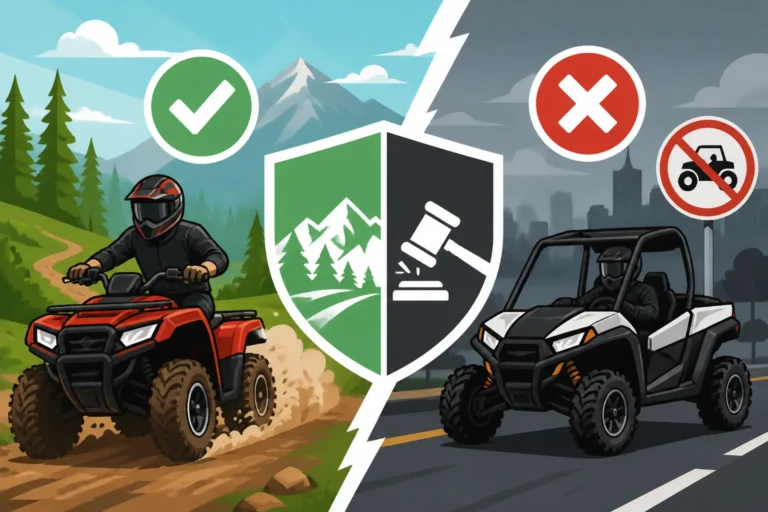
This is where many riders get confused. Alberta has mandatory helmet laws for OHV riders on public land. However, the rollover protection exemption is a key exception to this rule. If you are riding an OHV that has a ROPS and you are properly secured by a seatbelt, you are not legally required to wear a helmet. This specifically addresses the common side-by-side (UTV) setup.
It's important to stress that this exemption only applies if all conditions are met. If you're riding a quad (ATV), which typically does not have a ROPS, you must wear a helmet on public land, regardless of any other safety gear. The exemption is highly specific to machines designed with integrated rollover protection and occupant restraint systems. For a deeper dive into the overall rules, you can check out [Alberta Helmet Law on Public Land]. The provincial government recognized that the confined, caged environment of a UTV, when combined with a seatbelt, offers a different safety dynamic than an open-air ATV, hence the specific nuance in the regulations.
Deconstructing ROPS and FOPS Standards for Riders
Understanding the regulations is one thing, but knowing what goes into these protective structures helps you make informed choices about your machine and any aftermarket additions. It’s not just about a metal frame; it's about engineered safety.
Manufacturer-Installed ROPS: What to Expect from Your Machine
When you purchase a new side-by-side, the ROPS is a meticulously designed and tested component. Manufacturers adhere to stringent industry standards, such as those set by SAE (Society of Automotive Engineers), ISO (International Organization for Standardization), or ANSI (American National Standards Institute), though specific regulatory adoption can vary. These standards dictate everything from the materials used to the welding techniques and the crush resistance of the structure.
During the design phase, prototypes undergo extensive computer simulations and physical rollover tests to ensure the ROPS can withstand specific loads and maintain a survival space for occupants. This means that the ROPS on your new UTV isn't just a convenient place to mount lights; it's a critical safety system that has been engineered to precise specifications to protect you. Always ensure your manufacturer-installed ROPS is in good condition, free from damage, and has not been altered in any way that could compromise its integrity. These structures are built to protect but are not indestructible, especially after prior impacts.
Aftermarket ROPS Solutions and Considerations
The market for aftermarket OHV accessories is huge, and naturally, this includes various forms of protective additions. While most side-by-sides come with an integrated ROPS, some riders might look for enhanced cages, different styles, or additional bars. It's crucial to exercise caution here. Not all aftermarket "roll cages" or "roll bars" provide the same level of protection as a factory-installed, certified ROPS. Many are designed more for aesthetics, accessory mounting, or minor brush deflection rather than true rollover protection.
If you are considering modifying or replacing your ROPS, or adding extensions, always prioritize products from reputable manufacturers that can demonstrate their adherence to safety standards. Companies like SuperATV offer a range of products, and while many are excellent for utility or customization, for critical safety components, ensure any structural additions are specifically designed and tested to either meet or exceed the original ROPS's protective capabilities. Improperly designed or installed aftermarket cages could actually compromise your safety, bending or collapsing in ways an engineered ROPS would not. Always consult with experts or the manufacturer before making significant structural changes that could affect your vehicle’s safety ratings.
Understanding Certification and Compliance
For those working in industries like construction, mining, or forestry, where OHVs are used as work tools, the distinction between ROPS and FOPS becomes even more critical, and certification is paramount. While recreational riders primarily benefit from the ROPS (which might have some incidental FOPS properties), industrial applications often require strict compliance with specific safety certifications. These certifications ensure that the protective structures can withstand defined loads and impacts, protecting workers from both rollovers and falling debris.
For example, a utility-task vehicle (UTV) used on a logging site might need to meet specific OSHA or CSA standards for both ROPS and FOPS to be deemed safe for that environment. These certifications involve rigorous testing protocols that simulate various accident scenarios. For the average recreational rider, your focus will likely be on maintaining the integrity of your factory ROPS and ensuring you're using your seatbelts, as this is what the Alberta exemption hinges upon. However, it's good to know the depth of engineering and testing that goes into these structures in more demanding applications, reinforcing their overall importance.
Real-World Scenarios for Alberta OHV Enthusiasts
Understanding the legal framework and technical aspects is one thing, but how does the rollover protection exemption actually play out when you're geared up and ready to ride in Alberta? Let's look at some common situations.
Riding a Side-by-Side: When the Exemption is Relevant
This is the primary scenario where the Alberta rollover protection exemption comes into play. If you own a side-by-side (UTV), like a Polaris RZR, Can-Am Defender, or a Yamaha Wolverine, it almost certainly came from the factory with a robust ROPS. Because these machines are designed with a cabin-like structure and multiple occupants, the law acknowledges that the combination of that integrated ROPS and the use of seatbelts offers substantial protection.
So, when you and your passengers are belted into your side-by-side, driving on designated public land trails – such as those in [McLean Creek: Alberta's Best Known OHV Area] – you are legally exempt from wearing a helmet. This is why you often see UTV riders on the trails without helmets, while their ATV-riding counterparts always have them on. It’s a recognition of the different safety dynamics between the two vehicle types. Just remember, the moment you unbuckle that seatbelt, or if your ROPS is compromised, the exemption no longer applies, and you could be looking at a fine for not wearing a helmet.
ATVs and Their Rollover Characteristics
Now, let's talk about ATVs, or "quads." These machines are fundamentally different from side-by-sides in their design. ATVs are open-air, straddle-seat vehicles, and they generally do not come equipped with a ROPS. While some aftermarket roll bars or cages exist for ATVs, they are typically not designed or tested to the same rigorous standards as a UTV's integrated ROPS, nor are they recognized under the Alberta exemption.
Because ATVs lack this integrated rollover protection, the exemption simply does not apply to them. Therefore, if you're riding an ATV on public land in Alberta, you are always required to wear a CSA-approved helmet. There are no exceptions for ATVs based on rollover protection. The design of an ATV means that in a rollover, the rider is much more exposed and vulnerable to head injuries, making the helmet an absolute necessity. Remember, even if you are just puttering around on private land, while the helmet law might not strictly apply, it’s still highly recommended for your safety.
Implications for Farm and Commercial Use
The rollover protection exemption also has implications for those using OHVs for work, particularly in agriculture or other industries. Many farmers rely on side-by-sides for tasks around the acreage, from checking fences to hauling feed. In these scenarios, the same rules generally apply: if the side-by-side has a ROPS and the operator (and any passengers) are wearing seatbelts, a helmet is not legally required. This aligns with [Alberta's Farm Exemption From Registration] as well, where specific rules apply to agricultural operations.
However, commercial operators might also be subject to additional workplace safety regulations that could mandate helmets even when a ROPS and seatbelt are present, depending on the specific industry and hazards involved. For example, in forestry or construction, where falling objects are a significant risk, a helmet might be required regardless of the ROPS. Always check with your employer or the relevant industry safety bodies if you're using an OHV for commercial purposes to ensure you're compliant with all applicable safety standards, which can sometimes exceed recreational requirements.
Navigating Safety Beyond Formal Exemptions
While Alberta's rollover protection exemption from helmet use is an important legal detail, it's crucial to remember that legal compliance is just one facet of overall rider safety. There's so much more you can do to protect yourself and your passengers, regardless of what the law says about a helmet in specific circumstances.
The Role of Seatbelts and Restraints
We've touched on this, but it bears repeating: if your machine has a ROPS, your seatbelt is its critical partner in protecting you. The ROPS creates the survival space, but the seatbelt ensures you stay within that survival space during a rollover. Without it, you could be tossed around inside the cage, hit your head on the structure, or even be partially ejected. This is why the Alberta exemption explicitly links the ROPS to the use of a seatbelt.
Always ensure your seatbelts are in good working order, properly fastened, and adjusted snugly. Many side-by-sides come with three-point automotive-style seatbelts, but some performance models might feature four-point or five-point harnesses for enhanced security. If your machine came with harnesses, use them! And consider upgrading to more robust harnesses if you frequently ride aggressive terrain. Never compromise on seatbelt use; it's the simplest and most effective way to leverage your machine's built-in rollover protection. You can read more about [Rollover Protection and Belts] and how they work together for your safety.
Rider Training and Safe Operating Practices
No amount of safety equipment, including a ROPS and seatbelts, can fully compensate for poor riding skills or reckless behavior. Rider training is invaluable, whether you're a seasoned veteran or new to OHVing. Courses like those offered through the Canada Safety Council teach fundamental skills, proper turning techniques, hill climbing and descending, obstacle negotiation, and emergency maneuvers. This knowledge helps you avoid rollovers in the first place.
Beyond formal training, always practice safe operating principles:
- Know your machine: Understand its capabilities, weight distribution, and limitations.
- Ride within your limits: Don't attempt terrain that's beyond your skill level or your machine's capacity.
- Scout the trail: Look ahead for hazards, steep drops, or obstacles.
- Maintain your machine: Ensure tires are properly inflated, brakes work, and steering is responsive.
- Ride with others: Never ride alone, especially in remote areas.
- Be aware of your surroundings: Watch for changing weather, wildlife, and other riders.
These practices are the foundation of safe OHV riding, forming a proactive layer of protection that complements any passive safety features like ROPS.
Additional Safety Accessories to Consider
Beyond the core ROPS and seatbelt system, there are numerous other accessories that can significantly enhance your safety and comfort on the trails. While they might not be part of a formal exemption, they contribute to a safer riding experience.
- Doors or nets: While many side-by-sides have them factory-installed, aftermarket doors or full nets (like those from SuperATV) can help prevent arms and legs from dangling outside the vehicle during rough riding or a minor tip, even if not a full rollover.
- Windshields and roofs: As mentioned with FOPS, a sturdy windshield (polycarbonate is often preferred for impact resistance) and a solid roof can protect against branches, mud, and minor falling debris.
- Skid plates: Protecting the underside of your machine from rocks and stumps prevents critical components from being damaged, which could lead to loss of control.
- Winch: Essential for self-recovery or helping others get unstuck, a winch can get you out of precarious situations that might otherwise lead to a rollover attempt.
- Mirrors: Side mirrors and rearview mirrors drastically improve visibility, especially when riding in groups or backing up.
- Communication devices: A two-way radio or satellite messenger can be a lifesaver in areas with no cell service, allowing you to call for help if an accident occurs.
Ultimately, your safety on the trails is a combination of your machine's engineering, your personal gear, and most importantly, your judgment and skills as a rider.
Common Misconceptions and Staying Compliant
It's easy to misunderstand regulations, especially when they involve nuanced exemptions. Let's clear up some common myths and ensure you know exactly what an officer might be looking for on the trail.
Dispelling Myths About the Exemption
One of the biggest misconceptions is that the "rollover protection exemption" means you don't need any safety gear in a side-by-side. This is absolutely not true. It specifically exempts you from the helmet requirement if your machine has a ROPS and you are using a seatbelt. It doesn't mean you can ride barefoot in a t-shirt. Common sense and other safety considerations still apply.
Another myth is that any aftermarket roll bar on an ATV qualifies for the exemption. As discussed, ATVs are generally not covered by this exemption because they lack the integrated, tested ROPS and occupant compartment of a UTV. Don't assume a bolt-on accessory changes your legal obligation to wear a helmet on an ATV. Always clarify with official sources if you are unsure. This exemption is not an invitation to be less safe, but a specific legal acknowledgment of existing safety features in certain vehicle types.
What an Enforcement Officer Looks For
When an Alberta Fish and Wildlife officer, RCMP officer, or other authorized enforcement personnel pulls you over on public land, they're looking for compliance with several regulations. Regarding the rollover protection exemption, they will specifically assess:
- Vehicle Type: Is it a side-by-side (UTV) that typically comes with a ROPS, or is it an ATV?
- Presence of ROPS: Does the machine have its original, intact ROPS? Any significant damage or alteration to the ROPS could be questioned.
- Seatbelt Use: Are all occupants (driver and passengers) properly wearing their seatbelts or restraint systems? This is non-negotiable for the exemption.
- Other Safety Gear: While not strictly part of the ROPS exemption, officers will also check for other required equipment, such as working headlights and taillights if riding at dusk or night, and a spark arrestor on your muffler. You can learn more about [Alberta Equipment Required on Public Land] and [Alberta Requires a Spark Arrestor] to be fully prepared for these checks.
If any of these conditions for the exemption are not met, and you are not wearing a helmet, you could face a ticket for failing to wear a helmet, along with any other violations found.
Where to Find Official Information and Clarification
Navigating government regulations can be tricky, and while this guide provides extensive information, there's no substitute for direct, official sources. If you have any lingering doubts or specific questions about the rollover protection exemption or other OHV rules in Alberta, here's where to turn:
- Alberta Registry Agents: These are often your first point of contact for vehicle-related questions. While their primary role is registration, many agents are well-versed in OHV regulations and can offer clarification. You can inquire about [Alberta Registry Agents and OHV Paperwork].
- Alberta Transportation: The provincial government department responsible for transportation legislation. Their website is a valuable resource for official documents like the Traffic Safety Act and the Off-Highway Vehicle Regulation.
- Alberta Environment and Parks: This department manages public land use zones (PLUZs) and related regulations. They often have information specific to riding areas and might clarify rules regarding safety equipment within those zones.
- Local Enforcement Agencies: In some cases, directly contacting your local RCMP detachment or Fish and Wildlife office can provide specific answers related to the area you plan to ride.
Always refer to the most current provincial legislation, as rules can sometimes be updated. Staying informed ensures you not only comply with the law but also ride as safely as possible.
| Feature / Scenario | Applies to ATVs (Quads) | Applies to Side-by-Sides (UTVs) | Alberta ROPS Exemption Relevance | Key Safety Consideration |
|---|---|---|---|---|
| Manufacturer ROPS | No (rarely) | Yes (standard) | Required for helmet exemption | Check for damage, never modify unsafely. |
| Wearing a Seatbelt | N/A | Yes (required with ROPS) | Required for helmet exemption | Always buckle up, ensure proper fit. |
| Mandatory Helmet Use | Always on public land | Not required if ROPS & seatbelt | Primary focus of exemption | Wear one if conditions for exemption aren't met. |
| Open-Air Design | Yes | Partially (no enclosed cab) | Impacts helmet necessity | More exposure in a rollover for ATV riders. |
| Farm Work Use | Helmet still required | ROPS/seatbelt exemption applies | Specific to ROPS-equipped UTVs | Additional workplace safety rules may apply. |
| Aftermarket Roll Bar | No (not typically certified) | Varies (check for certification) | Does not qualify for ATVs | Only certified, purpose-built ROPS count. |
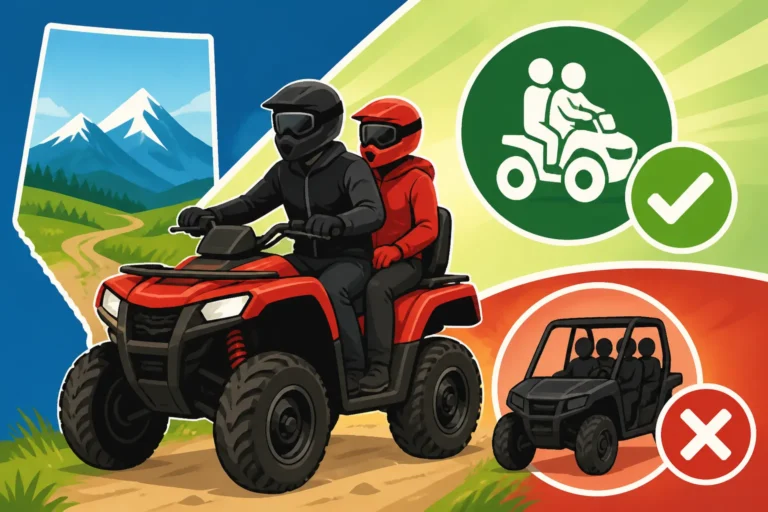
| Passenger Safety | Limited, often restricted | ROPS and seatbelts for all occupants | All passengers must be belted in UTVs | Manufacturer limits, proper seating, and restraints are vital. |
Disclaimer
This article is for general informational purposes only and does not constitute professional advice. Laws, prices and regulations vary by location and change over time. Consult a qualified professional for guidance on your specific situation.