Alberta Parks Closed to Machines
It's incredibly frustrating when you're geared up, your machine is running perfectly, and you're ready for an adventure, only to discover that the beautiful natural area you had your sights on is completely off-limits to your ATV or side-by-side. Alberta has some of the most stunning landscapes in the world, and many of us naturally want to explore them on our off-highway vehicles (OHVs). However, a significant portion of these lands, particularly our provincial parks and other protected areas, are explicitly closed to OHV use. This guide will walk you through why certain Alberta parks are closed to OHVs, what types of parks fall under these restrictions, and crucially, how you can find legal and exhilarating places to ride your machine without risking fines, environmental damage, or vehicle seizure.
Understanding Alberta's Protected Areas and OHV Access
As passionate OHV riders, we often look at a vast stretch of wilderness and see endless possibilities for exploration. It's easy to assume that if it's "public land," it's fair game. But Alberta's landscape is a mosaic of different land designations, each with its own set of rules and purposes. Many of these areas are specifically set aside for conservation, passive recreation, or to protect sensitive ecosystems, and this often means a firm "no" to motorized vehicles.
The "Why Not Here?" Frustration: Balancing Recreation and Conservation
We've all been there: you pull up to a trail entrance, see a beautiful panorama, and then spot the dreaded "no motorized vehicles" sign. It's a bummer, and it can feel like your favourite pastime is being unfairly targeted. But when you delve a little deeper, the reasons behind these closures usually come down to a delicate balancing act between allowing public access and preserving the very nature we all cherish.
Firstly, many park closures are driven by ecological sensitivity. OHVs, while incredibly fun, can leave a significant footprint. They can compact soil, erode trails, disturb fragile vegetation, spread invasive species, and impact water quality in streams and wetlands. Imagine a pristine alpine meadow or a critical wildlife habitat being crisscrossed by dozens of machines daily; the damage, even unintentional, can be immense and long-lasting. Parks often contain unique plant species, breeding grounds for birds, or migratory routes for large mammals that are easily disrupted by noise and presence of vehicles.
Secondly, user conflict is a major factor. Provincial parks are heavily used by hikers, birdwatchers, equestrians, and families seeking quiet recreation. The noise of OHVs, even with [Alberta Bans Modified Exhausts] rules in place, can significantly detract from the experience of those seeking solitude or peace. There's also a safety aspect: mixing fast-moving machines with pedestrians on shared trails can be a recipe for accidents. These areas are designed to offer a different kind of outdoor experience, one where the roar of an engine isn't part of the soundtrack.
Lastly, closures can be about trail sustainability. In areas not designed for OHV use, existing trails might be too narrow, too steep, or too sensitive to withstand the heavier impact of machines. Opening these areas could lead to rapid degradation of the trail system, requiring costly repairs or leading to further closures. It's about ensuring the land remains accessible and enjoyable for its intended users for generations to come, which sometimes means making tough decisions about what activities are permitted where.
Different Types of Parks, Different Rules
Alberta's parks system is more nuanced than just "parks." There are several designations, each with specific objectives and regulations, impacting whether your OHV is welcome. Knowing the difference is key to planning your ride and avoiding a nasty surprise.
-
Provincial Parks: These are Alberta's flagship protected areas, like Kananaskis Country (though it's a Public Land Use Zone, parts within it are designated Provincial Parks and Wildland Parks) or Cypress Hills Provincial Park. They are generally managed for conservation, outdoor recreation, and education. OHV use is almost universally prohibited within the boundaries of a Provincial Park. The focus here is typically on activities like hiking, camping, fishing, and wildlife viewing, where motorized vehicle access is limited to paved roads and designated parking areas. If you're looking to ride, a Provincial Park is usually not your destination.
-
Wildland Provincial Parks: As the name suggests, these areas prioritize wilderness preservation. They are typically larger, more remote, and managed to maintain their natural ecological processes with minimal human impact. Access is often restricted to foot or horseback, with very limited, if any, developed facilities. OHV use is strictly prohibited in Wildland Provincial Parks. These are places for true backcountry adventures, far from the sound of an engine.
-
Ecological Reserves: These are Alberta's most protected natural areas, established to preserve unique ecosystems, critical habitats, or representative natural features. Public access is often highly restricted, and any activity that could disturb the environment is forbidden. OHVs are absolutely not allowed in Ecological Reserves. You're unlikely to even find an accessible trail in many of these areas, as their purpose is pure preservation.
-
Natural Areas: These are smaller, often less-developed protected areas that conserve natural landscapes and provide opportunities for low-impact recreation. While some might have existing trails, OHV use is generally not permitted unless explicitly designated, which is rare. Always check specific signage or local regulations.
-
Wilderness Areas: Alberta has two designated Wilderness Areas (Siffleur and White Goat), which are even more stringent than Wildland Provincial Parks. Access is strictly non-motorized, emphasizing pristine wilderness experience. No OHVs here, ever.
Here's a quick reference table to help clarify:
| Park Type | Primary Purpose | Typical OHV Access | Example (General Area) |
|---|---|---|---|
| Provincial Park | Conservation, recreation, education | No | Cypress Hills |
| Wildland Provincial Park | Wilderness preservation, minimal human impact | No | Willmore Wilderness |
| Ecological Reserve | Protect unique ecosystems, critical habitats | No | Wagner Natural Area |
| Natural Area | Conserve landscapes, low-impact recreation | No (unless specified) | Glenbow Ranch |
| Wilderness Area | Pristine wilderness experience, non-motorized access | No | Siffleur Wilderness |
It's clear that if your goal is to ride your OHV, these types of parks are generally off-limits. So, where can you go?
Navigating the "No-Go" Zones for Your Machine
Understanding that many of Alberta's parks are closed to OHVs is the first step. The next is knowing how to identify these areas on the ground and understanding the laws that back up these restrictions. Ignorance of the rules, unfortunately, isn't a valid excuse when you're facing a provincial officer in the backcountry.
Spotting the Signs: Identifying OHV Prohibited Areas
When you're out exploring, especially if you're venturing into a new region, it's crucial to be vigilant about signage. Land managers put up signs for a reason, and they are your primary on-the-ground indicator of what's allowed and what's not.
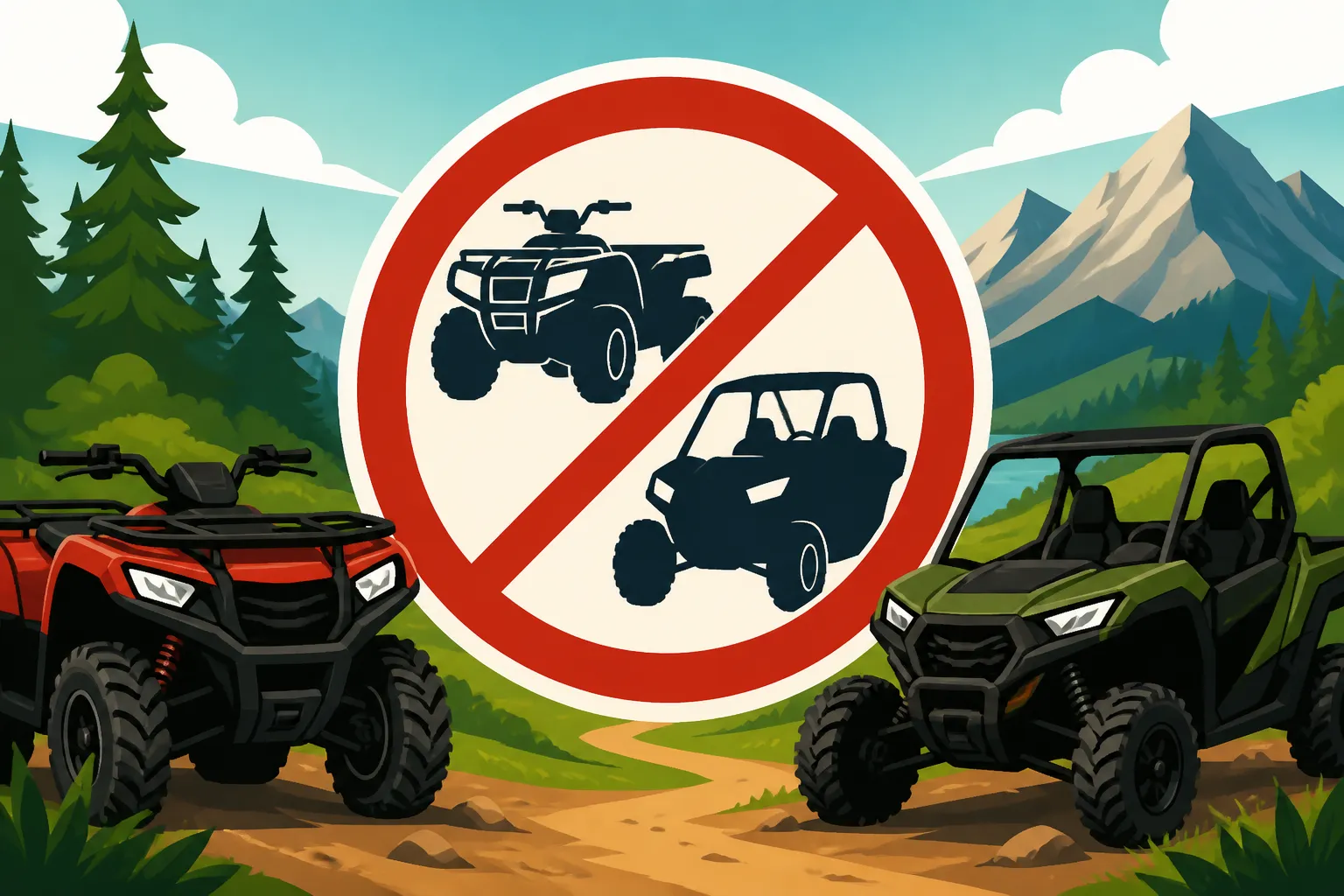
Look for signs that explicitly state "No Motorized Vehicles," "No OHVs," or display symbols indicating prohibited vehicles like ATVs, dirt bikes, or snowmobiles with a red slash through them. These signs are often posted at trailheads, entry points to protected areas, or along the boundaries where OHV-permitted land transitions into a restricted zone. Sometimes, they might indicate "foot traffic only" or "non-motorized use only." It's not always about specific park names; sometimes it's about the general land designation.
Beyond dedicated signs, pay attention to the overall infrastructure and feel of an area. If you see paved parking lots, well-maintained boardwalks, and interpretive displays, it's a good bet you're in a developed park area where OHV use is restricted to paved access roads at best. Conversely, areas with rough gravel roads, staging areas clearly designed for trailers, and maps showing designated OHV trails are usually a good indicator that you're in a permissible riding zone. Always err on the side of caution; if you don't see clear signs allowing OHVs, assume they are prohibited until you can confirm otherwise.
Another thing to remember is that maps are your best friend. Before you even leave the house, consult official provincial park maps or online resources from Alberta Parks. These maps clearly delineate park boundaries and often specify permitted activities. Digital mapping apps can also be incredibly helpful, especially those that overlay different land designations. Just make sure your maps are up-to-date, as regulations can sometimes change. [Alberta OHV Trail Map Downloads] can be a huge help here.
The Legal Framework: What Laws Govern Park Access
These closures aren't just suggestions; they're backed by provincial law, and violating them can lead to significant consequences. The primary legislation governing OHV use in Alberta is the Traffic Safety Act and the Off-Highway Vehicle Regulation (319/2002). However, when it comes to parks and protected areas, other specific acts and regulations come into play.
The Provincial Parks Act, the Wilderness Areas, Ecological Reserves, Natural Areas and Heritage Rangelands Act, and the Public Lands Act all provide the legal authority to designate specific areas where certain activities, including OHV use, are restricted or prohibited. These acts empower park rangers and enforcement officers to issue tickets, impound vehicles, and levy other penalties for non-compliance.
For instance, within a Provincial Park, riding your OHV off a designated access road could be considered a violation of park regulations. This isn't just a minor infraction; it's a serious matter of respecting protected lands. Officers are not just looking for registration and insurance; they're also ensuring that riders are adhering to the specific rules of the land they're on. [Alberta Penalties for Riding Unregistered] and [Alberta Vehicle Seizure for No Insurance] highlight some of the more severe consequences, but riding where prohibited can also lead to fines specifically for illegal access or damage to protected areas. The bottom line is that these laws are in place to protect Alberta's natural heritage, and enforcement is taken seriously.
Finding Your Ride: Where OHVs Are Welcome in Alberta
So, if many of Alberta's most picturesque parks are off-limits, where can you take your ATV or side-by-side for a legitimate, legal, and thrilling ride? The good news is that Alberta still offers an incredible amount of public land where OHV use is not just permitted, but often encouraged, provided you stick to designated trails and follow the rules.
Public Land Use Zones: The Rider's Haven
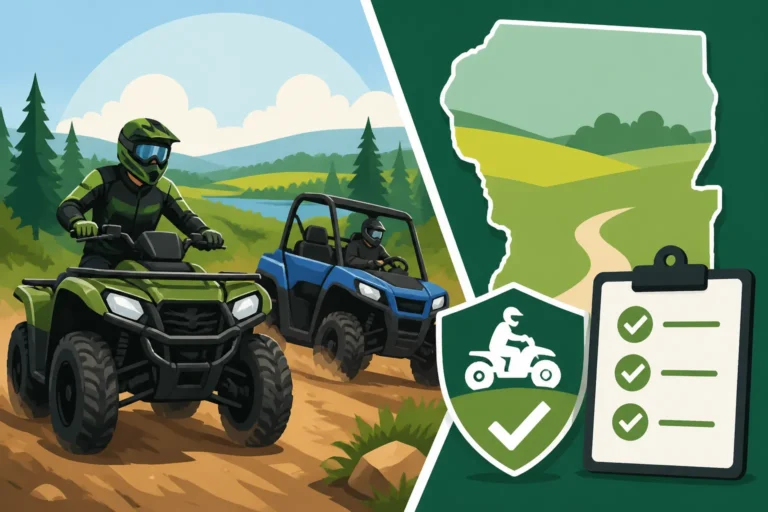
When it comes to legal OHV riding in Alberta, Public Land Use Zones (PLUZs) are your best bet. These are large areas of public land, often in the foothills and mountains, where a variety of recreational activities are managed to minimize conflict and environmental impact. Many PLUZs have extensive networks of designated trails specifically for OHVs.
Popular PLUZs that welcome OHV riders include:
- McLean Creek PLUZ: Located southwest of Calgary, [McLean Creek: Alberta's Best Known OHV Area] is a huge draw for riders, offering hundreds of kilometres of trails ranging from easy to challenging. It's a fantastic place to spend a day or a weekend, with designated staging areas and camping.
- Ghost PLUZ: West of Cochrane, the Ghost PLUZ offers rugged mountain and foothill riding experiences. It's known for its challenging terrain and stunning views. Keep in mind that some areas within the Ghost PLUZ have seasonal closures or specific restrictions, so always check before you go. [Ghost PLUZ Riding in Alberta] is a must-read for anyone heading there.
- Livingstone and Porcupine Hills PLUZs: Further south in the Crowsnest Pass area, these PLUZs also offer significant riding opportunities, often with a mix of forested trails and open rangeland.
- Nordegg/Rocky Mountain House Area: This central Alberta region has numerous cutlines, forestry roads, and designated trails where OHVs are welcome. Places like the Ram River area offer diverse terrain.
- Northern PLUZs: Up north, areas around Grande Prairie, Fort McMurray, and Whitecourt also boast vast tracts of public land and forestry zones that are OHV-friendly.
It's critical to understand that even within a PLUZ, you must stay on designated trails. Random riding off-trail is generally prohibited and can lead to significant fines. The purpose of designating trails is to concentrate the impact of OHVs, protecting the surrounding environment. Always look for maps specific to the PLUZ you plan to visit, which will clearly mark approved OHV trails. Many of these maps are available through the Alberta government's website or dedicated OHV associations like AOHVA. You'll also need to ensure your machine is registered and insured, and that you carry a [Alberta Public Lands Camping Pass] if you plan to camp in one of these zones.
Researching Before You Ride: Tools and Resources
Planning is your best friend when it comes to responsible and enjoyable OHV riding. Don't just point your truck and trailer towards a mountain range and hope for the best.
- Alberta Environment and Protected Areas Website: This is your official source for information on all provincial parks, PLUZs, and other protected areas. Look for detailed maps, rules, and any current advisories or closures (e.g., [Alberta Fire Bans and Riding]).
- Avenza Maps App: Many official PLUZ maps are available as georeferenced PDFs through the Avenza Maps app. You can download these maps to your phone and use your device's GPS to see your location even without cell service. This is invaluable for staying on designated trails and knowing where you are in relation to restricted areas.
- Local OHV Clubs and Associations: Organizations like the Alberta Off-Highway Vehicle Association (AOHVA) are excellent resources. They often have up-to-date information on trail conditions, closures, and group rides. They advocate for riders and work with the government to maintain and expand riding opportunities.
- Registry Agents: When you go to register your machine, a registry agent can be a great source of basic information on regulations, like [Alberta OHV Registration Cost] or [Alberta Requires Insurance on Public Land]. While they might not know every single trail closure, they can certainly clarify general legal requirements. [Alberta Registry Agents and OHV Paperwork] is a good read on this.
- Online Forums and Social Media Groups: While not official sources, rider communities can provide valuable firsthand accounts of trail conditions, popular spots, and even tips for new riders. Just remember to cross-reference any information with official sources.
By doing your homework and sticking to designated areas like the PLUZs, you can have fantastic OHV adventures across Alberta while respecting our beautiful natural environment and avoiding any legal headaches. Responsible riding ensures these opportunities will continue for years to come.
Disclaimer
This article is for general informational purposes only and does not constitute professional advice. Laws, prices and regulations vary by location and change over time. Consult a qualified professional for guidance on your specific situation.