Alberta Equipment Checks by Officers
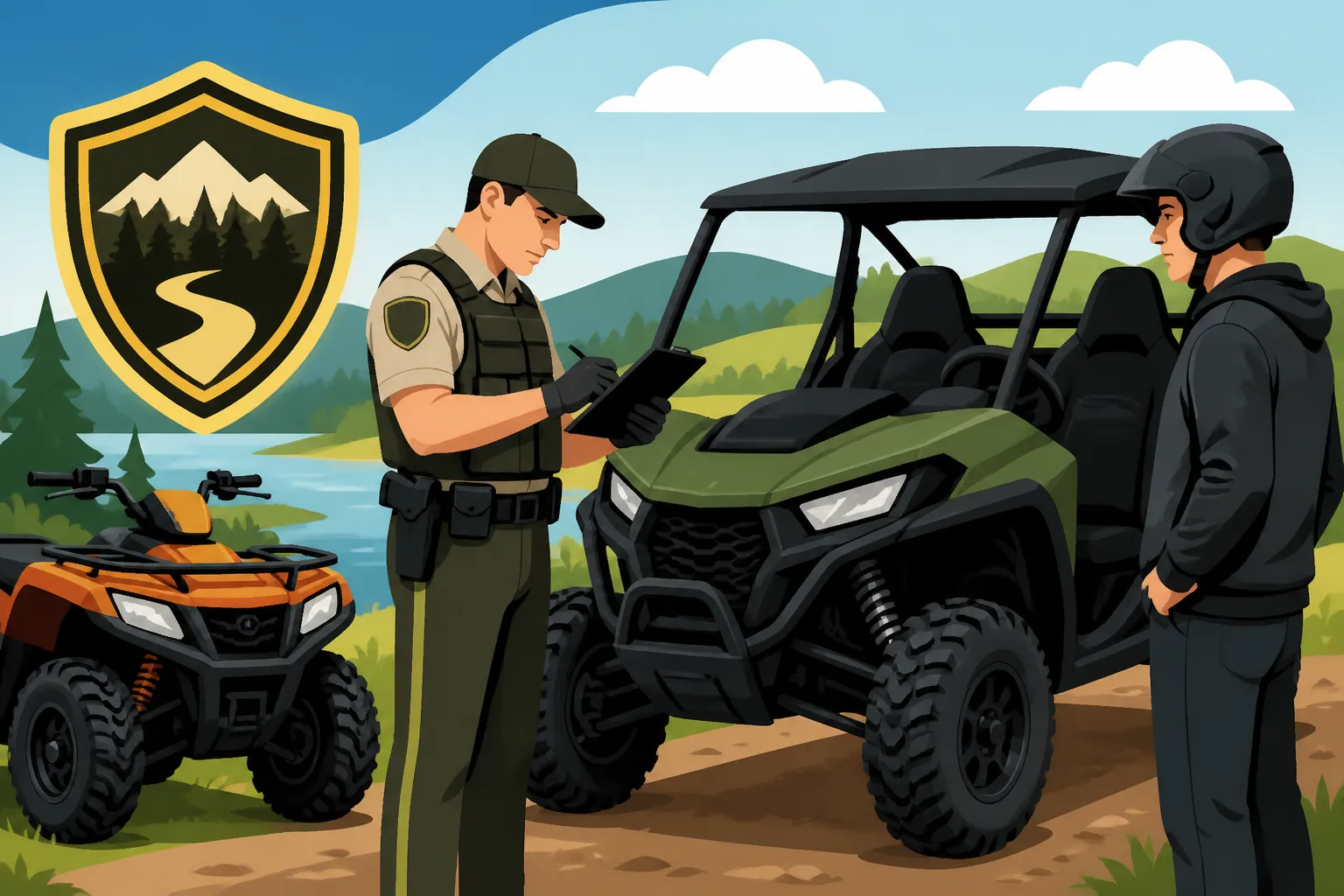
It's never a fun feeling to see those flashing lights in your rearview mirror, especially when you're out enjoying Alberta's beautiful backcountry on your ATV or side-by-side. Many riders worry about what an officer might be looking for during a stop, and the truth is, equipment checks are a common part of responsible OHV enforcement. This guide will walk you through exactly what Alberta officers are looking for when they stop you on the trail or public land, helping you understand the regulations and confidently ensure your machine is always ready to ride.
Why Officers Conduct OHV Equipment Checks in Alberta
When you're out riding, whether it's on a designated trail in a Public Land Use Zone (PLUZ) like McLean Creek, or simply crossing a range road, you might encounter an officer. Their presence isn't just about catching people doing wrong; it's a crucial part of maintaining safety for all users, protecting our natural environment, and ensuring the long-term sustainability of OHV recreation in Alberta. They're looking for adherence to the Off-Highway Vehicle Regulation 319/2002 and other relevant sections of the Traffic Safety Act.
Ensuring Rider and Public Safety
One of the primary reasons for equipment checks is to ensure the safety of the rider and everyone else on or near the trails. Imagine riding through a dense forest at dusk without working headlights, or a side-by-side that can't signal a turn because its tail lights are out. These aren't just minor inconveniences; they're serious hazards that can lead to preventable accidents. Officers are often looking for the basics – things that seem simple but are absolutely critical. They want to see that your machine is in good working order, minimizing the risk of a breakdown in a remote area or a collision with another rider, a hiker, or even wildlife. It’s about making sure your machine isn't a danger to yourself or others.
Beyond the immediate hazards, these checks also reinforce the idea of shared responsibility on public lands. When everyone's machines are properly equipped and maintained, it builds a safer, more predictable environment for all users – not just other OHV riders, but also hikers, equestrians, and campers who share these spaces. It's about proactive prevention, ensuring that a fun day out doesn't turn into an emergency situation because of a preventable equipment failure.
Protecting Alberta's Natural Environment
Alberta’s wilderness is precious, and off-highway vehicles, while providing amazing access, can also have an impact if not operated responsibly. Environmental protection is a significant driver behind many OHV equipment regulations, particularly concerning exhaust systems. Loud, modified exhausts don't just annoy other trail users; they can disturb wildlife and contribute to noise pollution that diminishes the outdoor experience for everyone. Officers are often on the lookout for machines that are excessively loud because it's a clear indicator that the exhaust system might not be compliant.
Furthermore, a critical component of environmental protection is fire prevention. Alberta summers can be incredibly dry, and a single spark can devastate vast tracts of forest and grassland. This is where a properly functioning spark arrestor becomes non-negotiable. Officers understand the immense risk posed by machines without this crucial device, and they will absolutely be checking for it. By ensuring machines comply with these standards, enforcement helps to preserve the pristine beauty and ecological integrity of Alberta's public lands for generations to come.
Key Equipment Officers Look For on Your OHV
When an Alberta officer pulls you over, their inspection will typically focus on a few core areas related to your machine's safety and environmental compliance. Knowing these key points beforehand means you can do your own checks and ride with confidence. These aren't just suggestions; they are legal requirements designed to keep you and our shared natural spaces safe.
Lighting Requirements
Visibility is paramount, especially when conditions change rapidly or you're out near dusk. Alberta law is quite clear: your off-highway vehicle must have properly functioning head and tail lights when riding on public land. [Alberta Requires Working Head and Tail Lights] not just for night riding, but often during the day in areas of low visibility or certain designated zones. The officer will typically ask you to demonstrate these lights. They’ll want to see that your headlight casts sufficient light forward, and that your tail light is clearly visible from the rear. This isn't just about having the lights installed; they must be working. Many riders get caught out because a bulb has burnt out, or a wire has come loose. It's a quick check to do before every ride, and it can save you a ticket.
Some OHVs also come equipped with brake lights. While not universally mandated for all types of OHVs in Alberta, if your machine has them, they are generally expected to be in working order, as they are a crucial safety feature for signaling to riders behind you. An officer will often have you apply the brakes to confirm they illuminate. For those who enjoy adding accessories, it's vital to ensure any aftermarket lighting from brands like SuperATV is installed correctly and doesn't interfere with the primary lighting system, or create glare that could blind other trail users. Always double-check your connections and bulb functionality before heading out on any adventure.
Exhaust System and Spark Arrestor
The sound and emission from your OHV are significant points of interest for officers, primarily because of the impact on the environment and other recreational users. [Alberta Bans Modified Exhausts] that exceed factory noise levels. This means aftermarket exhausts designed purely for performance or a louder sound are often illegal on public land. An officer will be listening for excessive noise and may even use a sound meter. If your machine sounds significantly louder than stock, it's a red flag. The purpose of this rule is to mitigate noise pollution, which can negatively impact wildlife and detract from the peaceful experience of others enjoying nature.
Equally important, and perhaps even more so in dry conditions, is the spark arrestor. Every OHV operating on public land in Alberta must have an effective spark arrestor. [Alberta Requires a Spark Arrestor] to prevent hot carbon particles from escaping the exhaust and igniting dry vegetation, which can lead to devastating wildfires. Officers will often visually inspect the end of your muffler or exhaust pipe to confirm the presence of a spark arrestor and ensure it’s intact and functional. If it's missing, damaged, or modified to the point of being ineffective, you're looking at a serious violation. Even some performance exhausts from reputable companies like SuperATV might be sold without a spark arrestor or with a removable one – it's crucial to ensure it's installed and in good condition before hitting the trails. [Does Your Quad Need a Spark Arrestor in Alberta?] is a question every rider should know the answer to before they leave home.
Other Safety Gear and Documentation
Beyond the machine itself, officers will also be checking for personal safety gear and essential documentation. The most critical piece of personal equipment is, without a doubt, a helmet. [Alberta Helmet Law on Public Land] makes it mandatory for almost all riders. Officers will look to see that you and any passengers are wearing a helmet that meets recognized safety standards (like CSA, Snell, or ECE). It’s not just about having a helmet, but wearing it properly fastened. Riding without one is a common and costly mistake, carrying a significant fine.
Then there's the paperwork. Officers will always ask for proof of your machine’s registration and, if you're on public land, proof of insurance. [Alberta Requires Insurance on Public Land] means you need to have your insurance card handy, whether a physical copy or a digital one on your phone. They will also verify your OHV's registration, which means having your current registration certificate accessible. [What an Alberta Officer Can Ask to See] includes these documents, along with your driver's license if you're old enough to have one, or proof of age if you're a younger rider. A lost or unreadable license plate is also a concern; [Mounting an OHV Plate So It Stays Readable] is important, as it helps officers identify the machine and verify its registration status. Ensuring all your documents are in order and your personal safety gear is worn correctly is just as vital as the machine's equipment itself.
What Happens If Your OHV Fails an Equipment Check
Being stopped by an officer and having your OHV fail an equipment check can be a disheartening experience, to say the least. It’s important to understand the potential consequences, as they can range from a simple warning to significant fines, and in some serious cases, even having your machine impounded. The exact outcome often depends on the nature of the violation, the officer's discretion, and whether it’s a repeat offense.
Understanding Fines and Penalties
If your OHV is found to be non-compliant with Alberta's equipment regulations, you can expect to face penalties. For something like a burnt-out headlight, you might get a warning and a directive to fix it immediately if possible, or an order to cease riding until it's repaired. However, more serious infractions, such as a missing or ineffective spark arrestor, an excessively loud modified exhaust, or riding without valid registration or insurance, will almost certainly result in a ticket. [Alberta Ticket Costs for a Riding Violation] can be substantial, and these fines are meant to be a deterrent to ensure compliance. For instance, [Why a Modified Muffler Can Cost You a Ticket] isn't just about noise; it's about breaking a regulation designed for environmental peace and safety. Similarly, [Alberta Penalties for Riding Unregistered] can include a hefty fine, and it’s a situation you absolutely want to avoid. The penalties aren't just monetary; repeated offenses or very serious violations can also lead to more severe consequences.
When an officer writes you a ticket, it's not just the base fine you're dealing with. There are often administrative fees and victim surcharges that get added on, making the total amount significantly higher than you might expect. This is why being proactive and ensuring your machine is always compliant is so much cheaper and less stressful in the long run. Keeping up with maintenance, regularly checking your lights, and ensuring your exhaust and spark arrestor are legal will save you headaches and money.
Immediate Rectification vs. More Serious Consequences
In some situations, if the violation is minor and can be immediately rectified, an officer might allow you to do so on the spot. For example, if your license plate is obscured by mud, they might simply ask you to clean it. However, for more fundamental equipment failures or missing documentation, you could be ordered to cease riding your machine. This means you’d have to arrange for it to be transported off public land, which is inconvenient and can be costly. Imagine being miles into a trail system and being told you can't ride your machine out – that's a tough spot to be in!
The most severe consequence, particularly for infractions like riding without insurance, is vehicle seizure. [Alberta Vehicle Seizure for No Insurance] is a very real possibility. If your OHV is seized, you’ll not only face fines but also impoundment fees, storage costs, and the hassle of arranging to get your machine back, all of which can quickly add up to thousands of dollars. It’s a drastic measure, but it underscores the seriousness of certain violations, particularly those that pose a significant risk to public safety. This is why a thorough pre-ride check and ensuring all your paperwork is up to date is not just good practice, but a critical safeguard against major problems.
Proactive Steps to Ensure Your OHV is Trail-Ready
Riding an OHV in Alberta is an incredible experience, but it comes with the responsibility of ensuring your machine is always safe and compliant. Taking a few proactive steps before each ride can save you from inconvenient stops, fines, and potential safety hazards. Think of it as your personal pre-flight checklist before hitting the trail.
Regular Pre-Ride Inspections
Making a quick pre-ride inspection a habit is the single best way to avoid equipment-related issues. Before you even start your engine, walk around your machine and mentally (or physically) check off these items.
Here’s a quick checklist of what you should inspect:
| Item | Check | Why it's Important |
|---|---|---|
| Headlights | Turn on, ensure both high/low beams work. | Essential for visibility, especially at dusk or in low-light conditions. |
| Tail Lights/Brake Lights | Activate, ensure bright and visible from rear. | Signals your presence and braking intentions to riders behind you. |
| Spark Arrestor | Visually inspect for presence and good condition. | Prevents wildfires; legally required on public land. |
| Muffler/Exhaust | Listen for excessive noise; check for modifications. | Ensures compliance with noise regulations and environmental protection. |
| Tire Pressure | Check against manufacturer recommendations. | Affects handling, safety, and tire longevity. |
| Brakes | Test front and rear for effective stopping power. | Critical safety feature; prevents collisions. |
| Steering | Check for looseness or play. | Ensures precise control and responsiveness. |
| Fluid Levels | Engine oil, coolant, brake fluid. | Prevents mechanical breakdowns and overheating. |
| Registration Plate | Ensure it’s clean, visible, and securely attached. | Required for identification; avoids tickets for obscured plates. |
| Helmet | Inspect for damage, proper fit, and strap function. | Mandatory personal safety gear; protects against head injuries. |
| Paperwork | Valid registration, proof of insurance, ID. | Legally required; often requested by officers during checks. |
This simple ritual only takes a few minutes but can make all the difference. Imagine discovering a flat tire or a broken headlight in your driveway instead of deep in the wilderness – it's a far better scenario! Making sure your machine from front to back, top to bottom, is ready for the trail takes away a lot of the stress of encountering an officer.
Upgrading and Maintaining Compliant Parts
When it comes to maintaining or upgrading your OHV, always prioritize compliance. If a part is worn out, replace it with an equivalent or better part that still meets Alberta’s regulations. For example, if your headlight bulb burns out, don't just replace it with any old bulb; ensure it meets the light output required for safety. For components like exhausts, if you’re considering an aftermarket upgrade from brands like SuperATV, always verify that it is explicitly stated to be compliant with noise regulations and includes a functional spark arrestor for use on public lands. Many manufacturers will clearly indicate if their products are "trail legal" or "off-road use only."
Regular maintenance is also key. Spark arrestors can become clogged with carbon over time, reducing their effectiveness. Mufflers can develop leaks or internal damage that increases noise. By performing routine maintenance, such as cleaning your spark arrestor, checking for exhaust leaks, and replacing worn bulbs, you’re not only ensuring compliance but also extending the life of your machine and making your rides safer and more enjoyable. Think of it as an investment in hassle-free riding, where you can focus on the adventure rather than worrying about an unexpected equipment check.
Disclaimer
This article is for general informational purposes only and does not constitute professional advice. Laws, prices and regulations vary by location and change over time. Consult a qualified professional for guidance on your specific situation.