Helmets Since May 15, 2017
Riding an ATV or UTV in Alberta is an incredible experience, offering unmatched access to our province's stunning landscapes. However, many riders, especially those new to the sport or returning after a hiatus, find themselves scratching their heads over the helmet laws. It's not always clear cut, and the rules have definitely seen some significant updates. This guide will cut through the confusion, explaining Alberta's mandatory helmet requirements for off-highway vehicles, focusing on the changes that took effect in 2017, and helping you understand exactly when and where a helmet is a non-negotiable part of your gear.
The Shift to Mandatory Helmets: What Changed in 2017
For years, the rules around helmets for off-highway vehicles (OHVs) in Alberta were a bit of a grey area, leaving many to wonder if they truly needed one. It was a common sight to see riders, particularly on private land or less regulated trails, without head protection. This changed fundamentally with new legislation introduced in 2017, specifically on May 15th of that year. This date marked a significant turning point for rider safety in Alberta, as helmets officially became mandatory for most OHV users on public land.
Before the Mandate: A Different Landscape for Riders
Before May 15, 2017, while helmets were always strongly recommended by safety advocates and seasoned riders, they weren't universally required by law for all OHV operation. This led to a patchwork of practices across the province, with some riders opting for helmets for personal safety, others only wearing them in organized events, and some foregoing them entirely. There was often confusion about whether certain types of machines or specific riding areas necessitated a helmet, and enforcement could be inconsistent. Many of us remember the days when the choice felt more individual, but the province recognized a growing need for enhanced public safety.
This previous lack of a universal mandate often put riders at greater risk, as head injuries are among the most severe and common in OHV accidents. The move to mandatory helmets was a direct response to injury data and a push from safety organizations to better protect riders across all ages and experience levels. It was about bringing Alberta's OHV safety standards in line with best practices, ensuring that everyone hitting the trails understood their responsibility to protect themselves.
Why the Law Was Updated: Prioritizing Rider Safety
The primary motivation behind the 2017 amendment to the Off-highway Vehicle Regulation (319/2002) was unequivocally rider safety. Statistics consistently showed that head injuries were a leading cause of death and serious disability in OHV incidents. By making helmets mandatory, the provincial government aimed to significantly reduce these preventable injuries and fatalities. It's a proactive measure designed to ensure that even a momentary lapse in judgment or an unexpected trail hazard doesn't result in life-altering consequences.
This legislative change also brought a clearer standard to the OHV community. Instead of debating whether a helmet was necessary or merely a good idea, the law now provides a definitive answer for most public land scenarios. This clarity helps both riders and law enforcement, streamlining expectations and promoting a culture of safety. For families riding together, it provided a clear guideline for protecting younger, less experienced riders, ensuring they start their adventures with proper protection. You can find more details on why the change was made in [Why Alberta Made Helmets Mandatory on Public Land].
Who Needs to Wear a Helmet in Alberta (and Where)
The core of Alberta's helmet law, post-May 15, 2017, is quite clear: if you're operating or riding as a passenger on an OHV on public land, you need a helmet. This blanket rule covers most recreational riding scenarios and aims to create a consistent safety standard across the province's vast network of trails and public access areas.
Public Land Versus Private Land: Defining the Boundaries
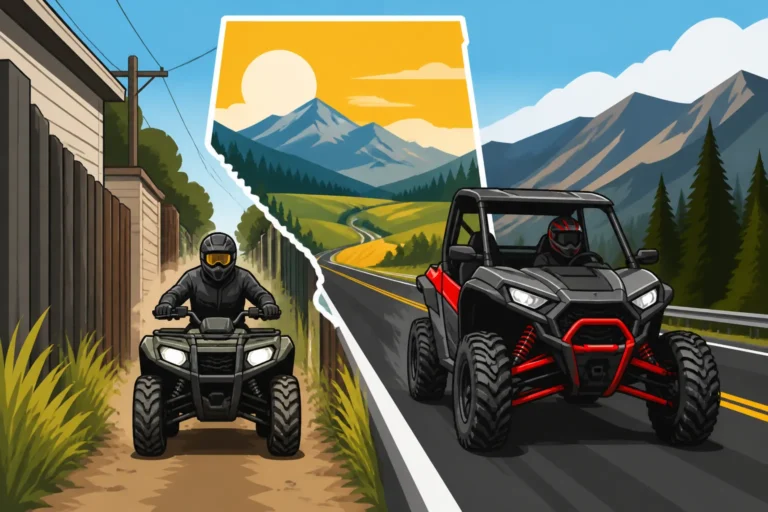
Understanding the distinction between "public land" and "private land" is crucial because it directly impacts when the helmet law applies. Public land in Alberta is broadly defined and includes designated OHV trails, Crown land, provincial parks (where OHVs are permitted), utility corridors, and even highway ditches. Basically, if it's not privately owned property, it's generally considered public. This is where most recreational OHV riding takes place, from the popular trails of McLean Creek to the extensive networks in the Ghost PLUZ. For a comprehensive overview, see [Alberta Helmet Law on Public Land].
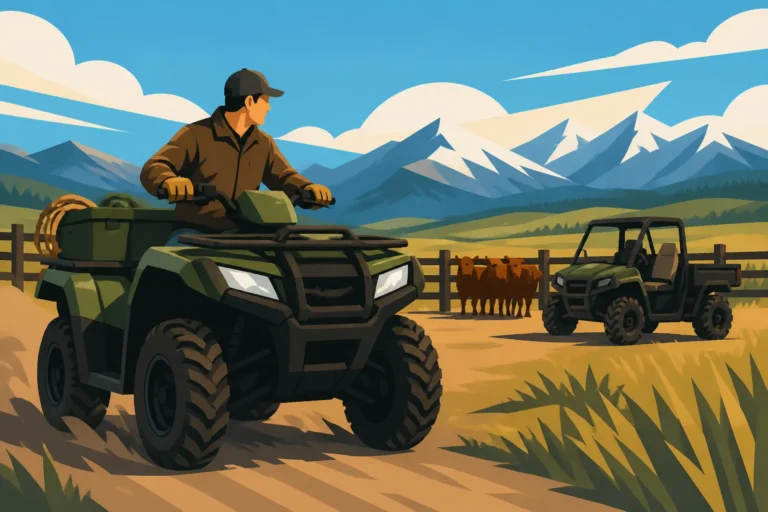
On private land, the helmet requirement changes. If you are riding your OHV exclusively on private property that you own or have explicit permission to use, the provincial helmet law generally does not apply. This means that if you're working on your own farm, riding around your acreage, or exploring a friend's private land with their permission, you are technically exempt from the provincial helmet mandate. However, it's critical to remember that while the law may not require it, wearing a helmet on private land is still a paramount safety measure. Accidents can happen anywhere, and the consequences of a head injury are just as severe on private property as they are on a public trail. Many riders choose to wear a helmet regardless, simply because it's the smart thing to do. [Alberta Private Property Helmet Exemption] provides more context.
Exemptions and Special Circumstances
While the general rule is "helmet on public land," Alberta's law does account for a few specific exemptions. It's important to understand these, not to look for loopholes, but to be aware of the nuances of the legislation.
One notable exemption applies to certain religious head coverings. Specifically, members of the Sikh religion who wear a turban are exempt from the helmet requirement, provided their turban is properly worn. This is a specific accommodation to religious freedom while still emphasizing safety where possible. Another exemption exists for individuals operating an OHV that has a cab or roll-over protective structure (ROPS) and is equipped with seatbelts, provided the seatbelts are being worn. This typically applies to many modern side-by-sides. If your machine provides this level of integrated protection, the helmet mandate is often waived. This is a critical point for many side-by-side owners, and you can explore this further in [Do You Need a Helmet in a Side-by-Side?].
Lastly, there can be specific exemptions for agricultural or industrial use on public land, though these are often very narrowly defined and require specific conditions to be met. For instance, a farmer moving a machine from one field to another across a public road allowance for work purposes might have different requirements than someone riding for recreation. Always verify specific rules if you believe your situation falls under an occupational exemption. It's never a bad idea to wear a helmet even if exempt, as safety should always be your top priority.
Understanding Helmet Standards and Exemptions
It's not enough to simply wear a helmet; the helmet you choose for riding your ATV or UTV on Alberta's public lands must meet certain safety standards. This ensures that the protection you're relying on has been rigorously tested and is genuinely capable of safeguarding your head in the event of an impact. Just grabbing an old bicycle helmet or a construction hard hat won't cut it, and could actually lead to a ticket.
What Makes a Helmet Legal: CSA Standards and Beyond
In Alberta, the law specifies that an OHV helmet must meet one of several recognized safety standards. The most common and widely recognized standard in Canada is the Canadian Standards Association (CSA) standard. A helmet meeting the CSA CAN3-D230-M85 standard, or newer equivalent, is legally acceptable. When you're shopping for a helmet, look for a CSA sticker or label, usually found inside the helmet or on the chin strap.
Beyond CSA, other international standards are also recognized, acknowledging the global market for quality safety gear. These often include the U.S. Department of Transportation (DOT) standard, the Snell Memorial Foundation (Snell) certification, and the Economic Commission for Europe (ECE) standard. Reputable helmet manufacturers will clearly mark their helmets with the standards they meet. It's about ensuring the helmet is designed to withstand the types of impacts and forces associated with OHV riding, offering real protection rather than just a perceived one. For more information on what to look for, check out [Alberta CSA Helmet Standards] and [Buying a CSA-Approved Helmet Before an Alberta Ride].
Exceptions for Specific Machines: Side-by-Sides and Rollover Protection
Modern side-by-sides (UTVs) have introduced a new dynamic to helmet laws due to their inherent design. Many side-by-sides come equipped with factory-installed rollover protective structures (ROPS) and seatbelts, essentially creating a cabin-like environment. The Alberta law makes an important distinction here: if your OHV is equipped with a ROPS and seatbelts, and you are properly wearing those seatbelts, a helmet is generally not required. This acknowledges the significant level of passive safety built into these machines.
However, it's crucial to understand the specifics. This exemption is for machines designed with these features, not for riders who might add a roll cage to a quad. And the seatbelt use is mandatory for the exemption to apply. If you have a side-by-side but aren't wearing your seatbelt, or if your machine lacks a factory ROPS, then the helmet rule still applies. Many riders, even with ROPS and seatbelts, still opt to wear a helmet in a side-by-side, especially on challenging terrain or at higher speeds, simply because it adds another layer of protection. Accessory companies like SuperATV offer a range of safety components and upgrades for side-by-sides, from enhanced roll cages to harnesses, that complement the inherent safety features of these machines, even if they don't directly change the helmet requirement. [Alberta Rollover Protection Exemption] offers a deeper dive into this topic.
Consequences of Not Wearing a Helmet (and Staying Safe)
Ignoring Alberta's helmet law isn't just a matter of personal risk; it carries legal penalties that can quickly turn an enjoyable ride into a costly headache. Beyond the fines, it's crucial to remember that the law is in place to protect you from severe injury. A helmet is a small piece of gear with massive protective potential.
Fines and Penalties for Non-Compliance
If you're caught riding an OHV on public land in Alberta without a compliant helmet, you're looking at a ticket. The specific fine amount can change over time, but generally, it's a significant penalty. Officers conducting compliance checks at staging areas or on trails are well within their rights to stop you and verify your adherence to the law. This is not just a warning; it's a clear enforcement of a safety regulation.
Beyond the initial fine, there can be other implications. In the event of an accident, not wearing a helmet could potentially affect insurance claims or be considered a factor of contributory negligence. It's also a point that officers consider when assessing overall safety during an incident. For detailed information on the financial implications, see [Alberta Helmet Fines and How They Are Issued] and [Alberta Penalties for No Helmet]. The simplest way to avoid these penalties is to simply wear a helmet that meets the required standards every time you hit public land.
The True Cost: Preventing Serious Injury
While fines are certainly a deterrent, the true "cost" of not wearing a helmet is far more profound: the risk of serious, life-altering injury or even death. Head injuries, even seemingly minor ones, can have long-lasting effects on cognitive function, motor skills, and overall quality of life. An OHV accident can happen in an instant – hitting an unseen obstacle, taking a corner too fast, or another rider making an error. A helmet provides a critical layer of protection against impacts that could otherwise be devastating.
Think about the investment you make in your machine, your gear, and the time you dedicate to enjoying the outdoors. A quality, compliant helmet is one of the most cost-effective investments you can make to protect your most valuable asset: your brain. Modern helmets are also more comfortable and feature-rich than ever before, offering good ventilation, anti-fog visors, and lightweight designs. Consider other safety accessories for your machine too, like robust skid plates or A-arm guards from brands such as SuperATV, which protect your vehicle, but a helmet protects you. Making it a habit to always wear your helmet, just like you wouldn't drive a car without a seatbelt, is the most crucial step you can take for a safe and enjoyable riding experience. It's about returning home safely after every adventure, ready to plan the next one.
Disclaimer
This article is for general informational purposes only and does not constitute professional advice. Laws, prices and regulations vary by location and change over time. Consult a qualified professional for guidance on your specific situation.