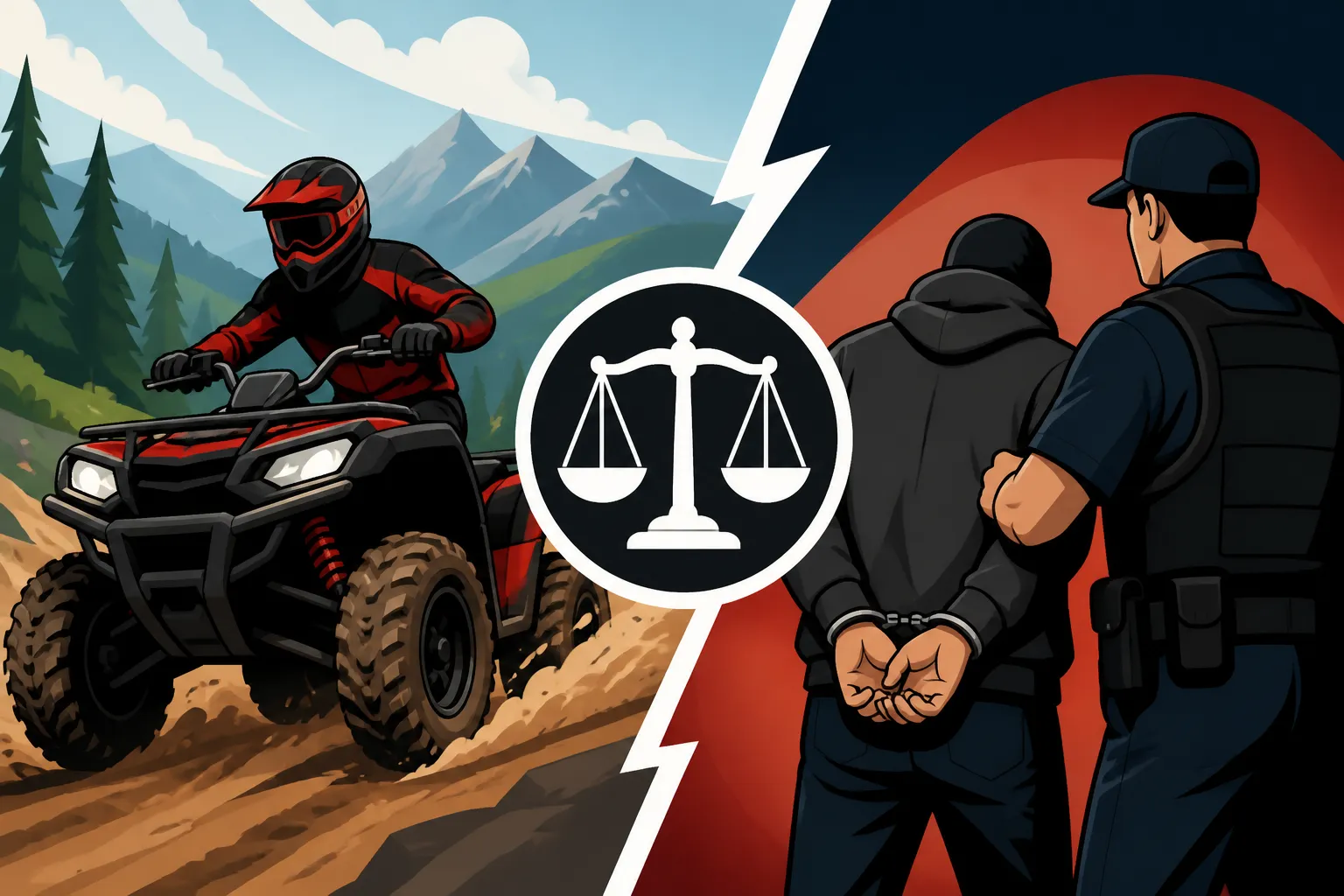
When Riding a Quad Becomes a Criminal Charge
It’s a beautiful day, you’re out on your quad, wind in your hair, enjoying the freedom that comes with Alberta’s incredible backcountry. But sometimes, a ride can take a wrong turn, and what started as a simple outing can quickly escalate into a serious legal situation. This guide isn't about the usual fines or traffic tickets; it's about the much more severe consequences when riding an OHV leads to criminal charges. We'll break down the scenarios that can land you in truly hot water, and what that means for your future, far beyond just a hefty fine.
Understanding the Line Between a Ticket and a Charge
Many off-highway vehicle (OHV) riders in Alberta are familiar with the various tickets and fines that can come from breaking provincial or municipal bylaws. Maybe you forgot to register your machine, or you were caught riding without a helmet. These are typically considered provincial offences, and while they can be costly and frustrating, they generally don't result in a criminal record. However, there's a distinct line where actions taken on an OHV can cross into the realm of the Criminal Code of Canada, leading to much graver consequences. This isn't just about paying money; it's about your freedom and your future.
When a Provincial Offence Escalates
Imagine you're riding a modified machine, perhaps with an exhaust system that's a bit too loud for comfort. That's usually a provincial offence under the Off-Highway Vehicle Regulation. But what if you repeatedly ignore warnings, engage in a high-speed chase with law enforcement, or deliberately use your machine to damage private property? Suddenly, the initial noise complaint or equipment violation can become part of a larger narrative that hints at a disregard for the law or the safety of others.
The shift often occurs when an action involves a higher degree of intent, negligence, or risk to public safety. For instance, if you're riding in a prohibited area and accidentally cause minor environmental damage, it might be a significant fine under provincial environmental acts. But if you intentionally tear up protected land, knowing the harm it will cause, a prosecutor might consider more serious charges like mischief, especially if the damage is extensive or costly to repair. It’s about more than just the act itself; it’s about the mindset behind it and the impact on others.
The Role of Impaired Operation in Criminal Charges
Perhaps the most common way an OHV rider can face criminal charges is through impaired operation. This isn't just a concern for those driving cars on highways; it applies equally to operating an ATV, side-by-side, dirt bike, or snowmobile, even on remote trails or private land. The law is clear: if your ability to operate your machine is impaired by alcohol, cannabis, or any other drug, you can be charged under the Criminal Code.
The perception that "what happens in the bush, stays in the bush" simply isn't true when it comes to impaired riding. Law enforcement patrols OHV areas specifically looking for this, and the penalties are severe. Not only can you face a criminal record, but you'll also likely lose your driving privileges for all vehicles, including your car or truck. The consequences outlined for impaired driving on a public road are mirrored for OHV use. Make no mistake: operating an OHV while impaired can lead to a criminal conviction, significant fines, mandatory education programs, and even jail time. For a full breakdown, check out [Alberta Impaired Riding Penalties].
Common Scenarios Leading to Criminal Charges on an OHV
When we think of criminal charges, we often imagine scenarios involving cars on city streets. However, an off-highway vehicle is still considered a "conveyance" under the Criminal Code of Canada, meaning the same serious laws apply to their operation. The remote nature of OHV riding can sometimes create a false sense of security, leading riders to believe they are beyond the reach of the law, but this is a dangerous misconception.
Impaired Operation of an OHV
Let's dig a little deeper into impaired operation because it’s a critical point. If an officer has reasonable grounds to believe you've been operating your OHV while impaired by alcohol or drugs, they can demand a breath sample or other physical sobriety tests. Refusing to comply with these demands is, in itself, a criminal offence, regardless of whether you were actually impaired. This is often treated with the same severity as being impaired.
The consequences of an impaired operation charge are far-reaching. A conviction will result in a criminal record, which can impact your ability to travel internationally, your employment prospects, and even your personal reputation. You'll likely face substantial fines, a driving prohibition that applies to all motor vehicles (even your daily driver), and potentially a period of probation or even incarceration, especially for repeat offenders or if there was an accident involving injury or death. This isn't just about a bad day on the trails; it can fundamentally alter your life.
| Violation Type | Provincial Offence (e.g., no helmet, unregistered) | Criminal Charge (e.g., impaired operation) |
|---|---|---|
| Legal Authority | Provincial Traffic Safety Act or bylaws | Criminal Code of Canada |
| Record Type | Driving record, provincial offence record | Criminal record |
| Fines | Typically fixed, specific amounts | Can be substantial, set by court |
| Jail Time | Rare, usually for non-payment of fines | Possible, especially for repeat offenses or harm |
| Driving Bans | May apply to OHV, sometimes overall licence | Mandatory, applies to all motor vehicles |
| Impact on Travel | Minimal | Can restrict travel to other countries |
| Employment | Minimal, unless job requires clean driving record | Significant, especially for jobs requiring checks |
| Long-Term Impact | Generally fades with time and good behaviour | Permanent, can be difficult to overcome |
Dangerous Operation and Reckless Endangerment
Beyond impairment, "dangerous operation" is another serious criminal charge that can arise from OHV use. This charge applies when someone operates a vehicle (including an OHV) in a manner that is dangerous to the public, having regard to all the circumstances, including the nature and condition of the place, the amount of traffic, and the use of the place. It's a broad category that covers a range of reckless behaviours.
Consider a rider who intentionally drives at excessive speeds through a popular staging area crowded with families and children, weaving in and out, or performing stunts that put others at extreme risk. Or perhaps someone engaged in a high-speed pursuit with law enforcement, deliberately trying to evade apprehension, creating a highly volatile situation. These are not mere tickets for speeding; they are actions demonstrating a blatant disregard for the safety of others and the law. If these actions cause injury or death, the charges escalate dramatically to dangerous operation causing bodily harm or death. Furthermore, officers have the authority to seize vehicles involved in serious violations, like dangerous driving, as outlined in [Alberta Vehicle Seizure for Riders].
Theft, Fraud, and Tampering with OHVs
The world of OHVs, unfortunately, isn't immune to criminal activity involving theft and fraud. If you are found to be in possession of a stolen OHV, even if you claim you didn't know it was stolen, you can face charges of possessing stolen property. The onus is often on the buyer to exercise due diligence to ensure a machine isn't stolen, which is why resources like [Checking a Serial Number for Theft Before You Pay] are so important.
Moreover, intentionally tampering with an OHV's Vehicle Identification Number (VIN) to disguise its origin or to facilitate theft or fraud is a serious criminal offence. Trying to register a machine with a falsified VIN, or attempting to remove or alter the existing VIN, can lead to charges under the Criminal Code. These actions betray a clear intent to deceive and defraud, and law enforcement takes them very seriously. If you've ever found yourself in a situation where the VIN is missing or unreadable, it's a red flag that requires immediate attention and investigation, as discussed in [Alberta Registration When the VIN Is Gone]. Always ensure your documentation is pristine and verifiable.
The Broader Implications of a Criminal Record
It's easy to dismiss a "minor" infraction on an OHV, but when things cross into criminal territory, the impact extends far beyond a simple fine or a temporary inconvenience. A criminal record is a permanent stain that can follow you for years, affecting various aspects of your life in ways you might not immediately consider. This isn't just about an embarrassing moment; it's about potentially reshaping your future.
Beyond Fines: What a Criminal Record Means for You
The immediate pain of fines, legal fees, and potential jail time is certainly a deterrent, but the long-term ramifications of a criminal record are often much more debilitating. One of the biggest impacts is on employment. Many employers, especially those in positions of trust, those working with vulnerable populations, or those requiring international travel, conduct criminal record checks. A conviction for an impaired driving offence or dangerous operation, even on an OHV, can lead to job loss or make it incredibly difficult to secure future employment.
International travel becomes complicated, too. Many countries, most notably the United States, can deny entry to individuals with criminal records, even for seemingly minor offences. A weekend trip across the border could become impossible, or require extensive and costly waivers. Furthermore, your reputation within your community, among friends, and even within your family can suffer a significant blow. The distinction between a provincial offence (like an unpaid parking ticket or a helmet violation discussed in [Alberta ATV Helmet Law Explained]) and a criminal conviction is crucial here; one impacts your driving record, the other affects your entire legal standing as a citizen.
Avoiding Escalation: Proactive Steps for Responsible Riding
The best way to avoid the nightmare of a criminal charge is to be a responsible, law-abiding rider. This starts with knowing and following all OHV regulations, both provincial and local. Always ensure your machine is properly registered and plated before you hit the trails. Understand the nuances of [Alberta Requires Insurance on Public Land] and carry proof with you at all times.
Wearing a CSA-approved helmet isn't just a suggestion; it's the law on public land, and it could save your life, as explained in [Alberta Helmet Law on Public Land]. Beyond these basics, always ride sober. This cannot be stressed enough. If you plan on consuming alcohol or cannabis, leave the OHV parked and have a designated driver, or simply abstain from riding. Understand designated riding areas like those on [Alberta Rules for Riding Crown Land] and respect private property. Keep your machine properly maintained, including lights that work and a spark arrestor, and ensure any aftermarket parts you install, like those from SuperATV, are compliant with noise and safety regulations to avoid drawing unwanted attention or posing a risk. Responsible modifications enhance your ride without breaking the law. By taking these proactive steps, you not only protect yourself but also preserve the privilege of riding for everyone.
Navigating the Legal System and What to Do
Finding yourself facing criminal charges related to your OHV is a frightening and overwhelming experience. The legal system can be complex and intimidating, especially if you've never had to deal with it before. Understanding your rights and the general process can help you navigate this difficult time, though ultimately, professional legal guidance is paramount.
Interaction with Law Enforcement and Your Rights
If you are stopped by law enforcement while operating your OHV and they suspect a criminal offence (like impaired driving or dangerous operation), it's crucial to understand your rights. Officers have the right to stop you and investigate. They may ask for your identification, registration, and proof of insurance, as detailed in [What an Alberta Officer Can Ask to See]. If they have reasonable suspicion you are impaired, they can demand a breath sample or other sobriety tests.
You have the right to remain silent and the right to speak with a lawyer without delay. It is always advisable to exercise your right to counsel before answering any questions beyond basic identification. What you say (or don't say) and do at this stage can significantly impact the outcome of your case. Be polite and cooperative, but firmly assert your rights. Do not resist arrest, even if you believe it is unjustified, as this can lead to additional charges. Your time to dispute the charges or the process comes later, in court.
Seeking Legal Counsel and Understanding the Process
Once you are charged with a criminal offence, the very first and most critical step is to seek legal counsel from a qualified criminal defence lawyer. Do not try to navigate the system alone. A lawyer can explain the specific charges against you, advise you on the strength of the prosecution's case, explore potential defences, and guide you through every stage of the legal process, from initial appearances to trial or plea negotiations. They can help you understand the long-term implications and fight to protect your rights and your future.
The court process for a criminal charge can be lengthy and involves several stages, including disclosure of evidence by the Crown, various court appearances, and potentially a trial. Your lawyer will be your advocate, negotiating with prosecutors, preparing your defence, and representing you in court. While you might be tempted to simply plead guilty to "get it over with," a lawyer can often explore alternatives or mitigate the consequences. Even if you've received a provincial violation and are considering disputing it, understanding the process for [Disputing a Ticket in Court] is a good precursor to how criminal court operates, but the stakes are exponentially higher. A criminal record has lifelong implications, so securing expert legal representation is an investment in your future.
Disclaimer
This article is for general informational purposes only and does not constitute professional advice. Laws, prices and regulations vary by location and change over time. Consult a qualified professional for guidance on your specific situation.