Can You Ride an ATV on the Road in Alberta?
It’s a question that nearly every ATV and UTV owner in Alberta eventually asks: "Can I just hop on the road and cruise down to the corner store, or even use the pavement to connect trails?" The simple answer, which can be incredibly frustrating for riders, is often a resounding "no" for the vast majority of public roads. This guide is here to break down the complexities of Alberta's rules, exceptions, and the real-world implications of riding your off-highway vehicle (OHV) on roads, helping you stay legal and safe.
The Hard Truth: Alberta's Default Position on ATVs on Public Roads
Let's face it, the convenience of using your quad to run an errand or link up two fantastic sections of trail is incredibly appealing. However, Alberta's Traffic Safety Act generally views your ATV, side-by-side, or dirt bike as an "off-highway vehicle," meaning it's primarily designed for terrain other than paved or even gravel public roads. This isn't just a suggestion; it's the law, and there are significant penalties for ignoring it.
The intent behind these regulations is multifaceted: safety for OHV riders, safety for other motorists, and preserving the integrity of our roads. OHVs typically aren't built with the same signalling, lighting, or speed capabilities as street-legal vehicles, and their handling characteristics are entirely different. This fundamental distinction is crucial to understanding why riding on most public roads is off-limits.
What the Law Says About "Highways" and Ditches
One of the biggest misunderstandings riders have is about what exactly constitutes a "highway" in Alberta's legal framework. When the Traffic Safety Act refers to a "highway," it’s not just talking about multi-lane freeways. This definition is incredibly broad and includes almost any public thoroughfare you can think of: provincial highways, paved county roads, gravel municipal roads, town streets, back alleys, and yes, even the ditches alongside them.
So, when you think about riding your quad in the ditch beside a county road, or using an alley to get from point A to point B in a small town, you are, in the eyes of the law, still operating on a "highway." This broad definition catches many riders by surprise, leading to tickets and frustration. It's important to remember that these aren't just arbitrary rules; they're designed to maintain order and safety across all public access ways. Think of it this way: if it's publicly maintained and accessible to vehicle traffic, it's likely a "highway." You can find more details in [Why the Legal Definition of Highway Includes the Ditch].
Why Your Quad Isn't Just Another Vehicle
Your ATV or side-by-side, while powerful and capable, lacks many features that are standard on street-legal vehicles. Things like turn signals, rearview mirrors, proper brake lights that activate consistently, a horn that meets specific decibel requirements, and even tires designed for sustained road use are often missing or not up to standard on stock OHVs. Moreover, the suspension and steering geometry of an ATV are optimized for rough terrain, not high-speed cornering on asphalt.
Trying to adapt an OHV for consistent road use often involves significant modifications, but even with these changes, the fundamental legal classification as an "off-highway vehicle" remains. While aftermarket companies like SuperATV offer incredible accessories to enhance your machine's performance and utility in its intended environment, these parts typically don't magically transform an OHV into a street-legal vehicle in Alberta. They can make your off-road experience safer and more enjoyable, but they don't override provincial legislation regarding public road access.
The Consequences of Ignoring the Rules
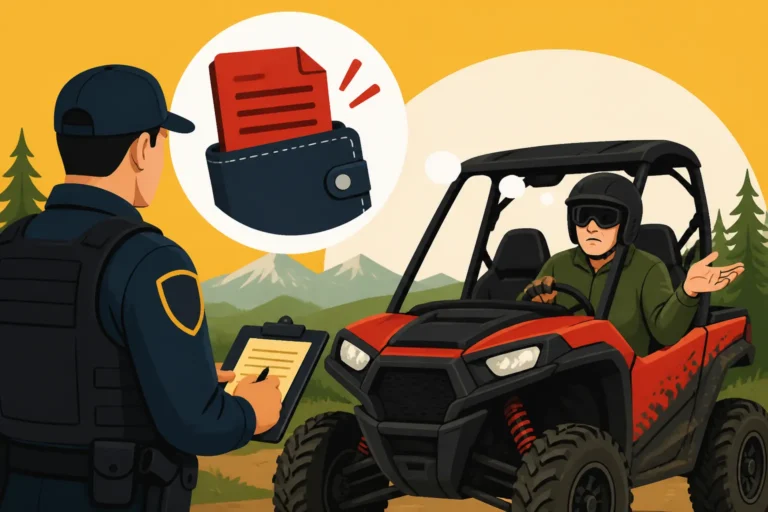
Riding your ATV on a public road where it's not permitted can lead to a number of unpleasant and costly consequences. First and foremost, you could face significant fines. Peace officers and RCMP routinely patrol areas where OHVs are commonly used and are well-versed in the regulations. A ticket for illegal road use isn't just a slap on the wrist; it can be a substantial financial hit.
Beyond fines, there's the risk of vehicle seizure. In more serious or repeat offenses, or if you're caught riding without mandatory [Alberta Requires Insurance on Public Land], officers have the authority to impound your machine. Imagine your long-anticipated riding trip ending with your quad on the back of a tow truck, incurring towing fees, impound fees, and the hassle of retrieving it. It’s a sure way to ruin a weekend. In the worst-case scenario, if you're involved in an accident on a road while operating your OHV illegally, your insurance coverage could be nullified, leaving you personally liable for damages, injuries, and potentially facing criminal charges depending on the severity of the incident.
Navigating the Exceptions: When and Where You Might Find Access
While the general rule is "no," there are specific, limited circumstances under which an OHV might legally operate on or across certain public roads in Alberta. These exceptions are critical to understand, as they are often location-specific and come with their own set of stringent requirements. It's never a free-for-all; rather, it’s about very particular situations.
Municipal Bylaws: A Patchwork of Possibilities
The most common exception to the "no OHVs on roads" rule comes down to local municipal bylaws. Alberta's counties, municipal districts, and some towns have the authority to create bylaws that specifically allow OHVs on certain roads within their jurisdiction. This is not a blanket permission across the province; it's a patchwork, and what's legal in one county might be strictly prohibited in the next.
For example, a rural county might have a bylaw that designates specific gravel roads or undeveloped road allowances where OHVs are permitted for certain purposes, like accessing agricultural land or connecting to trail systems. However, even these bylaws often come with restrictions on speed, time of day, and required equipment. You need to do your homework for every area you plan to ride. Checking the local county or municipal district website for their specific OHV bylaws is absolutely essential. Don't rely on what "everyone else does" or hearsay from other riders, as rules change and ignorance of the law is no excuse. This is why you need to research [Alberta Bylaw Lookups Before You Ride].
Special Permissions and Ministerial Orders
In rare instances, the Minister of Transportation can issue a "Ministerial Order" to designate a specific section of a provincial highway for OHV use. These are highly specific and usually temporary, often related to special events, resource extraction, or emergency access. These orders are not common for recreational riding and are definitely not something you can count on for everyday use.
Similarly, an individual or organization might apply for special written permission from the Minister for very specific circumstances, such as moving equipment for a major project that has no other viable route. These are extraordinary permissions and typically involve strict conditions, insurance requirements, and often a police escort. For the average recreational rider, obtaining such a permit for casual road riding is generally not an option. This is covered more in [Written Permission From the Minister].
Agricultural and Occupational Use: Limited Scope
If you're a farmer or rancher, or if you use an OHV for specific occupational purposes (such as oilfield work, trapping, or forestry), there are limited exemptions that allow you to operate your machine on certain roads. These exemptions are very specific and are tied directly to the performance of that work. You can't just take your farm quad for a joyride on the paved road to town because you use it for agricultural work on your property.
For example, a farmer might be able to use their quad on a municipal road to get from one section of their land to another, or to check fence lines. However, even then, the OHV must be operated safely, with appropriate lighting, and often only for short distances, and it must be clear that the operation is directly related to the agricultural or occupational activity. These exemptions do not generally apply to public main roads or highways. Understanding [Alberta's Farm Exemption From Registration] is key for rural landowners.
Crossing a Highway: How It's Done Legally
While continuous travel on a public road is largely prohibited, the Traffic Safety Act does generally allow OHVs to cross a public highway, but only under very specific conditions to ensure safety. This isn't permission to drive down the middle of a major road to get to your favourite coffee shop!
Here's how a legal highway crossing typically works:
- At a Right Angle: You must cross the highway at as close to a right angle as possible, not diagonally or by riding along the shoulder.
- Safe Manner: The crossing must be done in a safe manner, yielding to all vehicular traffic on the highway. This means waiting until the road is absolutely clear and you can cross without impeding or endangering any other vehicles.
- Quickest Route: You should take the most direct and quickest route across the highway. Lingering or travelling parallel to the highway on the shoulder is not permitted.
- No Intersections: Generally, these crossings should not occur at controlled intersections (where there are traffic lights or stop signs controlling multiple directions), as this can create confusion and danger. The intent is for uncontrolled, clear crossings.
This exception is designed to allow riders to access trails or private property that may be on the other side of a road, not to integrate OHVs into road traffic. Always exercise extreme caution and prioritize the safety of yourself and others when executing a highway crossing.
| Scenario | Generally Legal? | Notes |
|---|---|---|
| Riding on a paved provincial highway | No | Strictly prohibited unless a rare Ministerial Order is in effect. |
| Riding in the ditch of a county road | No | Ditches are legally part of the "highway" under the Traffic Safety Act. |
| Riding down a town street | No | Unless a specific municipal bylaw explicitly permits it on that street. |
| Using a back alley in town | No | Alleys are also considered part of the "highway" definition. |
| Crossing a paved highway | Yes (with conditions) | Must be at a right angle, safely, quickly, and yielding to all traffic. Not at controlled intersections. |
| Farm quad on a rural road between fields | Yes (with conditions) | Must be directly related to agricultural work, short distances, and follow local bylaws. |
| OHV on designated roads in an OHV Public Land Use Zone (PLUZ) | Yes | Within designated zones, specific internal roads may be part of the trail system. |
Beyond Legality: Safety, Equipment, and What Doesn't Make Your ATV Street Legal
When we talk about riding an OHV, safety should always be the absolute top priority. This applies whether you're ripping through the mud in McLean Creek or cautiously making a legal highway crossing. Proper equipment, both for the rider and the machine, is non-negotiable. It's also vital to understand that simply adding certain accessories to your quad doesn't magically make it street legal in Alberta.
Essential Safety Gear and Machine Requirements
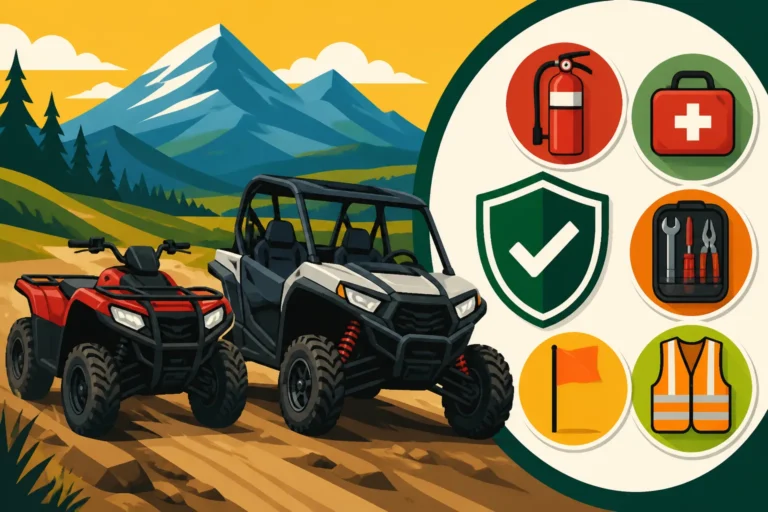
Even on private land or in designated off-highway vehicle areas, there are fundamental safety requirements for both you and your machine. On public land, these requirements become mandatory by law:
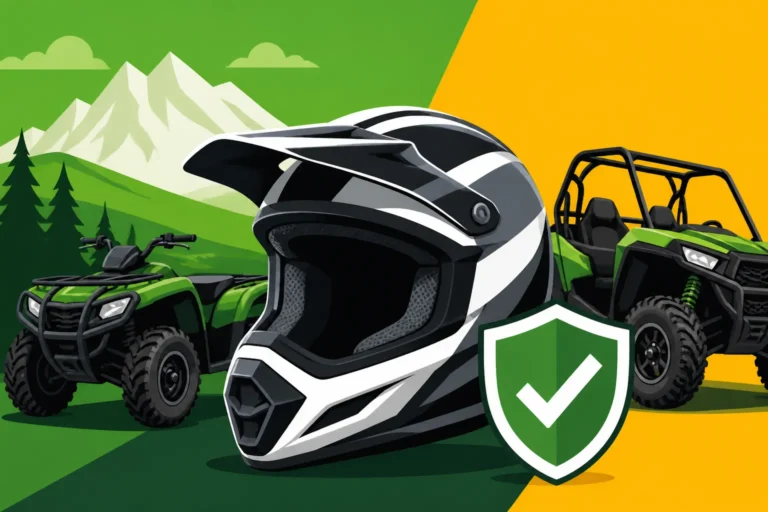
- Helmets: In Alberta, it is mandatory for all OHV riders and passengers on public land to wear a helmet that meets approved safety standards (CSA, Snell, ECE). This has been law since May 2017. [Alberta Helmet Law on Public Land] covers this in detail.
- Lights: Your OHV must have working head and tail lights if you plan to ride at any time from one hour after sunset to one hour before sunrise, or at any other time when visibility is poor. Even in daylight, having your lights on can improve your visibility to others, especially when making a legal crossing. [Alberta Requires Working Head and Tail Lights]
- Spark Arrestor: All OHVs operating on public land in Alberta must be equipped with a spark arrestor that is in good working order. This is a critical safety device designed to prevent sparks from escaping your exhaust and potentially starting wildfires, which are a serious concern in our beautiful province. [Alberta Requires a Spark Arrestor]
- Muffler: Your machine must have a muffler that is in good working order and not modified from the manufacturer’s original specifications in a way that increases noise levels. Excessive noise is a common cause of public complaints and can lead to tickets. [Alberta Bans Modified Exhausts]
While brands like SuperATV offer fantastic high-performance parts, lift kits, and advanced lighting solutions, these are generally designed to enhance your off-road experience or utility, not to convert your OHV into a street-legal vehicle for general road use in Alberta. They can make your machine more capable and safe where it is permitted to ride.
Why Aftermarket Parts Don't Grant Road Access
Many riders, especially those coming from jurisdictions where OHV street legality is more common (like some US states), might consider purchasing "street legal kits" that include turn signals, mirrors, and horns. While these kits, sometimes offered by accessory providers, can be excellent for enhancing visibility and meeting certain requirements in other places, they typically do not change the fundamental classification of your OHV under Alberta law for the purposes of general road use.
In Alberta, simply adding these accessories to your quad does not automatically make it legal to ride on public roads. The legal framework is tied to the vehicle's original design, manufacturing classification, and specific provincial legislation. A set of turn signals from SuperATV might be a great safety addition for trail riding or for those rare permitted road sections, but they won't grant you the right to cruise down Deerfoot Trail. The emphasis in Alberta is on where you can ride, not just how your machine is equipped.
Planning Your Ride: Know Before You Go
The most critical piece of advice for any OHV rider in Alberta is to "know before you go." This means:
- Check Local Bylaws: Always research the specific municipal district or county bylaws for the area you intend to ride. These are usually available on their official websites.
- Understand "Highway" Definitions: Internalize the broad definition of "highway" in Alberta law to avoid inadvertently riding illegally in ditches or alleys.
- Ensure Proper Registration and Insurance: Your OHV must be registered with the province and have valid liability insurance to be ridden on public land (which includes those limited road allowances or crossings). You can learn more about this in [What Alberta OHV Registration Costs]. Always carry proof of [Alberta Proof of Insurance on Demand] and your [Alberta Digital Certificates Must Be Printed].
- Equip Yourself and Your Machine: Make sure you and your passengers have appropriate helmets, and your machine meets all lighting, spark arrestor, and muffler requirements.
- Utilize Designated Areas: Alberta has fantastic Public Land Use Zones (PLUZ) like McLean Creek and the Ghost PLUZ where OHV riding is not only permitted but actively managed. These are the places designed for you to enjoy your machine to its fullest. Refer to resources like [Alberta OHV Trails: Riding Public Land] for ideas.
Riding an ATV on the road in Alberta is a complex issue with very few exceptions. By understanding the laws, respecting the purpose of public roads, and embracing the fantastic off-highway opportunities our province offers, you can ensure your riding adventures are safe, legal, and truly enjoyable.
Disclaimer
This article is for general informational purposes only and does not constitute professional advice. Laws, prices and regulations vary by location and change over time. Consult a qualified professional for guidance on your specific situation.