Alberta ATV Helmet Law Explained
Riding an ATV or UTV in Alberta is an incredible experience, offering unmatched access to our province's stunning landscapes. But with that freedom comes responsibility, and few topics cause as much confusion and concern among riders as helmet laws. It's easy to get tangled up in the specifics of what's allowed where, especially with different types of machines and varying land access rules. This guide is here to untangle all that, giving you a clear, empathetic breakdown of Alberta's helmet requirements so you can ride safely and legally, without second-guessing yourself.
Understanding Alberta's Mandatory Helmet Law for OHVs
For years, many off-highway vehicle (OHV) riders operated under the assumption that helmets were a matter of personal choice or only required in certain zones. That all changed, and understanding the current landscape is crucial for anyone hitting the trails or heading out on public land.
Why Helmets Became Law: Safety First
The shift to mandatory helmets wasn't an arbitrary decision; it was a direct response to a significant number of serious injuries and fatalities among OHV riders in Alberta. Before the law, emergency rooms saw far too many head injuries that could have been prevented or significantly mitigated by a helmet. The provincial government, along with safety advocates and rider groups, pushed for legislative changes to prioritize rider safety. [Alberta Helmets Required Since May 2017] came into effect to bring a consistent, province-wide standard to OHV use on public land.
This change aimed to reduce the burden on healthcare systems and, more importantly, to save lives and prevent life-altering injuries. It's easy to feel invincible on a quad or side-by-side, but accidents happen, often in unpredictable ways and at low speeds. A helmet is your first, best line of defence against serious trauma, acting as a crucial piece of safety equipment that protects your most vital organ.
Defining "Public Land" and Where the Law Applies
One of the biggest areas of confusion revolves around what actually constitutes "public land" in Alberta. The helmet law specifically applies to OHV operation on any public land. This isn't just designated OHV parks; it's a much broader definition. It includes all Crown land, whether it's managed as a Public Land Use Zone (PLUZ), a recreation area, or simply undeveloped forest. It also extends to road allowances, ditches alongside public roads, and any other land that isn't privately owned.
So, whether you're exploring the vast trails of McLean Creek, making your way down a ditch alongside a county road to access a field, or riding through a cutline on Crown land, you are on public land and a helmet is mandatory. The only real exception to this public land rule is private property, which we'll delve into in more detail shortly. For all intents and purposes, if you're not on your own fenced acreage or someone else's land with explicit permission, assume you need a helmet. This is the core of [Alberta Helmet Law on Public Land].
What Makes a Helmet "Legal" in Alberta?
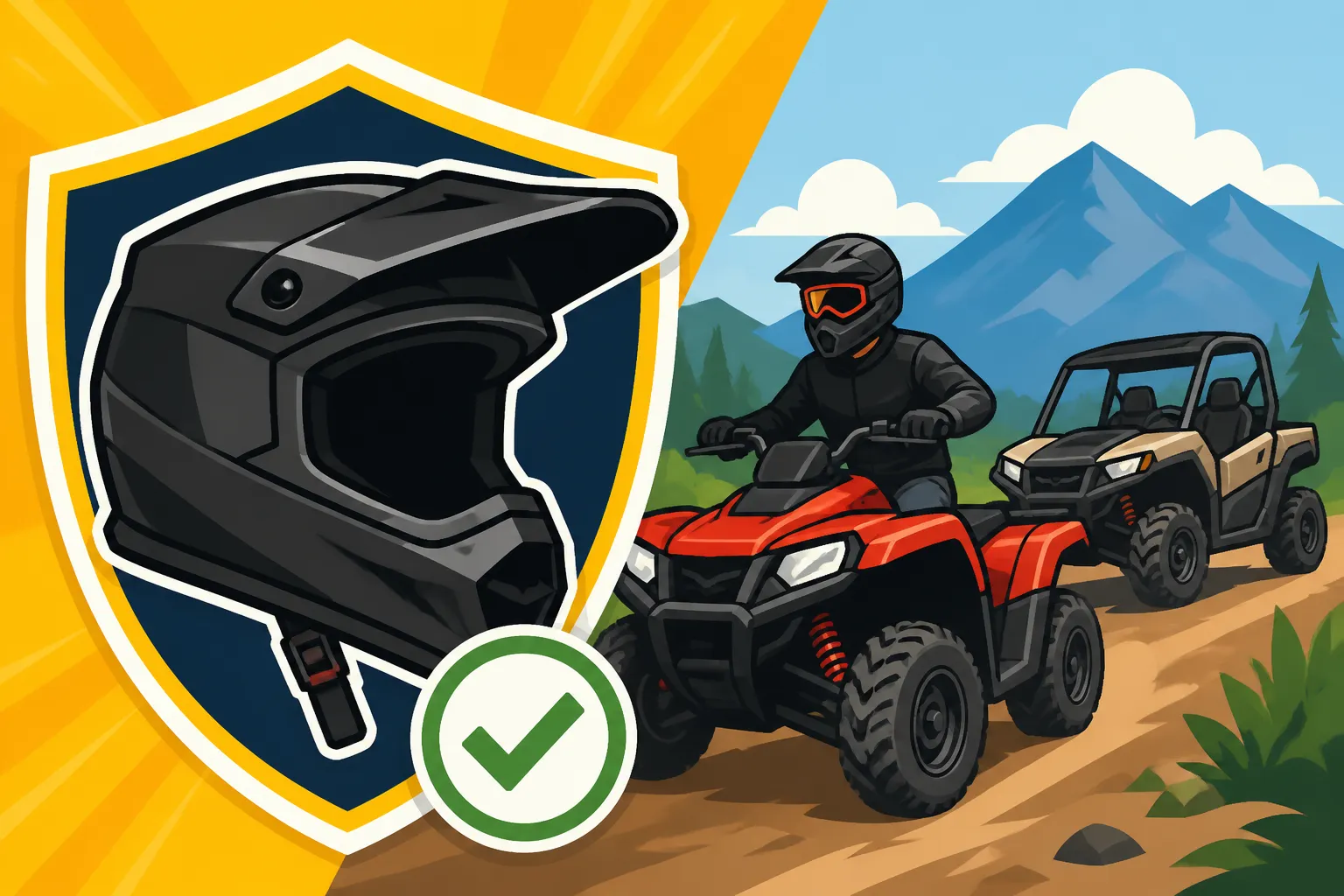
It's not enough to just wear any helmet; it needs to be one that meets specific safety standards. Alberta's law requires helmets that comply with the standards set by the Canadian Standards Association (CSA), specifically CAN3-D230-M85. However, the law also recognizes several equivalent international standards, acknowledging that many quality helmets are manufactured to other rigorous safety certifications. These include Snell Memorial Foundation (Snell), U.S. Department of Transportation (DOT), and Economic Commission for Europe (ECE).
When you're shopping for a helmet, always look for the certification sticker or label inside the helmet. A CSA, Snell, DOT, or ECE certification indicates that the helmet has undergone stringent testing and meets recognized safety benchmarks. Don't be tempted to use a bicycle helmet or a non-certified motocross style helmet, no matter how comfortable or cool it looks. These don't provide the level of protection required for OHV riding and won't stand up to the law, let alone a serious impact. This is precisely what [Alberta CSA Helmet Standards] addresses.
Key Exemptions to Alberta's OHV Helmet Requirements
While the general rule is "helmet on, always," there are a few specific situations where the law carves out exceptions. These aren't loopholes to exploit, but rather acknowledgments of specific circumstances where the intent of the law doesn't quite apply, or where alternative safety measures are already in place.
Riding on Private Land: Your Own Rules (Mostly)
The most significant and straightforward exemption is when you're riding your OHV exclusively on private property. If you own the land, or have express permission from the landowner, the provincial helmet law typically doesn't apply. This means if you're riding around your acreage, tearing up trails on your friend's farm, or practicing in a private sand pit, you're generally not legally required to wear a helmet under provincial legislation. This is often the case for [Alberta Private Property Helmet Exemption].
However, even though it's not legally mandated, prioritizing safety on private land is still crucial. Landowners still have a duty of care, and riders should always consider the risks. Many experienced riders will still opt for a helmet, even on private property, because accidents can happen anywhere, regardless of legal requirements. Remember, while the provincial law might not apply, local bylaws or specific agreements with landowners could still have expectations about safety gear, so it's always wise to check.
Occupational and Cultural Exceptions
Alberta's helmet law also includes specific provisions for certain occupational and cultural situations. These exemptions are carefully defined and aren't meant for general recreational use. One primary example is the exemption for individuals engaged in farm and ranch work. If you're using your OHV strictly for agricultural purposes on a farm or ranch, you are generally exempt from the helmet requirement. This is a practical recognition of the varied tasks performed with OHVs in a working environment. For more details, you can look into [Alberta Farm and Ranch Work Exemption].
Another notable exemption caters to religious practices. Members of the Sikh faith who wear a turban are exempt from the helmet requirement. This exemption respects religious freedom while balancing public safety, specifically acknowledging that a turban can't be easily or respectfully removed to accommodate a helmet. It's important to understand the specific criteria for this, as it applies to sincere religious practice. [Alberta Turban Exemption for Sikh Riders] provides further clarification on this specific allowance.
Rollover Protection Structures (ROPS) and Seatbelts
This exemption is primarily for side-by-side (SxS or UTV) owners, as most traditional ATVs (quads) do not have this feature. If your OHV is equipped with a properly functioning Rollover Protection Structure (ROPS) – essentially a factory-designed roll cage – and you are wearing the machine's manufacturer-installed seatbelt, then you may be exempt from the helmet requirement. The thinking here is that the ROPS and seatbelt provide a significant level of protection in the event of a rollover or collision, fulfilling a similar safety objective as a helmet in an open-cab ATV.
However, this is not an open invitation to ride helmet-less in a side-by-side. The exemption specifically refers to the manufacturer-installed ROPS and seatbelts, indicating the integral design of the vehicle's safety system. It's also crucial that you are actually wearing the seatbelt. If you're riding in a side-by-side with a ROPS but you're not buckled in, the exemption does not apply, and you're liable for a helmet violation. Many side-by-side owners, seeking to enhance their vehicle's capabilities and comfort, often look to aftermarket accessories. Companies like SuperATV provide a wide array of parts, from roofs and doors to windshields, all designed to integrate seamlessly with the existing ROPS, creating a more enclosed and protected cabin for riders and passengers. While these accessories enhance the riding experience, the core helmet exemption for ROPS-equipped vehicles hinges on the factory design and the use of seatbelts. For more on this, check out [Alberta Rollover Protection Exemption] and [Does You Need a Helmet in a Side-by-Side?].
What Happens If You Don't Comply: Penalties and Risks
Ignoring Alberta's helmet law isn't just a minor oversight; it carries both legal and personal consequences that can range from a hefty fine to severe injury or even worse. It's important to be fully aware of the ramifications before you make the decision to ride without proper head protection.
Understanding the Fines and Legal Consequences
If you are caught riding an OHV on public land without a helmet where one is required, you will face a penalty. The fines are specific and designed to be a deterrent, serving as a clear message that compliance is taken seriously. While I can't provide the exact dollar amount (as these can change), rest assured it's a significant sum that will certainly put a damper on your riding day. [Alberta's $93 Non-CSA Helmet Fine] gives you an idea of the kind of financial impact you can expect for not having the right helmet, let alone no helmet at all.
Beyond the initial ticket, repeated offenses or riding recklessly without a helmet could lead to more severe actions from law enforcement. While vehicle seizure is typically reserved for more serious infractions like impaired operation or riding unregistered and uninsured, building a record of non-compliance can escalate the attention you receive from authorities. The process for disputing a ticket involves appearing in court, which takes time and can incur further costs, even if you are successful. It's simply not worth the hassle or the financial hit. To understand how fines are generally issued, you can refer to [Alberta Helmet Fines and How They Are Issued].
The Grave Safety and Insurance Ramifications
While the legal penalties are a deterrent, the most critical reason to wear a helmet is for your own personal safety and the safety of any passengers. OHV riding inherently carries risks: unexpected terrain changes, obstacles, collisions with other vehicles or stationary objects, and rollovers. In any of these scenarios, your head is incredibly vulnerable. A properly certified helmet is designed to absorb impact, spread force, and reduce the risk of concussions, skull fractures, and other traumatic brain injuries that can change your life forever.
Beyond the immediate physical danger, there are significant insurance implications. If you are involved in an accident on public land and were not wearing a helmet when the law required it, your insurance company may view your claim differently. While your basic third-party liability insurance (which is required on public land, as outlined in [Alberta Insurance Requirements on Public Land]) might still cover damages to others, your own personal injury or medical coverage could be impacted. An insurer might argue that you contributed to your own injuries by not complying with safety laws, potentially reducing or denying certain payouts. This adds a financial layer of risk on top of the already severe health risks. Ultimately, a helmet is a small investment for massive protection.
Passenger Helmet Requirements
It's absolutely essential to remember that Alberta's helmet law applies not just to the operator of the OHV, but to all passengers as well. If you're carrying a passenger on your quad or side-by-side on public land, they must also be wearing a legally compliant helmet. As the operator, you have a responsibility to ensure your passengers are properly equipped and following the rules.
This includes children. There are specific rules regarding [Alberta Passenger Rules on an OHV], including age and proper seating, but regardless of age, a helmet is non-negotiable for anyone riding with you on public land. Failing to ensure your passenger is helmeted can result in a separate ticket for you, on top of any you might receive for yourself. Always make sure you have enough appropriately sized, certified helmets for everyone who will be riding on your machine.
Here's a quick summary of Alberta's OHV helmet requirements:
| Scenario | Helmet Required? | Key Condition(s) |
|---|---|---|
| Public Land (ATV) | Yes | All riders and passengers. CSA, DOT, Snell, ECE certified helmet. |
| Public Land (Side-by-Side) | Generally No | If machine has factory-installed ROPS AND all occupants wear manufacturer's seatbelts. |
| Private Land | No (Legally) | Owner's permission. Still highly recommended for safety. |
| Farm/Ranch Work | No | Engaged in actual agricultural operations. |
| Sikh Riders | No | Wearing a turban for religious purposes. |
| Non-Certified Helmet | Yes (Still) | Law requires a certified helmet. Non-certified is essentially "no helmet" in law. |
Ultimately, Alberta's helmet law for OHVs is about ensuring everyone can enjoy our beautiful outdoors safely. While the rules can seem complex, they boil down to a few key principles: wear a certified helmet on public land unless a very specific exemption applies, and always prioritize your safety and the safety of those riding with you. Being prepared and informed means you can hit the trails with confidence and peace of mind.
Disclaimer
This article is for general informational purposes only and does not constitute professional advice. Laws, prices and regulations vary by location and change over time. Consult a qualified professional for guidance on your specific situation.