Alberta Alcohol Rules While Riding
A drink at camp can complicate an ATV or UTV ride more than many riders expect. The key issue is not just whether alcohol is open or being carried: operating while impaired can lead to serious legal consequences, including off-road. Here’s how to separate drinking from riding, what to consider on public land, and how to make a safe plan for your group.
The key rule: do not operate after drinking
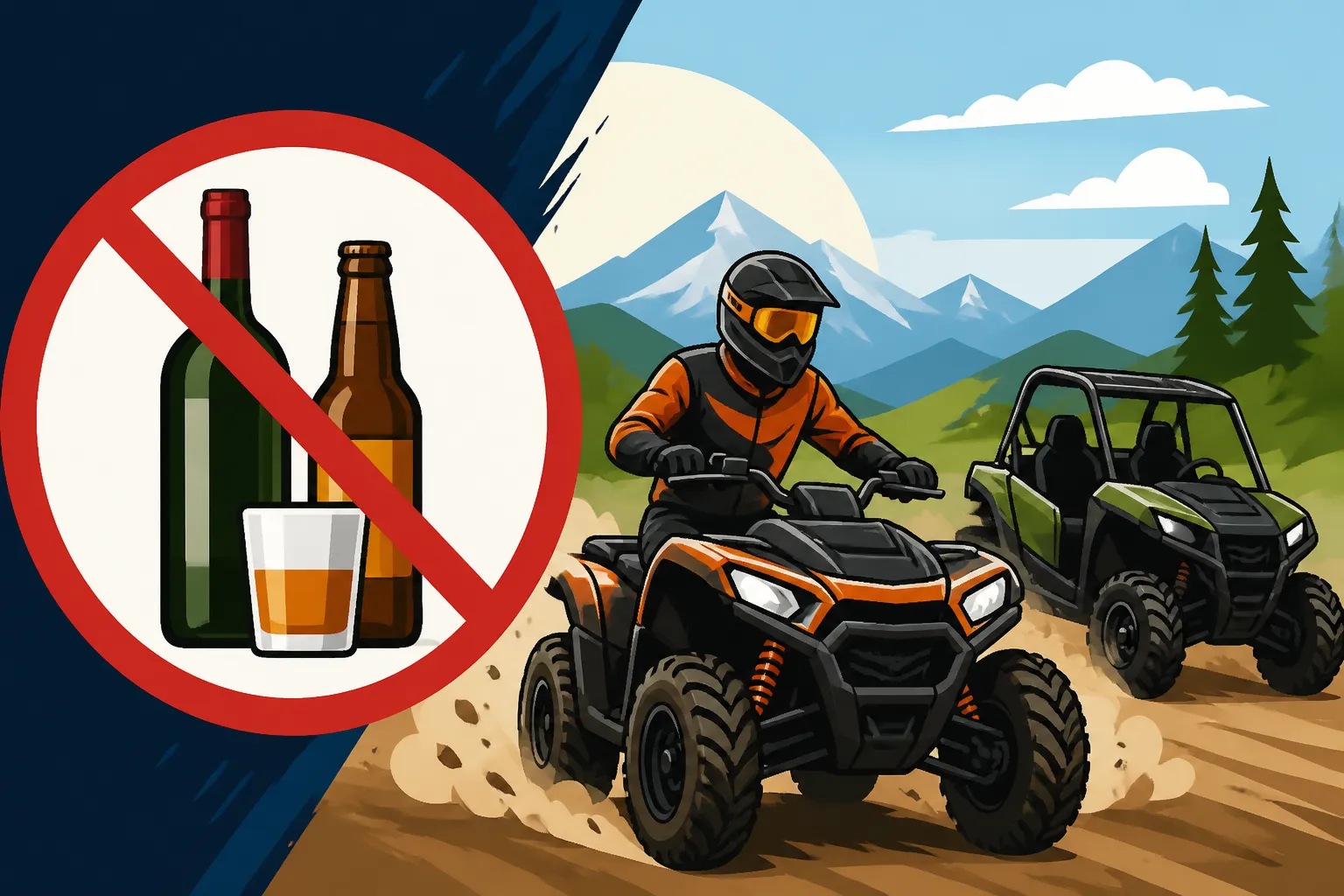
Alberta riders should treat alcohol and operating an ATV or UTV as separate activities. If alcohol affects your ability to ride safely, operating the machine can put you and others at risk and may lead to impaired-operation charges. A trail, cutline, staging area or private property is not a safe place to assume impaired operation is allowed.
Impairment is not always obvious to the person who has been drinking. Alcohol can affect balance, judgment, reaction time and the ability to assess terrain. Those effects matter on a machine that may be travelling over uneven ground, through mud, near other riders or around obstacles. A rider may feel capable and still be unsafe.
A rider also should not use a personal estimate of how long it takes to “sober up” as a plan. The effects of alcohol vary with the person and the circumstances. Coffee, food, a shower or a short rest does not make an impaired rider safe to operate. If you have been drinking, don’t ride.
Impaired-operation law is not limited to paved roads. Criminal impaired-operation rules can apply when someone operates a motor vehicle off road, and an off-highway machine can fall within the relevant legal definitions. The details depend on the facts, but the practical rule is straightforward: don’t operate an ATV or UTV after drinking. For a closer look at the legal issue, see Impaired Operation Off Road and Alberta Impaired Riding Penalties.
There can be legal consequences even when nobody is injured and the ride is short. Depending on the circumstances, a case can involve criminal charges and driving-related consequences. A serious violation may also raise the possibility of a vehicle seizure. None of those outcomes is automatic in every situation, but they are serious enough that “just around the campsite” is not a sensible exception. When Riding a Quad Becomes a Criminal Charge explains why an off-road setting does not necessarily remove criminal-law risk.
| Situation | Safer approach |
|---|---|
| You plan to drink later | Finish riding first, park the machine and secure it |
| You have already had a drink | Do not start or continue operating |
| A rider in your group has been drinking | Keep that person from operating and arrange a sober alternative |
| You are unsure whether you are affected | Treat the uncertainty as a reason not to ride |
| You need to move a machine after drinking | Don’t operate it; ask a sober person who is legally permitted to move it |
The safest plan is to decide before anyone starts drinking who is riding, who is staying off the machines, and where the machines will remain for the night. A person who expects to ride should not rely on judging their own impairment later.
Drinking, carrying alcohol and public-land rules
Operating while impaired is the central concern, but carrying or consuming alcohol raises separate questions. A sealed drink packed for later is not the same situation as drinking while operating; however, that distinction does not make every place or circumstance lawful. Rules can depend on where you are, whether you are on a road or public land, the type of vehicle, and any local restrictions.
Do not assume that a trail or staging area is legally outside the rules that apply to roads or public places. In Alberta, the legal definition of a highway can reach beyond the paved roadway, and the status of a particular access route may not be obvious. A route that looks like an informal trail could have a different legal status from a secluded campsite. Alberta Highways Include Ditches and Alleys describes why the label riders use for a place may not settle its legal status.
Open alcohol in or around a vehicle can also raise issues distinct from impaired operation. Rules about liquor in vehicles may depend on whether the vehicle is on a highway and on the circumstances. Because an off-highway route, road allowance and staging site may not all be treated the same way, don’t rely on a general assumption that an open container is permitted just because you are not on a conventional road. Check the current rules that apply to the location and vehicle before bringing alcohol.
Public-land access rules are another part of the picture. A legal right to ride in an area does not automatically mean every activity there is allowed. The area may have restrictions, temporary closures or site-specific conditions, and riders still need to follow applicable laws and directions. Before setting out, confirm where riding is allowed and what requirements apply. Alberta Rules for Riding Crown Land is a useful starting point for understanding the riding side of that decision.
A practical way to avoid confusion is to keep alcohol out of the riding part of the day:
- Finish the ride before opening alcohol.
- Keep any drinks intended for camp securely packed and unopened while travelling.
- Do not drink while operating, waiting to operate, or moving a machine.
- Follow the rules for the specific road, land, campground or staging area.
- If a rule is unclear, leave the alcohol behind until you can confirm what is allowed.
Passengers should also avoid encouraging a rider to “just take it slowly” after drinking. A slower speed does not eliminate impaired judgment or the possibility of losing control. If the group has reached its drinking plans for the day, the machines should be parked until a sober, lawful ride is possible.
Plan the ride so nobody has to choose between drinking and getting home
A reliable plan is easier to follow than a last-minute decision. Decide before the outing whether the group is riding only, drinking only after the machines are parked, or staying overnight. Make the plan clear to everyone, including passengers and anyone who may arrive later.
If you are camping, establish a firm end to machine use before drinking begins. Park the machines in a secure spot and leave the keys with a person who will remain sober, if that helps prevent an impulsive ride. Don’t treat a short trip to another campsite, the staging lot or a nearby road as harmless. The legal and physical risks do not disappear because the distance is short.
For a group ride, agree on what happens if someone drinks earlier than planned. That person does not operate. A sober group member can help arrange a safe alternative, but the plan should not shift the risk onto another rider who has also been drinking. If the group needs to leave the area, use a sober driver and a suitable road vehicle, or stay put until a safe option is available.
Keep the alcohol plan separate from the vehicle plan. A person who is sober enough to drive a road vehicle is not automatically authorized to ride every machine or on every route. The machine must be legally registered and insured where required, the operator must meet applicable requirements, and the route must allow that use. For example, riders using public land should be ready to meet the applicable insurance rules; see Alberta Insurance Requirements on Public Land.
A simple pre-ride conversation can prevent pressure later:
- Agree on when the riding day ends.
- Identify who will remain sober if anyone expects to operate after the group has gathered.
- Decide where the machines and keys will stay once riding is finished.
- Confirm how everyone will get back to camp or home without an impaired ride.
- Make clear that no one will be persuaded to “move it a little” after drinking.
This approach is useful for day trips as well as overnight outings. A rider may be tempted to operate after drinking because the group is close to the staging area, because the weather has changed, or because someone has forgotten gear. Those are reasons to find another solution, not reasons to take a chance.
If alcohol is part of the outing, the conservative option is to complete all machine travel first, then leave the machines parked until the next riding period. If the next morning’s timing is uncertain, do not make a promise based on an arbitrary number of hours. Make a fresh decision when it is time to ride, and do not operate if there is any doubt about impairment.
If a rider has been drinking or an officer asks questions
If someone in your group has been drinking, focus first on preventing them from operating. Keep the discussion calm, offer a safe place to stay, and arrange transportation with a sober person where needed. Don’t hand over keys to someone who may ride, and don’t let embarrassment or a desire to keep the group moving turn into pressure to continue.
If an officer stops or speaks with your group, be respectful and follow lawful directions. Officers may ask questions or request documents connected to the ride. Riders should know what paperwork they need and how to produce it. What an Alberta Officer Can Ask to See covers the practical side of roadside and staging-area checks.
An alcohol-related encounter can also bring attention to other compliance issues, such as registration, insurance, equipment or whether the machine is permitted on that route. That does not mean every stop leads to every kind of enforcement, but it is sensible to have the required documents and equipment in order before leaving. If a machine is seized or another enforcement action occurs, the circumstances matter; Alberta Vehicle Seizures for Riders explains that seizure is a possible consequence in some cases, not an automatic result of every stop.
If a collision happens, get help and make the area safe if you can do so without putting yourself at risk. Do not leave an injured person without assistance. Alcohol can make it harder to respond well to an emergency, which is another reason to keep the riding period and drinking period separate.
If you face a charge or an enforcement decision, the facts and applicable law matter. Don’t assume that the same rule applies in every setting, and don’t rely on advice from another rider as a substitute for legal guidance. A qualified lawyer can assess the specific situation.
The most dependable rule for an Alberta ATV or UTV outing is also the simplest: ride sober, finish riding before drinking, and leave the machine parked once alcohol is involved. That plan avoids having to guess whether a particular trail, staging area or short trip changes the answer.
Disclaimer
This article is for general informational purposes only and does not constitute professional advice. Laws, prices and regulations vary by location and change over time. Consult a qualified professional for guidance on your specific situation.