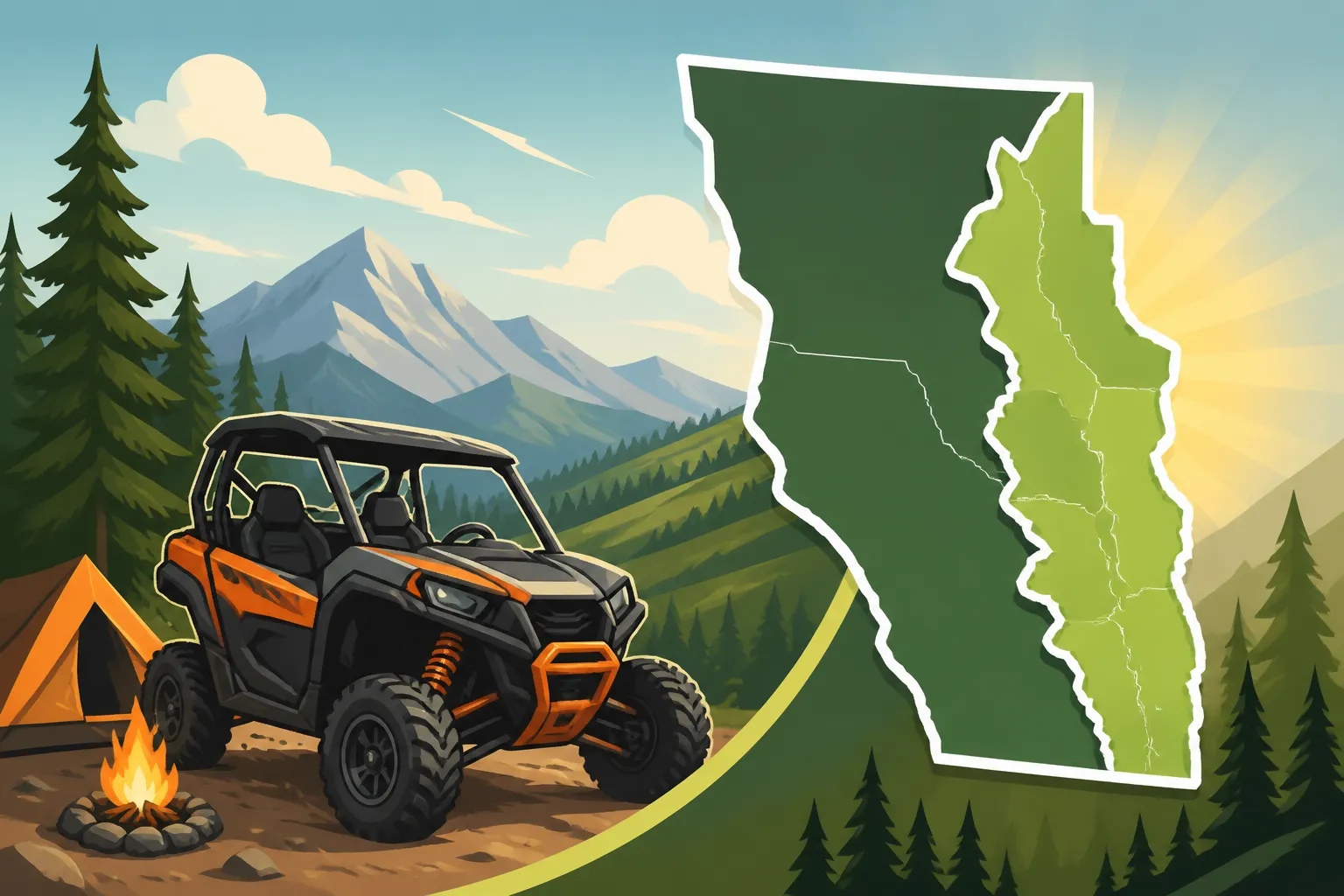
Which Land the Eastern Slopes Camping Pass Covers
If you’re planning to camp in Alberta’s foothills, “Eastern Slopes” can sound like a simple boundary—but it does not mean every nearby parcel is covered. The Public Lands Camping Pass applies to certain public lands and camping situations, not to every campsite or every kind of land use. Knowing the difference helps you avoid buying the wrong pass or assuming it grants access where camping is restricted.
Where the Eastern Slopes Camping Pass applies
Alberta’s Public Lands Camping Pass is required for random camping on public land in the areas covered by the program. The Eastern Slopes coverage extends through a broad corridor along the Rocky Mountains, reaching south to the Waterton area. It includes public land in parts of the foothills and eastern mountain region, but it is not a blanket pass for all land that someone might casually describe as “the Eastern Slopes.”
That distinction matters because the name describes a large region, while the pass applies according to mapped coverage and land status. A campsite may look like ordinary Crown land and still fall outside the pass area. Conversely, a spot that seems far from a well-known mountain destination may be within a covered area.
The pass also covers certain areas outside the general Eastern Slopes corridor, including parts of the Porcupine Hills and Willmore Wilderness Park. These areas have their own boundaries. Don’t assume that a pass is required—or that it is not required—based only on a destination’s name or how close it is to the mountains.
| Location or land type | Is the pass generally relevant? | What to verify |
|---|---|---|
| Public land within the mapped Eastern Slopes coverage area | Yes, when you are random camping | Confirm that the specific campsite is within the current coverage boundary |
| Public land in the Porcupine Hills coverage area | Yes, when you are random camping | Check the mapped area; the name alone does not define the boundary |
| Willmore Wilderness Park | The pass program covers this area | Confirm camping rules and any site-specific restrictions |
| A paid campground or recreation-area campground | Usually handled through that campground’s own rules and fees | Check whether the campground requires a reservation or payment instead |
| Private land | The public-lands pass does not provide permission to camp there | Get permission from the landowner |
| Public land outside the mapped pass areas | The Eastern Slopes pass may not be required | Check other camping rules, closures, and access restrictions |
For a broader explanation of the pass and where the program applies, see Alberta’s Public Lands Camping Pass. For the related rules about finding a legal place to camp, Alberta Random Camping Rules Explained can help separate pass coverage from camping permissions.
The southern reach includes the Waterton area
The pass coverage reaches south to the Waterton area, but that does not mean every nearby place is included. Waterton Lakes National Park, for example, is a national park with its own camping and access system. The pass does not replace park permits, campground bookings, or other requirements inside a national park.
Nearby public land may have different rules from the park itself. If your trip crosses between a park, public land, and a campground, check each part separately. A single trip can involve several land managers, and a pass that applies to one part does not automatically cover the others.
The same care is useful farther north. A map label such as “Eastern Slopes” is not enough to decide whether a specific campsite is covered. Check the official pass map against the exact location where you intend to stay, especially if you are camping near a boundary.
A place can be public land without being open for camping
Pass coverage answers one question: whether the pass applies to camping in that area. It does not answer every question about whether you may camp at a particular spot.
A piece of public land may have a closure, a site restriction, a limit on camping, or other conditions. Some locations are managed for particular uses, and land access can change. Campgrounds and designated recreation sites may have separate systems, while some sensitive or restricted places may not allow camping at all.
Before setting up, confirm both the land status and the camping rules. Public Land Use Zones by Region is a useful starting point for understanding how Alberta’s public land areas are organized. For the specific camp setup rules, see Alberta Camping Limits in One Spot.
What the pass covers—and what it does not
The Public Lands Camping Pass is tied to camping in covered areas. It is not a general access permit, a vehicle registration document, or an OHV trail permit. Buying it does not give you permission to enter private land, use a closed road, ride outside an allowed area, or camp at a site where camping is prohibited.
That separation is easy to miss when a trip involves both camping and riding. A rider may need to meet several different requirements: the camping pass for an overnight stay, valid OHV registration and insurance where applicable, and compliance with riding rules for the route and land. The camping pass does not replace those obligations. Alberta does not have a general mandatory OHV trail pass; see Alberta Has No OHV Trail Pass for how that differs from the camping pass.
Likewise, having a camping pass does not make every public-land activity lawful. Riding, hunting, lighting a fire, and accessing a grazing lease can each have separate rules. Confirm requirements for the activity you plan, not just the overnight stay.
Campgrounds may use a separate payment system
A campground or recreation area may charge its own camping fee or require a reservation. That payment is separate from the public-lands pass program. The fact that a campground sits within the broad Eastern Slopes region does not necessarily mean you need to buy the pass for a stay there; campground rules may apply instead.
Check the specific site’s instructions before travelling. If you are staying at a developed campground for one night and random camping on public land on another night, the requirements could differ between the two stops. Keep track of where you will sleep, not just the general region you are visiting.
The pass does not grant landowner permission
Some land that appears open from a road may be private, leased, or subject to access conditions. A pass for public land does not authorize you to cross private property or camp on it. Permission from a landowner is still necessary when you are using private land, and a road or trail that reaches public land may pass through property with separate restrictions.
For mixed-access routes, check where public land begins and whether you have a lawful way to reach it. When a trip crosses grazing lease land, access rules can be more nuanced than simply having a camping pass. Alberta Grazing Lease Access Rules explains why a pass and permission to cross are separate questions.
How to check a campsite before you go
A little checking before departure is more reliable than trying to interpret a broad regional name at the trailhead. Use the official pass information and map to verify the planned campsite, then check current access and camping notices for the area. If you are choosing a site from a phone map or a social-media post, treat that as a lead rather than confirmation.
- Pinpoint the intended campsite. A community, highway, trailhead, or recreation-area name may cover a wide area. Identify the actual place where you plan to sleep.
- Check the pass coverage map. Compare the campsite location—not just the nearby town—with the mapped coverage boundary.
- Confirm the land type. Determine whether the site is public land, private land, a campground, a recreation site, or part of a park with separate rules.
- Check for restrictions. Look for closures, camping limits, fire restrictions, and other current conditions that could affect your plan.
- Confirm the pass or fee for that specific stay. If the site is a managed campground, follow its own payment and reservation instructions. If you are random camping in a covered public-land area, follow the pass requirements.
- Recheck close to departure. Access conditions and closures can change. A location that was available on an older map or trip report may not be available now.
If you will camp in more than one place, check every overnight stop individually. A multi-day trip might begin at a campground, continue with random camping in a covered public-land area, and finish outside the pass boundary. Do not assume that one booking or one pass arrangement automatically covers the whole route.
For people camping away from developed sites, it is also worth reviewing Alberta Camping Away From Recreation Areas. It addresses a separate issue from pass coverage: where random camping is allowed and how far a site must be from certain facilities.
Keep proof available, but don’t rely on it as a substitute for checking
If you buy a pass, keep the required proof accessible in the form specified by the program. Save your confirmation or other purchase record before you leave areas with reliable service. If an officer or land manager asks about your camping arrangements, having proof ready can make the conversation easier.
Proof of purchase does not resolve a boundary or access problem by itself. If the campsite is outside the covered area, or camping is not allowed there, showing a pass does not change that. The most useful preparation is to know the location, the land type, and the rules that apply before you set up camp.
A practical way to plan an Eastern Slopes trip
Treat the pass as one item on a location-specific checklist, rather than as a pass for the whole mountain region. Start with your overnight stops, identify who manages each one, and then check the rules for that land. This avoids both common mistakes: buying a pass for a campground that has its own fee system, and arriving at random camping land in a covered area without meeting the pass requirement.
If you are riding an ATV or UTV during the same trip, plan for that separately. Confirm where riding is allowed, whether the machine and rider meet the applicable requirements, and whether routes are currently open. A camping pass does not authorize OHV use, and OHV registration does not cover the camping pass requirement.
A compact planning record can help, particularly for a trip with several stops:
- The location or coordinates of each overnight stop
- The land type and managing authority, where known
- Whether the stop is a campground or random camping
- The pass, booking, or fee requirement for that stop
- Any closure, fire, or access notice that affects the plan
- A backup campsite in case the intended area is unavailable
The key is to verify the exact place, not just the region name. The pass covers mapped public-land areas for camping, including Eastern Slopes coverage reaching south to the Waterton area, as well as other included areas such as the Porcupine Hills and Willmore Wilderness Park. It does not turn every nearby parcel into public land, open every site to camping, or replace other permits and rules.
Disclaimer
This article is for general informational purposes only and does not constitute professional advice. Laws, prices and regulations vary by location and change over time. Consult a qualified professional for guidance on your specific situation.