How Close an Eighteen-Year-Old Supervisor Must Stay
Alberta’s supervision rule can leave families wondering whether an adult on the same trail is close enough, or whether they need to ride alongside a young driver. The key point is that the rules do not give a set distance in metres. They require direct or close supervision, so the adult needs to stay in a position to actively oversee the rider.
What Alberta means by adult supervision
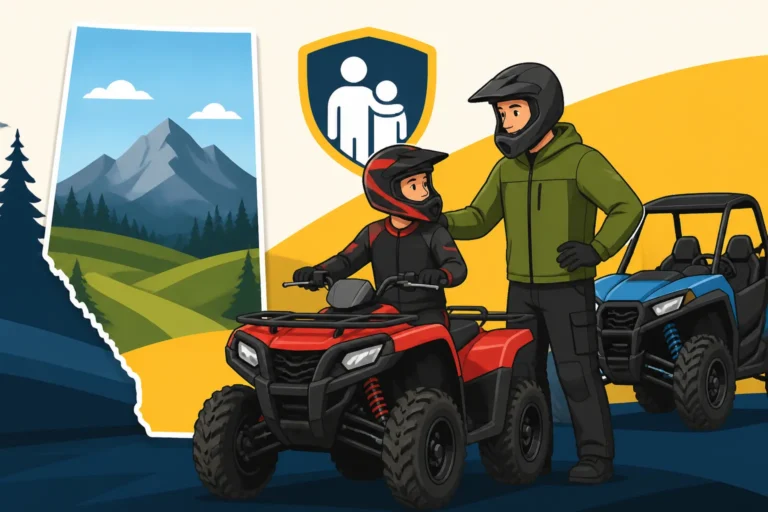
According to Alberta.ca, an off-road driver on public land must be at least 14 years old unless closely supervised by an adult aged 18 or older. The Government of Alberta also says riders under 14 must be under the direct supervision of an adult. These requirements establish who may supervise and the kind of oversight expected, but they do not specify a fixed distance between the adult and the young rider.
That means there is no official radius that makes supervision acceptable simply because the adult stays within it. Being somewhere in the same riding area is not automatically the same as actively supervising. The adult should be able to keep track of the young rider and respond if the rider needs help or gets into trouble.
The terms “direct supervision” and “closely supervised” point to active oversight, rather than a distant adult who is unavailable or unaware of what the rider is doing. They do not, on their own, answer every practical question about where to ride or exactly how near to stay. When applying the rule, consider whether the adult can maintain meaningful oversight in the specific conditions.
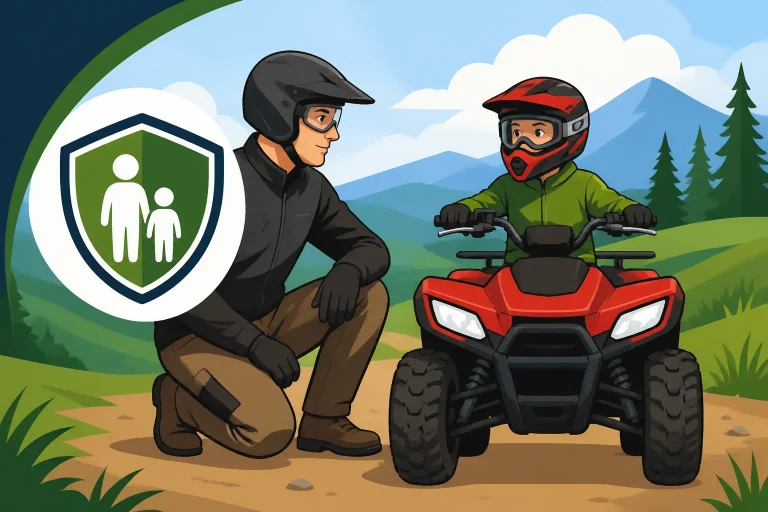
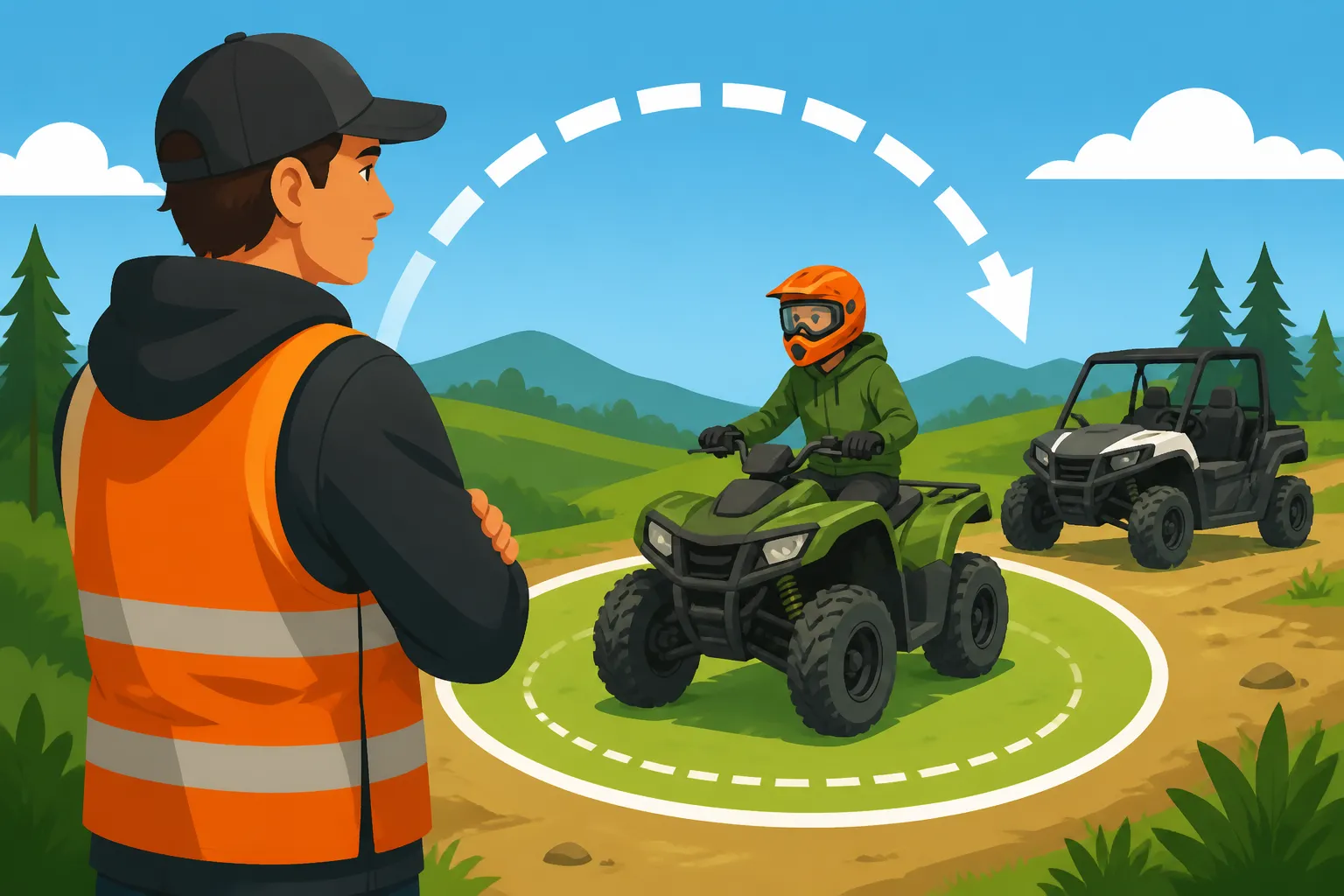
For a family ride, the safest practical approach is to keep the young rider within sight and close enough to communicate and intervene promptly. That is a prudent way to meet the intent of supervision, not a government-issued distance measurement. If a bend, hill, trees, dust, or other riders block the adult’s view, the adult may need to change position or slow the group so supervision remains effective.
| Situation | Practical supervision approach |
|---|---|
| The adult and young rider are riding together on a clear trail | Keep the young rider in view and close enough to respond quickly |
| The route bends or the view is blocked | Slow down, stop, or reposition so the rider is not out of sight |
| The young rider is ahead or behind the group | Keep the gap small enough to maintain active oversight and communication |
| The adult cannot see or reach the rider promptly | Treat that arrangement as inadequate and regroup before continuing |
For a fuller look at the age and supervision requirements, see Alberta Supervision Rules for Young Riders and Alberta Rules for a Supervising Adult. The practical details can vary with terrain and visibility, but an adult should not assume that being reachable by phone or meeting the rider later is the same as supervising during the ride.
How close should an eighteen-year-old stay?
There is no exact distance in Alberta’s stated rule. An 18-year-old supervisor should therefore judge proximity by whether they can continuously monitor the young rider and respond without delay, rather than by following a specific number of metres. Staying within sight is a useful baseline, but the terrain and riding conditions matter too.
A wide, open area with clear visibility may make it easier to monitor a rider while moving. A narrow or winding trail can make even a short gap hard to supervise if the rider disappears around a corner. Dust, changing light, trees, slopes, noise, and other riders can also reduce the adult’s ability to see or communicate. When those conditions interfere, the answer is not to rely on an assumed legal distance. Reduce the gap, stop at a safe place, or adjust the group’s pace and positions.
The young rider’s experience and the machine also matter as practical safety considerations. A young person who is unfamiliar with the route or struggling to control the machine may need closer attention than a confident rider in an open area. The legal requirement does not create a separate distance for each skill level, but sensible supervision should reflect the actual situation.
A workable plan before setting out can help:
- Choose a route and pace that the young rider can manage.
- Agree on who rides ahead, who stays behind, and where the group will regroup.
- Keep the young rider in sight whenever the route and conditions allow.
- Stop if the adult cannot tell where the young rider is or cannot respond promptly.
- Reassess if visibility, terrain, traffic, or the rider’s confidence changes.
This is practical risk management, not a substitute for the legal requirement. If the adult cannot maintain direct oversight, continuing with the young rider separated from the group is a poor plan, even if the adult believes the gap is small.
For more context on what close supervision looks like in practice, see Close Supervision of a Young Rider. The important question is not whether the adult is technically on the same trail, but whether the adult is actively aware of the rider and able to respond.
Where the rule applies and what else to plan for
Supervision requirements are only one part of planning an Alberta OHV ride. The rules described here concern riding on public land; they should not be treated as a blanket statement about every setting. Public roads, designated areas, private property, and local access rules may raise separate requirements. Check the rules for the place you plan to ride, rather than assuming that permission to use one route settles every question.
Alberta’s public-land requirements also include equipment and protective gear. The Government of Alberta says that OHVs used on public land must be registered and insured, display a valid plate, and have working head and tail lights, a proper muffler, and a spark arrestor. The Government of Alberta also requires riders on public land to wear a Canadian Standards Association-compliant helmet. An adult supervising a young rider should check that both machines and riders are ready before leaving the staging area.
The rules for a young rider do not remove the adult’s responsibility to keep the ride manageable. Choose a route the rider can handle, leave room to stop safely, and avoid letting the group spread out beyond the adult’s ability to supervise. An adult who is focused on navigating, helping another rider, or managing a machine problem may not be able to supervise effectively at the same time. If that happens, pause the ride and regroup.
A pre-ride check can include:
- Confirming that the adult understands the route and can keep track of the young rider.
- Checking that required registration, insurance, plate, lights, muffler, and spark arrestor are in order.
- Confirming that the rider has a compliant helmet and knows the group’s stop-and-regroup plan.
- Reviewing local restrictions and trail conditions before setting out.
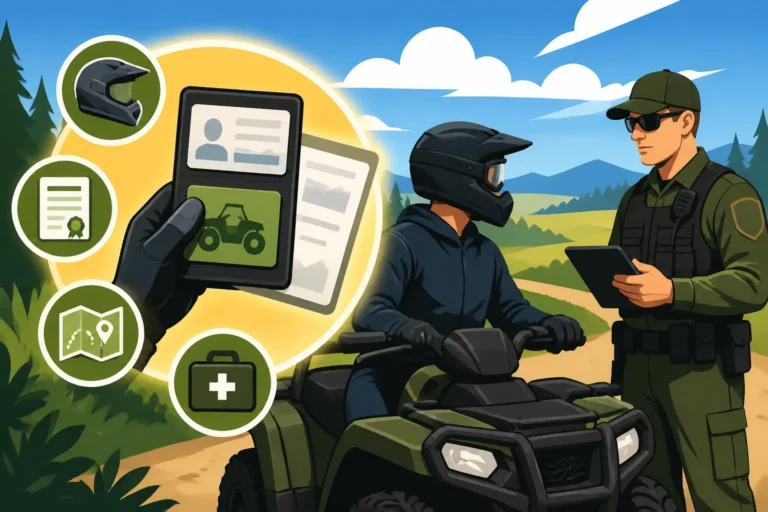
- Carrying the documents that may be needed during a ride. What to Show an Officer on Alberta Public Land covers the public-land document check.
Helmets are a separate requirement from supervision, not a substitute for it. The Government of Alberta says that CSA-compliant helmets have been mandatory for OHV users on public land since May 15, 2017. For more on helmet rules and exceptions, see Alberta Helmet Law on Public Land.
If you are buying a helmet online, including through Amazon, check that the specific helmet meets the required CSA standard. A listing that describes a helmet as suitable for off-road use does not by itself confirm compliance. Check the helmet and its labelling, and consult the seller or manufacturer if the standard is unclear.
Before riding, confirm where the planned route goes and what rules apply there. Public-land access, trails, and local restrictions are not interchangeable; Alberta Rules for Riding Crown Land is a useful starting point for that separate question. For a supervision question that depends on a particular route or circumstance, check with the relevant authority rather than relying on an assumed distance.
Sources
- Government of Alberta — Recreation on public land – Know before you go | Alberta.ca (checked November 3, 2026)
- Government of Alberta — Motorized recreation on public land | Alberta.ca (checked November 3, 2026)
- Alberta government — Off-highway vehicle helmet law | Alberta.ca (checked November 3, 2026)
- Government of Alberta — McLean Creek Off-Highway Vehicle PLUZ | Alberta.ca (checked November 3, 2026)
- Alberta.ca — Port obligatoire du casque pour les véhicules hors route | Alberta.ca (checked November 3, 2026)
Disclaimer
This article is for general informational purposes only and does not constitute professional advice. Laws, prices and regulations vary by location and change over time. Consult a qualified professional for guidance on your specific situation.