A Pass Valid 365 Days
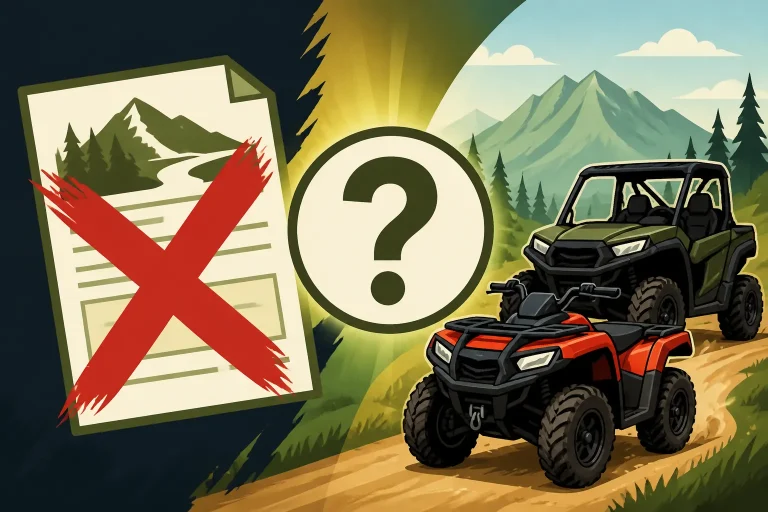
Alberta’s “365-day pass” is the annual Public Lands Camping Pass, not an ATV trail permit or vehicle registration. If you are planning an overnight trip, the key is knowing when your pass period starts, which land it covers, and who in your group needs one. Here’s how to plan around its validity without confusing it with riding requirements.
What “valid for 365 days” means
An annual Alberta Public Lands Camping Pass is tied to a period of 365 days, rather than to a calendar year. In practical terms, buying it partway through the year does not make it expire at the end of that calendar year. Its validity runs from its purchase date, so the date you buy it matters when you are planning future trips.
That does not mean the pass gives you 365 nights of camping. It means the pass is valid across a defined period. The rules for where you can camp, how long you can stay in one place, and what land is covered still apply each time you go.
For example, someone who buys an annual pass before a summer trip may still have a valid pass for a winter outing, depending on the dates shown on the pass. Someone who buys it shortly before an intended trip should check the expiry date before relying on it for a later visit. The 365-day term is useful for planning, but the pass itself is the final record of its validity.
The annual pass is different from a short-term pass. If you are comparing the options, look at the date range and access rules for each one, not just the number of days in its name. Alberta Three-Day Pass vs Annual Pass explains the kinds of trips for which each option may make sense.
A few practical points help avoid date confusion:
- Keep the purchase confirmation and pass details where you can retrieve them.
- Check the stated expiry date instead of estimating it from memory.
- If you are buying online, confirm that the details on the issued pass match the dates you need.
- Do not assume a renewal extends the old pass automatically; verify that the new pass is active for the trip.
- Check the official pass information before travel if a booking, trip date, or expiry date is close.
A pass that is valid on the first day of a trip may not cover a later trip after it expires. Similarly, an upcoming purchase does not necessarily make an already expired pass valid. If you have an unusual situation, such as buying the pass for someone else or replacing a pass, confirm how the current system records the holder and dates before setting out.
The simplest approach is to treat the pass like a dated permission document: check the holder’s details, the validity period, and the current land-use information before each trip. Alberta Camping Pass Expiry covers the expiry question in more detail, including why it is better to check the recorded date than to count days yourself.
Where the pass applies—and where it does not
The Public Lands Camping Pass is associated with camping on specified public lands, not with every public place in Alberta. Its coverage is geographically limited. You should use the current official map or land information to confirm that the exact area where you intend to camp is included.
That distinction matters in Alberta, where a trip can pass through several kinds of land in a short distance. A staging area, trail, recreation site, public land camping area, and private parcel may each have different rules. A pass that covers camping in one area does not automatically authorize camping elsewhere, and it does not override a closure or a land manager’s restrictions.
Before travelling, check the land status for your proposed overnight location. Do not rely only on a familiar place name, an old map, or another rider’s description. Access can be affected by closures, seasonal restrictions, fire conditions, or changes to local arrangements. Alberta’s Public Lands Camping Pass gives the broader context for what the pass is intended to cover, while Public Land Use Zones by Region can help you identify the area you are looking at.
The pass also does not create permission to use land that is not open for your activity. It cannot replace consent from a private landowner, satisfy a local permit requirement, or turn a closed route into an open one. The land-use rules still decide where you may camp and ride.
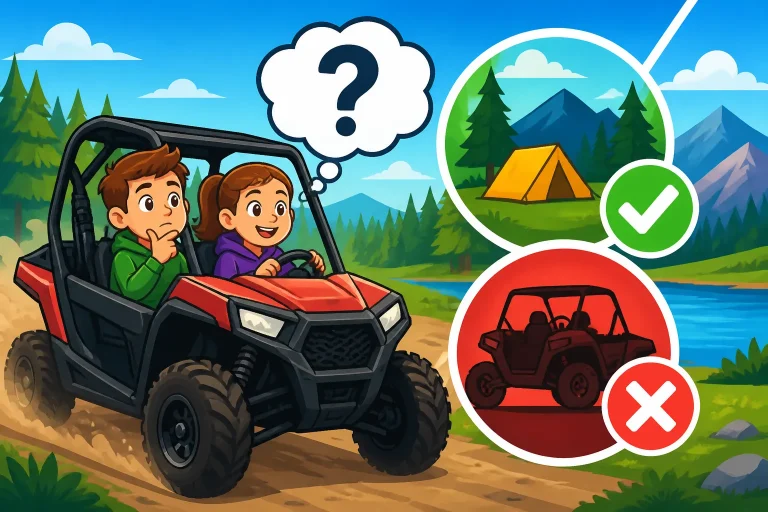
A useful way to think about it is to separate three questions:
- Can you camp in this location? Check land status, camping rules, closures, and any required pass.
- Can you ride your ATV or UTV there? Check the vehicle-access rules for the route and land.
- Is your machine ready and legal to operate? Check registration, insurance, equipment, and other applicable requirements.
One pass does not answer all three questions. For instance, having permission to camp does not automatically mean every nearby trail is open to OHVs. Likewise, being allowed to ride through an area does not necessarily mean you can camp wherever you stop.
The location check is especially important when your plan includes a remote camp, a multi-day ride, or a route that crosses between public and private land. Mark your intended camp on a current map, then confirm whether it falls within the pass area and whether camping is permitted at that spot. If the map or boundary is unclear, ask the relevant land office or official information service before relying on a general description.
Who needs a pass, and what it is issued for
A Public Lands Camping Pass is not a plate, sticker, or registration document attached to an ATV. It is associated with the person who needs the pass for covered camping. That means carrying one pass for a vehicle or for a household may not meet the requirement for every adult in a group.
Check the current eligibility and purchase rules for each person who will be camping. In general, the rules distinguish adults from children, but do not guess based on a family’s usual setup or an old trip. Do Alberta Kids Need a Camping Pass? addresses the question for younger campers. If the group includes visitors, family members, or people who have not camped in the area before, confirm the requirement for each person individually.
The pass may be connected to a Wildlife Identification Number or another account detail used in the purchase process. If you do not already have what the system requires, allow time to sort that out before heading to the trailhead. Why You Need a Wildlife Identification Number First explains why the identification step can come before buying a pass.
Keep the pass details accessible during the trip. A receipt or digital record can help you verify the date and holder information, but check what the official system accepts as proof. If your pass is on a phone, consider whether you can still show it where cellular reception is weak. Save any permitted confirmation in a way that is available offline, and keep a separate note of the expiry date.
If something in the purchase record is incorrect, resolve it before travelling rather than assuming an officer or land manager will be able to correct it on the spot. This is particularly sensible when the mismatch involves a name, account, or validity date.
The pass is also separate from an OHV’s paperwork. Depending on where and how you ride, you may need machine registration and insurance in addition to the camping pass. Alberta Registration Before Riding Crown Land and Alberta Insurance Requirements on Public Land explain those separate obligations.
| Trip requirement | What it relates to | What it does not replace |
|---|---|---|
| Public Lands Camping Pass | Camping in the areas where the pass is required | OHV registration, insurance, or permission to ride a closed route |
| OHV registration | Identifying and registering a machine where registration is required | A camping pass or local access permission |
| Insurance | Financial protection and proof of coverage where required | Registration or camping permission |
| Land-use permission | Whether you may enter, ride, or camp in a particular place | A pass that applies to a different activity or area |
A family or riding group should assign one person to check the shared trip plan, but each traveller should know what documents apply to them. The person carrying the group map may know the campsite location; that does not mean everyone’s individual pass or vehicle documents are in order.
The pass is not an ATV or UTV trail permit
The word “pass” can make the Public Lands Camping Pass sound like a permit to ride. That is an easy misunderstanding, particularly for OHV users planning a weekend where camping and riding are part of the same outing. The camping pass covers a camping-related requirement in the areas where it applies. It does not, by itself, grant general riding access.
Alberta does not use this pass as a province-wide ATV trail permit. Riding rules depend on the land, route, vehicle, and local restrictions. Routes may be open, limited to certain vehicle types, seasonally closed, or closed altogether. A camping pass cannot override those conditions. Alberta Has No OHV Trail Pass explains the distinction between a camping pass and a general trail permit.
For your machine, check the applicable registration and insurance rules before riding. Then confirm the route itself. A public land map can show where you are, but you still need to know whether OHV use is permitted on the specific trail, road, or access route. Avoid treating a visible track or an established tire line as proof that it is legal to ride.
A practical pre-trip check looks like this:
- Choose the riding area and intended camp. Identify both on current maps, rather than planning only around a staging lot.
- Confirm the camping-pass area. Check whether the intended overnight location falls within the area where the pass is required.
- Check camping rules. Verify that camping is allowed at the chosen site and review any stay limits or restrictions.
- Check OHV access. Confirm that your machine may use the intended trails and that they are open for your dates.
- Check the machine’s documents and equipment. Make sure required registration, insurance, and safety equipment are in order.
- Recheck shortly before departure. Closures, fire restrictions, and access conditions can change after you first make a plan.
If camping is not part of your trip, do not assume that a camping pass is required simply because you are riding on public land. Instead, identify which requirements apply to your activity and location. Conversely, if you are camping in an area where the pass is required, having your ATV registered does not satisfy the camping-pass requirement.
That separation is useful when planning a trip with mixed activities. One person might ride while another stays at camp; a group may travel through several land types; or the route may include a staging area outside the camping-pass coverage. Treat each obligation on its own terms rather than relying on one document to cover the whole trip.
Buying, checking, and planning around expiry
The best time to sort out the pass is before the travel day. Buying early gives you time to deal with account details or purchase problems, while checking the expiry date helps you avoid carrying an expired pass on a later trip. How to Buy an Alberta Camping Pass explains the purchase process, and Alberta Camping Pass Cost covers how to check current cost information. For current requirements and figures, use the official purchasing information rather than an old receipt or saved screenshot.
When the annual pass is the right fit, compare its 365-day validity with the dates you expect to camp. A trip pattern that includes several visits across the year may make an annual option more convenient than repeatedly arranging shorter-term coverage. If your planned camping is limited to a brief visit, compare the short-term option’s actual validity window and conditions before deciding.
Do not buy based only on the word “annual.” The useful details are the start date, expiry date, covered person, and area. Confirm each one on the pass record. If someone else in your party buys the pass, make sure the pass is issued for the person who needs it rather than assuming it can be transferred or shared.
A simple planning note can prevent a last-minute scramble:
- Pass holder and required account details
- Purchase or activation date shown on the record
- Expiry date
- Planned camping locations
- Current land-use map or official area information
- OHV registration and insurance documents, where required
- Contact or offline information in case service is unavailable
For a trip planned close to expiry, consider the whole stay rather than only the departure date. Check what the rules require for the dates you will be camping, and arrange valid coverage for the full period if needed. Do not assume that starting a trip with a valid pass is enough to cover nights after it expires.
If you are renewing or replacing a pass, confirm that the new record is active and that you can access it. A payment confirmation and an issued pass may not be the same thing in every system. If the details are unclear, contact the official service before leaving.
Make the annual period work for your plans
Because the validity is based on a rolling period, purchase timing can affect how much of the term lines up with your likely trips. There is no need to optimize the date down to the day if your travel plans are uncertain, but it helps to consider whether you will use the pass soon and whether future outings fall within the same period.
For example, someone who usually camps in one season may want to compare a pass purchased just before that season with one bought much earlier. Someone with trips spread across the year may value having the pass in place well before the first outing. The right choice depends on actual travel plans, not on a general rule that one option is always better.
Keep a reminder of the expiry date in your trip-planning calendar. If you travel with the same group each year, check every person’s pass separately; one person’s renewal does not necessarily update everyone else’s record. Recheck the map and restrictions too, since a valid pass does not guarantee that a previous campsite or route remains available.
The most reliable habit is a brief document check before each trip: verify the pass date, confirm the campsite is within the covered area, and then check the separate rules for the machine and route. That takes less time than discovering at the destination that a pass has expired or that the planned location falls outside its coverage.
Frequently Asked Questions
Does an Alberta Public Lands Camping Pass expire at the end of the calendar year?
No. The annual pass is described as valid for 365 days from purchase, rather than through a calendar year. Check the expiry date shown on the pass record.
Does the pass let me ride an ATV or UTV anywhere on public land?
No. It is a camping pass for the areas where it applies, not general riding permission. Check the OHV rules for each route and make sure your machine meets applicable registration and insurance requirements.
Does one pass cover everyone camping together?
Do not assume that it does. Check the current rules for each person in your group, including adults and children. The pass is not a vehicle registration document.
Do I need the pass if I am riding but not camping?
The camping pass is not a general OHV trail permit. Check the requirements for the activity and location you have planned, and confirm whether camping is part of the trip.
What should I check before using an older pass?
Check the recorded expiry date, the pass holder’s details, the current camping-area information, and any restrictions for your intended location. If the record is unclear, confirm it through the official service before travelling.
Disclaimer
This article is for general informational purposes only and does not constitute professional advice. Laws, prices and regulations vary by location and change over time. Consult a qualified professional for guidance on your specific situation.