Transferring a Plate to a New Machine
There's nothing quite like the excitement of bringing a new off-highway vehicle (OHV) home. Maybe you’ve upgraded your trusty quad for a more powerful side-by-side, or perhaps you've found a fantastic deal on a used dirt bike. Amidst the thrill, a common question pops up: what do you do with the license plate from your old machine? Many riders wonder if they need a brand new plate every time they get a new ride, and the answer is often "not necessarily." This guide will walk you through the simple process of transferring your existing Alberta OHV plate to your new machine, saving you time and hassle.
The Basics of Plate Transfer in Alberta
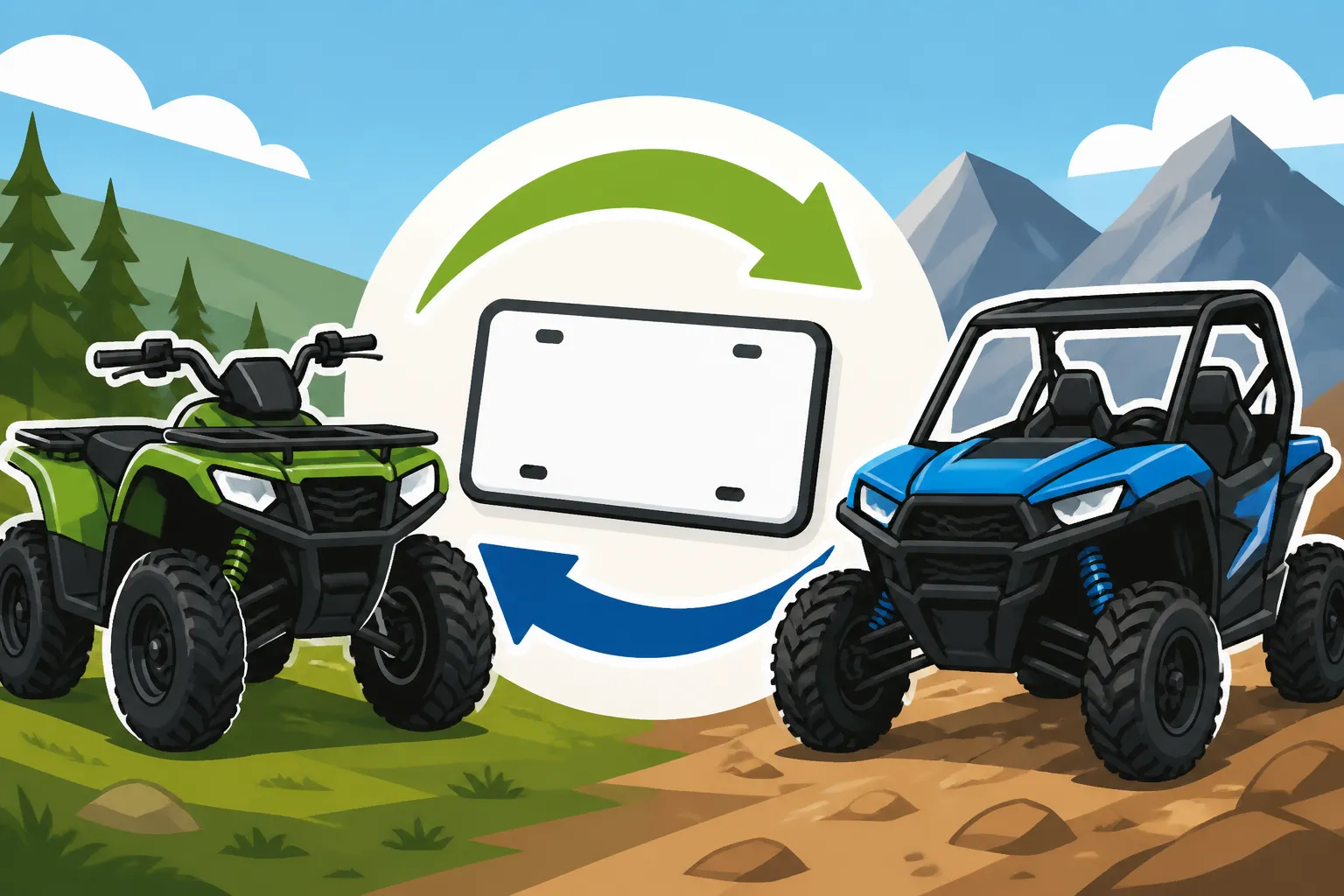
When you register an OHV in Alberta, the license plate is actually registered to you, the owner, rather than being permanently tied to a specific machine. This owner-centric approach means you have the flexibility to move your plate from one off-highway vehicle to another, as long as it's an OHV and the appropriate paperwork is updated. It’s a pretty handy system that recognizes your ownership first and foremost.
Why Plates Aren't Tied to the Machine Forever
Think of it like the license plate on your family car. When you sell one vehicle and buy another, you typically transfer your existing plate to the new car, rather than being issued a completely new one every time. Alberta's OHV registration system works on a similar principle. The province issues a plate to you, and that plate serves as your unique identifier for registering an OHV. It's a pragmatic approach that streamlines the administrative process. Instead of constantly manufacturing and tracking new pieces of metal, the system focuses on maintaining accurate records of which machine you currently have registered to your existing plate number. This saves both the province and you a bit of a headache, reducing waste and making renewals simpler down the line. It really puts the emphasis on the rider as the responsible party.
When a Plate Transfer Makes Sense
Transferring your plate isn't just a convenience; it's often the most logical and cost-effective option in several common scenarios. For many riders, the primary reason is simply upgrading or changing machines. Let's say you've been riding a smaller ATV for years and decide to jump into the side-by-side world for more comfort and passenger capacity. You sell your old ATV, and now you have this beautiful new side-by-side sitting in your driveway. Instead of going through the process of requesting a brand-new plate and number, you can simply transfer your current, familiar plate to the new machine. This makes a lot of sense, particularly if you're fond of your current plate number or just want to keep things straightforward.
Another common situation is when your existing machine might have been written off after an accident or has simply reached the end of its useful life due to wear and tear or a major mechanical failure. In these unfortunate cases, you might replace it with another OHV. Since the original machine is no longer operational or owned by you, that plate would otherwise just sit unused. Transferring it to your replacement OHV ensures you're back on the trails legally and efficiently. It’s about continuity of your registration, rather than starting from scratch. Finally, sometimes you might simply decide one machine suits your needs better than another. Perhaps you bought a snowmobile but realize you prefer riding a quad year-round. As long as both are off-highway vehicles, the plate transfer process is designed to accommodate these changes in your riding preferences without unnecessary red tape.
Step-by-Step: How to Transfer Your OHV Plate
Transferring an OHV plate in Alberta is a fairly straightforward process, primarily because it's handled through a network of authorized registry agents. You can't do it online; it requires an in-person visit to ensure all the details are correct and legal. This hands-on approach by the registry agents ensures everything is above board, especially when dealing with ownership changes and different machines.
Gathering Your Paperwork
Before you head out, make sure you have all the necessary documents in order. Showing up prepared will make the process at the registry agent's office much smoother and quicker. You don't want to make multiple trips!
First, you'll need identification for yourself, the registered owner. This could be your valid Alberta driver's license or another government-issued ID. Next, you'll need the details of your old machine's registration. Ideally, you should have your current [Alberta Digital Certificates Must Be Printed] or a physical copy of your registration certificate for the OHV that the plate is currently on. This certificate contains crucial information like the VIN, make, and model, which the registry agent will use to deregister the old machine from that plate. If you don't have the certificate, having the VIN of the old machine handy can sometimes suffice, but the certificate is always best.
For your new machine, you'll need proof of ownership. If you purchased it from a dealership, this will typically be the New Vehicle Information Statement (NVIS) or Manufacturer's Statement of Origin (MSO) for a brand new machine, or a bill of sale if it's new to you from a dealer. For a private sale, a clear, signed bill of sale is absolutely essential. This document needs to clearly identify the buyer and seller, the date of sale, the purchase price, and most importantly, the Vehicle Identification Number (VIN) of the OHV. If you're buying privately, you might want to look into templates or services like LawDepot to ensure your bill of sale is robust and includes all the necessary legal details, protecting both you and the seller. Many people overlook the importance of a good bill of sale in private transactions, but it's your primary proof of ownership. Remember, the registry agent needs to see concrete evidence that you now legally own the new OHV.
Finally, and this is absolutely critical, you must have valid proof of insurance for your new OHV. In Alberta, all off-highway vehicles operating on public land are required to be insured, and you cannot register or transfer a plate to a machine without it. This usually comes in the form of a pink card from your insurance provider. Make sure the VIN on the pink card matches the VIN of your new machine exactly. If you haven't insured the new OHV yet, you'll need to do that before you visit the registry. Without all these pieces of paperwork, the registry agent simply won't be able to complete the transfer for you. For a complete list, check out [What a Registry Agent Needs to Register Your Quad].
Visiting an Alberta Registry Agent
Once you've gathered all your documents, your next step is to visit an authorized Alberta Registry Agent. This isn't something you can complete online or over the phone, as the agent needs to verify your identity and examine the original documents. There are numerous [Alberta Registry Agents and OHV Paperwork] locations scattered across the province, making it fairly convenient to find one near you.
When you arrive, inform the agent that you wish to transfer an OHV plate from an old machine to a new one. They will guide you through the process, which typically involves a few key steps. First, they will take your old registration certificate (or the VIN of the old machine) and initiate the process of cancelling the registration of your previous OHV from that plate number. This essentially "frees up" the plate. Next, using the ownership documents for your new machine and your proof of insurance, they will then register your new OHV under that same plate number. They will enter all the details of your new quad, side-by-side, dirt bike, or snowmobile into the provincial system. It’s important to carefully review the new registration certificate they print out for you. Double-check that all the information, especially the VIN, make, model, and your name, is accurate. Any errors here could cause issues down the line if you're ever stopped by enforcement. The agent will collect any applicable fees for the transaction, which typically include a basic service fee on top of the provincial registration cost, as well as a new certificate issuance fee. Once everything is processed and paid for, you'll walk out with an updated registration certificate showing your existing plate number now assigned to your new off-highway vehicle.
Updating Your Insurance
This is a step that some riders unfortunately overlook in the excitement of a new machine, but it is absolutely critical: you must update your insurance for the new OHV immediately. Your existing insurance policy for your old machine will not automatically cover your new one. Riding an OHV on public land in Alberta without valid insurance specifically for that machine can lead to severe penalties, including fines and even vehicle seizure.
Before you even consider hitting the trails or heading to the registry, contact your insurance provider. Inform them that you have acquired a new OHV and provide them with all the details: make, model, year, and the all-important Vehicle Identification Number (VIN). They will then assess the new machine and adjust your policy accordingly. It's not uncommon for the insurance premium to change, as factors like horsepower, value, and machine type (e.g., a high-performance side-by-side versus a utility ATV) all influence the cost. Once your policy has been updated, your insurer will issue you new proof of insurance, often referred to as a "pink card." This document will clearly show the VIN of your new OHV, confirming that it is properly covered. You need to present this updated pink card at the registry when you transfer your plate, so make sure you have it in hand. Do not assume your old policy transfers. Make that call to your insurance provider as soon as you take possession of your new ride. [Alberta Requires Insurance on Public Land] is a non-negotiable rule, and compliance starts with properly updating your coverage.
Common Scenarios and Considerations
Understanding the plate transfer process is one thing, but real-life situations can throw a few curveballs your way. Let's delve into some common questions and unique circumstances you might encounter when dealing with OHV registration and plates in Alberta.
What if You Don't Have a Plate to Transfer?
There are definitely times when a plate transfer isn't an option, and that's perfectly normal. Perhaps this is your very first off-highway vehicle purchase, and you don't have an existing OHV plate. Or maybe you had an OHV years ago, sold it, and let the registration expire, so there's no active plate to transfer. In these cases, you'll simply be registering your new machine from scratch.
This process is very similar to a plate transfer in terms of documentation needed for the new machine (proof of ownership like a bill of sale or NVIS, your ID, and proof of insurance for the new OHV). The key difference is that instead of updating an existing registration, you'll be requesting a brand new plate number and physical plate. The registry agent will issue you a fresh plate to affix to your OHV. There will be the standard [Alberta OHV Registration Cost], plus any plate issuance fees. If your old plate was lost or stolen, you cannot transfer it. In that scenario, you would report the loss and then request a new plate, which is a separate process known as [Alberta Plate Replacement If Lost]. So, while the transfer is a convenient option, getting a new plate is equally straightforward when needed.
Transferring a Plate from a Different Type of OHV
A common question that pops up is whether you can transfer a plate from, say, a quad to a snowmobile, or from a dirt bike to a side-by-side. The good news is, yes, you absolutely can! In Alberta, an OHV plate is considered valid for any type of off-highway vehicle, as long as it falls under the definition of an OHV as per the Traffic Safety Act. The plate itself isn't specific to a quad, a snowmobile, or a side-by-side; it's specific to you as the owner and indicates that you have a registered off-highway vehicle in the provincial system.
This flexibility makes the transfer process incredibly convenient for multi-sport enthusiasts or those who change their preferred riding machine based on the season or terrain. You don't need to worry about different categories of plates. The important thing is that when you go to the registry, you are updating the specific machine information linked to your plate. The registry agent will simply record the VIN, make, model, and type of your new OHV, and that information will be reflected on your updated registration certificate. So, feel free to swap that plate from your winter snow machine to your summer trail-blazing side-by-side without a hitch, as long as all the other documentation requirements are met.
Legal Implications of Not Transferring Properly
It might seem like a minor detail to some, but not properly transferring your OHV plate carries significant legal implications that you definitely want to avoid. The most immediate and serious consequence is riding an unregistered machine. If you've sold your old OHV and bought a new one, but haven't gone to the registry to update which machine is associated with your plate, your new ride is technically unregistered. This means that if you're out on public land—whether it's a designated trail, Crown land, or even a public ditch—and you're stopped by an enforcement officer, you could be facing fines for riding an unregistered off-highway vehicle. These penalties can add up quickly and certainly put a damper on your riding fun. For specific details on what you might face, it's worth reviewing [Alberta Penalties for Riding Unregistered].
Beyond registration, there's the critical issue of insurance. As we've discussed, your insurance policy is tied to a specific VIN. If you don't update your insurance to reflect your new OHV, you're not just riding unregistered, you're also riding uninsured. This is arguably an even more serious offence. In the event of an accident, you could be personally liable for damages, medical costs, and potentially legal fees, which could be financially devastating. Furthermore, an uninsured OHV can be seized by enforcement officials on the spot. So, while transferring your plate might seem like just another piece of paperwork, it's a fundamental step in ensuring you're riding safely and legally in Alberta. Don't risk the headache and expense; always complete the transfer and update your insurance before you hit the trails on your new machine.
After the Transfer: What to Expect
Once you've left the registry agent's office with your updated paperwork, you're almost ready to ride. But there are a couple of final details to keep in mind to ensure everything is perfect for your next adventure. These small steps complete the loop and prevent any surprises out on the trail.
Your New Registration Certificate
The most tangible outcome of your plate transfer will be the new registration certificate provided by the registry agent. This document is crucial. It will list your name as the registered owner, your existing OHV plate number, and all the updated details of your new off-highway vehicle – its make, model, year, and, most importantly, its Vehicle Identification Number (VIN). It serves as legal proof that your current plate is now properly associated with your new machine in the provincial system.
It's absolutely essential to keep this certificate with you whenever you're riding your OHV. While [Alberta Dropped Plate Stickers in 2021] for on-road vehicles, a digital certificate for OHVs still needs to be printed and kept in your possession. You can carry a physical copy in a waterproof bag or even a clear scan on your phone, though a physical copy is often preferred in areas with no cell service. An enforcement officer on public land can, and often will, ask to see this document. Being unable to produce it can lead to delays or even a ticket. So, once you have that new certificate, file it safely and make sure it's accessible whenever you're out enjoying the trails. For more on this, check out [Does a Printed Registration Certificate Count on the Trail?].
Physical Plate Remains the Same
One of the great benefits of transferring your OHV plate is that the physical piece of metal on your machine remains the same. You won't be issued a new physical plate with a different number; you'll simply be reusing the plate you already have. This means less waste and less hassle for you. Your job, however, is to ensure that this plate is properly affixed to your new off-highway vehicle.
The placement of your OHV plate is important for visibility and compliance. It needs to be securely mounted, visible, and kept clean so that the numbers can be easily read. Most quads and side-by-sides have designated spots, often on the rear fender or cargo rack, for plate attachment. Make sure it's not tucked away where mud or debris can obscure it, or where it might easily fall off. If your new machine doesn't have a clear spot, you might need to get creative with brackets or zip ties to ensure it’s firmly attached and readable. The goal is for any officer to be able to see and read your plate without difficulty. Having a properly mounted plate means one less thing to worry about when you're out exploring Alberta's beautiful backcountry. More specific guidance on placement can be found in [Alberta Plate Mounting on a Quad].
Here’s a quick overview to help you differentiate between transferring a plate and registering a new machine with a brand new plate:
| Feature | Plate Transfer Process | New Registration Process |
|---|---|---|
| Physical Plate | Use existing plate; numbers remain the same | Issued a new physical plate with a new number |
| Old Machine Status | Deregistered from the plate | Not applicable (unless selling an old machine separately) |
| Documentation Needed | Old registration cert/VIN, new machine ownership, ID, new insurance | New machine ownership, ID, new insurance |
| Registry Visit | Required for updating vehicle details | Required for new plate issuance and vehicle details |
| Key Advantage | Convenience, familiarity, reuses existing plate | Necessary for first-time owners or lost plates |
| Timeframe | Immediate upon successful registry visit | Immediate upon successful registry visit |
Disclaimer
This article is for general informational purposes only and does not constitute professional advice. Laws, prices and regulations vary by location and change over time. Consult a qualified professional for guidance on your specific situation.