Alberta’s 30-Day Rule for Out-of-Province Machines
It can be incredibly confusing when you're an off-highway vehicle (OHV) enthusiast from outside Alberta, wondering about the rules for riding your quad, side-by-side, dirt bike, or snowmobile here. Many riders mistakenly believe that as long as their machine is registered in their home province or state, they’re automatically good to go indefinitely in Alberta. This simply isn't the case, and failing to understand the specific rules, particularly the 30-day window, can lead to unexpected fines or complications. This guide is here to untangle the complexities of Alberta's 30-day rule for out-of-province machines, helping you navigate the provincial regulations with confidence whether you're visiting for a long stay or making Alberta your new home.
Understanding the "30-Day Rule" in Alberta
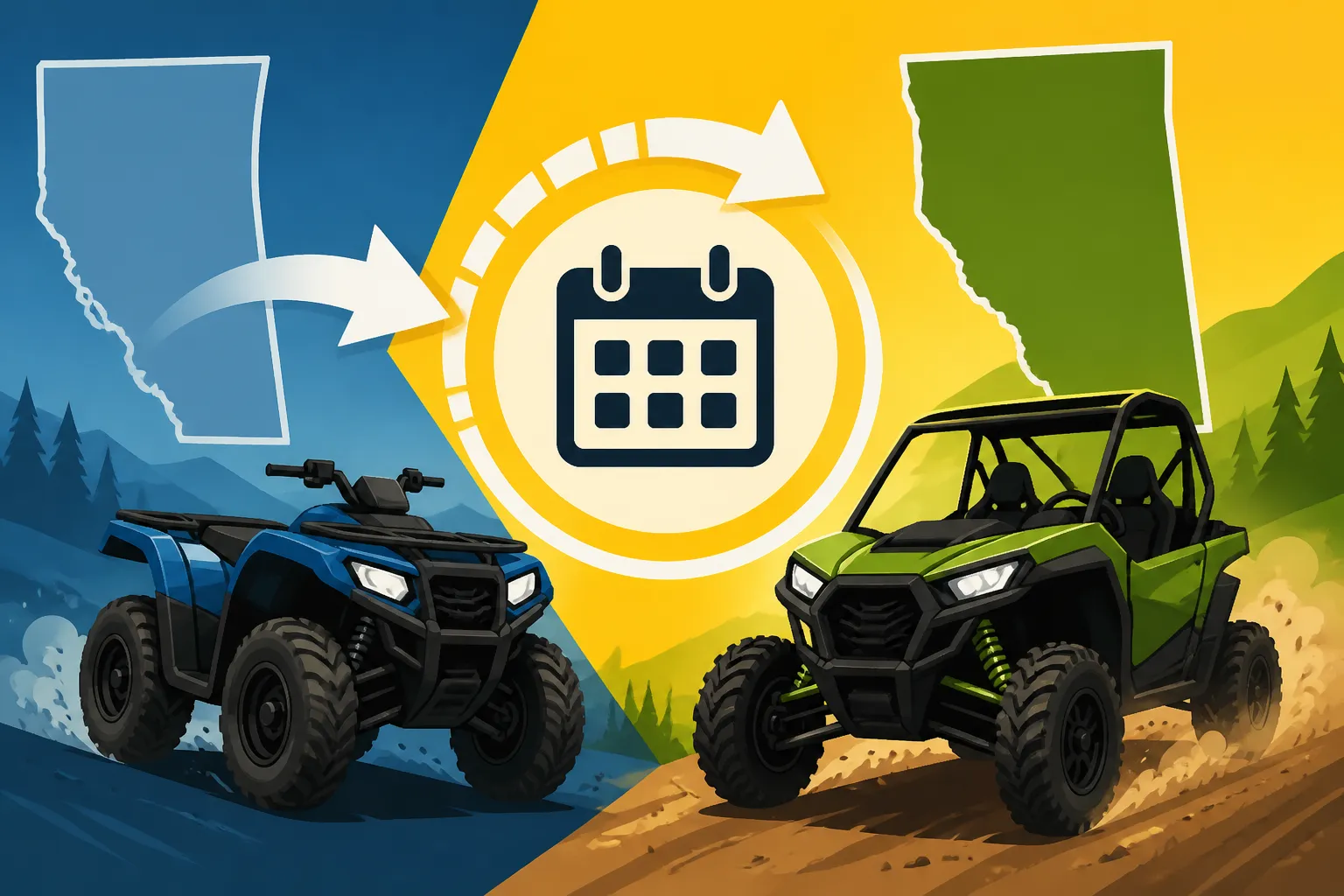
Let's cut right to the chase: Alberta has a specific rule for off-highway vehicles that are not registered within the province. It's often referred to as the "30-day rule" and it's something every out-of-province rider needs to be intimately familiar with. Essentially, if your OHV is from another province or territory in Canada, or from outside the country, you generally have a grace period of 30 consecutive days from the date you bring it into Alberta to continue using its existing registration. After those 30 days, if you intend to keep riding your machine in Alberta, you'll likely need to get it registered here. This isn't just a suggestion; it's a critical component of Alberta's Traffic Safety Act and its associated Off-Highway Vehicle Regulation.
Why 30 Days? The Logic Behind the Time Limit
You might wonder why Alberta sets this specific 30-day limit. It's not arbitrary; it strikes a balance between welcoming visitors and ensuring all vehicles regularly operating within its borders meet provincial standards for safety and accountability. The 30-day period is generally considered sufficient for short-term recreational visits, allowing riders to enjoy Alberta's incredible trails and vast public lands without immediate administrative hassle. However, if your stay extends beyond that, the province considers you to be more than just a transient visitor. At that point, your machine's operation falls under the full scope of Alberta's regulatory framework, which includes provincial registration, proof of insurance, and adherence to equipment standards. It's about integrating you into the system that manages vehicle use, protects the environment, and maintains public safety for all users.
What Constitutes "Consecutive Days" in Alberta?
The term "30 consecutive days" is crucial here. It means 30 days in a row, without interruption, that your OHV is physically present within Alberta's borders. It's not 30 days of riding, but 30 days of presence. Imagine you bring your side-by-side into Alberta on June 1st. Even if you only ride it on weekends, the clock starts ticking from June 1st. By June 30th, you've hit your 30-day limit. There isn't a reset button just because you parked it for a week or only used it on private land for part of that time. The continuous presence of the machine in the province is the trigger. So, for visitors planning an extended adventure or those contemplating a move, keeping a close eye on this timeline is absolutely essential. Don't assume you can duck out of the province for a day and reset the clock, as the spirit of the law focuses on your residency and the machine's continuous presence. [Thirty Consecutive Days and the Clock] delves deeper into this specific interpretation.
Who Does the 30-Day Rule Apply To?
This rule isn't just for one specific type of out-of-province rider; it casts a wide net to cover most scenarios where an OHV from elsewhere finds its way onto Alberta's public lands. Whether you're a tourist, a new resident, or someone working temporarily in the province, understanding how this rule applies to your situation is paramount.
Tourists and Recreational Riders on Extended Stays
If you're visiting Alberta from another province like British Columbia or Saskatchewan, or even from the United States, for a vacation, a multi-week riding trip, or to stay at a family cabin for the summer, the 30-day rule applies directly to you. Your OHV is registered in your home jurisdiction, which is perfectly fine for shorter visits. Alberta welcomes tourism and understands that riders want to experience its diverse landscapes. However, once your stay exceeds 30 consecutive days, your machine effectively transitions from being a short-term visitor to having a more established presence. At this point, provincial law requires it to be registered in Alberta. This ensures that even though you're a visitor, your machine meets Alberta's standards, has current valid insurance for use on public land, and contributes to the system that maintains the trails and safety infrastructure you're enjoying. Ignoring this could lead to issues with law enforcement during a routine check. [Alberta Registration for Visiting Riders] provides more context on this.
New Residents Moving to Alberta
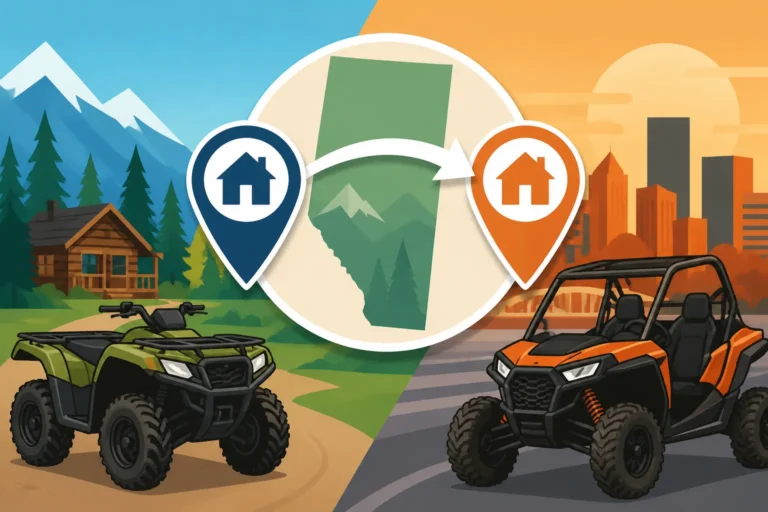
For individuals or families relocating to Alberta, bringing their OHVs with them, the 30-day rule is a key administrative step in becoming an Albertan rider. Once you establish residency in Alberta – which usually means obtaining an Alberta driver's license, renting or buying property, or taking up employment – your out-of-province registered OHV has 30 consecutive days to be re-registered in Alberta. This isn't just about plates and papers; it's about fully integrating into the provincial system. During this initial 30-day period, your existing out-of-province registration and insurance are generally accepted. However, as soon as that window closes, your machine must display an Alberta OHV registration plate and have valid Alberta insurance for use on public land. This process is similar to what you'd go through for a car or truck, ensuring all vehicles regularly operating here are properly accounted for. [Moving to Alberta With a Machine] outlines the broader steps involved in bringing your OHV with you.
Workers and Students on Temporary Assignments
Sometimes, people come to Alberta for work or study, bringing their OHVs with them. Perhaps you're on a long-term contract in the oilfield near Fort McMurray, or you're a student attending post-secondary education in Calgary and want your quad for weekend excursions. Even if your stay is technically "temporary" and you maintain residency elsewhere, if your OHV is physically present in Alberta for more than 30 consecutive days, you typically fall under the scope of this rule. The intent is to capture vehicles that are routinely used within the province, regardless of the owner's permanent domicile. It's less about your mailing address and more about where the machine is operating. Therefore, if you anticipate your work assignment or study period will keep your OHV in Alberta past the 30-day mark, planning for Alberta registration is a responsible and legally compliant step.
Calculating Your 30 Days: What Counts?
The concept of "30 consecutive days" can feel a bit nebulous, especially if your OHV use isn't strictly continuous. Let's break down what truly counts towards this limit and dispel some common misconceptions. It's vital to understand that the clock starts ticking from the moment your OHV enters Alberta, not just when you decide to take it for a ride.
Entry Date and Physical Presence
The 30-day count begins on the first day your OHV physically crosses into Alberta. It's not tied to when you start using it, or when you first ride it on public land. If you haul your snowmobile from Montana into Alberta on December 1st for a potential winter season, even if the snow doesn't fall until mid-December and you don't ride it until then, December 1st is still day one of your 30-day window. The rule is about the machine's presence within the provincial borders. This means if you're bringing your machine to a cabin in the foothills for the entire summer, the 30-day clock will tick away whether it sits in the shed for two weeks or is out on the trails every day.
Private Land Use During the 30 Days
A common misunderstanding is that if you only use your OHV on private land during your initial stay, the 30-day rule doesn't apply, or the clock stops. Unfortunately, this isn't true for the purposes of the 30-day residency trigger. While riding on your own private property generally exempts you from the provincial registration requirement if your machine never leaves that property, the 30-day rule is about the presence of the out-of-province machine in Alberta. If you bring your OHV to Alberta and keep it exclusively on a friend's private ranch for 35 days, then decide to venture onto public land on day 36, you've already exceeded the 30-day grace period for out-of-province registration. If caught on public land at that point, you'd be subject to penalties for an unregistered machine, even if it had been on private land previously. It's the moment you intend to use it on public land after 30 days that triggers the need for Alberta registration.
The Myth of "Resetting the Clock" by Leaving Briefly
Another popular myth is that you can "reset" the 30-day clock by simply driving your OHV across the border into Saskatchewan or Montana for a day, and then bringing it back into Alberta. While this might work for some other types of regulations in different contexts, for the spirit of Alberta's OHV registration rule, it's not a reliable strategy, especially if you're trying to circumvent the intent of the law. The regulation focuses on continuous presence and the establishment of an extended stay. If you've clearly established your OHV's presence in Alberta for an extended period, a quick hop across the border and back is unlikely to be viewed by enforcement as a genuine "reset" of your 30 days. It’s far safer and less stressful to simply plan to register your machine if your stay will genuinely exceed the limit.
What Happens After 30 Days? Registering Your Machine
Once your out-of-province OHV has been in Alberta for 30 consecutive days and you intend to continue using it on public land, the grace period for its home registration ends. At this point, Alberta law requires you to officially register your machine within the province. This isn't an option; it's a mandatory step to ensure legal compliance and avoid potential penalties.
The Registration Process for Out-of-Province OHVs
Registering an out-of-province OHV in Alberta is a straightforward process, much like registering any other OHV bought within the province. You'll need to visit an Alberta Registry Agent office – these are private businesses authorized by the provincial government to provide vehicle registration services. You'll need to provide several key pieces of documentation. This typically includes:
- Proof of Ownership: This is crucial. It could be your original bill of sale, a previous registration certificate, or a Manufacturer's Statement of Origin (MSO/NCO). If you bought the machine privately, ensure you have a properly filled-out bill of sale. If you're struggling to create one or need a template for a private sale, platforms like LawDepot offer customizable legal documents that can help ensure you have all the necessary information.
- Proof of Insurance: Your OHV must have valid third-party liability insurance from an insurer authorized to operate in Alberta. This is non-negotiable for riding on public land. [Alberta Requires Insurance on Public Land] and [Alberta Insurance Requirements on Public Land] explain this in more detail.
- Personal Identification: You'll need valid photo ID, such as an Alberta driver's license if you've become a resident, or other government-issued identification.
- Your Out-of-Province Registration (if applicable): While you're transitioning, having your old registration can help demonstrate the chain of ownership.
The registry agent will process your application, verify your documents, and if all is in order, issue you an Alberta Off-Highway Vehicle Registration Certificate and a valid OHV license plate. Remember, this plate must be properly displayed on your machine whenever you're riding on public land. [What a Registry Agent Needs to Register Your Quad] outlines a comprehensive checklist for this process.
Consequences of Non-Compliance
Ignoring the 30-day rule and continuing to operate your out-of-province OHV on public land in Alberta without proper registration can lead to serious consequences. These aren't minor inconveniences; they can result in significant financial penalties and legal troubles.
- Fines: The most immediate consequence is typically a fine for operating an unregistered OHV. These fines can be substantial and are designed to deter non-compliance.
- Vehicle Seizure: In more serious cases, or for repeat offenders, your OHV could be seized by law enforcement. This means your riding trip comes to an abrupt halt, and you'll incur additional costs for impoundment and storage, on top of the original fines, to get your machine back.
- Insurance Issues: Operating an unregistered vehicle can also complicate insurance claims. Even if you have out-of-province insurance, its validity might be questioned or voided if you're found to be operating illegally in Alberta. This could leave you personally liable for damages in the event of an accident. [Alberta Penalties for Riding Unregistered] and [Alberta Vehicle Seizure for No Insurance] offer stark warnings about these outcomes.
It's simply not worth the risk. The small amount of time and effort it takes to properly register your machine pales in comparison to the stress and expense of dealing with fines, seizures, or insurance headaches.
How Much Does Alberta OHV Registration Cost?
The cost of registering an OHV in Alberta involves a few components. There's a base registration fee set by the province, which can be for a one-year or two-year term. On top of that, registry agents, being private businesses, charge a service fee for their work in processing the paperwork. These service fees can vary slightly between different registry offices. You might also encounter additional charges if there are specific searches needed (e.g., lien checks, although less common for OHVs than road vehicles). It's always a good idea to call your local Alberta Registry Agent in advance to confirm the current fees and what payment methods they accept. While I can't provide exact figures as costs change, expect a combined total that covers the provincial fee and the agent's service. You'll also need to factor in the cost of obtaining Alberta OHV insurance, which is a separate expense from the registration itself. [What Alberta OHV Registration Costs] provides a general overview of the fees involved.
Exceptions and Special Considerations
While the 30-day rule generally applies broadly, there are a few scenarios that warrant special attention. Understanding these nuances can save you a headache and ensure you remain compliant with Alberta's regulations.
Alberta's Farm Exemption From Registration (Limited Scope)
Alberta does have an exemption from registration for farm-owned OHVs. However, this exemption is very specific and applies only to machines that are "used solely for farming or ranching operations" and "never leave the property being farmed or ranched." This means if you bring your out-of-province quad to Alberta to help out on a family farm, and that machine never, ever leaves the boundaries of that farm property, then theoretically, it wouldn't need Alberta registration, even after 30 days.
- Key Condition: The machine must never be used on public land, including ditches, roads, or trails.
- Risk Factor: If you ever take it off the farm property, even for a quick spin down a gravel road to a neighbour's field or to retrieve a stray animal from the ditch, it immediately loses its exemption and would need Alberta registration.
- Practicality: For an out-of-province visitor or new resident, relying on this exemption is often impractical, as the desire to ride usually extends beyond a single private property. Most people want to explore.
Therefore, while the farm exemption exists, its limited scope means it rarely applies to out-of-province machines that come to Alberta with the intent of being used for anything other than strictly on-property farming tasks. [Alberta's Farm Exemption From Registration] provides a more detailed look at this specific rule.
Military Vehicle Exemption
There's a specific exemption under the Traffic Safety Act for off-highway vehicles that are owned by the Crown in right of Canada and used for military purposes. These machines, often used for training exercises or transport on military bases, are exempt from provincial registration requirements. This is a very niche exemption and applies only to official military vehicles, not personal OHVs owned by military personnel. If you are military personnel bringing your personal quad to Alberta, the 30-day rule applies to your personal machine just as it would to any other civilian. [Alberta Military Vehicle Exemption] clarifies this further.
Reciprocity for Short-Term Visitors (Under 30 Days)
The 30-day rule inherently grants a form of reciprocity. For visitors from other Canadian provinces or territories, or from the United States, your existing valid OHV registration from your home jurisdiction is recognized and accepted in Alberta for that initial 30-day period. This is the whole point of the grace period – to allow short-term visitors to enjoy Alberta's public lands without needing to immediately re-register their machines.
- What's Required: You still need to carry proof of your home province/state registration and valid insurance with you while riding. An Alberta officer can demand to see these documents.
- Equipment Standards: Your machine must also meet Alberta's equipment standards, such as having a spark arrestor and working lights, regardless of how long you've been in the province. [Alberta Registration for a Machine From BC], [Alberta Registration for a Machine From Saskatchewan], and [Alberta Registration for a Machine From Montana] elaborate on how this reciprocity functions for specific jurisdictions.
The table below summarizes the key differences in requirements for short-term visitors versus those staying longer or moving to Alberta.
| Feature | Out-of-Province Visitor (Under 30 Days) | Long-Term Stay / New Resident (Over 30 Days) |
|---|---|---|
| Registration | Valid registration from home province/state/country accepted. | Mandatory Alberta OHV Registration. |
| License Plate | Home province/state/country plate displayed. | Mandatory Alberta OHV license plate displayed. |
| Insurance | Valid third-party liability insurance from home jurisdiction accepted. | Mandatory Alberta third-party liability insurance. |
| Proof on Demand | Must carry proof of home registration and insurance. | Must carry Alberta OHV registration certificate and Alberta insurance proof. |
| Documentation | Valid ID, proof of home residency (if requested). | Valid Alberta ID (e.g., driver's license), proof of ownership for registration. |
| Equipment Standards | Must meet Alberta's OHV equipment standards (spark arrestor, lights, etc.). | Must meet Alberta's OHV equipment standards. |
| Penalties | Riding without home province registration/insurance. | Riding without Alberta registration/insurance after 30 days. |
Why This Rule Exists: Public Safety and Regulation
Rules and regulations, especially those that involve administrative steps like registration, can sometimes feel like a burden. However, Alberta's 30-day rule for out-of-province OHVs is rooted in important principles of public safety, environmental protection, and effective resource management. It's not about making things difficult for riders, but about ensuring a fair and safe system for everyone who enjoys Alberta's vast public lands.
Ensuring Accountability and Traceability
One of the primary reasons for vehicle registration is accountability. Every registered OHV is linked to an owner, and this linkage is vital for several reasons. In the event of an accident, property damage, or a violation of environmental regulations, authorities need to be able to identify the responsible party. An unregistered machine makes this process significantly more challenging, if not impossible. By requiring Alberta registration after 30 days, the province ensures that all machines regularly operating within its borders can be traced back to an owner, fostering responsible use and allowing for proper enforcement when necessary. This protects not only the environment but also other riders and landowners.
Validating Insurance Coverage for Public Land Use
Another critical aspect of the 30-day rule revolves around insurance. In Alberta, having valid third-party liability insurance is mandatory for any OHV operating on public land. This insurance protects riders and the public in case of an accident where property damage or injury occurs. While an out-of-province insurance policy might be valid in Alberta for a short visit, once a machine establishes a more permanent presence (past 30 days), the province wants to ensure that the insurance coverage is fully compliant with Alberta's specific requirements and that the insurer is authorized to conduct business here. This minimizes potential legal and financial complications for all parties should an incident occur, providing a layer of protection for riders and the wider community. [Alberta Insurance Requirements on Public Land] highlights the significance of this.
Maintaining Equipment and Safety Standards
Alberta has specific regulations regarding the equipment OHVs must carry when used on public land. This includes requirements for working headlights and taillights, a functioning brake system, and most importantly, a spark arrestor to prevent wildfires. While most modern OHVs meet these standards, registration can be a touchpoint to ensure compliance. Although a registry agent doesn't typically inspect your machine, the act of registration implies an agreement to adhere to these rules. The 30-day rule ensures that machines that become a regular fixture on Alberta's trails are understood to operate under these same safety and environmental mandates, protecting our natural spaces from fire and ensuring that all machines on the trail are visible and capable of safe operation. [Alberta Requires a Spark Arrestor] and [Alberta Requires Working Head and Tail Lights] offer specific details on these equipment requirements.
Practical Tips for Out-of-Province Riders in Alberta
Navigating the rules for out-of-province OHVs can feel like a lot to take in, but with a little preparation and understanding, you can ensure your riding experience in Alberta is smooth, enjoyable, and completely compliant. Here are some practical tips to keep in mind, whether you're planning a short visit or considering a longer stay.
Document Everything: Keep Records Handy
Regardless of how long you plan to stay, always carry proof of your OHV's registration and insurance with you when you ride. This includes your home province or state's registration certificate and your insurance liability card. For residents of Alberta, this would be your Alberta OHV registration certificate. These documents should be readily accessible, perhaps in a waterproof bag in your machine's storage compartment, or even printed and laminated for durability. An enforcement officer may ask to see these at any time, especially if you're pulled over or checked at a staging area. Being prepared demonstrates responsibility and can prevent delays or further scrutiny. [What an Alberta Officer Can Ask to See] provides insight into what officers look for.
Be Aware of Your Time in the Province
This might sound obvious, but it's easy to lose track of time when you're having fun on the trails or settling into a new routine. If you're visiting for an extended period, or if your plans change and you find yourself staying longer than anticipated, actively track the 30-day countdown. Mark it on a calendar or set a reminder on your phone. If it becomes clear you'll exceed the 30 days, start the registration process before you hit that mark. Procrastinating only increases your risk of non-compliance and potential penalties.
Know Before You Go: Research Your Destination
Before you even load up your machine and head to Alberta, do your homework. Research the specific Public Land Use Zones (PLUZs) or riding areas you plan to visit. Different areas can have specific bylaws or seasonal restrictions that apply to all riders, regardless of where their machine is registered. This proactive approach applies to understanding the 30-day rule too. If you know you'll be here for more than a month, start researching Alberta registry agents and the paperwork you'll need. This foresight can make the transition much smoother. [Alberta OHV Trails: Riding Public Land] is a great resource for finding and understanding riding areas.
Consider a Bill of Sale Template for Private Purchases
If you're new to Alberta and plan to purchase an OHV while you're here, or if you're bringing a machine you just acquired privately, make sure your bill of sale is thorough and complete. A clear, detailed bill of sale is essential proof of ownership for registration. It should include the full names and addresses of both buyer and seller, the date of sale, the purchase price, and crucially, the complete Vehicle Identification Number (VIN) of the OHV. If you're involved in a private sale and want to ensure you have a robust document, legal document platforms like LawDepot can provide templates for bills of sale that cover all the necessary information, giving you peace of mind during the transaction. This document will be critical when you go to register your new-to-you machine.
Frequently Asked Questions About the 30-Day Rule
Let's tackle some of the common questions and scenarios that out-of-province riders often have about Alberta's 30-day rule. These questions often highlight specific situations or lingering uncertainties that can lead to confusion.
What if my OHV is registered in another country, like the United States?
The 30-day rule applies equally to OHVs registered in other countries, including the United States. Whether you're from Montana, Idaho, or further afield, your machine is permitted on Alberta's public lands with its foreign registration for 30 consecutive days. After this period, if you continue to use it in Alberta, it must be registered here. The process will be largely the same as for a Canadian out-of-province machine, requiring proof of ownership, valid insurance from an Alberta-authorized provider, and proper identification. You might also need specific customs paperwork if you've recently imported the machine.
Does the 30-day rule apply to snowmobiles too?
Yes, absolutely. The term "Off-Highway Vehicle" (OHV) in Alberta's legislation includes a wide range of machines, such as quads (ATVs), dirt bikes, side-by-sides (UTVs), and snowmobiles. Therefore, if you bring your snowmobile from another province or country into Alberta, the 30-day rule applies in the exact same way. If your snowmobile is present in Alberta for more than 30 consecutive days and you intend to ride it on public land, it will need Alberta registration and insurance. [Alberta Registration for a Snowmobile] provides more detailed information on snowmobile-specific registration.
Can I get an extension on the 30-day period?
In short, no, there isn't a formal process for requesting an extension on the 30-day period for out-of-province OHVs. The 30-day limit is a fixed regulatory period. The expectation is that if your OHV will be in Alberta for longer than 30 consecutive days and you plan to use it on public land, you will take the necessary steps to register it within that timeframe. Planning ahead is key here to avoid any issues.
What if I bought an OHV from an out-of-province seller and brought it to Alberta?
If you, as an Alberta resident, purchase an OHV from an out-of-province seller (e.g., from British Columbia or Montana) and bring it into Alberta, the 30-day rule for out-of-province registration doesn't directly apply to your machine in the same way. As an Alberta resident, your OHV is expected to be registered in Alberta from the moment you take possession and intend to use it on public land. You would bring your proof of ownership (bill of sale) and insurance to a registry agent to get it registered in Alberta immediately, rather than waiting 30 days. The 30-day rule is primarily for visitors using their existing out-of-province registration. If you're an Albertan, your OHV should have Alberta registration. Ensuring you have a solid bill of sale, perhaps using a template from a service like LawDepot, will streamline this process. [Alberta Registration for an Imported Machine] covers this scenario in more detail.
What if I only ride on private land? Do I still need to register after 30 days?
If your out-of-province OHV is solely used on private property and never enters public land (which includes ditches, municipal roads, and designated trails), then Alberta provincial registration is not required, regardless of how long it stays in the province. However, this is a very strict interpretation. The moment even one wheel touches public land, the registration requirement is triggered if you are past the 30-day visitor window. Many people overestimate what counts as "private land" and accidentally stray onto public access points, ditches, or undeveloped areas that fall under provincial regulation. Always err on the side of caution.
The 30-day rule for out-of-province OHVs in Alberta is designed to integrate long-term visitors and new residents into the provincial regulatory framework, ensuring safety, accountability, and proper management of our beautiful wild spaces. By understanding and adhering to this rule, you can focus on what truly matters: enjoying the incredible riding opportunities Alberta has to offer, without the worry of unexpected fines or legal hassles.
Disclaimer
This article is for general informational purposes only and does not constitute professional advice. Laws, prices and regulations vary by location and change over time. Consult a qualified professional for guidance on your specific situation.