Why a Modified Muffler Can Cost You a Ticket
It's incredibly frustrating when you invest in your off-highway vehicle, perhaps add some aftermarket flair, only to find yourself facing a hefty fine. Many riders in Alberta don't realize that modifying their ATV or side-by-side's exhaust system, especially for a louder sound, isn't just about personal preference; it's a direct violation of provincial regulations and can quickly lead to an unexpected ticket from an enforcement officer. This guide will walk you through exactly why those modifications are illegal, the real-world consequences you could face, and how to stay on the right side of the law while still enjoying your machine on Alberta's trails.
Understanding Alberta's Off-Highway Vehicle Noise Regulations
When you're out ripping around on your ATV or UTV, the sound your machine makes is often part of the experience. Many riders enjoy a more aggressive exhaust note. However, what sounds great to you might be a serious problem for wildlife, other trail users, and nearby residents – and it's definitely a concern for Alberta law enforcement. The province has clear rules about how loud your off-highway vehicle can be, and ignoring them can lead to a ticket.
The Legal Basis for Muffler Rules
The rules governing OHV noise and exhaust systems in Alberta aren't just arbitrary suggestions; they're enshrined in law. Specifically, the Traffic Safety Act and the associated [Off-Highway Vehicle Regulation 319/2002] dictate what's permissible. These regulations are designed to ensure public safety, protect the environment, and minimize disturbances to communities and other land users. The gist of it is pretty simple: your machine's exhaust system needs to be in good working order, and it must effectively silence the exhaust gases. This generally means keeping your machine's exhaust system as it was originally manufactured or ensuring any aftermarket parts comply with strict sound limits.
The problem arises when riders decide to alter that original equipment. Maybe you want more horsepower, or perhaps you just prefer a "throatier" sound. Whatever the motivation, if your modification leads to an exhaust system that's louder than the factory design, or if it bypasses the silencing function, you're likely in violation. It's not just about the volume; it's about the modification itself, especially if it's done without certified aftermarket parts designed to meet legal standards. Riders often overlook that these aren't just "suggestions" but legal requirements that can be enforced by peace officers and RCMP on public lands, including designated OHV zones, Crown land, and even along public road allowances like ditches. Understanding [What the Traffic Safety Act Requires of Alberta OHVs] is crucial for all riders.
What Counts as a Modified Exhaust System
So, what exactly does the law consider a "modified" exhaust system? It's more than just slapping on a shiny new pipe. Generally, any alteration to the original equipment manufacturer (OEM) exhaust system that changes its sound characteristics or effectiveness in dampening noise can be deemed a modification. This includes, but isn't limited to, replacing the stock muffler with an aftermarket one that's not designed to meet noise regulations, removing internal baffles or packing, drilling holes in the muffler, or even completely "straight piping" your machine.
Many riders, especially those new to the sport or those coming from areas with less stringent regulations, might not realize the implications of these changes. They might be chasing a perceived performance boost or simply a more aggressive sound profile. However, if that aftermarket muffler doesn't have the proper certification or significantly increases the decibel level beyond legal limits, it falls into the category of "modified exhaust" in the eyes of the law. Even a seemingly minor tweak, like removing a spark arrestor (which we'll discuss more later), often goes hand-in-hand with exhaust modifications and can contribute to a louder, more illegal setup. When an officer pulls you over, they're not just listening; they're often looking for visual cues of these kinds of alterations.
The Purpose of Noise Limits
It might feel like an unfair restriction on your personal property, but Alberta's OHV noise limits serve several critical purposes that extend beyond simply preventing loud machines from annoying people. Firstly, there's a significant environmental impact. Excessive noise can disturb wildlife, particularly during sensitive breeding or nesting seasons. This disturbance can stress animals, disrupt their natural behaviours, and even push them out of vital habitats, impacting ecosystems. Many of our most beautiful riding areas are home to diverse wildlife, and respecting their space means managing our noise output.
Secondly, there's the community impact. Many popular riding areas, even if they're public lands, are often adjacent to rural communities, farms, or recreational cabins. A constant barrage of excessively loud OHV noise can be a major source of frustration and resentment for residents, diminishing their quality of life. This friction can escalate into formal complaints, leading to increased enforcement, public outcry, and ultimately, calls for further restrictions or even closures of riding areas. Responsible riding includes being a good neighbour, and that means keeping your machine's sound output within reasonable limits, especially when near populated areas or designated quiet zones.
Finally, and perhaps less obviously, noise limits can even play a role in rider safety. While a loud exhaust might make you feel more noticeable, it can also mask other critical sounds on the trail, like approaching vehicles, emergency signals, or even the cries for help from a fellow rider in distress. Furthermore, prolonged exposure to excessive noise can contribute to hearing damage for the rider and their passengers. By keeping machines quieter, everyone on the trail, and the surrounding environment, benefits.
The Real-World Consequences of a Loud Exhaust
Thinking that a loud exhaust is "just a noise complaint" can be a costly misconception for Alberta OHV riders. The province takes these regulations seriously, and enforcement officers are out on the trails and public lands, looking for machines that don't comply. A ticket for a modified muffler isn't just a minor inconvenience; it comes with financial penalties and can contribute to broader issues for the riding community as a whole.
Getting Pulled Over and Ticketed
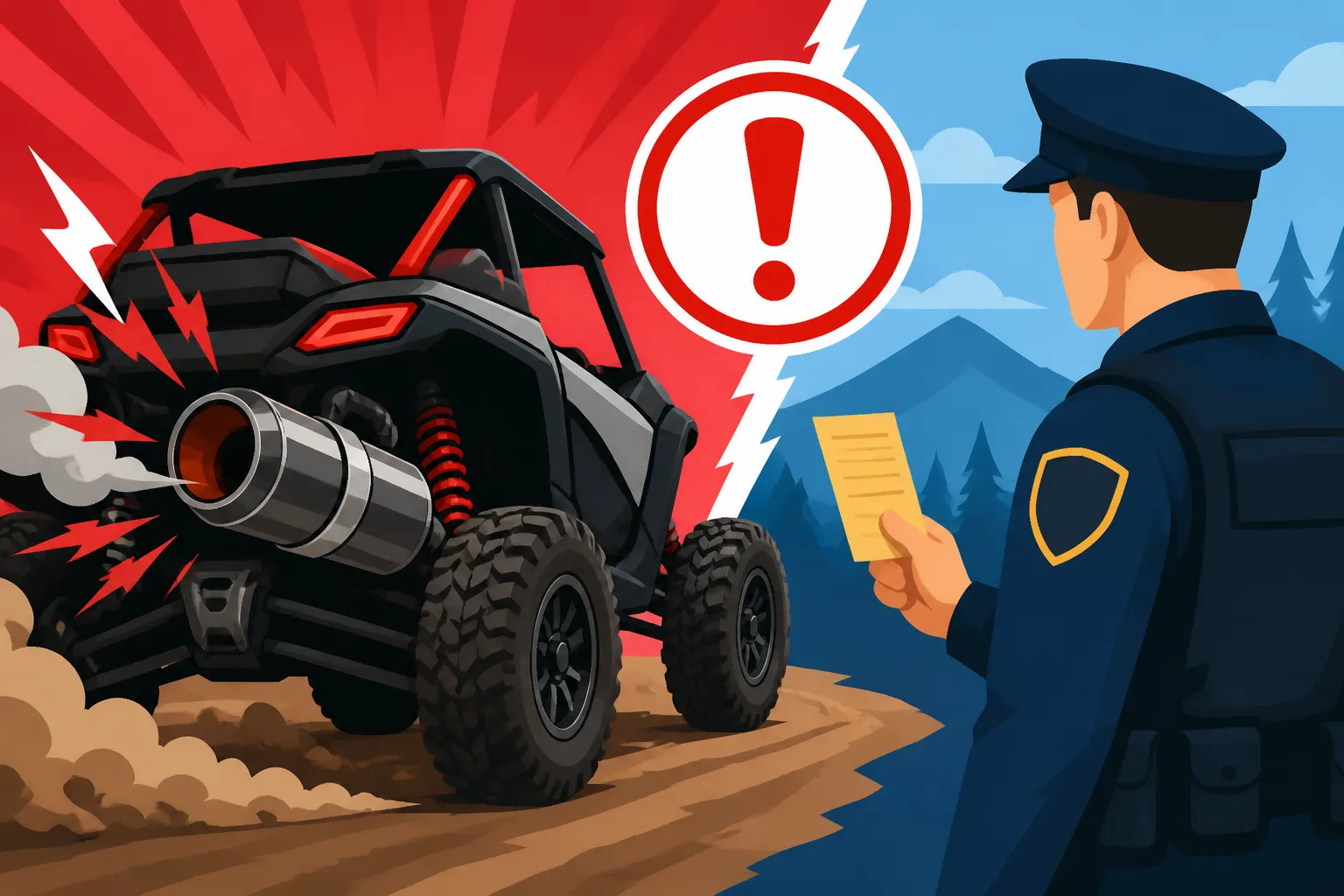
Imagine you're enjoying a beautiful Saturday ride in McLean Creek or the Ghost PLUZ, feeling the wind, enjoying the scenery, perhaps even passing a few other riders. Suddenly, you see flashing lights in your rearview, or an officer motions for you to pull over at a staging area. This is a common scenario for riders with excessively loud or modified exhausts. Enforcement officers, whether it's the RCMP, Fish and Wildlife officers, or local peace officers, are trained to identify machines that violate noise regulations. They often have experience with different makes and models, and an uncharacteristically loud exhaust will definitely catch their attention.
Once pulled over, the officer will likely conduct a visual inspection of your exhaust system. They're looking for obvious signs of modification: aftermarket pipes without proper markings, missing baffles, or tell-tale signs of tampering. They might also assess the sound level, though formal decibel testing is less common on the trail itself. The interaction often culminates in a ticket being issued on the spot. It's a frustrating experience, especially if you felt you weren't harming anyone, but from the officer's perspective, they're enforcing a clear regulation. This immediate financial penalty can quickly sour what was supposed to be a relaxing day out.
Fines and Further Penalties
Let's talk brass tacks: what does a ticket for a modified muffler actually cost you? While specific fine amounts can change, Alberta legislation typically levies a significant penalty for non-compliant exhaust systems. You can expect a fine that will definitely make a dent in your wallet. This isn't just a slap on the wrist; it's a financial consequence designed to deter future violations. Information on [Alberta Bans Modified Exhausts] confirms these penalties.
But it's not always just a single ticket. Sometimes, a modified exhaust also means you've removed or bypassed your spark arrestor – which is another separate violation with its own fine. So, one modification could lead to two tickets! Furthermore, if an officer finds other serious issues during the stop, such as no registration, no insurance, or impaired operation, the situation can escalate dramatically. While a modified muffler alone typically won't lead to vehicle seizure, other compounding issues, like [Alberta Vehicle Seizure for No Insurance], demonstrate the seriousness with which authorities treat OHV infractions. These penalties are designed to ensure responsible ownership and operation, and consistently flouting the rules will lead to increasingly severe consequences. Check [Alberta Ticket Costs for a Riding Violation] to get a general idea of the financial impact.
Impact on Trail Access and Community Relations
Beyond the personal cost of a ticket, operating a loud, modified OHV has broader implications for the entire riding community. When a significant number of riders consistently operate machines that are excessively noisy, it generates widespread complaints from residents, landowners, and other recreational users. This negative public perception can lead to a vicious cycle. Local communities and municipalities, tired of the noise, might lobby for stricter bylaws, impose new restrictions, or even push for outright trail closures. We've seen this happen in various areas where OHV use clashes with local sensibilities.
It's a frustrating situation because the actions of a few can impact the access for many. The OHV community works hard through various associations and volunteer efforts to maintain trails, promote responsible riding, and secure access to public lands. When individual riders disregard regulations like noise limits, it undermines these efforts and makes it harder for everyone to enjoy the sport. Being good stewards of the land, respecting the peace and quiet of others, and adhering to existing regulations like [Alberta Muffler Noise Rules] are essential for preserving our riding privileges. Every time a rider gets a ticket for a loud exhaust, it reinforces the negative stereotypes and provides ammunition for those who wish to restrict or ban OHV use altogether.
Beyond Sound: The Spark Arrestor Connection
When we talk about modified mufflers and the tickets they can incur, there's another critical component that often gets overlooked or intentionally removed: the spark arrestor. This small but vital device isn't just about noise; it's about preventing potentially catastrophic wildfires, and its absence or modification is another serious offense in Alberta.
Why a Spark Arrestor is Crucial
A spark arrestor's job is deceptively simple: it prevents hot carbon particles from exiting your exhaust system and igniting dry vegetation. When your engine runs, especially at high RPMs, it can expel tiny, superheated bits of carbon from the combustion process. If these glowing embers land on dry grass, leaves, or pine needles, particularly during Alberta's often hot and dry summers, they can quickly start a wildfire. The consequences of such a fire are devastating: loss of forests, wildlife habitats, homes, and even human lives.
This is why [Alberta Requires a Spark Arrestor] on all off-highway vehicles operating on public land. It's not an optional accessory; it's a mandatory safety device. A properly functioning spark arrestor typically consists of a screen or a series of baffles designed to capture these hot particles while still allowing exhaust gases to flow through. Without it, your machine is a rolling fire hazard, and the risks simply aren't worth the perceived benefits of a slightly louder exhaust or marginally improved performance. Enforcement officers are acutely aware of the fire risk, especially in sensitive areas like provincial forests and Public Land Use Zones (PLUZs), and they will be checking. [What an Officer Looks for on a Spark Arrestor] is often a USFS (United States Forest Service) or "SA" (Spark Arrestor) stamp, indicating it meets fire safety standards.
How Modified Mufflers Affect Spark Arrestors
Here's where the two issues often become intertwined: riders who modify their mufflers for sound or performance often inadvertently, or deliberately, compromise their spark arrestor. Many aftermarket exhaust systems, particularly those that are cheaply made or designed purely for racing applications, either don't come with an integrated, certified spark arrestor, or the design makes it difficult to install one properly. Some riders even remove the spark arrestor during their modification process, thinking it restricts exhaust flow or sound.
This means that if you're running a modified muffler, there's a good chance you might also be operating without a legal spark arrestor. This effectively doubles your risk of getting a ticket. An officer performing a visual inspection might identify a non-compliant muffler and the absence of a spark arrestor, resulting in two separate fines. It's a clear example of how one seemingly minor modification can lead to multiple violations. The provincial regulations are clear on both fronts: you need an exhaust that dampens sound effectively, and you need a functional, certified spark arrestor.
Inspecting Your Spark Arrestor
To avoid an unnecessary ticket and, more importantly, to prevent starting a wildfire, it's crucial to regularly inspect your spark arrestor. This should be part of your pre-ride checklist, especially if you've recently performed any work on your exhaust system or installed an aftermarket muffler.
Here's how you can typically check it:
- Locate the Device: On most machines, the spark arrestor is either integrated into the muffler or is a removable insert at the end of the exhaust pipe. Consult your owner's manual if you're unsure.
- Look for Certification: A certified spark arrestor will usually have a stamp or label that says "USFS Approved" or "SA" (Spark Arrestor). This indicates it meets the required safety standards. If there's no stamp, or if it's a generic unbranded part, it might not be compliant.
- Check for Damage or Blockage: The screen or baffles should be intact and free from excessive carbon buildup. If the screen is ripped, bent, or missing, it's no longer effective. Carbon buildup can restrict exhaust flow and might indicate a need for cleaning or replacement.
- Ensure it's Secure: Make sure the spark arrestor is firmly in place and not loose.
Regular cleaning, especially if you ride frequently in dusty or dirty conditions, is also important to maintain its effectiveness. A clogged spark arrestor can reduce engine performance and still pose a fire risk if debris eventually breaks free. Taking a few minutes to check this critical component before each ride is a simple step that can save you a fine and potentially prevent a disaster.
Riding Responsibly: Avoiding a Ticket and Protecting Access
The goal isn't just to avoid a ticket, but to be a responsible rider who contributes positively to the OHV community and ensures continued access to Alberta's incredible landscapes. This means taking proactive steps before you even hit the trail and making informed decisions about your machine's setup.
Checking Your Machine Before You Ride
Before every ride, a thorough check of your OHV is paramount, and your exhaust system should be a key part of that inspection. It's not just about avoiding a ticket; it's about ensuring your machine is safe and compliant.
Here’s a quick checklist for your exhaust:
- Visual Inspection: Look at your muffler and exhaust pipe. Are there any obvious modifications? Has anything been removed, drilled, or altered from its original factory state? If you have an aftermarket muffler, does it look excessively large or small compared to the stock unit, potentially indicating a non-compliant design?
- Sound Check: Start your machine. Does it sound significantly louder than other similar stock machines you've heard? Is there an unusually aggressive rumble or bark? If you have any doubts, it's worth investigating further.
- Spark Arrestor: As discussed, confirm the presence and good condition of your spark arrestor. Look for the "USFS Approved" or "SA" stamp, and ensure the screen is intact and clear of debris.
- Leaks or Damage: Listen for any exhaust leaks, which can make your machine louder and reduce performance. Check for cracks, dents, or loose connections that might affect the exhaust system's integrity and sound dampening.
Regular maintenance extends to your exhaust system too. Over time, internal baffles can degrade, packing material can blow out, or pipes can rust through, leading to increased noise even on a stock machine. Addressing these issues promptly not only keeps you compliant but also prolongs the life of your exhaust system. Making these checks a habit will ensure you're ready for the trail and less likely to attract unwanted attention from enforcement.
Knowing the Rules for Your Riding Area
Alberta's OHV regulations are provincial, but specific riding areas or municipalities can have additional bylaws or restrictions that impact noise levels and acceptable exhaust systems. It's a common mistake to assume that if it's legal in one spot, it's legal everywhere. This simply isn't the case.
- Provincial Parks and Designated PLUZs: Areas like parts of Kananaskis Country or designated Public Land Use Zones often have stricter enforcement and specific rules regarding noise and environmental impact. For example, some provincial parks might have blanket bans on OHV use, or strict limits on where and how you can ride. Always check the specific rules for the [Alberta Provincial Park Rules for Machines] you plan to visit.
- Crown Land vs. Private Land: While you might have more leeway on private land with the owner's permission (though even there, noise bylaws can apply), public lands are where provincial regulations are most strictly enforced. [Alberta Rules for Riding Crown Land] are generally consistent, but again, local specifics can apply.
- Municipal Bylaws: Some counties, towns, or districts have specific [Alberta Bylaw Lookups Before You Ride] that might govern OHV use, including noise. A municipality might, for instance, have a bylaw restricting OHV noise levels within a certain distance of residential properties, or even specific times of day when OHV operation is restricted.
Before you haul your machine to a new area, take a few minutes to do some research. Check the website for the specific PLUZ, provincial park, or municipal district you plan to ride in. A quick call to a local registry agent or directly to the relevant authority can save you a lot of grief. Being informed about the specific regulations for your chosen riding area is a hallmark of a responsible rider and significantly reduces your chances of an unexpected ticket.
Choosing Aftermarket Options Wisely
If you're dead set on upgrading or replacing your exhaust system, the key is to choose wisely. Not all aftermarket exhaust systems are created equal, and many are designed for closed-course racing, not for public land use. The allure of a throaty sound or a slight performance bump can be tempting, but it's vital to prioritize compliance.
When shopping for an aftermarket exhaust:
- Look for "USFS Approved" or "SA" Stamps: Just like with spark arrestors, many compliant aftermarket mufflers will explicitly state they are USFS approved or meet other relevant noise standards. This is your first clue that the product is designed for legal public land use.
- Research Sound Levels: Some reputable aftermarket manufacturers will provide decibel ratings for their exhausts. While you may not have a decibel meter on the trail, this information can help you compare and choose a quieter, compliant option.
- Prioritize Reputable Brands: Stick to well-known brands that have a track record of producing quality, compliant OHV accessories. They are more likely to have engineered their products to meet legal requirements. Avoid obscure brands or systems advertised specifically for "off-road use only" or "racing" if you plan to ride on public land.
- Consider OEM Replacements: Sometimes, the safest and most compliant option is simply to replace a damaged or worn-out stock muffler with another OEM part. While perhaps not as exciting as an aftermarket upgrade, it guarantees compliance.
The market offers plenty of options for improving your machine without breaking the law. A little research upfront can prevent the headache and expense of a ticket down the line. Remember, the goal of [Alberta Equipment Required on Public Land] is to ensure everyone's safety and enjoyment, and choosing the right exhaust is a big part of that.
What to Do if You Get a Ticket for a Modified Muffler
Even the most careful rider can sometimes find themselves with a ticket. Maybe you bought a used machine with an illegal exhaust you didn't know about, or perhaps you genuinely misunderstood the regulations. Whatever the reason, if an officer issues you a ticket for a modified muffler, knowing your options and how to proceed can make a difference.
Understanding Your Rights and Options
Getting a ticket can be a jarring experience, especially when you're out trying to enjoy a ride. First and foremost, when an officer pulls you over, remain calm and respectful. Arguing at the roadside rarely changes the outcome and can sometimes escalate the situation. Instead, accept the ticket, collect any information the officer provides, and politely ask any clarifying questions about the specific violation.
Once you have the ticket in hand, take a moment to review it carefully. Ensure all the details are correct: your name, vehicle information, the date, time, and the specific section of the Traffic Safety Act or Off-Highway Vehicle Regulation that you're alleged to have violated. This information will be crucial if you decide to contest the ticket.
In Alberta, you generally have two main options when issued a provincial offence ticket:
- Pay the Fine: This is the simplest option. If you believe you were indeed in violation or decide it's not worth the effort to dispute, you can pay the fine by the due date specified on the ticket. Payment methods are usually listed on the back of the ticket or available online.
- Dispute the Ticket: If you believe you were unjustly ticketed, that there was a factual error, or that your exhaust system is, in fact, compliant, you have the right to challenge the ticket in court.
It's important to weigh the financial cost of the fine against the time and effort required to attend court, gather evidence, and potentially hire legal advice. Sometimes, paying the fine is the more practical option, even if it stings a bit. However, if you genuinely believe you have a strong case, exercising your right to dispute is a legitimate path.
Contesting a Ticket in Alberta
If you decide to contest a ticket for a modified muffler, be prepared to build a solid case. This isn't about simply stating your opinion; it's about presenting evidence that proves your machine complies with the law.
Here's a general approach:
- Request a Court Date: The first step is typically to indicate your intention to plead "not guilty" and request a court date. Instructions for this are usually on the ticket itself. Do not miss the deadline for this.
- Gather Evidence: This is critical.
- Photos/Videos: Take clear, well-lit photos and videos of your exhaust system from multiple angles, showing its condition and any identifying marks (like USFS stamps).
- Documentation: If you have an aftermarket muffler, obtain documentation from the manufacturer that explicitly states it meets Alberta's OHV noise regulations or relevant standards (like USFS approval) and includes a certified spark arrestor. Your owner's manual for a stock machine might also be useful to show the original configuration.
- Professional Inspection: Consider having your OHV professionally inspected by a certified mechanic or a powersports dealer who can confirm the compliance of your exhaust system and provide a written statement or report. This can carry significant weight in court.
- Witnesses: If there were any witnesses who can attest to the sound level or condition of your machine at the time of the incident, consider asking them for a statement.
- Understand the Law: Familiarize yourself with the specific sections of the Traffic Safety Act and the Off-Highway Vehicle Regulation related to exhaust systems and noise. This will help you understand the prosecutor's case and formulate your defense.
- Prepare Your Argument: Clearly articulate why you believe the ticket was issued in error, backed by your evidence. Focus on facts, not emotions.
Attending court will involve presenting your case to a Justice of the Peace or a Judge. The prosecutor will present the officer's evidence. You'll have an opportunity to cross-examine the officer and present your own evidence and argument. While it can seem daunting, being prepared and organized is key. The possibility of [Alberta Court Costs for an OHV Citation] should also be factored into your decision to dispute. More details can be found in [Disputing a Ticket in Court].
Learning from the Experience
Whether you pay the fine or successfully dispute the ticket, take it as a learning opportunity. The regulations around OHV operation in Alberta are in place for safety, environmental protection, and to ensure harmonious coexistence among all land users.
- Adjust Your Machine: If your exhaust system was indeed non-compliant, invest in bringing it up to legal standards. Replace the modified muffler with an OEM part or a certified aftermarket option that includes a spark arrestor and meets noise regulations. This small investment can save you future tickets and contributes to responsible riding.
- Stay Informed: Make it a point to regularly review OHV regulations, especially before venturing into new riding areas. Follow groups like the Alberta Off-Highway Vehicle Association (AOHVA) or provincial parks websites for updates.
- Educate Others: Share what you've learned with fellow riders. Many people are simply unaware of the specific rules. By promoting responsible riding practices, we collectively work towards preserving access to our incredible trails and natural spaces for everyone to enjoy.
Table: Stock vs. Modified OHV Muffler Comparison
To summarize the differences and potential outcomes between a factory-standard exhaust system and a modified one, here's a quick comparison:
| Feature | Stock/OEM Muffler | Modified/Aftermarket Muffler (Non-Compliant) |
|---|---|---|
| Noise Level | Designed to meet legal decibel limits | Often significantly louder than legal limits |
| Spark Arrestor | Typically integrated and USFS-approved | May be missing, uncertified, or removed |
| Performance | Optimized for engine longevity and broad power | Can offer marginal gains, sometimes at cost of reliability |
| Legality on Public Land | Compliant with Alberta regulations (generally) | High risk of non-compliance and ticketing |
| Environmental Impact | Minimizes noise pollution and fire risk | Increases noise pollution and fire risk |
| Community Relations | Less likely to draw complaints | High potential for neighbour complaints |
| Cost of Ownership | Initial cost, occasional maintenance | Initial cost + potential fines & compliance costs |
| Inspection Result | Pass (if in good condition) | Fail, leading to ticket(s) and potential vehicle orders |
Disclaimer
This article is for general informational purposes only and does not constitute professional advice. Laws, prices and regulations vary by location and change over time. Consult a qualified professional for guidance on your specific situation.