Why Your Renewal Costs More Than the Base Fee
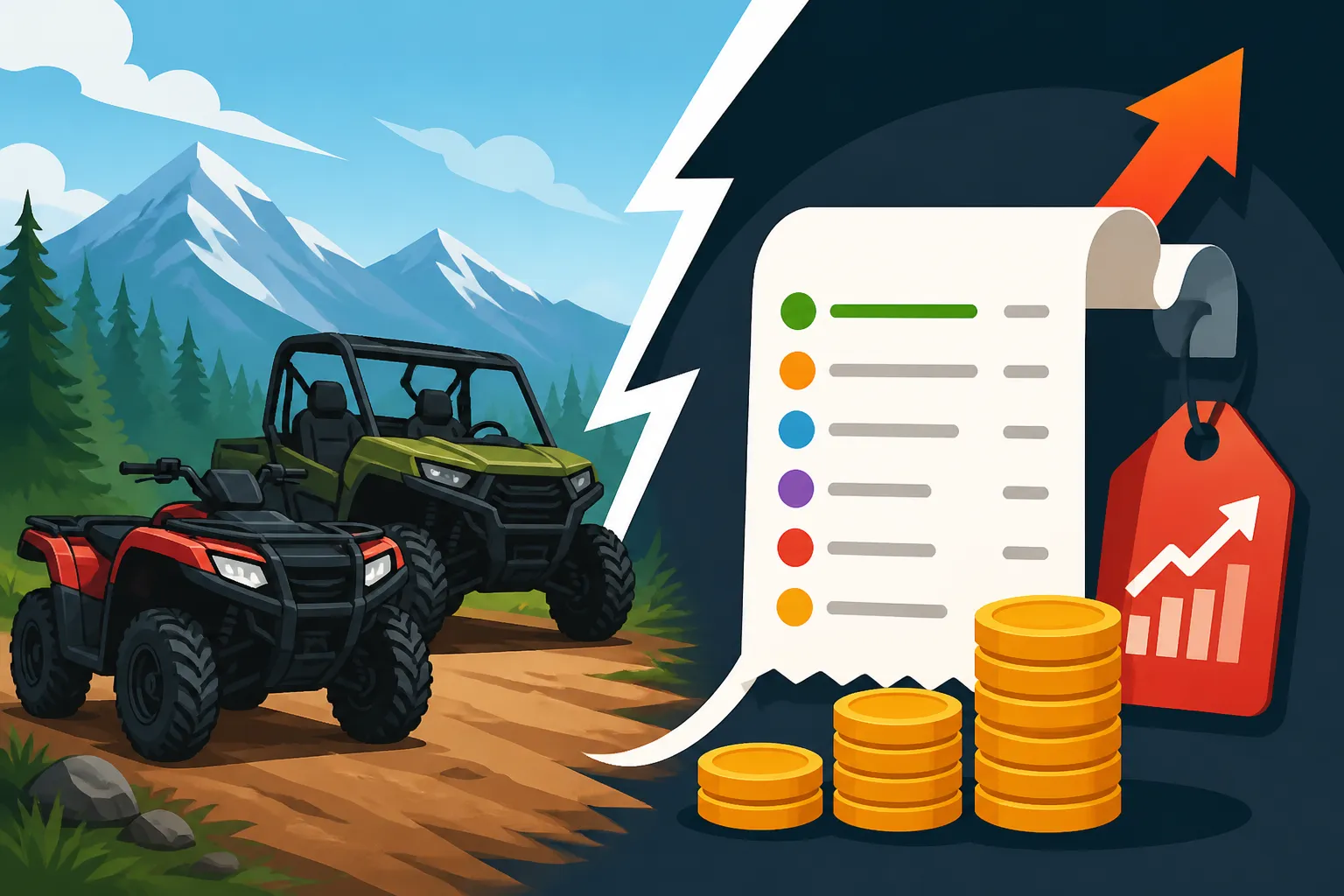
It can be incredibly frustrating to go online or walk into a registry office, expecting to pay a certain amount for your ATV or UTV registration renewal, only to find the final bill is noticeably higher than the "base fee" you've heard about. This guide is here to unravel that mystery for you, explaining all the different components that contribute to the full cost of renewing your off-highway vehicle registration in Alberta, so you're never caught off guard again.
Understanding the Core Registration Fee for Your OHV
Let's start with the absolute basics: the actual cost of the off-highway vehicle (OHV) registration itself. This is the fee the Alberta government charges to grant you the privilege of operating your ATV, UTV, dirt bike, or snowmobile on public lands. Think of it as your entry ticket to explore the vast network of trails and designated riding areas across the province. This fundamental charge goes towards the system that tracks vehicles, helps ensure compliance with regulations, and contributes to overall safety efforts on Alberta's public spaces.
The base registration fee is typically a set amount for either a one-year or two-year period, and you get to choose which option suits you best at the time of renewal. Choosing a two-year registration can sometimes feel like a better deal per year, as you're committing for a longer period and don't have to worry about renewing again as quickly. However, it's important to remember that regardless of whether you pick a single year or commit to two, this core fee is just one line item on your total invoice. It's rarely the final number you'll pay out of pocket. For more on these options, you might find [Alberta Registration Terms of One or Two Years] helpful. This fee is what enables you to legally operate your machine, but it doesn't cover the administrative side of getting that paperwork done or other associated costs.
The Essential Role of Registry Agents and Their Service Fees
When you head to renew your OHV registration in Alberta, you're almost certainly dealing with a private registry agent. These aren't government offices in the traditional sense; they're independent businesses authorized to provide government services, from vehicle registration to driver licensing. This business model is incredibly convenient for Albertans, offering numerous locations and often extended hours, but it comes with an inherent cost: service fees.
Every transaction you complete at a registry agent, including your OHV registration renewal, will incur a service fee. This fee is separate from the government's base registration fee and goes directly to the registry agent for their time, overhead, and the convenience they provide. These fees are regulated by the provincial government, meaning there's a maximum amount they can charge, but individual agents have some leeway to set their own fees up to that maximum. This is often where the first surprise comes in for riders expecting a lower total. You might check a government website and see the base registration fee, but that figure doesn't include the registry agent's charge for actually processing your paperwork. These service fees ensure the registry agents can keep their doors open, hire staff, and maintain the systems needed to efficiently handle thousands of transactions every day. It's a fundamental part of the Alberta system, and understanding it is key to anticipating your full renewal cost. To learn more about what services they offer, check out [Alberta Registry Agents and OHV Paperwork].
Additional Government-Mandated Charges Beyond the Base Fee
Beyond the base registration fee and the registry agent's service charge, there are other government-mandated costs that can pop up during your OHV registration renewal process. These aren't always applicable to every single rider, but they're common enough to warrant understanding.
The Wildlife Identification Number WIN Card
For many outdoor enthusiasts in Alberta, a Wildlife Identification Number (WIN) card is a familiar item. While not directly an OHV registration document, it's often a prerequisite for many activities on public land, and registry agents will typically require one before they can process certain types of registrations or passes. If you don't already have one, or if yours has expired (though the WIN card itself is typically a one-time purchase with a long lifespan), you'll need to acquire or update it. This card has a small fee associated with its purchase, which is added to your total transaction cost at the registry. It's a crucial piece of identification for anyone engaging in hunting, fishing, or in some cases, even just certain types of access to public lands. The registry agent will charge their own service fee for processing the WIN card transaction as well, layering another small cost onto your total. You can read more about it here: [Alberta's WIN Card Explained].
The Public Lands Camping Pass
While not a direct component of your OHV registration, the Alberta Public Lands Camping Pass is another fee that many OHV riders will encounter and often purchase at the same time or through the same system. If you plan to use your OHV to access Crown land for random camping in designated areas along the Eastern Slopes, you will need this pass. It's a separate fee, either for a three-day period or an annual pass, and it applies to anyone 18 years or older camping on these public lands. Since many OHV adventures involve camping, it's common for riders to factor this into their overall outdoor recreation budget, and it can be purchased conveniently at a registry agent. Like other services, the agent will add a processing fee to the pass cost. It's vital to know whether your riding plans include camping in these zones, as it's an additional mandatory cost for a certain type of land use. Get more details on this pass by looking into [Alberta Public Lands Camping Pass Rules].
Goods and Services Tax GST
Finally, let's not forget about taxes. In Alberta, there's no provincial sales tax, which is a relief for many consumers. However, the federal Goods and Services Tax (GST) still applies to most goods and services, and this includes your OHV registration fees and the registry agent's service fees. So, when you see the base fee, remember to factor in the 5% GST that will be added on top of that, as well as on any service fees charged by the registry agent. While it might seem like a small percentage, it adds another layer to the total amount you're paying, especially if you're renewing for two years or purchasing additional passes. It’s a standard part of nearly every purchase in Canada, and your OHV renewal is no exception. While it's slightly different from buying a machine, the principle of GST still applies to these transactions, similar to what you'd see detailed in [Alberta GST on an ATV Purchase].
Related Costs That Riders Often Encounter
While not strictly part of the "renewal fee" itself, there are other financial considerations that often come up when discussing OHV registration and ownership in Alberta. These are costs that riders frequently associate with getting their machine ready for the trail or dealing with specific situations.
Mandatory Insurance for Public Land Use
Here’s a big one: insurance. While your registration fee allows you to operate on public land, it absolutely does not cover the mandatory insurance required to do so. In Alberta, you must have valid third-party liability insurance for your OHV if you plan to ride on any public land, including designated trails, Crown land, or even the shoulder of a public road. This is a significant ongoing cost of OHV ownership, and it's a separate expense you arrange through an insurance broker, not a registry agent. Riders often mentally lump these costs together because both are prerequisites for legal riding on public land. Forgetting about insurance can lead to serious fines and even vehicle seizure. So, when you budget for your renewal, ensure you're also accounting for your insurance premiums, which are often much higher than the registration itself. Understanding this requirement is crucial, as explained further in [Alberta Requires Insurance on Public Land].
Penalties for Unregistered Operation
What if you forget to renew, or intentionally let your registration lapse? While there isn't typically a late fee added directly to your renewal invoice, the consequences of riding an unregistered OHV on public land are far more severe than a simple administrative charge. If an enforcement officer stops you, you could face significant fines for operating an unregistered vehicle. This isn't a fee you pay to renew, but a penalty for not renewing and then riding. It's a strong incentive to ensure your registration is always current before you hit the trails. The financial sting of a ticket for riding unregistered will far outweigh the cost of a timely renewal, not to mention the potential hassle and legal costs. You can find more information about these consequences in [Alberta Penalties for Riding Unregistered].
Transfer Fees for Recently Purchased Machines
If you're renewing the registration for an OHV you've recently purchased used, you’re likely dealing with a transfer of ownership as well. This process involves its own set of fees. Before you can renew the registration in your name, you first have to officially transfer the ownership from the previous owner. This transfer transaction, completed at a registry agent, comes with its own service fees on top of any provincial charges. So, if you just bought a used quad and are now renewing its plates, you're not just paying the renewal costs; you're also covering the cost to put the machine into your name. This is a common scenario that adds to the initial outlay for a used machine. Details on this process can be found in [Alberta Registration Transfer After a Sale].
Summary of Potential OHV Renewal Costs
To help you visualize where all these various fees and charges come from, here's a breakdown of what you might encounter when renewing your OHV registration in Alberta:
| Cost Component | Description | Applies To | Paid To |
|---|---|---|---|
| Base Registration Fee | The fundamental charge for legal operation on public land (1 or 2 years). | All OHV Renewals | Alberta Government |
| Registry Agent Service Fee | The charge for processing your transaction at a private registry office. | All OHV Renewals (processed in-person/online) | Private Registry Agent |
| WIN Card Fee | Cost for a Wildlife Identification Number card, if you don't already have one or need to update it. | New WIN Card holders or updates | Alberta Government (via agent) |
| WIN Card Service Fee | Agent's charge for processing your WIN card transaction. | WIN Card transactions | Private Registry Agent |
| Public Lands Camping Pass | Mandatory pass for random camping in designated zones of the Eastern Slopes (3-day or annual). | Riders camping in specific PLUZ areas | Alberta Government (via agent/online) |
| Camping Pass Service Fee | Agent's charge for processing your Public Lands Camping Pass. | Camping Pass transactions | Private Registry Agent |
| GST (5%) | Federal Goods and Services Tax applied to all taxable fees (registration, agent, WIN, passes). | All taxable fees | Federal Government |
| Insurance Premiums | Mandatory third-party liability insurance for riding on public land. | All OHV riders on public land | Insurance Company/Broker |
| Transfer Fee | Fee to change ownership of a used OHV into your name before renewal. | Used OHV purchases requiring transfer | Alberta Government & Registry Agent Fees |
| Late Penalties/Fines | Penalties for riding an unregistered OHV, not a fee added to renewal. | Riders caught operating unregistered | Provincial Government (via court/ticket) |
As you can see, the "base fee" is truly just the starting point. When you factor in all these other elements, it quickly becomes clear why your renewal bill ends up being higher than you initially anticipated.
In conclusion, the seemingly simple act of renewing your OHV registration in Alberta involves a few more financial layers than just the base registration fee. From the necessary service charges of the registry agents, who are instrumental in making these services accessible, to other government-mandated requirements like the WIN card or the Public Lands Camping Pass (depending on your activities), and of course, the ever-present GST, these costs quickly add up. By understanding each component outlined here, you can better budget for your off-highway vehicle adventures and avoid any unpleasant surprises at the counter or online. Being prepared for the full cost allows you to focus on what truly matters: enjoying the incredible trails and landscapes Alberta has to offer safely and legally.
Disclaimer
This article is for general informational purposes only and does not constitute professional advice. Laws, prices and regulations vary by location and change over time. Consult a qualified professional for guidance on your specific situation.