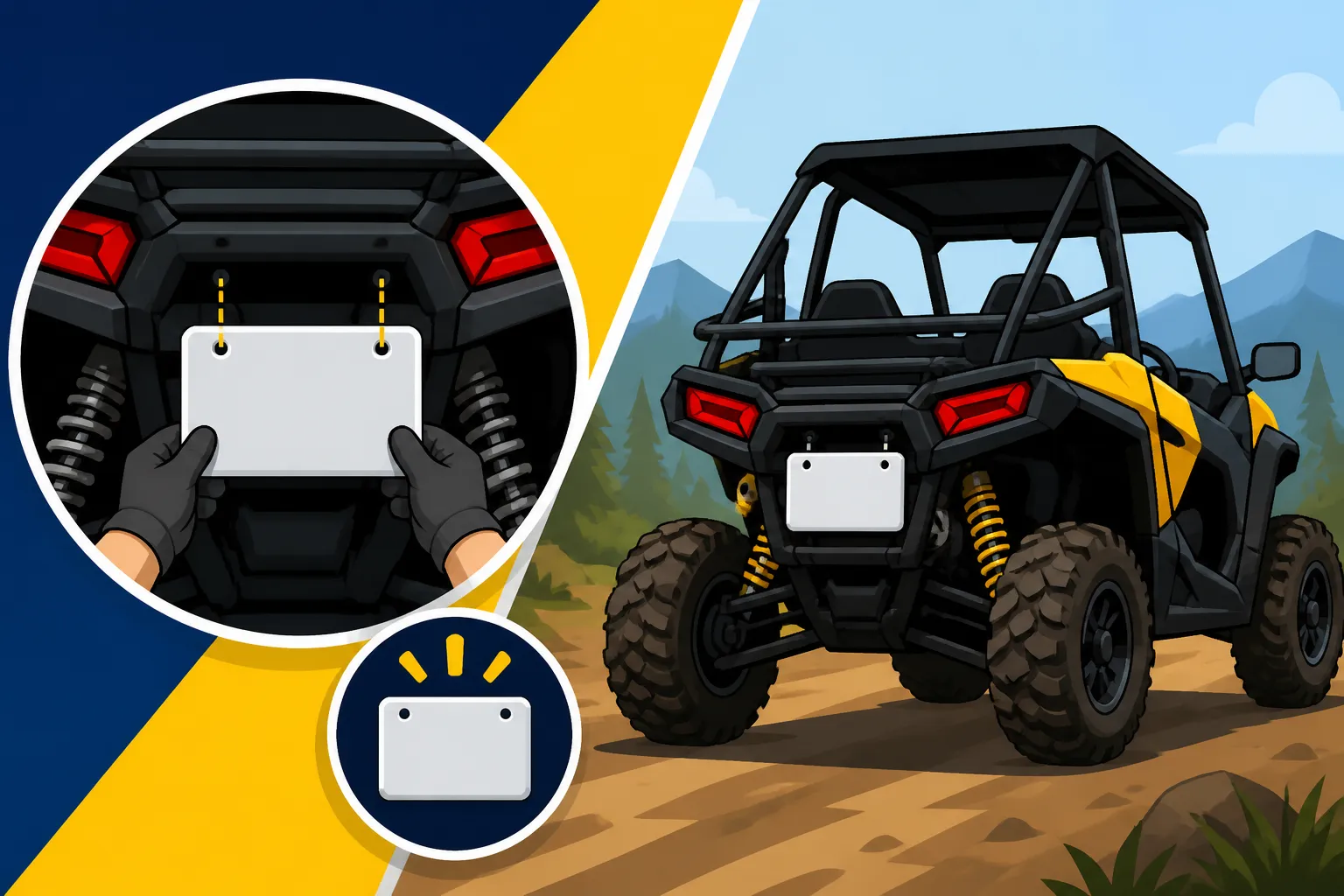
Alberta Plate Placement on a Machine
Riding an off-highway vehicle (OHV) in Alberta is an incredible experience, but it comes with a few responsibilities, and one of the most overlooked details that can trip up even seasoned riders is proper plate placement. Many of us just want to get out on the trails, and the small stuff, like exactly where and how that little piece of metal is attached, can feel like an afterthought – until an enforcement officer has questions. This guide is here to walk you through everything you need to know about correctly mounting your Alberta OHV plate, helping you avoid unnecessary headaches and ensure your machine is always trail-ready and compliant.
Why Your OHV Plate Placement Is More Than Just a Suggestion
It’s easy to think of your OHV plate as just another piece of hardware, something to slap on wherever it fits. But in Alberta, the way you display your registration plate is actually quite important, serving several key functions from a legal and safety standpoint. Ignoring these details can quickly turn a fun day out into a frustrating encounter with law enforcement, complete with tickets and potential fines. It’s not just about having the plate; it’s about having it visible and secure, the way the rules intend.
The Legal Mandate Behind Plate Display
The requirements for off-highway vehicle registration and plate display aren't just arbitrary suggestions dreamt up by bureaucrats; they're enshrined in provincial legislation, specifically the Traffic Safety Act and its associated regulations. When you register your ATV, UTV, dirt bike, or snowmobile in Alberta, you're given a specific plate that acts as a unique identifier for your machine, much like a license plate on your car. This plate signals to enforcement officers, land managers, and even other riders that your vehicle is legally registered for use on public lands. Failing to display it correctly is seen as a breach of these regulations, making your machine, in effect, unregistered or improperly identified in the eyes of the law.
Think about it this way: the plate is your OHV's ID card. If you're pulled over in your truck and your license plate is obscured by mud or hanging by a thread, you'd expect a conversation with the officer, right? The same principle applies to your quad or side-by-side. The legislation mandates that the plate be securely attached and clearly visible, ensuring that anyone who needs to identify your machine can do so without difficulty. This applies to every ride, whether you're ripping through a designated OHV zone or just cruising a lease road. Understanding this legal underpinning helps you appreciate why proper placement isn't just a recommendation but a firm requirement for every rider heading out into Alberta's vast backcountry.
Safety and Identification on Public Lands
Beyond the strict legalities, proper plate placement plays a crucial role in overall safety and efficient identification, particularly in the sprawling and sometimes remote areas where OHVs are commonly used. Imagine a scenario where an incident occurs on a trail – perhaps an accident, a medical emergency, or even suspicious activity. If your plate is missing, unreadable, or precariously attached and falls off, it makes it incredibly difficult for witnesses, first responders, or land management personnel to identify the machine or its owner. This isn't just about catching someone who's done wrong; it's about facilitating help when it's needed most.
Furthermore, clear identification can deter unauthorized or irresponsible riding. When plates are easily visible, it fosters a sense of accountability among riders. It shows that you're a responsible operator who has taken the necessary steps to register your machine and comply with the rules. For other trail users, seeing a clearly displayed plate offers a basic level of assurance that the rider is legitimate and likely adhering to regulations. In an emergency, or even in less critical situations like reporting a lost item or identifying a machine for a shared ownership agreement (something LawDepot might help formalize), a properly displayed plate is indispensable. It truly is a small effort with potentially large benefits for everyone sharing Alberta's beautiful public lands.
Deciphering Alberta's Specific Plate Placement Rules
So, what exactly does "properly placed" mean in Alberta? It's not always explicitly spelled out down to the millimeter, but there are clear principles that dictate where and how your plate should be mounted. These rules are designed to ensure consistent visibility and legibility under a variety of riding conditions, which, as any OHV enthusiast knows, can change pretty rapidly out on the trails.
The "Clearly Visible" Standard and What It Means
The overarching rule for your OHV plate is that it must be "clearly visible." This sounds straightforward, but its interpretation can be quite broad and often relies on an officer's discretion. Generally, "clearly visible" means the plate should be unobstructed by mud, snow, gear, or even parts of your machine like a fender, exhaust pipe, or cargo rack. It needs to be easily read from a reasonable distance, both from the front and the rear (depending on where it's mounted, though typically on the rear). This means avoiding placement in areas prone to excessive splashing or where it might be easily bent or obscured by regular riding.
Consider riding conditions: if you frequently ride in muddy areas, placing your plate low on the back of your quad might mean it's almost immediately caked over, making it not clearly visible. Similarly, if you load up your side-by-side with coolers and camping gear, ensure that none of your cargo inadvertently blocks the view of your plate. Some riders mistakenly try to tuck the plate under a fender for protection, but this often makes it unreadable from a normal standing height or from a passing vehicle. The intention is that if an officer or another rider needs to see your registration, they shouldn't have to get down on their knees, move your gear, or wipe off excessive grime to do so. The idea is to make identification effortless, no matter the trail or the weather. For additional details on specific placement, you might check out [Mounting an OHV Plate So It Stays Readable].
Maintaining Plate Integrity: Cleanliness and Legibility
Beyond just the physical location, the "clearly visible" standard also extends to the condition of the plate itself. An OHV plate must be kept clean and legible at all times. This means the characters and numbers should be easily identifiable without needing to scrub off layers of dirt or snow. It's a common oversight – you get back from a fantastic, muddy ride, park your machine, and forget about the plate until your next outing. However, an officer encountering your machine, even when parked, might still find an issue with an illegible plate.
Wear and tear are also factors. Over time, plates can get scratched, bent, or faded from sun exposure, impacts, or even aggressive washing. While some minor damage is inevitable from regular off-road use, if your plate becomes so damaged that its numbers are unreadable, you're effectively riding with an unidentifiable machine. In such cases, it's your responsibility to replace the plate through an Alberta registry agent. You can find more information about this process in [Alberta Plate Replacement If Lost]. Remember, the goal is for anyone to be able to read your plate quickly and accurately. This isn't about maintaining a showroom shine; it's about ensuring functionality and compliance with the basic identification rules that apply to all registered vehicles in the province.
Common Pitfalls and Creative (But Illegal) Plate Solutions
We've all seen them: the innovative, sometimes almost artistic, ways riders attempt to deal with their OHV plates. From zip-tying them to a plastic fender to stuffing them into a backpack, the ingenuity is sometimes impressive, but often completely non-compliant. These "solutions" usually stem from a desire to protect the plate, prevent it from falling off, or simply a lack of understanding of the regulations. Unfortunately, good intentions don't always translate to legal compliance, and these common mistakes can land you in hot water.
The Problem with Flimsy Mounts and Obscured Views
One of the most frequent errors is using inadequate or temporary mounting methods. Zip ties, duct tape, or a single bolt are often employed, leading to plates that flap in the wind, bend easily, or worse, fall off completely mid-ride. A plate secured this way might technically be "on" the machine, but it's rarely "securely attached" or "clearly visible" for long, especially on rough terrain. A loose plate can also become a hazard, potentially getting caught in a wheel or even injuring someone if it flies off. Furthermore, placing a plate in an area where it's consistently obscured – perhaps directly behind a spare tire, a jerry can, or even a rider's leg when seated – defeats the purpose entirely.
Consider the dynamic nature of off-roading. Your machine will bounce, vibrate, and possibly roll. A flimsy mount won't stand a chance. The vibration alone from a long ride can cause bolts to loosen or plastic to crack around attachment points. This isn't just a theoretical problem; many riders have shared stories of looking back to find their plate missing after a particularly bumpy section. Ensuring your plate is mounted with robust hardware and in a location that stays clear of obstructions, even when your machine is articulated or loaded, is paramount. Remember, the plate should be visible from multiple angles, not just when looking straight at it from one specific point.
Why a Backpack or Pocket Won't Cut It
Another common misconception is that simply having the plate with you is enough. Many riders, perhaps trying to protect their plate from damage or theft, will carry it in their backpack, a cargo box, or even their jacket pocket. While it's great that you haven't forgotten it, this method renders the plate completely useless for its intended purpose: identification of the vehicle. The law is clear: the plate must be attached to the OHV and be clearly visible.
An officer needs to be able to identify your machine at a glance, without having to stop you and ask where your plate is. If your machine is involved in an incident and you're not immediately present, or if an officer is simply observing machines on a trail, the absence of a visible plate means your OHV appears unregistered or improperly identified. This can lead to the same penalties as not having a plate at all. While you should certainly carry your registration certificate and proof of insurance (which LawDepot can't help with directly, but they can certainly help with other legal documentation, like crafting a robust liability waiver if you're letting others use your machine), the physical plate needs to be affixed to the machine itself. For a full rundown on what to carry, check out [Alberta Registration Paperwork Checklist].
Understanding "Intentional" Obstruction
Sometimes, an obscured plate isn't just an accident; it can appear to be intentional. While most riders don't set out to purposely break the law, positioning a plate in a way that makes it consistently unreadable—say, heavily caked with mud in a spot known for splashing, or bent up under a fender—could be interpreted as an intentional attempt to avoid identification. This can carry more severe penalties than a simple oversight. Officers are trained to recognize patterns and judge intent, and a plate that looks like it's been deliberately hidden or made unreadable might be treated more seriously.
This is why a proactive approach to plate placement is so vital. Before every ride, take a moment to check your plate. Is it clean? Is it secure? Is anything obstructing it? Are the numbers and letters still fully legible? If you're going into an area where you know mud or snow will be a factor, consider giving your plate a quick wipe down during a break. It's about demonstrating due diligence and respect for the regulations. An officer might be more lenient with a genuinely accidental mud splash than with a plate that consistently looks like it's trying to hide. This vigilance is part of being a responsible OHV operator in Alberta, ensuring you adhere to [What the Traffic Safety Act Requires of Alberta OHVs].
Practical Strategies for Secure and Compliant Plate Mounting
Now that we understand why proper plate placement is critical and what not to do, let's talk about how to do it right. The good news is that securing your OHV plate compliantly doesn't require a master mechanic or specialized tools. It's all about choosing the right location, using appropriate hardware, and performing regular checks.
Choosing the Right Spot on Your ATV or Side-by-Side
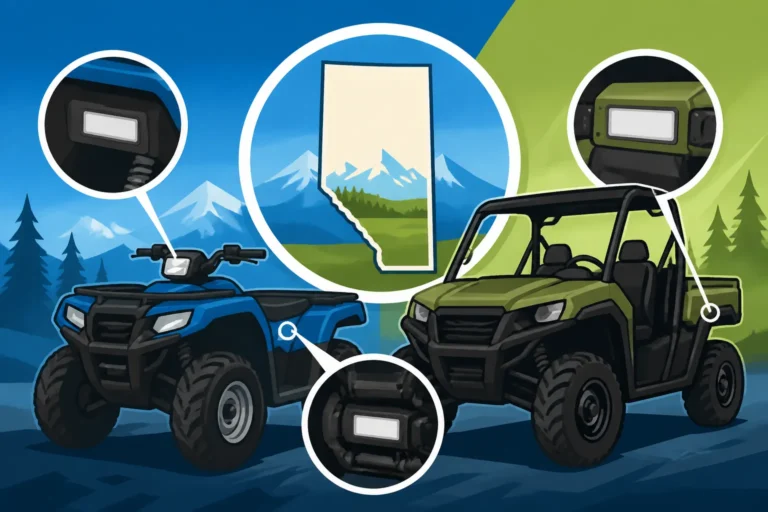
The ideal location for your OHV plate is typically on the rear of your machine, in a prominent position where it's not likely to be hit by debris, mud, or parts of your vehicle. For ATVs, this often means the rear fender, above the taillight, or on a dedicated plate bracket that extends slightly off the back. For side-by-sides (UTVs), the tailgate, the rear bumper, or a bracket mounted to the roll cage are common and effective choices. The key is to select a flat, sturdy surface that offers good visibility from behind.
When choosing your spot, consider the following:
- Height: It should be high enough to be easily seen by someone standing or by another vehicle, but not so high that it gets caught on branches or cargo.
- Protection: While it needs to be visible, try to pick a spot that offers some natural protection from direct impacts, especially if you ride in tight trails or rocky areas. Avoid placing it where a tire might kick up rocks directly at it.
- Stability: The surface needs to be rigid enough to prevent the plate from flapping or vibrating excessively, which can loosen hardware or cause fatigue cracks in the plate itself. This will also help prevent issues like the ones discussed in [Alberta Plate Mounting on a Quad].
- Clearance: Ensure there’s enough room around the plate so that it’s not obscured by tires, suspension components, cargo boxes, or even your exhaust pipe, especially when your suspension is compressed or your cargo area is loaded.
A minute spent evaluating the best spot before you drill those holes can save you a lot of hassle down the trail.
Durable Mounting Hardware and Techniques
Once you've picked the perfect spot, the next step is to use the right hardware to ensure your plate stays put, even through the most rigorous rides. Forget flimsy screws or single zip ties. You'll want something more substantial.
Here’s what to look for:
- Stainless Steel Bolts/Screws: These resist rust and corrosion, which is essential given the wet and muddy environments OHVs operate in. Use at least two, preferably four, mounting points for maximum stability.
- Nyloc Nuts or Lock Washers: These are crucial for preventing bolts from vibrating loose. A nyloc nut has a nylon insert that grips the bolt threads, while lock washers provide tension to keep nuts from backing off.
- Large Washers: Use washers on both sides of the plate (if possible) to distribute the load and prevent the bolt heads from pulling through the plate's holes, especially if mounting to plastic.
- Rubber Spacers/Grommets: If mounting directly to plastic fenders, rubber spacers can absorb some vibration, reduce stress on the plastic, and prevent the plate from scratching the machine's finish. They also help reduce noise from plate vibration.
- Dedicated Plate Brackets: For machines without a perfect flat spot, or if you want to extend the plate slightly for better visibility, consider investing in an aftermarket OHV plate bracket. These are designed to withstand off-road abuse and often come with built-in lights for night visibility.
When drilling holes, make sure they are slightly larger than your bolts to allow for some flex without cracking the plate or fender. Don't overtighten the bolts, especially on plastic, as this can strip threads or crack the material. A snug fit with a nyloc nut or lock washer is far better than a cinched-down bolt that will eventually fail.
Custom Solutions for Unique Machine Designs
Not all OHVs are created equal, and some models present unique challenges for plate placement. Perhaps you have a custom mud quad with extended fenders, a highly modified rock crawler side-by-side, or a vintage machine with limited flat surfaces. In these cases, a "one-size-fits-all" approach won't work, and you might need to get a bit creative with your mounting solution. However, "creative" must still align with "compliant."
Here are a few custom considerations:
- Roll Cage Mounting: For UTVs, mounting a bracket to the rear section of the roll cage is a popular and robust option. You can use roll bar clamps designed for accessories to secure a flat plate bracket, ensuring it sits clearly above any cargo or other modifications.
- Hitch Receiver Mounts: Some riders use brackets that slide into the 2-inch hitch receiver on the back of their machine. These are generally very sturdy and allow for quick removal if you need to access the hitch for towing. Just ensure the plate remains visible even when a hitch ball is installed.
- Spring-Loaded or Folding Brackets: If your plate is consistently prone to getting smashed or bent in very aggressive riding conditions, a spring-loaded or folding bracket can be a lifesaver. These are designed to give way on impact, protecting the plate, and then returning to their upright, visible position. Make sure they are robust enough that they don't simply flop around during normal riding.
- Reinforcement: If mounting to a plastic fender, consider adding a thin sheet of aluminum or high-density plastic on the underside of the fender to provide a more rigid backing. This will prevent the plate from pulling through the plastic and reduce overall vibration.
Always test your custom solution after installation. Take your machine for a short, bumpy ride and then check the plate. Is it still secure? Is it still clearly visible? Has anything come loose? These small adjustments can make a big difference in the longevity and legality of your plate placement. If you're involved in selling or buying a machine with such custom setups, ensuring all registration documentation is solid is key – LawDepot can be a useful resource for creating [Alberta Private Sale Paperwork] or other legal forms.
The Consequences of Getting Plate Placement Wrong
It might seem like a minor detail, but improper OHV plate placement can lead to more than just a stern talking-to. Alberta's enforcement officers take these regulations seriously, and the penalties can range from hefty fines to the temporary loss of your machine. It’s a classic case of an ounce of prevention being worth a pound of cure, or in this case, a secure plate being worth a stack of cash.
Tickets, Fines, and Officer Discretion
The most common consequence of an improperly displayed OHV plate is a ticket. The specific fine amount can vary, but generally, offences related to registration and identification are not cheap. You might receive a ticket for "failure to display a valid plate," "plate not clearly visible," or "plate not securely attached." These fines often start in the low hundreds of dollars, which can quickly turn a fun day of riding into an expensive lesson.
Keep in mind that officers have a degree of discretion. A plate that's slightly obscured by a fresh splash of mud might warrant a warning and a request to clean it, especially if you're otherwise compliant and respectful. However, a plate that's intentionally hidden, hanging by a thread, or repeatedly found in an unreadable state is far more likely to result in a citation. Your overall attitude and cooperation can also play a role. Being polite and demonstrating an understanding of the rules, even if you've made a mistake, can sometimes lead to a warning instead of a ticket. But don't count on it. The best approach is to ensure your plate is always compliant to begin with, leaving no room for discretion to go against you. You can learn more about general penalties for riding without proper registration here: [Alberta Penalties for Riding Unregistered].
Potential for Vehicle Seizure and Impoundment
While less common for a simple plate placement issue, serious or repeat offenses related to registration and identification can potentially lead to your OHV being seized and impounded. This typically happens in more egregious cases, such as riding a machine that appears completely unregistered, or if there's a suspicion of theft and the plate is deliberately obscured. However, if an officer determines that your machine's identification is severely compromised, especially in conjunction with other infractions like [Alberta Requires Insurance on Public Land] and you don't have proof, they have the authority to remove your vehicle from the public land.
Imagine your quad being loaded onto a tow truck in the middle of a remote trail, leaving you stranded and facing not only a hefty fine but also impoundment fees, storage costs, and the inconvenience of having to retrieve your machine from a compound. This can quickly add up to thousands of dollars and countless hours of frustration. Preventing this nightmare scenario is as simple as ensuring your plate is mounted correctly, visible, and legible, every single time you head out. It's about respecting the rules and protecting your investment.
Here's a quick comparison of proper versus improper plate mounting:
| Aspect | Proper Plate Mounting | Improper Plate Mounting |
|---|---|---|
| Location | Rear, flat surface, clearly visible | Under fender, behind gear, too low/high |
| Visibility | Easily read from a reasonable distance, unobstructed | Obscured by mud, snow, cargo, machine parts |
| Attachment | Securely fastened with 2-4 bolts, lock washers/nuts | Zip ties, single bolt, tape, loose or flapping |
| Condition | Clean, legible, intact characters | Dirty, bent, faded, scratched, missing characters |
| Compliance | Meets Traffic Safety Act requirements | Violates identification rules |
| Consequence | Smooth sailing, no hassle | Tickets, fines, potential vehicle seizure |
Beyond the Mount: Ongoing Plate Compliance and Care
Mounting your plate correctly is a great first step, but plate compliance isn't a "set it and forget it" task. The demanding nature of off-road riding means your plate and its mounting hardware are constantly put to the test. A truly responsible rider incorporates regular checks and maintenance into their routine to ensure their plate remains compliant throughout its lifespan.
Regular Checks Before Every Ride
Just like checking your tire pressure, oil levels, or helmet condition, giving your OHV plate a quick once-over should become a non-negotiable part of your pre-ride ritual. This simple habit takes mere seconds but can save you significant trouble down the road.
Here's what to look for during your check:
- Security: Wiggle the plate gently. Is it still firmly attached, or does it feel loose? Are all bolts present and tight? Off-road vibrations can loosen fasteners over time, so a quick check can prevent a plate from falling off altogether.
- Cleanliness: Is the plate caked in mud, dust, or snow from a previous ride? If so, take a moment to wipe it clean. A small brush or a wet rag is usually all you need. This is especially critical before heading out onto public land where officers are more likely to be present.
- Legibility: Are all the numbers and letters still clearly visible and intact? Check for excessive scratches, fading, or bends that might make it difficult to read.
- Obstructions: Are there any new accessories, bungee cords, or pieces of gear that might be blocking the plate? Ensure your cargo setup doesn't inadvertently cover it once you're loaded up.
Making this a routine ensures that you're always heading out with a fully compliant machine, minimizing the risk of an unexpected ticket or an uncomfortable roadside chat. It's a small investment of time that pays dividends in peace of mind. Remember, an officer checking your machine might ask to see not only your physical plate but also documents like your registration certificate and proof of insurance, so keep those handy too, as mentioned in [What an Alberta Officer Can Ask to See] and [Producing Insurance on Demand].
Replacing a Damaged or Lost Plate
Despite your best efforts, accidents happen. Plates can get bent in a rollover, scratched by branches, or even fall off on a particularly rough trail. If your OHV plate becomes damaged to the point where it's no longer clearly legible, or if it goes missing entirely, you are legally obligated to replace it. Riding with a damaged or missing plate is no different than riding without one, and it carries the same potential penalties.
The process for replacing a damaged or lost plate in Alberta is straightforward:
- Visit a Registry Agent: You'll need to go to an authorized Alberta Registry Agent. You can't usually do this online as they need to issue a physical plate.
- Provide Documentation: Bring your OHV's registration certificate and personal identification. You'll need to demonstrate ownership of the vehicle.
- Explain the Situation: Inform the agent whether the plate was lost, stolen, or damaged. If stolen, it's often advisable to report it to the police first.
- Pay the Fee: There will be a fee for the replacement plate. This fee covers the cost of issuing a new plate and updating your registration record.
- Re-Mount Properly: Once you receive your new plate, make sure to mount it using the durable hardware and techniques discussed earlier in this guide. This is your chance to correct any previous mounting issues.
Don't procrastinate on replacing a damaged or lost plate. The longer you ride without a compliant plate, the higher the risk of encountering legal trouble. It's a minor inconvenience that prevents a potentially much larger problem. Keep in mind that registry agents also handle the renewal of your OHV registration, which you can learn more about in [Alberta Registration Terms of One or Two Years].
Disclaimer
This article is for general informational purposes only and does not constitute professional advice. Laws, prices and regulations vary by location and change over time. Consult a qualified professional for guidance on your specific situation.