Alberta Registration Before Riding a Ditch
Many of us grew up thinking that riding an ATV or UTV in the ditch alongside a road was a low-stakes activity, a quick way to get from point A to point B on your own property or just out for a casual spin without much fuss. The reality in Alberta, however, is far more complex, and misunderstanding the rules around ditch riding can lead to frustrating and expensive encounters with law enforcement. This guide is here to untangle the often-confusing regulations so you can ride safely, legally, and without an unexpected ticket.
Understanding Alberta's Definition of a "Ditch" for OHVs
It's easy to assume a ditch is just a grassy strip of land, maybe a little wet, sometimes full of brush, and often seen as an extension of someone's field. For many of us, it feels like "no man's land" or certainly not a place where formal road rules apply. But when it comes to off-highway vehicles (OHVs) in Alberta, the legal definition of what constitutes a "highway" is far broader than just the paved or gravel surface you drive your truck on, and this includes those roadside ditches.
The Legal Landscape: What the Traffic Safety Act Says
The crucial piece of legislation here is Alberta's Traffic Safety Act. While it might sound like it only applies to cars and trucks on major thoroughfares, it actually has a very specific and expansive definition of what a "highway" entails. This definition isn't just the travelled portion of the road; it extends to the shoulders, boulevards, and yes, the ditches on either side. So, from a legal standpoint, when you're riding your quad in that ditch next to a municipal road, you're actually operating on what the province considers a "highway." This distinction is absolutely critical because it immediately triggers a host of requirements that apply to all vehicles on a highway, including OHVs. It means that the same rules regarding registration, insurance, and even helmet use that apply to main roads can, by extension, apply to where you're riding in the ditch. It's a tricky area, and it's where a lot of riders accidentally run afoul of the law because their common sense definition of a ditch doesn't align with the legal one. Understanding [What the Traffic Safety Act Requires of Alberta OHVs] is your first line of defense.
Common Misconceptions About Roadside Riding
One of the biggest misconceptions riders hold is that ditches are part of private property, or at least exempt from public land rules. This often stems from rural areas where property lines might not be clearly marked, and a ditch runs right alongside a farmer's field. While the adjacent land might be private, the road allowance—which includes the ditch—is almost universally considered public land, controlled by the municipality or the province. Another common thought is that if there's no pavement, there are no rules. This couldn't be further from the truth. The surface type, whether it's gravel, dirt, or even just grass, doesn't negate the fact that it's legally defined as part of the "highway." Riders also sometimes believe that if they're just crossing a short distance or only going to the mailbox, the rules don't apply. Unfortunately, the law doesn't make exceptions for convenience or short distances; if you're operating on a legally defined highway, you're expected to comply with all relevant regulations, regardless of how far you intend to travel. These ingrained assumptions are often the source of frustration when a rider gets stopped and ticketed for something they genuinely didn't realize was illegal.
How Local Bylaws Can Further Complicate Things
Just to make things even more interesting, while the province sets the baseline for what a "highway" is, individual municipalities (counties, towns, villages) have the power to create their own bylaws that either restrict or, in rare cases, permit OHV use on specific roads and ditches within their jurisdiction. This means that what's permissible in one county might be strictly forbidden just across the border in another. For example, some rural municipalities might have bylaws that open certain secondary roads and their adjacent ditches for OHV travel, often for agricultural purposes or to connect to designated trail systems. Conversely, a town might have a strict bylaw completely prohibiting OHVs on any road allowance within its limits, including ditches, even if provincial law might otherwise allow some limited access. This patchwork of rules makes it incredibly challenging for riders to know the exact regulations for their specific riding area without doing some homework. Always check [Alberta ATV Road Rules: Bylaws Decide] for your specific location before heading out.
Why Your OHV Needs Registration Even for Ditch Riding
Given the legal definition of a "highway," it quickly becomes clear why your off-highway vehicle needs to be properly registered, even if your plan is just to stick to the ditches. This isn't just about collecting fees; it's about accountability, identification, and ensuring that vehicles operating on public land are trackable.
The "Highway" Loophole: Ditches as Public Land
As we just discussed, the moment your wheels touch that ditch beside a public road, you're technically on a "highway" according to Alberta's Traffic Safety Act. This isn't a loophole in the rider's favor, but rather a legal classification that brings your OHV under the umbrella of registered vehicles. Think of it this way: if a car needs to be registered to drive on the paved part of the road, and the ditch is legally part of that same road, then your OHV operating in the ditch also needs to be registered. This is where many riders get caught off guard; they truly believe that because they're not on the main "road," they're exempt. But the law is quite clear: if it's considered a highway, and you're operating an OHV on it, that OHV needs to have current registration. This rule applies whether you're driving a brand-new side-by-side or a vintage quad that rarely leaves the yard. For a deeper dive into this, you might want to read Alberta Registration Before Riding a Ditch.
Avoiding Penalties for Unregistered Machines
Riding an unregistered OHV in a ditch that's legally classified as a highway can lead to significant penalties. We're not just talking about a stern warning from a peace officer; unregistered operation can result in substantial fines. These fines are designed to deter riders from circumventing the system and can quickly turn a casual outing into a costly mistake. Beyond the financial hit, there's also the potential for your machine to be seized, especially if other infractions, such as a lack of insurance, are also present. Imagine your weekend plans ruined, your quad impounded, and the hassle of going through the process to retrieve it, along with paying all the associated fees and fines. It's a headache no rider wants to experience. The financial and logistical burdens of dealing with an unregistered machine can far outweigh the cost and effort of simply getting it registered properly in the first place. You can find more information about the consequences by looking up [Alberta Penalties for Riding Unregistered].
The Importance of Carrying Proof of Registration
It's not enough to simply have your OHV registered; you also need to be able to prove it when asked by a peace officer. This means carrying your registration certificate with you whenever you ride on public land, which, as we've established, includes ditches. While Alberta no longer issues physical stickers for plates, the registration certificate itself is your official proof. In the digital age, many riders expect to simply show a picture on their phone, but the province explicitly states that you should have a printed copy. This ensures readability in all conditions and avoids issues if your phone battery dies or signal is poor. Keeping this document accessible, perhaps in a waterproof bag in your OHV's storage compartment, is a small but vital step to ensure your ride goes smoothly. When an officer pulls you over, they'll want to see that paper; a digital image simply won't cut it. For details, check out [Alberta Digital Certificates Must Be Printed].
| Aspect | Common Rider Assumption | Alberta Legal Reality for Ditches |
|---|---|---|
| Location Status | Private land or "no man's land" | Part of the "highway" under Traffic Safety Act |
| Registration | Not needed, only for main roads/trails | Required, just like any vehicle on a highway |
| Insurance | Only if I crash, or on trails | Required for public land, including ditches |
| Helmets | Optional, only for trails | Mandatory if not enclosed with seatbelts |
| Bylaws | Doesn't apply, too rural | Can add further restrictions or permissions |
| Enforcement | Rarely enforced in rural ditches | Peace officers can and do enforce rules |
The Process of Registering Your OHV for Alberta Ditches
So, you've understood why registration is crucial for even ditch riding. Now, let's walk through the straightforward steps of getting your OHV properly registered in Alberta. It's a relatively simple process once you have all your ducks in a row.
Gathering Your Essential Paperwork
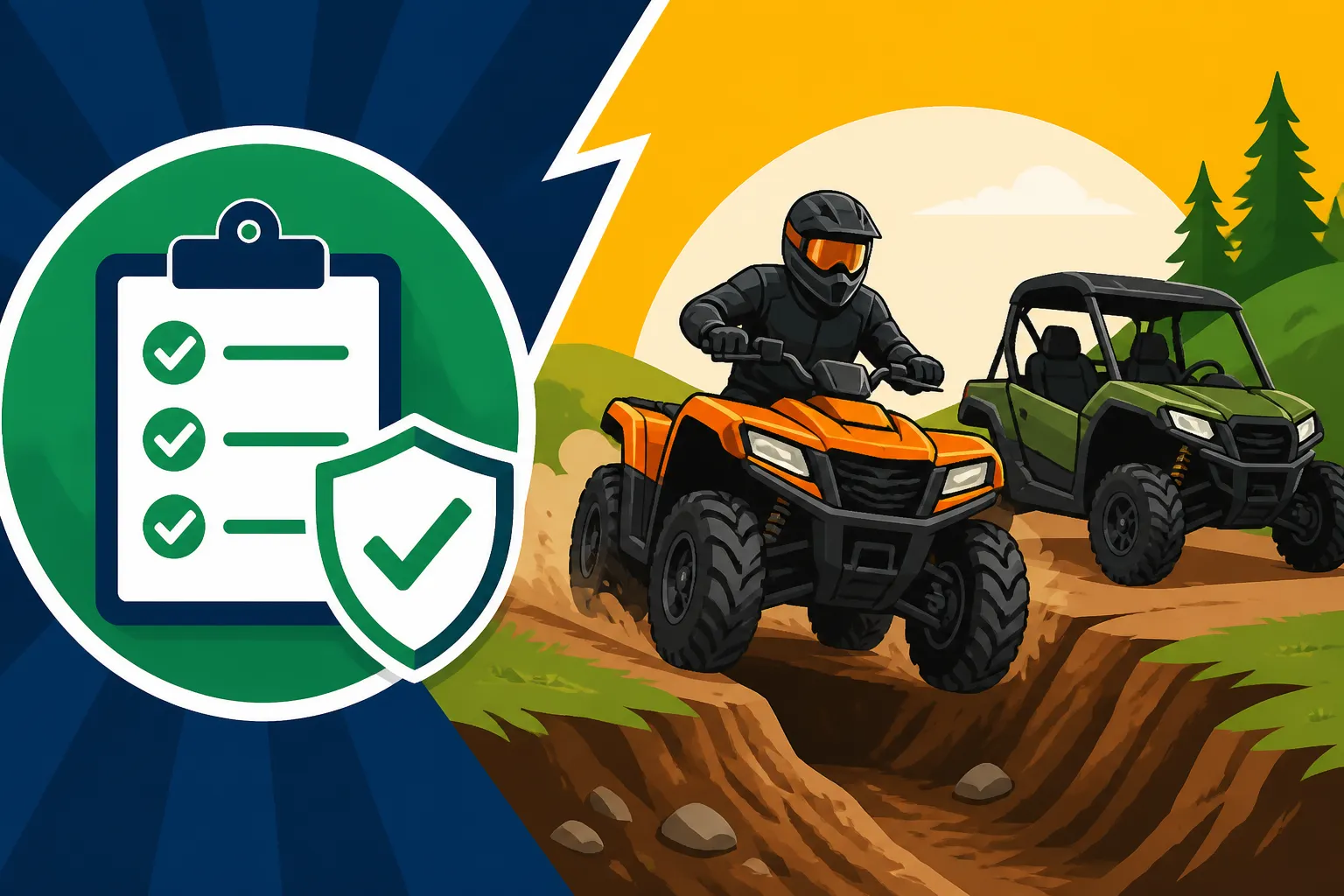
Before you even step foot into an Alberta Registry Agent office, you'll need to gather the right documentation. This usually includes proof of ownership, such as a bill of sale or a Manufacturer's Statement of Origin (MSO) for a brand-new machine. If you bought your OHV privately, a detailed bill of sale is absolutely essential. It needs to include the buyer's name, seller's name, date of sale, purchase price, and a clear description of the OHV, including its Vehicle Identification Number (VIN). Without this, the registry agent won't be able to process your application. You'll also need valid personal identification, such as your Alberta driver's license or other government-issued ID. Proof of Alberta residency might also be required, particularly if you're new to the province. Finally, you'll need proof of valid liability insurance, as this is a mandatory requirement for all OHVs operating on public land in Alberta. Make sure you have your insurance provider's name and your policy number handy. If you're unsure about what a proper bill of sale looks like, resources like LawDepot can provide templates that ensure all the necessary information is included, making your registration process smoother. Having a well-prepared bill of sale can prevent hiccups at the registry. Find a full list by checking [Alberta Registration Paperwork Checklist].
Visiting a Registry Agent: What to Expect
Once you have all your paperwork in order, your next step is to visit an Alberta Registry Agent. These are private businesses authorized by the provincial government to provide registry services, including OHV registration. You can't just send in a form by mail; you need to go in person for your initial registration. When you arrive, you'll present your documents to a registry agent. They will verify your identity, confirm your ownership details, check for any liens on the machine (if applicable), and ensure you have valid insurance. You'll fill out an application form, and then pay the required registration fee. While the base provincial fee for registration is standard, the registry agent itself will also charge a service fee, which can vary slightly between locations. They'll then issue you a metal license plate for your OHV and a registration certificate. The whole process is usually quite efficient, provided you have everything prepared. It’s always a good idea to call ahead or check their website for their specific hours and any potential wait times. For more about this, look at [Alberta Registry Agents and OHV Paperwork].
Ensuring Your Registration Stays Current
OHV registration in Alberta is not a one-time affair; it needs to be renewed. You'll typically have the option to register your machine for either one or two years. It's generally a good idea to choose the two-year option if you plan to keep the machine, as it means one less thing to remember. Renewal notices are usually sent out by mail or email by the province, so keep your contact information updated with the registry. You can renew your OHV registration online for subsequent renewals, which is a convenient option for many riders. However, the first registration must be done in person. If you let your registration expire, you risk facing the same penalties as if you were riding an unregistered machine. So, make sure to mark your calendar and stay on top of those renewal dates! For details on how to manage this, read [Alberta ATV Registration Renewal Online].
Beyond Registration: Other Rules for Ditch Riding in Alberta
While getting your OHV registered is a huge step, it's certainly not the only rule you need to be aware of when riding in Alberta's ditches. There are several other critical regulations that apply to OHV operation on any public land, which, again, includes those roadside ditches.
Helmet Laws and Age Restrictions Apply
This is a big one, and it's often overlooked. In Alberta, if you're riding an OHV on public land (which includes ditches), a helmet is mandatory unless your machine has an enclosed cab and seatbelts. This means virtually all ATVs and many side-by-sides require a helmet. The helmet must be properly secured and meet an approved safety standard, such as CSA, Snell, or ECE. Ignoring this can result in significant fines and, more importantly, put your safety at serious risk. Beyond helmets, there are also age restrictions. Riders under 14 years old must be supervised by an adult aged 18 or older, and that adult must be operating their own OHV. There are also manufacturer-recommended age limits for specific machine sizes, which are important to heed for safety reasons. You can dive deeper into this topic by reading [Alberta Helmet Law on Public Land] and [Alberta ATV Age Requirements].
Insurance Requirements on Public Land
We touched on it briefly, but it's worth reiterating: insurance is mandatory for any OHV operated on public land in Alberta. This isn't just a suggestion; it's a legal requirement. You need to have valid liability insurance coverage for your machine. Just like with registration, you must be able to produce proof of insurance when asked by a peace officer. This proof can often be a digital copy on your phone or a physical card provided by your insurer. The key is that it must be immediately accessible. Riding without insurance can lead to hefty fines, and in some cases, even vehicle seizure, a far more severe consequence than just a ticket. It's an important layer of protection, not just for legal compliance, but also in case of an accident. If you're planning on purchasing a new or used OHV, make sure to factor in the cost of insurance from day one. You can learn more by checking [Alberta Requires Insurance on Public Land].
Respecting Private Property and Local Noise Bylaws
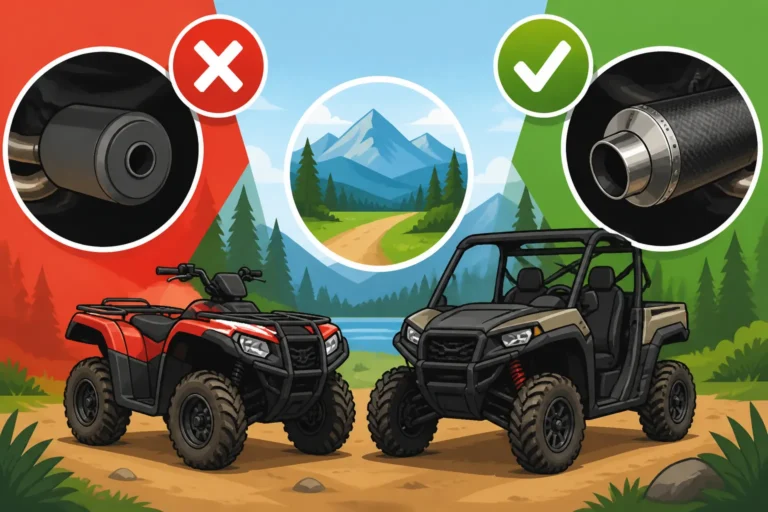
Even when you're legally riding in a ditch, it's crucial to be mindful of your surroundings. Just because the ditch is public land doesn't mean the property right next to it is. Always be respectful of adjacent private land and ensure you're not trespassing. This means avoiding cutting across fields, driving through people's yards, or disturbing livestock. Trespassing can lead to additional legal issues, separate from your OHV operation. Furthermore, OHVs can be noisy, and local municipalities often have noise bylaws in place, especially near residential areas. While your machine might meet provincial sound standards, excessive noise at odd hours or in sensitive areas can still draw complaints and attention from law enforcement. Always ensure your exhaust system is stock and unmodified; [Alberta Bans Modified Exhausts] for machines on public land. Being a responsible rider means being a good neighbour and minimizing your impact on others. A peaceful ride for you shouldn't come at the cost of peace for residents.
Navigating the Nuances: Exceptions and Local Variations
The world of OHV regulations in Alberta is full of nuances. While the general rules about ditches being part of the highway are broad, there are specific situations and local variations that can influence whether and how you can ride. Understanding these can help you avoid unintended violations.
Farm Exemptions and Their Limits
Alberta does offer some exemptions for OHVs used primarily for agricultural purposes. Specifically, a farm machine used solely for farming operations and never leaving private land (or strictly traveling between fields directly) might not require registration. However, this exemption is quite narrow. The moment that "farm quad" ventures onto a public road allowance, even a ditch, for any purpose other than directly crossing a public road at a right angle, it generally loses its exemption and needs to be registered and insured. Many farmers mistakenly believe their "farm quad" is exempt from all rules, but the key distinction is where and how it's being used. If it's used for personal recreation, or if it travels any significant distance along a ditch that's considered a highway, it likely needs to be registered. For more detailed information, look into [Alberta's Farm Exemption From Registration]. If you're buying or selling a quad for farm use, documents from LawDepot can help clarify the terms of sale and intended use, which might be helpful in understanding any exemptions.
When a Bylaw Actually Opens a Roadway
As mentioned earlier, some local municipalities have specific bylaws that can open up certain roads or ditches for OHV use, under defined conditions. This is not the norm, but it does happen. These bylaws are typically very specific, outlining which roads, during what times, and under what conditions OHVs are permitted. They might require you to have specific safety equipment, limit speeds, or only allow access to connect to designated trail systems. It's crucial not to assume that a bylaw allowing OHVs in one area applies everywhere. Always check the specific municipal bylaws for the county, municipal district, or town you plan to ride in. A quick search on the municipality's official website or a call to their administrative office can provide clarity. Assuming that a "road open to OHVs" sign applies to the entire region can lead to trouble if you haven't done your homework. These bylaws are the exception, not the rule, and often come with strict adherence requirements. Read [Alberta Bylaws That Open a Right-of-Way] for more information.
Visiting Riders and Out-of-Province Plates
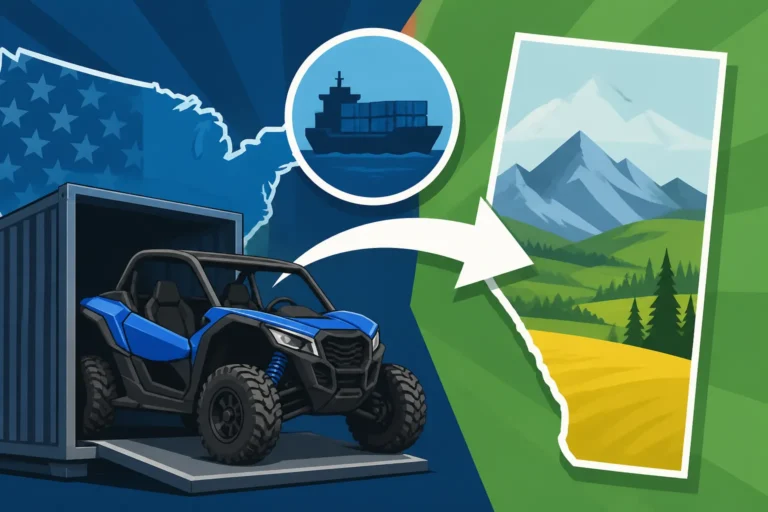
If you're an out-of-province visitor bringing your OHV to Alberta, you might be wondering about registration requirements, especially if you plan to do some ditch riding. Generally, Alberta extends reciprocity to OHVs registered in other Canadian provinces or U.S. states. This means if your OHV is legally registered and insured in your home jurisdiction, you can typically ride in Alberta for a limited period, usually up to 30 consecutive days. However, you must still comply with all other Alberta OHV rules, such as helmet laws, age restrictions, and equipment requirements (like spark arrestors). It's also vital to carry your home province's or state's registration and insurance documents, along with proof of your residency, as an officer may ask to see these. If you plan to stay longer than the specified period, or if you become an Alberta resident, you'll generally be required to register your OHV in Alberta. This 30-day rule is very specific, and it's about consecutive days, not just days of riding. You can find more detail by checking [Alberta's 30-Day Rule for Out-of-Province Machines].
Disclaimer
This article is for general informational purposes only and does not constitute professional advice. Laws, prices and regulations vary by location and change over time. Consult a qualified professional for guidance on your specific situation.