Alberta Registration for a Farm Quad
You've got a quad or a side-by-side on your farm, and for most of its life, it probably just putters around the fields, hauls tools, or helps with chores. The idea of registering it, getting a plate, and paying fees might seem like an unnecessary hassle. But the truth is, Alberta's rules around off-highway vehicles (OHVs), even those used exclusively for farm work, can be tricky and lead to fines if you're not careful. This guide will walk you through exactly when your farm quad needs to be registered and what the process entails.
Understanding Alberta's OHV Registration Requirements
It's easy to assume that if a machine never leaves the farm, it's exempt from all the usual regulations. And for a specific set of circumstances, that can be true. However, understanding the baseline requirements for OHVs in Alberta is crucial before diving into the nuances of farm exemptions. Many landowners have been caught off guard, thinking their machine was strictly for private use, only to find themselves on the wrong side of the law after a quick trip down a road allowance or a neighbour's driveway.
The Basic Rule for Public Land
In Alberta, the fundamental rule is that any off-highway vehicle operated on public land must be registered. This isn't just about collecting fees; it's about accountability, safety, and funding the very trails and infrastructure many riders enjoy. Public land is a broad category that includes everything from designated OHV trails and Crown land to seemingly innocuous places like highway ditches, road allowances, and even pipeline rights-of-way if they're not explicitly private. The moment your quad's tires touch these areas, even for a brief moment, it falls under the purview of the Traffic Safety Act and the Off-Highway Vehicle Regulation. If you've ever wondered about the broad strokes, [Do You Need to Register an ATV in Alberta?] covers the basic requirements in detail.
This core principle means that unless your machine is strictly confined to private property – and we'll get into what that really means – it needs a registration and plate. The system is designed with the assumption that OHVs, by their nature, are likely to be used in areas accessible to the public at large. Ignoring this baseline can lead to costly tickets, even if your intention was only to move a few bales of hay from one field to another across a public road allowance.
What Counts as an Off-Highway Vehicle
The term "Off-Highway Vehicle" is a legal designation in Alberta, and it covers a wide array of machines. It’s not just your weekend recreational toy. This definition includes all-terrain vehicles (ATVs), utility terrain vehicles (UTVs or side-by-sides), dirt bikes, snowmobiles, and even specialized vehicles designed for off-road use. If it's motorized, designed to travel on land other than a highway, and carries a person or property, it likely fits the bill.
For farm use, this means your quad that you use to check fences, your side-by-side that hauls feed, or your dirt bike that you use to quickly get across pastures, all legally qualify as OHVs. It doesn't matter if its primary purpose is work or play; the legal classification remains the same. The key differentiator for farm owners then becomes where and how these machines are used, rather than what they are. This distinction is critical because it directly impacts whether the farm exemption applies, or if you need to go through the standard registration process, which is detailed in resources like [How to Register an ATV in Alberta].
The Farm Exemption: What It Really Means for Your Quad
Now, let's talk about the specific relief many farmers and ranchers hope for: the farm exemption. Alberta does provide an exemption from OHV registration requirements, but it's much narrower than many people realize. It's not a blanket pass for all farm-related OHV use, and misunderstanding its conditions can lead to unexpected trouble.
Conditions for the Exemption
The exemption for farm quads is outlined in the Off-Highway Vehicle Regulation 319/2002. Essentially, an OHV does not require registration if it is:
- Owned by a farmer or rancher. This means the person who owns the machine must be actively involved in farming or ranching operations.
- Used solely for agricultural purposes. This is a critical point. The machine's use must be directly related to the operation of the farm or ranch – checking cattle, hauling tools for field work, fence repair, etc. Recreational riding, even on your own land, can technically disqualify it from the exemption.
- Operated exclusively on land owned or occupied by that farmer or rancher. This is perhaps the most restrictive condition. "Occupied" means land leased or otherwise used for the farming operation.
This combination of factors means that the moment your quad is used for something other than direct agricultural work, or if it ever leaves the boundaries of your own or your leased farm land, the exemption vanishes. It's a very clear line in the sand, and crossing it, even accidentally, can put you at risk of a penalty. Many farmers think "just for farm use" is enough, but the "exclusively on land owned or occupied" is the real sticking point. For a deeper dive into this specific relief, you can look at [Alberta's Farm Exemption From Registration].
The "Private Land Only" Clause
This condition is where most farm owners run into issues. What exactly constitutes "private land" in the eyes of the law? It's not just your deeded acres. It also includes land that you lease or have legal permission to occupy for your farming activities. However, it absolutely does not include:
- Highway ditches or road allowances: Even if they run alongside your fields, these are generally considered public land.
- Public roads: Even quiet gravel roads between your fields.
- Crown land: Unless you have a specific grazing lease or other permit that grants you exclusive occupation for farming purposes.
- Neighbour's land: Unless you specifically own or occupy that land for your farming business.
Imagine needing to move a piece of equipment from your main yard to a back forty. If that trip involves even briefly crossing a public road or driving down a road allowance, your "farm quad" is no longer operating exclusively on land owned or occupied by you, and it now requires registration. This can be a huge frustration for rural Albertans who might only use these public thoroughfares for a few seconds. The spirit of [Alberta Farmer-Owned Machines on Private Land] explains this tricky boundary.
When the Exemption Doesn't Apply
To make it even clearer, let's look at common scenarios where the farm exemption would not apply, and your quad would need to be registered:
- Recreational Riding: If you or your family use the quad for trail riding, mudding, or simply exploring, even if it's solely on your own land, it might challenge the "solely for agricultural purposes" clause. While enforcement might be rare if you never leave your private property, it's a condition to be aware of.
- Crossing Public Roads/Ditches: As mentioned, a quick hop across a municipal road, driving down a public road allowance to get to another field, or even using a roadside ditch for access can trigger the registration requirement.
- Visiting a Neighbour's Farm: If you take your quad over to help a neighbour with their chores, and the route involves public land, your machine needs to be registered.
- Transport for Repairs: If you load your quad onto a trailer and take it to a repair shop in town, the machine itself doesn't need to be registered for transport. However, if you ride it on any part of a public thoroughfare to get to the shop, it must be registered.
- Community/Rural Events: Participating in local parades, community rides, or even lending your quad for a non-farm related event (like a charity fundraiser), even if it's on private land, could challenge the "solely for agricultural purposes" condition if it's on a shared or public access space.
Given these strict conditions, many farmers and ranchers find it simpler and safer to register their OHVs anyway, especially if there's any chance they might occasionally leave their immediate private property. The peace of mind often outweighs the registration cost.
Registering Your Farm Quad: A Step-by-Step Guide
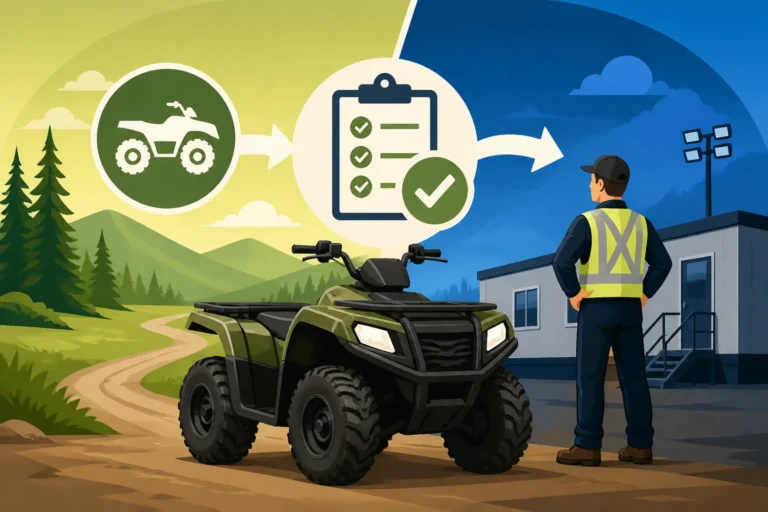
If you've decided that registering your farm quad is the best course of action – or if your specific use case requires it – the process is straightforward. Alberta doesn't differentiate between a recreational quad and a farm quad when it comes to registration; the steps are the same.
Gathering Your Paperwork
Before you head to a registry agent, make sure you have all the necessary documents. This preparation will save you time and a potential second trip. Here’s a checklist:
- Proof of Ownership: This is paramount.
- New Machine: A New Vehicle Information Statement (NVIS) or Manufacturer's Statement of Origin (MSO) from the dealer.
- Used Machine: A bill of sale signed by both the buyer and seller. This should include the date, purchase price, buyer's and seller's names and addresses, and the vehicle identification number (VIN) or serial number. Sometimes, especially with older machines, finding a solid bill of sale can be tough. [Will a Handwritten Bill of Sale Register a Quad?] dives into what’s acceptable. For instance, if you're documenting the sale of a farm quad between family members or neighbours, having a clear, well-structured bill of sale is crucial, and resources like LawDepot can provide templates that cover all the necessary details.
- Previously Registered Machine (Alberta): The seller's signed transfer of ownership on the existing registration certificate.
- Inherited Machine: Proof of the previous owner's death and documents proving your legal entitlement to the machine (e.g., will, probate documents). [Alberta Registration for an Inherited Machine] offers more guidance here.
- Personal Identification: A valid government-issued ID (e.g., driver's licence, passport).
- Proof of Alberta Residency: A document showing your Alberta address (e.g., utility bill, lease agreement, Alberta driver's licence).
Having these items organized before you go will make the process much smoother. For a complete list of what you might need, check out [Alberta Registration Paperwork Checklist].
Visiting a Registry Agent
Once you have your paperwork in order, your next stop is an Alberta registry agent. These are private businesses licensed by the Alberta government to provide registration services, among others. You cannot register an OHV directly with the provincial government online or by mail; it must be done through an authorized agent.
At the registry office, a friendly agent will guide you through the process. They'll review your documents, verify the VIN, and process your application. You'll need to declare whether the machine has been modified (e.g., engine, exhaust) as this can impact some aspects of its legal operation, though not necessarily the registration itself. They will input your information into the provincial system, and you'll pay the applicable fees. These fees include the provincial registration fee and a service charge from the registry agent. For details on what to expect, [Alberta Registry Agents and OHV Paperwork] provides valuable context.
The Registration Certificate and Plate
After successfully completing the registration, you'll be provided with a few important items:
- A Registration Certificate: This is a paper document listing your name, the machine's details (VIN, make, model), and the registration expiry date. It is your proof that the OHV is legally registered. While some digital options exist for displaying it on a phone, having a printed copy is always recommended when riding. [Does a Printed Registration Certificate Count on the Trail?] talks about the practicalities of carrying this document.
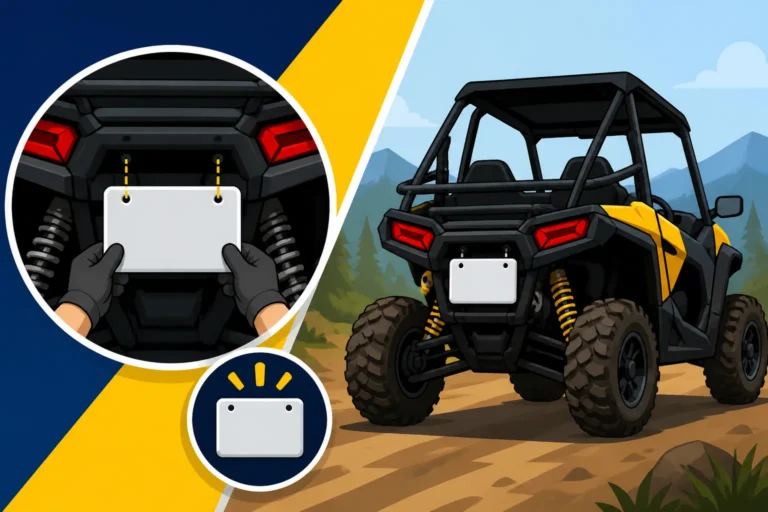
- A Licence Plate: Alberta issues a physical licence plate for OHVs, not a sticker. This plate is unique to your machine and must be affixed in a visible location.
It's crucial to ensure your registration certificate is always accessible when operating your quad, especially if you venture onto public land. For your plate, proper mounting is key to avoid issues. [Alberta Plate Placement on a Machine] provides specific guidance on where and how to display it so it's clearly visible to enforcement officers. Remember, without a clear plate and proof of registration, you could still face fines, even if the machine is technically registered.
Beyond Registration: Other Considerations for Farm OHVs
Registering your farm quad addresses one major legal requirement, but it's not the only one. Even with a plate, there are other responsibilities and considerations for farm owners to ensure they're fully compliant and protected.
Insurance Requirements
Just like registration, insurance for your OHV often hinges on where you're riding it. If your registered farm quad is ever operated on public land, liability insurance is mandatory. This protects you in case your machine causes injury or damage to others or their property. Even if you only use your quad on your own private land and qualify for the registration exemption, having liability insurance is a very smart move. Accidents can happen anywhere, and the financial consequences of an uninsured incident on private land can be devastating.
While basic liability is required for public land, many farm owners opt for more comprehensive coverage that includes collision, comprehensive (for theft, fire, vandalism), and even coverage for any attachments or modifications. This additional coverage helps protect your investment. [Alberta Requires Insurance on Public Land] delves into the legal necessity, and [Alberta Insurance Cost for an ATV] can give you an idea of the factors that influence premiums. Even though LawDepot primarily focuses on legal document templates rather than insurance policies, they highlight the importance of understanding your obligations when operating any vehicle, registered or not.
Safety Equipment and Operator Rules
Registration and insurance are about legal and financial protection, but personal safety is paramount. Alberta has specific rules regarding safety equipment and operator conduct, especially when riding on public land. These rules apply whether your machine is a recreational beast or a hardworking farm implement.
- Helmets: If you're on public land, helmets are mandatory. This rule has been in place since May 2017 and applies to all riders, regardless of age or experience. A CSA-approved helmet offers critical protection. [Alberta Helmet Law on Public Land] explains this in detail.
- Spark Arrestors: All OHVs operating on public land must be equipped with a spark arrestor to prevent wildfires. This is a small but critical piece of equipment, especially in dry agricultural areas. [Alberta Requires a Spark Arrestor] provides more context.
- Lights: If you're riding your quad at dusk, at night, or in conditions of poor visibility (like heavy rain or fog), working head and tail lights are required. [Alberta Requires Working Head and Tail Lights] outlines these requirements.
- Age and Supervision: There are minimum age requirements for operating OHVs on public land, and young riders often require adult supervision. Even if your 12-year-old is a whiz on the quad around the farm, taking them onto a road allowance requires adherence to these rules.
Adhering to these safety measures not only keeps you compliant with the law but also protects you and your loved ones while operating these powerful machines.
Cost of Registration
Understanding the cost involved can help you budget for registering your farm quad. While I can't provide current, specific figures, I can tell you what typically makes up the total expense:
- Provincial Registration Fee: This is the core fee set by the Alberta government for registering an OHV. It can be for one year or two years, with longer terms sometimes offering a slight discount.
- Registry Agent Service Fee: As registry agents are private businesses, they charge a service fee on top of the provincial fee for processing your transaction. This fee can vary slightly between agents.
- Plate Fee: A fee for the physical licence plate itself is usually included.
It's always a good idea to contact your local Alberta registry agent directly for the most up-to-date pricing before you go. They can give you an exact quote for the fees, ensuring you're fully prepared. Resources like [What Alberta OHV Registration Costs] will generally break down these components, allowing you to anticipate the financial outlay. Remember, the peace of mind knowing you're fully compliant with Alberta's OHV laws, especially if your farm quad ever touches public land, is often well worth the relatively modest annual cost.
Here's a quick comparison of the common scenarios for farm quads:
| Feature | Farm Quad on Private Land Only (Exempt) | Farm Quad Operating on Public Land (Registered) |
|---|---|---|
| Registration Required? | No, if solely for agricultural use on owned/occupied land | Yes |
| Licence Plate Needed? | No | Yes |
| Proof of Ownership? | Recommended for transfers, sales (e.g., LawDepot Bill of Sale) | Required for registration |
| Liability Insurance? | Highly Recommended (for private land incidents) | Mandatory |
| Helmet Required? | Not legally mandatory (but highly recommended for safety) | Yes, mandatory |
| Spark Arrestor? | Not legally mandatory (but highly recommended for fire prevention) | Yes, mandatory |
| Lights at Night? | Not legally mandatory (but highly recommended for safety) | Yes, mandatory |
| Age Restrictions? | No provincial minimum on private land | Yes, provincial minimum age (14 with supervision under 18) |
| Penalties for Violation | Trespass (if on others' private land) | Fines, possible vehicle seizure for no insurance/registration |
Disclaimer
This article is for general informational purposes only and does not constitute professional advice. Laws, prices and regulations vary by location and change over time. Consult a qualified professional for guidance on your specific situation.