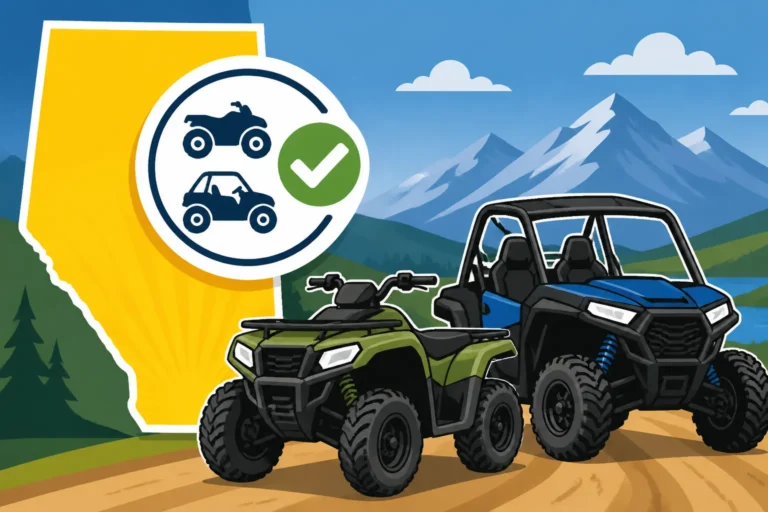
Do You Need to Register an ATV in Alberta?
It's a really common question, and one that trips up a lot of riders, especially if you're new to Alberta or coming from a place with different rules: do you actually need to register your ATV, UTV, or dirt bike in this province? The short answer, like so many things, is "it depends," but this guide is here to clear up the confusion and make sure you understand exactly when you need to get that plate and certificate to avoid trouble on the trails.
The General Rule: When Registration Is a Must
Let's cut right to the chase: for most recreational riders in Alberta, yes, you absolutely need to register your off-highway vehicle (OHV). This isn't just a suggestion; it's a legal requirement under provincial law. Ignoring it can lead to fines, hassles, and even having your machine seized, which is a nightmare nobody wants to experience when they're just trying to enjoy the outdoors.
Riding on Public Land
The primary trigger for OHV registration in Alberta is riding on public land. What counts as public land, you ask? Well, it's probably more expansive than you might think. This includes vast tracts of Crown land, designated Off-Highway Vehicle (OHV) zones like McLean Creek or the Ghost Public Land Use Zone (PLUZ), and even provincial parks where OHV use is permitted. But here's where it gets tricky for some: public land also encompasses the shoulders, ditches, and road allowances of public roads and highways, as well as alleys within municipalities. That quick hop across the ditch to a friend's property? Technically, you just rode on public land and need to be registered.
This requirement stems directly from Alberta's Traffic Safety Act and the associated Off-Highway Vehicle Regulation 319/2002. These pieces of legislation lay out the ground rules for how and where OHVs can operate. If you're planning any kind of recreational ride that involves leaving private property, whether it's a dedicated trail network or simply exploring some backroads, registration is your first step. Before you head out to those incredible trails, make sure your paperwork is in order. You can learn more about what counts as public land for OHVs by checking out [Alberta Registration Before Riding Crown Land] or understanding the specifics of [Alberta Registration Before Riding a Ditch]. The full scope of legal requirements is detailed in [What the Traffic Safety Act Requires of Alberta OHVs].
The Definition of an Off-Highway Vehicle (OHV)
Sometimes, people wonder if their particular machine falls under the OHV registration umbrella. Generally speaking, if it's designed for off-road use and isn't typically street-legal, it's an OHV in Alberta. This includes:
- All-Terrain Vehicles (ATVs) or Quads: These are the most common type of OHV and unequivocally require registration for public land use.
- Utility Terrain Vehicles (UTVs) or Side-by-Sides: These larger, often multi-passenger machines are also considered OHVs and need to be registered. If you're planning on getting one of these, make sure to read up on [Registering a Side-by-Side in Alberta].
- Dirt Bikes: While they might feel different from a quad, dirt bikes are purpose-built for off-road riding and are therefore OHVs that need registration. We have a whole guide on [Alberta Registration for a Dirt Bike].
- Snowmobiles: When the snow falls, these machines also fall under the OHV category and need their own registration. Check out [Alberta Registration for a Snowmobile] for more.
Essentially, if it's got an engine, is built for getting dirty, and doesn't have a regular vehicle registration for highway use, you should assume it's an OHV for registration purposes. Don't assume your machine is exempt just because it's small or has two wheels instead of four. The rules apply broadly to most recreational off-road vehicles.
Common Scenarios Where Registration Isn't Needed (and Why)
While the general rule leans heavily towards requiring registration, there are a few very specific situations where you might be exempt. It's crucial to understand these distinctions clearly, because misunderstanding them can quickly land you in a bind. These exemptions are narrow and often misunderstood.
Private Property Exemption
This is perhaps the most straightforward exemption: if your ATV, UTV, or dirt bike never leaves private property, you do not need to register it. This means if you ride exclusively on your own land, or on another person's private land with their explicit permission, and your machine never touches a public road, a ditch, a trail on Crown land, or any other public thoroughfare, you can forgo registration.
However, and this is a big "however," the moment even one tire touches public land—even briefly—the requirement for registration kicks in. This includes things like crossing a public road to get to another private parcel, riding a fence line that borders a road allowance, or using a utility corridor that's technically public access. It's easy to accidentally cross that line. So, if your riding is truly confined to a private field or a contained recreational area that is exclusively private, you're exempt. For a deeper dive into this, you can check out [Alberta Registration on Private Land Only] and [Does a Farm Quad That Never Leaves Need Registration?].
Farm and Ranch Exemptions
Alberta offers specific exemptions for off-highway vehicles used primarily for agricultural purposes on a farm or ranch. If the OHV is owned by a farmer or rancher and is being used for bona fide farming or ranching operations, it might not need registration, even if it occasionally crosses a public road allowance to get from one field to another. This exemption is designed to facilitate agricultural work, not recreational riding.
It's vital to understand that this isn't a blanket exemption for all OHVs owned by farmers. If that same quad is used for recreation on public land (like heading out to the mountains on a weekend), then it absolutely does need to be registered. The exemption applies narrowly to the use of the vehicle in agricultural work. For instance, moving cattle, hauling feed, or inspecting crops are typically covered. Going for a joyride with your kids in the back forty? If that "back forty" is exclusively private land, you're fine without registration. If it's a mix of private and public, you need registration. You can explore the details of [Alberta's Farm Exemption From Registration] and [Alberta Farmer-Owned Machines on Private Land] for more clarity. For those managing farm business, understanding all legalities is key, and resources like LawDepot can provide useful templates for agreements or property documents, though they aren't directly for OHV registration.
Military Vehicle Exemption
Another specific, though far less common, exemption applies to off-highway vehicles owned by and operated by the Canadian Armed Forces. These vehicles are generally exempt from provincial registration requirements when used in the course of military duties. This is a very niche exemption and won't apply to the vast majority of private OHV owners in Alberta. For more information, you can read [Alberta Military Vehicle Exemption].
What Registration Entails and Why It Matters
So, you've determined your OHV needs to be registered. What does that actually mean, and why is it such an important step before you hit the trails? It's more than just getting a piece of paper; it's about being a responsible and legal rider.
The Registration Process and What You Get
Registering an OHV in Alberta is a fairly straightforward process that you complete through a registry agent. These are private businesses licensed by the province to provide government services. When you go to a registry, you'll need to bring a few things:
- Proof of Ownership: This is typically a Manufacturer's Statement of Origin (MSO) for a new machine or a bill of sale for a used one. If you're buying privately, a well-drafted bill of sale is crucial. Sometimes, individuals use online resources like LawDepot to create proper legal documents like bills of sale to ensure everything is covered.
- Your Driver's Licence: As proof of identity.
- The Vehicle Identification Number (VIN): This unique serial number identifies your specific machine.
Once you complete the process and pay the required fees, you'll receive two key items:
- A numbered plate: This plate must be affixed to the rear of your OHV, clearly visible. Alberta used to issue stickers for plates, but that changed. You can read about [Alberta Issues a Plate, Not a Sticker] for context.
- A Certificate of Registration: This is your proof of registration. While Alberta offers digital certificates, it's highly recommended, and often legally required, to have a printed copy of your registration certificate with you whenever you're riding on public land. An officer can ask to see it. Learn more about carrying your papers with [Alberta Digital Certificates Must Be Printed].
Registry agents are your go-to for all this paperwork. Check out [Alberta Registry Agents and OHV Paperwork] for more details on what they do.
The Importance of Registration Beyond Legality
Beyond simply avoiding a ticket, OHV registration serves several important purposes that benefit both you and the riding community:
- Identification and Recovery: Your registration links your specific machine to you, the owner. In the unfortunate event that your OHV is stolen, having it registered with a unique plate and VIN makes it much easier for law enforcement to identify and potentially recover it. This adds a layer of security that unregistered machines simply don't have.
- Accountability: Registration helps ensure accountability for riders on public lands. If an OHV is involved in an incident or causes damage to trails or property, the registration provides a means to identify the owner. This promotes responsible riding and helps maintain access to our shared outdoor spaces.
- Compliance and Peace of Mind: Knowing your machine is properly registered provides peace of mind. You can enjoy your ride without constantly worrying about being stopped by an officer and facing penalties for riding an unregistered machine. Those penalties can be significant, including fines and even the seizure of your vehicle. Don't take that risk; understand [Alberta Penalties for Riding Unregistered]. Proper placement of your plate is also key, so check [Alberta Plate Placement on a Machine].
The Interplay with Insurance
It's absolutely critical to understand that registration is not the same as insurance, and in Alberta, you need both to legally ride an OHV on public land. Even if your machine is registered and plated, you are also legally required to have valid liability insurance.
Many riders mistakenly believe that if their quad is registered, they're good to go. This is a dangerous assumption. Insurance protects you in case of an accident where you cause damage to property or injury to another person. Without it, you could face immense financial liability. Just like registration, an officer can demand proof of insurance, and failing to provide it can lead to severe consequences, including vehicle seizure. For a detailed explanation, be sure to read [Alberta Requires Insurance on Public Land] and [Alberta Insurance Requirements on Public Land]. The repercussions of not having insurance are serious; see [Alberta Vehicle Seizure for No Insurance].
Special Considerations and Nuances
The world of OHV rules isn't always black and white, and there are a few particular situations that often cause confusion for riders. Understanding these nuances can save you a lot of headache.
Visitors and Out-of-Province Machines
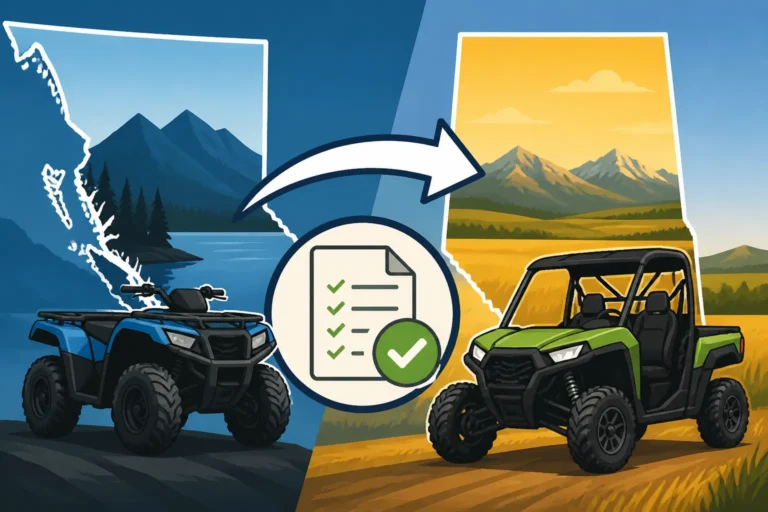
If you're visiting Alberta from another province or country and bring your OHV with you, you're generally permitted to ride with your home province's or state's registration for a limited time. Alberta has a "30-day rule" for out-of-province machines. This means you can ride your ATV, UTV, or dirt bike on public land in Alberta for up to 30 consecutive days using your existing registration from elsewhere.
However, if you plan to stay and ride in Alberta for longer than 30 consecutive days, you are then required to register your machine in Alberta. This rule is in place to ensure that long-term residents and frequent users contribute to the provincial system. It's not uncommon for people to come for an extended vacation or a work contract and inadvertently exceed this limit. Always carry proof of your residency, as an officer may ask for it. More information can be found in [Alberta Registration for Visiting Riders] and a detailed explanation of [Alberta's 30-Day Rule for Out-of-Province Machines]. Understanding what "consecutive days" means is key, so check out [Thirty Consecutive Days and the Clock].
Buying and Selling Registered Machines
When you buy or sell an OHV in Alberta, the registration needs to be transferred to the new owner. This is a crucial step for both parties to ensure legal ownership is properly recorded and to remove the previous owner's liability.
As a buyer, you'll need a proper bill of sale from the seller to present to the registry agent when you go to register the machine in your name. A clear, comprehensive bill of sale protects both parties. If you're selling, it's your responsibility to ensure the new owner registers the machine promptly to take it out of your name. For private sales, having a template from a resource like LawDepot for your bill of sale can be very helpful to ensure all the necessary details are included and legally sound. This process is fully explained in [Alberta Registration Transfer After a Sale] and [Alberta Private Sale Paperwork]. If you're buying, make sure you know what to expect with [Buying From a Private Seller in Alberta].
Summary of OHV Registration Scenarios in Alberta
To help clarify the various situations, here's a quick overview:
| Scenario | Registration Required? | Key Condition / Notes |
|---|---|---|
| Riding on Public Land | Yes | Includes Crown land, designated OHV zones, ditches, road allowances, and provincial parks (where permitted). |
| Riding Exclusively on Private Land | No | Machine must never leave the boundaries of the private property. |
| Farm/Ranch Use | No (conditional) | OHV must be owned by a farmer/rancher and used solely for bona fide agricultural operations. Recreational use on public land requires registration. |
| Visiting (Out-of-Province OHV) | No (conditional) | Permitted for up to 30 consecutive days with valid out-of-province registration. After 30 days, Alberta registration is required. |
| Military Use | No | For vehicles owned by and operated by the Canadian Armed Forces in the course of their duties. |
| Transporting Only | No | If the OHV is being transported on a trailer or in the back of a truck and not being operated, registration is not required during transport (but is required for the towing vehicle if on a highway). |
In conclusion, for the vast majority of Alberta ATV and UTV riders who want to explore our beautiful province, the answer is a resounding "yes," you need to register your off-highway vehicle. It's a fundamental part of responsible riding on public land, ensuring you comply with the law and have peace of mind as you enjoy your adventures. Get that plate, carry your certificate, and make sure you're insured!
Disclaimer
This article is for general informational purposes only and does not constitute professional advice. Laws, prices and regulations vary by location and change over time. Consult a qualified professional for guidance on your specific situation.