Checking a Serial Number for Theft Before You Pay
Buying a used ATV or UTV can be exciting, but it also comes with a hidden risk that can turn your dream machine into a legal and financial nightmare: unknowingly purchasing a stolen off-highway vehicle (OHV). This guide is all about equipping you with the knowledge and steps needed to thoroughly check a serial number for theft before you hand over your hard-earned cash, helping you ride away with peace of mind instead of a mountain of trouble.
The Hidden Danger of a "Too Good to Be True" Deal
There’s a real thrill in finding that perfect quad or side-by-side at a great price from a private seller. Maybe it’s a neighbour downsizing their fleet, or an online listing that just seems like an incredible deal. But often, those "too good to be true" prices can mask a much darker secret: the machine you're looking at might be stolen. It's a risk far too many buyers overlook until it's too late, and the consequences can be devastating.
The Nightmare Scenario: Buying a Stolen Machine
Imagine this: You’ve bought an OHV, you’ve registered it, and you’re happily tearing up some trails or using it around your property. Months later, a knock comes at the door, or perhaps you're stopped by an officer while riding. They inform you that your beloved machine, the one you paid good money for, is actually reported stolen. The police take it away. Just like that, your investment is gone, and you're left with nothing but a hole in your wallet and a huge headache. This isn't a rare occurrence; it happens more often than riders realize, especially with private sales where due diligence isn't always top of mind. Many times, the original owner has insurance and gets paid out, but they still want their property back, and law enforcement is usually happy to facilitate that.
Legal and Financial Consequences
The repercussions of buying a stolen OHV extend far beyond simply losing your machine. Financially, you've lost every dollar you spent on it, with very little recourse to get that money back from the person who sold it to you (who might have vanished or been an unwitting middleman themselves). Legally, while you might be an innocent purchaser, possession of stolen property can still lead to serious complications. The police will investigate to understand how the machine came into your possession, and you could face questioning, the hassle of court appearances, and even criminal charges if there's any suspicion of your involvement. On top of that, you'll have to deal with the registration implications – your [Alberta Registration Transfer After a Sale] will be voided, and you'll be left without a machine or its value. It's a high-stress situation that nobody wants to find themselves in, making pre-purchase checks absolutely vital.
Locating the Serial Number: Your First Line of Defense
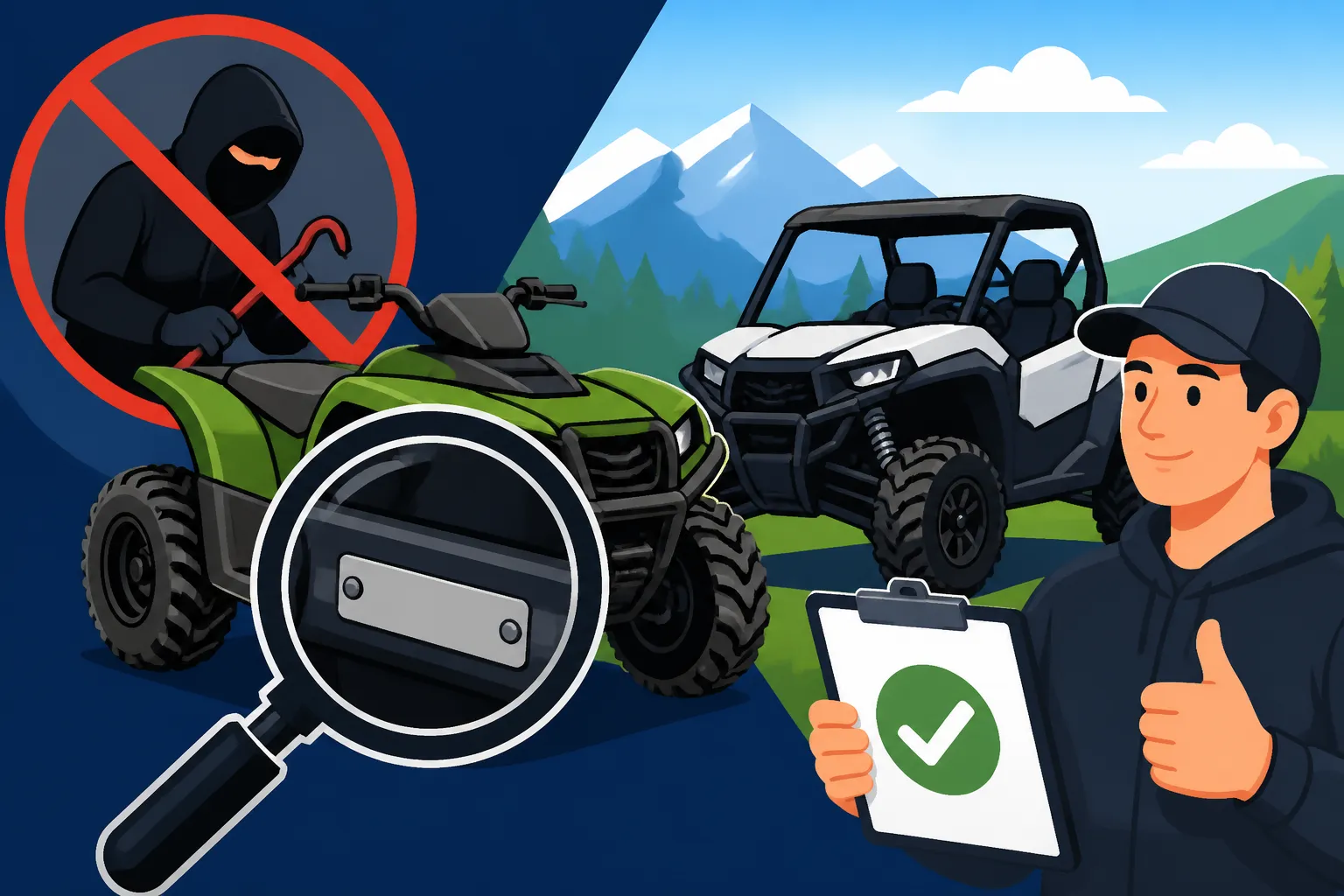
Before you even think about looking up a serial number, you first have to find it on the machine itself. This might sound obvious, but serial numbers can be in surprising places, and a seller who tries to prevent you from finding or checking it is a massive red flag. Always insist on seeing the physical number on the machine, and make sure it hasn't been tampered with.
Where to Find the VIN on Different OHVs
The Vehicle Identification Number (VIN) or serial number is a unique identifier, much like a fingerprint for your OHV. It’s typically a 17-character alphanumeric code on newer machines, or a shorter serial number on older ones. Knowing where to look is key. For most ATVs and side-by-sides, you'll often find it stamped into the frame near the front wheel well, on the lower frame rail, or sometimes under the seat. Dirt bikes usually have it on the steering head tube, stamped right into the frame. Snowmobiles might have it on the tunnel, near the engine, or on a compliance sticker. It’s critical that you find this number physically on the machine, not just on a piece of paper the seller hands you. If the number looks grinded off, re-stamped, or has any signs of alteration, walk away immediately. Trust your gut. For more specific guidance, you can often consult resources like [Serial Numbers and Where to Look] for detailed illustrations.
Here’s a quick guide to common VIN locations:
| OHV Type | Common VIN/Serial Number Locations |
|---|---|
| ATV (Quad) | Front frame rail (often near the right front wheel well) |
| Under the seat (on the frame) | |
| On a sticker or plate on the frame near the engine | |
| Side-by-Side | Driver's side door jamb (on a compliance sticker) |
| Front frame rail (often near a-arms or suspension mounts) | |
| Under the hood/dash, on a cross member | |
| Dirt Bike | Steering head tube (where the forks attach to the frame) |
| Frame rail near the engine mount | |
| Snowmobile | Tunnel (usually near the clutch or under the seat) |
| Engine casing (sometimes a secondary number) | |
| On a data plate under the hood |
Matching Numbers and Red Flags
Once you've found the VIN on the machine, your next step is to compare it to any paperwork the seller provides. Does it match the bill of sale, the previous registration, or any manufacturer's statement of origin (MSO)? If there's a discrepancy, that's a serious red flag. Even a single digit or letter being different could indicate fraud. Also, be wary if the seller only provides a handwritten bill of sale with no other supporting documents, or if they claim they lost all the original paperwork. While a [Will a Handwritten Bill of Sale Register a Quad?] might be accepted, it raises questions about the machine's history. Combined with a reluctance to show the VIN or allow a check, it should make you extremely cautious. Always aim for a clear paper trail, even when buying used. If a machine comes with [Alberta Machines With No Paperwork], the risk is significantly higher.
Your Options for Running a Theft Check
You’ve found the VIN, it looks legitimate on the machine, and the seller has provided some matching documentation. Now comes the critical step: actually running a check to see if the OHV has been reported stolen. Don't skip this. It's the most important part of your due diligence.
Checking with Law Enforcement
One of the most direct and reliable ways to check a serial number is through law enforcement. In Alberta, you can often call your local RCMP detachment or city police service's non-emergency line. Explain that you are considering purchasing an OHV and want to verify if the VIN is associated with a stolen vehicle report. They may be able to run the number through national databases. Be prepared to provide the full VIN and potentially some details about the machine and the seller (though they may not ask for seller info at this stage). It’s a simple call that can save you a world of trouble. While they might not be able to provide extensive details due to privacy, they can usually confirm if the vehicle is flagged as stolen. This is often the most definitive check you can do.
Registry Agents and Lien Checks
Alberta Registry Agents are another valuable resource. While their primary role is registration and titling, they can often perform a search for outstanding liens on a vehicle. A lien means someone else has a financial claim on the machine, which could complicate your ownership and could even be a red flag for potential theft or fraud if a financing company hasn't been paid. While a lien check isn't a direct theft check, it's a crucial part of understanding the machine's financial history. If you're looking into [Alberta Registration and Lien Records], a registry agent can help. They can access the Personal Property Registry, which will show if any financial institutions or individuals have a registered interest in the OHV. If a lien is found, the seller must clear it before you finalize the purchase, or you could become responsible for that debt.
Online Databases and Services
There are various online services that claim to provide vehicle history reports, often including theft checks. While some can be useful for gathering information, it's essential to exercise caution. These services often rely on compiled public data and may not always have real-time access to police databases or comprehensive Canadian-specific information. Always prioritize official checks through law enforcement or a reputable registry agent. If you do use an online service, consider it a supplementary tool rather than your sole source of truth. Always back it up with an official government or police check. Remember, no online database is a substitute for the official word from law enforcement on whether an item is reported stolen.
What to Do When a Number Comes Up Hot (or Cold)
You’ve done your checks, and now you have the results. What happens next depends entirely on what you've found. This is where your preparedness pays off, allowing you to react smartly and protect yourself.
When the Numbers Don't Add Up
If your VIN check reveals that the OHV is reported stolen, or if there's any inconsistency (like a VIN that doesn't match paperwork, or a lien that the seller can't explain), this is your moment to walk away. Do not, under any circumstances, proceed with the purchase. The temptation to still get that "deal" might be strong, but the risks are simply too high. You're not just risking your money; you're risking legal trouble and the emotional stress that comes with it. Even if the seller offers a further discount or a "cash only" deal, these are usually attempts to push you into a problematic purchase. Remember, if you buy a stolen machine, you forfeit your investment entirely, and the machine will be returned to its rightful owner. This is true whether you were aware it was stolen or not.
Reporting a Suspected Stolen Machine
If your checks confirm that the OHV is stolen, or if you encounter a seller who is highly suspicious, evasive about the VIN, or whose story simply doesn't add up, it's important to report it to the authorities. Contact your local police or RCMP non-emergency line. Provide them with all the details you have: the VIN, the description of the OHV, the seller's information (if you have it), and where you saw the machine. You could be helping to recover stolen property and prevent another innocent buyer from falling victim. Your actions can make a real difference in preventing crime. When law enforcement gets involved, they can track down the true owner and hopefully reunite them with their property.
Walking Away Safely
Sometimes, the best decision is simply to walk away, even if you can't definitively prove a theft, but something just feels off. Your safety and financial security are paramount. Don't feel pressured by a seller to make a quick decision. Take your time, do your research, and if your gut tells you something isn't right, listen to it. There will always be other OHVs for sale, and finding one with a clear history is worth the extra effort. A legitimate seller will understand your need to verify details and will be cooperative. Anyone who pushes back against a VIN check, or seems overly eager to get rid of the machine without proper scrutiny, is not someone you want to do business with. It’s always better to be safe than sorry, especially when making a significant purchase like an OHV.
Disclaimer
This article is for general informational purposes only and does not constitute professional advice. Laws, prices and regulations vary by location and change over time. Consult a qualified professional for guidance on your specific situation.