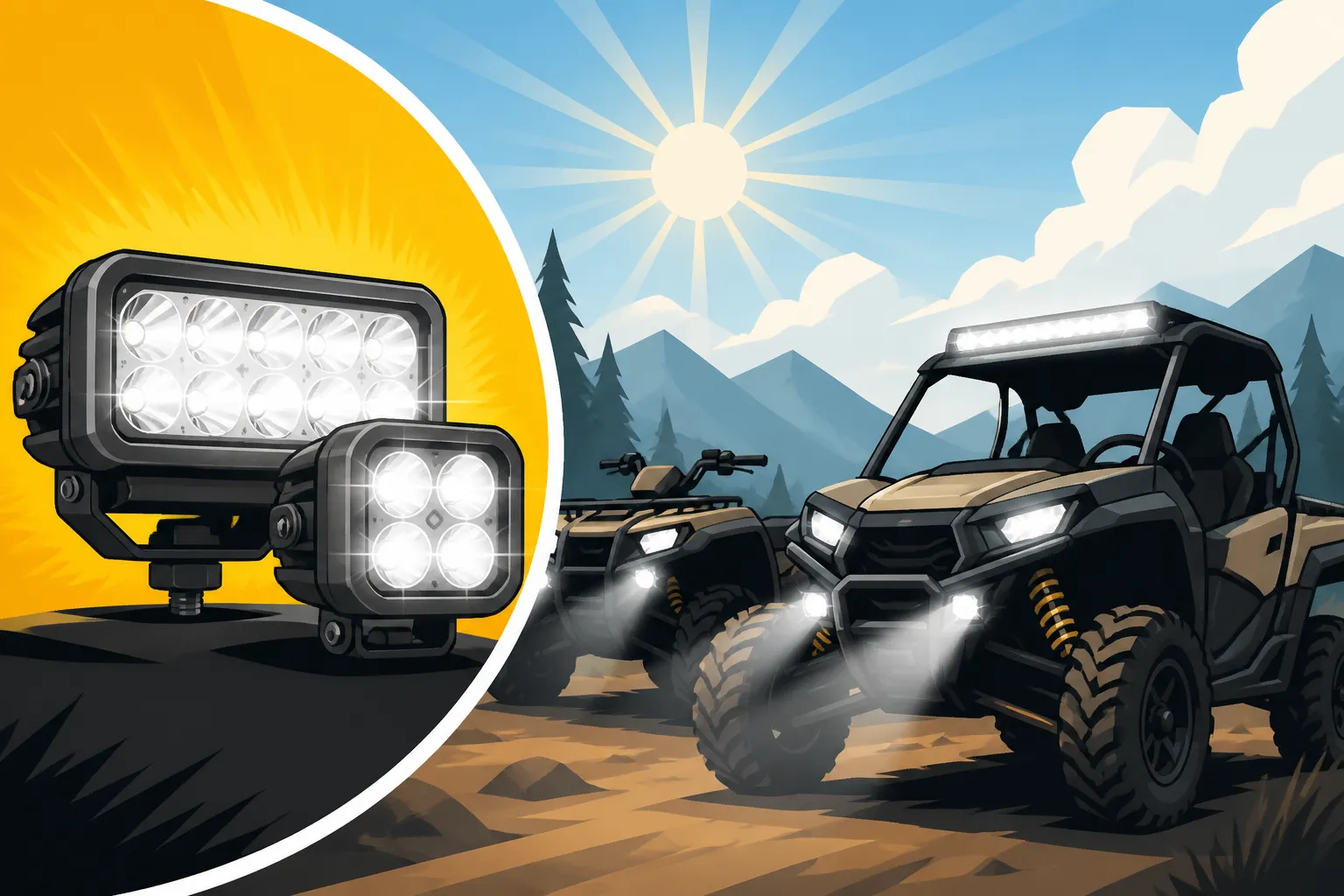
Lights That Work in Daylight
It's easy to think of your off-highway vehicle's lights as something you only need when the sun goes down, or maybe on a really overcast, gloomy day. But in Alberta, the rules are pretty clear: your ATV or side-by-side needs lights that are fully operational, even in broad daylight. This can catch riders off guard, leading to unnecessary tickets or, worse, safety hazards. This guide will shine a light (pun intended!) on why working lights are crucial at all times, what the regulations actually say, and how to make sure your machine is always compliant, keeping you safe and legal on the trails.
The Misconception: Why Lights Aren't Just for the Dark
For many of us who grew up riding dirt bikes or quads on the back forty, lights were an afterthought. You rode when the sun was up, and if it got dark, you parked the machine. That mindset often carries over to public land riding, but the reality on Alberta's trails is far different. The assumption that "daylight means no lights needed" is a common trap for new and experienced riders alike, and it completely misses the point of modern OHV safety regulations.
Beyond Sunset: The Year-Round Need for Visibility
While it might seem counterintuitive to need lights when the sun is high, consider the diverse and dynamic environments you encounter on Alberta's public lands. Picture riding through a dense evergreen forest, where the trail is plunged into deep shadow even at noon. Or cresting a hill on a dusty day, where your machine becomes almost invisible in the cloud kicked up by the rider ahead. These aren't isolated scenarios; they're common occurrences in places like McLean Creek or the Ghost PLUZ. Your lights aren't just for you to see; they're primarily for others to see you. This includes other riders, hikers, mountain bikers, and even wildlife that might be crossing the trail. The flicker of a headlight or taillight can make all the difference in preventing a collision, whether you're approaching a blind corner or just navigating a busy staging area.
Not Just for Seeing: Being Seen in All Conditions
Think about the sheer variety of conditions Alberta throws at us. A sunny summer day can quickly turn into a torrential downpour, or a bright autumn morning can give way to heavy fog rolling in through the valleys. Dust plumes on dry trails, bright sun glare, snow squalls in the mountains, or even just the contrast of your machine against a complex backdrop of trees and rocks can make it surprisingly difficult for others to spot you. Your lights provide a consistent, attention-grabbing signal that helps you stand out. This enhanced visibility is a critical layer of passive safety, much like wearing a helmet or bright clothing. It's about minimizing the risk of a "they just didn't see me" incident, which can have devastating consequences out in the backcountry.
Decoding Alberta's OHV Lighting Requirements
Alberta's regulations regarding off-highway vehicles are designed to ensure safety and order on public lands. When it comes to lighting, these rules are specific, and they don't differentiate between day and night for the basic requirement of having functional lights. It's not enough to have lights; they must work when you need them, and often, that means having them on.
Headlights, Taillights, and Brake Lights: The Full Suite
The Off-Highway Vehicle Regulation 319/2002 is the document that lays out many of these specifics. It clearly states that an OHV, when operated on public land, must be equipped with at least one white headlamp and at least one red tail lamp. Furthermore, these lights must be capable of being illuminated at all times the vehicle is in operation. This means your high-beams, low-beams, and taillights need to be fully functional.
Beyond the basic headlamp and taillamp, brake lights are also critical. While the regulation might not specify "brake lights" in the same way, any functional vehicle is expected to have working brake lights that illuminate when the brakes are applied. This is a universal expectation for road safety and extends to OHVs operating in areas where other vehicles or people might be present. Imagine someone following you on a dusty trail and you suddenly stop for an obstacle. Without working brake lights, they have no warning, increasing the risk of a rear-end collision. These aren't optional extras; they're fundamental components of a safe machine. [Alberta Requires Working Head and Tail Lights] is a good resource if you want more details on the exact phrasing of the legislation.
Visibility Standards: How Far Must Your Lights Shine?
It's not just about having a bulb that glows. The regulations also speak to the effectiveness of these lights. A headlamp must display a white light that is clearly visible for a minimum distance of 60 metres in front of the vehicle. Similarly, the taillamp must display a red light visible from a distance of at least 60 metres from the rear. This means a dim, flickering light that's barely noticeable isn't good enough. The lights must project with sufficient intensity to meet these visibility standards.
Think of it this way: if you're riding a twisty trail and someone is approaching a bend, your headlight needs to be bright enough to cut through any foliage or atmospheric conditions to be seen well before they are right on top of you. Similarly, a taillight needs to give a clear warning to those behind you, even if they're a little further back or through some dust. Regularly checking your lights for brightness and clarity is just as important as ensuring they turn on in the first place. This is part of the basic equipment check an officer might perform if they pull you over, alongside checking for things like a [Alberta Requires a Spark Arrestor] or ensuring you don't have [Alberta Bans Modified Exhausts].
Table: OHV Lighting Requirements at a Glance
| Light Type | Colour | Minimum Visibility Distance | When Required to Work | Purpose |
|---|---|---|---|---|
| Headlamp | White | 60 metres (front) | Always (when operating) | To illuminate path, to be seen by others |
| Tail Lamp | Red | 60 metres (rear) | Always (when operating) | To be seen by others from behind |
| Brake Light | Red | Clearly visible (rear) | When brakes applied | To signal deceleration/stop to others |
Ensuring Your OHV's Lights Are Trail-Ready
Understanding the rules is one thing; consistently applying them in the real world is another. Regular maintenance and a proactive approach to checking your OHV's lighting system are crucial for both legality and, more importantly, your safety and the safety of those around you. It's an often-overlooked aspect of pre-ride prep, but it's just as vital as checking your tire pressure or fuel level.
Pre-Ride Checks and Regular Maintenance
Before every ride, especially if you're heading out to a Public Land Use Zone (PLUZ) like the Castle or Ghost areas, make it a habit to do a quick check of your lights. This means turning on your machine, activating your headlights, and walking around to verify that both your headlamp and taillamp are fully illuminated and bright. Have a friend or family member stand behind you and apply the brakes while you watch to confirm the brake lights are working. This simple routine takes less than a minute but can save you from a ticket or, worse, an accident. If you're riding alone, you can back up to a wall or a trailer to see your brake lights reflected.
Beyond these quick checks, incorporate a more thorough inspection into your regular maintenance schedule. Check wiring for fraying or loose connections, as vibration on rough trails can take a toll. Ensure lenses are clean and free of mud or scratches, which can significantly reduce light output. Keep spare bulbs or fuses in your toolkit, especially for longer trips. A quick fix on the trail is far better than riding illegally or having to cut your day short. Maintaining your machine properly also applies to other legal aspects; for instance, if you're considering selling your ATV, ensuring all its components, including lights, are in good working order can make the transaction smoother. You might even use a service like LawDepot to draw up a [Alberta Private Sale Paperwork] agreement that details the machine's condition, including its operational lights, which can provide peace of mind for both buyer and seller.
What Happens When Your Lights Aren't Working?
Riding an OHV on Alberta's public lands without functioning lights, even in daylight, can lead to a few unwelcome consequences. The most immediate is often a fine. An enforcement officer has the authority to issue a ticket for non-compliance with the Off-Highway Vehicle Regulation 319/2002. These tickets are not just a slap on the wrist; they come with a monetary penalty that can put a serious dent in your riding budget.
Beyond the financial penalty, there are significant safety implications. If an accident occurs and your lights were not working, it could impact any insurance claim you might make. Insurance companies often look at compliance with regulations when assessing fault or damages. It's not worth the risk. Furthermore, your machine could be deemed unsafe for operation. In extreme cases of repeated non-compliance or if the machine is deemed to be in a dangerous condition, an officer might even impound the vehicle until the issue is rectified. The rules are there for a reason: to protect all users of public land. Adhering to them isn't just about avoiding a ticket; it's about being a responsible, safe rider. This applies whether you're taking your machine to a local trail or preparing for a big trip. Ensuring all your documentation, like proof of registration and insurance, is in order is just as important. [Alberta Requires Insurance on Public Land] and [Alberta Proof of Insurance on Demand] are key aspects to remember, and having your lights in working order falls under the same umbrella of responsible operation.
Riding Smart: Beyond Just Legal Compliance
While avoiding tickets and staying on the right side of the law is certainly a strong motivator, the bigger picture of having working lights on your OHV goes far beyond mere legal compliance. It's about fostering a culture of safety, respect, and preparedness that enhances the riding experience for everyone sharing Alberta's beautiful backcountry.
Enhancing Safety for Yourself and Others
Think of your lights as another tool in your safety arsenal, right up there with your helmet and proper riding gear. On shared trails, where you might encounter dirt bikes, quads, side-by-sides, mountain bikers, hikers, or even horseback riders, anything that increases your visibility is a huge asset. A bright headlight can warn an approaching hiker that a machine is coming around a blind corner, giving them precious seconds to react. A functioning taillight prevents you from becoming a sudden, unexpected obstacle for the rider behind you, especially on dusty or uneven terrain. This proactive approach to safety can prevent mishaps that range from startling someone to causing a serious collision.
Consider group rides: if you're the lead rider, your functioning lights help your group follow you. If you're in the middle or rear, your lights help prevent gaps and ensure everyone stays together, particularly as conditions change or dusk approaches. This is especially relevant in designated OHV areas like the Brule Lake PLUZ, where multiple trails intersect and traffic can be surprisingly high on a busy weekend. Taking the extra step to ensure your lights are always ready is a small effort with a massive return in peace of mind.
The Role of Courtesy and Responsibility on the Trails
Being a responsible OHV user in Alberta means more than just following the letter of the law; it means embodying a spirit of courtesy and respect for the environment and for other users. Having working lights, even in daylight, is a visible demonstration of that commitment. It shows that you've prepared your machine properly, that you take safety seriously, and that you're mindful of your impact on others.
It's about contributing to a positive riding culture where everyone feels safer and more respected. Imagine riding past a family hiking on a shared-use trail. A visible machine with working lights, handled responsibly, projects a much better image than a barely-seen blur. This good citizenship helps ensure that OHV access to public lands continues to be supported. When purchasing a used machine, it's always a good idea to confirm all safety features, including lights, are fully functional. A comprehensive bill of sale can even specify this, and templates for such documents can be found through legal resources like LawDepot, helping both parties ensure the sale is transparent. [What a Private Quad Sale Between Neighbours Needs] is a useful guide for anyone buying or selling.
Ultimately, whether you're enjoying a leisurely ride on a well-maintained trail or tackling a challenging backcountry route, your OHV's lights are a non-negotiable component of safe and legal operation. Don't let the daylight fool you into thinking they're not needed. A quick check before you head out is all it takes to ensure you're visible, compliant, and ready for whatever Alberta's trails throw your way.
Disclaimer
This article is for general informational purposes only and does not constitute professional advice. Laws, prices and regulations vary by location and change over time. Consult a qualified professional for guidance on your specific situation.