Mounting an OHV Plate So It Stays Readable
It's incredibly frustrating to be out enjoying Alberta's incredible landscapes on your ATV or side-by-side, only to get stopped by an officer because your license plate is unreadable. Whether it's caked in mud, bent out of shape, or simply rattled loose, an illegible plate can quickly turn a great day into a hassle. This comprehensive guide is here to walk you through everything you need to know about properly mounting your OHV plate in Alberta, ensuring it stays visible, secure, and helps you avoid those unnecessary interruptions.
Why Your OHV Plate Needs to Be Perfectly Readable
You’ve probably seen it on the trails: a quad with a plate so crusted in mud it’s just a brown blob, or a side-by-side with a plate flapping precariously, half-torn. While it might seem like a minor detail when you’re focused on the fun, the readability of your OHV plate isn't just a suggestion; it's a legal requirement that carries real weight in Alberta. Ignoring it can lead to more than just a stern talking-to.
The Legal Requirements in Alberta
In Alberta, the rules for off-highway vehicles, including how their license plates are displayed, are pretty clear. The Traffic Safety Act and the Off-Highway Vehicle Regulation (Regulation 319/2002) both stipulate that your plate must be clearly visible and legible at all times. This isn't just about making it easy for law enforcement; it's also about accountability and ensuring that all vehicles operating on public land or designated trails can be identified if necessary. Imagine a hit-and-run incident or a machine being operated dangerously – an unreadable plate hinders investigations and public safety.
The expectation is that your plate can be read from a reasonable distance, both day and night, without any obstructions. If an officer can't easily read the numbers and letters, or if it appears intentionally obscured, you could be facing a fine. It’s not about malice; it's simply about meeting the standard set out in law. For a deeper dive into what the law requires, check out [What the Traffic Safety Act Requires of Alberta OHVs]. A simple lapse in maintenance can suddenly put a damper on your ride and your wallet.
Common Scenarios Where Plates Get Unreadable
Our Alberta riding conditions are fantastic, but they can be brutal on equipment. Your license plate takes a beating out there, and it's easy for it to become unreadable for a variety of reasons:
- Mud and Grime: This is perhaps the most common culprit. A thrilling ride through a muddy trail or a wet creek crossing can instantly coat your plate, rendering it completely illegible. The spray from your own tires, or those of the rider in front of you, can quickly turn a shiny plate into a mucky mess.
- Snow and Ice: Winter riding is incredible, but snow and ice can adhere to your plate, building up until it's completely obscured. Salt and sand used on roads can also create a sticky film that captures dirt.
- Physical Damage: Vibrations from rough terrain, accidental bumps against trees or rocks, or even a minor rollover can bend, crack, or tear your plate. Once it's significantly deformed, even if clean, it might not be considered "readable."
- Wear and Tear: Over time, sun exposure can fade the plate's colours and reflective coating, making it harder to read. Scratches from cargo straps, branches, or even cleaning tools can also contribute to illegibility.
- Loss of Fasteners: The constant vibration of off-road riding can loosen bolts and screws, leading to a plate rattling free and eventually falling off. This is a common and avoidable problem if proper mounting techniques are used.
The Difference Between a Plate and a Sticker (and Why It Matters)
For a long time, Alberta OHVs used a registration sticker that was affixed directly to the machine. This led to a lot of confusion and often, people assumed a physical plate wasn't strictly necessary. However, things changed. As of 2021, Alberta stopped issuing stickers for OHVs. Instead, riders now receive a physical license plate, much like what you'd see on a car or truck, but often smaller. This means if you still think a sticker is all you need, you’re behind the times. You can learn more about this change in [Alberta Issues a Plate, Not a Sticker] and [No Sticker on the Plate Since 2021].
This shift from a sticker to a plate is more than just a bureaucratic detail; it fundamentally changes how you need to approach plate display. A sticker, while susceptible to fading or peeling, didn't have the same structural integrity concerns as a thin metal plate. A plate needs to be securely fastened, protected from bending, and positioned in a way that minimizes damage and maximizes visibility. It's a physical object that requires robust mounting, not just an adhesive patch.
Choosing the Right Location for Your OHV Plate
Finding the perfect spot for your OHV plate isn't always straightforward. Manufacturers might have a designated area, but it's not always the best for all riding styles or conditions. You need to consider both the law and the realities of off-road riding when making your choice.
Front, Rear, or Both? Understanding Alberta's Rules
When it comes to OHV plates in Alberta, the general rule is that you need to display one at the rear of your machine. There's no requirement for a front plate on an OHV, unlike some other vehicle types. The plate must be "clearly visible" and "legible." This might sound simple, but "clearly visible" means it shouldn't be hidden by accessories, cargo, or parts of the machine itself. An officer should be able to approach from behind and easily identify your OHV without having to search for the plate.
Think about the various angles an officer might be viewing your machine from – not just directly behind, but potentially from the side as you pass, or from a distance. If your plate is tucked away or obscured, even partially, it might not meet the standard. This is why the placement is so crucial. For more details on this, you can read [Where Your OHV Plate Must Sit to Be Seen].
Ideal Mounting Spots for Different Machine Types
The "best" spot often depends heavily on the type of off-highway vehicle you're riding. What works for a quad might not be practical for a side-by-side or a snowmobile.
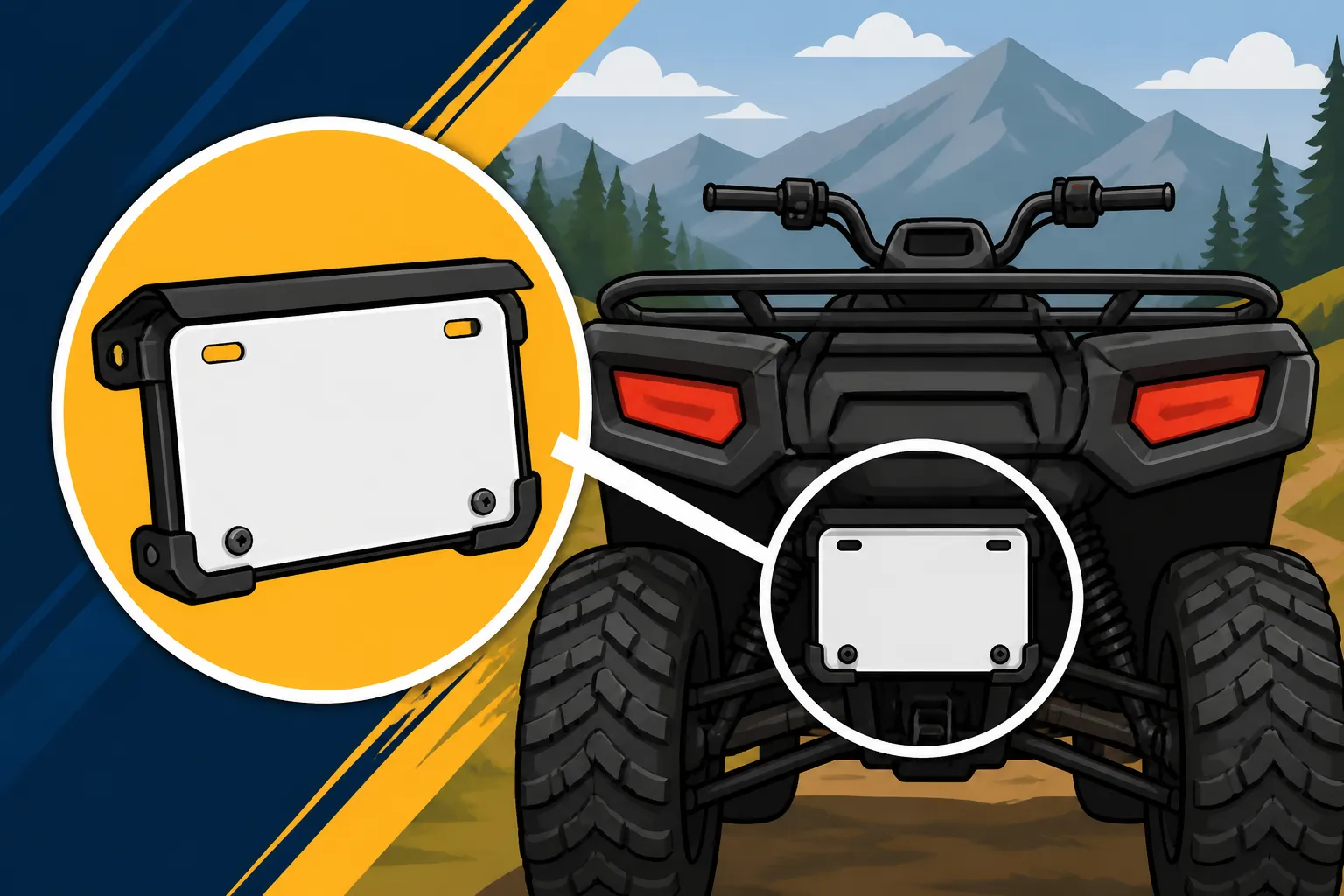
- ATVs/Quads: For most ATVs, the rear rack is the most common and often factory-intended spot. You can mount it on the very back face of the rack, or sometimes on the top flat surface, facing rearward. Some riders prefer to mount it slightly below the taillight on the rear fender, ensuring it’s low enough to be out of the way of cargo but still high enough to avoid excessive mud spray. The key is to ensure it doesn't interfere with your cargo securement, passenger seating, or obstruct your taillight. Be mindful of how your body positioning might temporarily block the plate during aggressive riding.
- Side-by-Sides (UTVs): These machines typically offer more options. The rear bumper is a popular choice, as is the tailgate area if your UTV has a dump box. Another strong option is mounting it to the roll cage or integrated frame, using specialized clamps or brackets. With UTVs, you need to consider the cargo bed, any spare tires mounted on the back, or custom rear bumpers that might obstruct a standard plate location. Some riders even fabricate small, rigid panels off the rear frame to provide a dedicated, protected mounting surface.
- Dirt Bikes: Dirt bikes can be a bit trickier due to their minimalist design and focus on lightweight performance. If your dirt bike is primarily ridden off-road and only occasionally on public land where a plate is needed, you might find a smaller, aftermarket fender extension or a custom bracket necessary. The rear fender near the taillight is usually the only practical spot, ensuring it doesn't interfere with the rear wheel's travel or suspension.
- Snowmobiles: For snowmobiles, the tunnel or rear bumper are the typical mounting locations. The main challenge here is keeping the plate clear of snow and ice accumulation, especially the spray kicked up by the track. A position that allows for quick and easy clearing of snow is ideal. Remember, the plate needs to be visible in all conditions, including a fresh powder day.
Avoiding Obstructions and High-Impact Areas
Placement isn't just about finding a flat surface; it's about strategic positioning to ensure longevity and constant readability. You want to avoid any areas that are prone to impact, excessive vibration, or being constantly covered in spray.
- Exhaust Heat: Never mount your plate too close to the exhaust pipe. The heat can cause the plate to warp, peel, or damage any protective coatings you might have applied.
- Moving Parts: Keep the plate clear of any moving components like suspension linkages, chains, driveshafts, or the tires themselves. A plate getting caught in a chain or rubbing against a tire is a recipe for disaster, both for the plate and your machine.
- Tire Spray: While hard to completely avoid, try to mount the plate as high as reasonably possible above the rear tire, or use fender extensions to minimize direct spray from mud, water, and snow. This significantly reduces the frequency with which you'll need to clean it.
- Branches and Rocks: On many Alberta trails, low-hanging branches and flying rocks are a constant threat. Positioning your plate where it's less likely to be snagged or struck can save it from damage. Consider whether a plate mounted vertically on the back of a rack is more exposed than one mounted on a slightly recessed bumper.
- Rollover Zones: While we all hope to never roll our machines, it's a reality of off-road riding. Mounting a plate on an extremely exposed part of the machine, like the very top of a rear roll cage or the far edge of a bumper, increases the likelihood of it being damaged in an incident.
Techniques and Hardware for Durable Plate Mounting
Once you've identified the perfect spot, the next step is securing your plate in a way that withstands the rigors of off-road riding. This isn't a job for the cheapest hardware or the quickest fix; it requires a bit of thoughtful preparation.
The Best Fasteners for Off-Road Conditions
The choice of fasteners is paramount to ensuring your plate stays put. Forget the flimsy screws that come with a novelty license plate frame. For OHVs, you need strength and resilience.
- Bolts with Locking Nuts (Nylock) or Lock Washers: This is the gold standard. Bolts provide far superior holding power compared to self-tapping screws. Pairing them with nylock nuts (which have a nylon insert that resists loosening from vibration) or metal lock washers creates a secure, vibration-resistant connection. Aim for stainless steel bolts, nuts, and washers to prevent rust, which can not only look terrible but can also compromise the integrity of the connection over time.
- Rubber Washers or Grommets: These are unsung heroes in plate mounting. Placing rubber washers between the plate and your machine, and/or under the bolt heads, achieves a few things:
- Vibration Dampening: They absorb some of the incessant vibrations, reducing stress on the plate and preventing the metal from fatiguing and cracking around the bolt holes.
- Scratch Prevention: They prevent metal-on-metal contact, protecting your machine's finish and the plate's coating from scratching.
- Tight Seal: They can help create a tighter seal, reducing the ingress of dirt and moisture around the mounting points.
- Avoid Self-Tapping Screws: While convenient for a quick fix, self-tapping screws rarely hold up to the constant abuse of off-road riding. They can strip out easily, loosen over time, and offer very little vibration resistance. It's a false economy to use them for a long-term solution.
Here's a quick comparison of common fastening methods:
| Fastener Type | Pros | Cons | Ideal Use Case |
|---|---|---|---|
| Bolts (Stainless Steel) with Nylock Nuts & Rubber Washers | Extremely secure, vibration resistant, corrosion resistant, prevents plate fatigue. | Requires access to both sides for tightening, slightly more effort to install. | Permanent, durable mounting on any OHV, particularly high-vibration machines. |
| Heavy-Duty Self-Tapping Screws | Quick and easy installation, only requires access to one side. | Prone to loosening, can strip mounting holes, offers poor vibration dampening. | Temporary fix, or very low-impact, low-vibration applications (not recommended for OHVs). |
| Zip Ties | Very quick, flexible, lightweight. | Extremely poor security, prone to breaking, not durable. | Emergency temporary fix only, not for legal display. |
Reinforcing and Protecting Your Plate
The Alberta OHV plate itself is relatively thin metal. Without reinforcement, it's prone to bending, especially in an exposed location. Protecting it is just as important as securing it.
- Metal Backing Plate or Sturdy Frame: This is one of the most effective ways to prevent your plate from bending or tearing. A small sheet of aluminum or steel, slightly larger than your license plate, can be mounted behind it. This backing plate provides rigidity, distributing forces over a larger area. Alternatively, a heavy-duty, off-road specific license plate frame (often made from thick aluminum or steel) can provide similar protection around the edges. Avoid flimsy plastic frames, which offer minimal protection.
- Laminating or Clear-Coating (with caution): Some riders consider laminating their plate or applying a clear coat. While this can offer some protection against scratches and fading, you must be extremely careful not to obscure any part of the numbers or letters, or to change the reflective properties of the plate. Check local regulations or consult an [Alberta Registry Agent] if you're unsure about the legality of such modifications. The primary goal is legibility, and any coating that interferes with that could be problematic.
- Drilling Additional Holes: If your mounting location allows, and you have a backing plate or sturdy frame, drilling additional, strategically placed holes can provide more points of attachment, further securing the plate and reducing the likelihood of it rattling or bending. Just ensure these new holes don't interfere with the plate's numbers or letters.
- Aftermarket Brackets: There are many aftermarket OHV license plate brackets available, designed specifically for off-road use. These often feature robust construction, rubber isolators, or spring-loaded mechanisms that allow the plate to flex slightly on impact without permanent damage. Some even incorporate LED lighting for nighttime visibility, which can be an excellent upgrade. For example, some side-by-side specific mounts integrate directly into the roll cage or bed.
You want to make sure all your vehicle documents are in order, not just the physical plate. When dealing with purchases or transfers, resources like LawDepot can provide templates for bills of sale or ownership agreements, ensuring you have the proper paperwork in hand should any questions arise about your machine's provenance. While not for mounting, maintaining accurate legal documents is part of being a responsible OHV owner.
DIY Solutions and What to Avoid
Many riders are handy, and DIY solutions can be great, but some "fixes" are definitely to be avoided when it comes to your license plate.
- Zip Ties: While they might get you home in a pinch if a bolt comes loose, zip ties are absolutely not a permanent solution for mounting a license plate. They are prone to breaking from UV exposure, abrasion, and tension, and they don't provide the rigidity needed to keep the plate from bending or flapping. An officer will not consider a zip-tied plate securely mounted.
- Tape (Electrical, Duct, etc.) or Bungee Cords: These are temporary, unreliable, and frankly, look unprofessional. They won't withstand the elements or vibrations of riding and are almost guaranteed to fail, potentially leading to you losing your plate entirely.
- Too Thin a Backing or Cheap Hardware: If you're going the DIY route with a backing plate, use something sturdy like 1/8-inch aluminum or steel. Don't use flimsy sheet metal that will just bend along with the plate. Similarly, don't skimp on the hardware; invest in good quality stainless steel bolts, nuts, and washers. Cheap hardware will rust, seize, or break, defeating the purpose of your effort.
- Compromising Safety or Function: Any modification to mount your plate should never interfere with the safe operation of your machine. Ensure it doesn't block lights, impede suspension travel, create sharp edges, or prevent you from accessing maintenance points.
- Strong Adhesives: While some strong, weather-resistant adhesives could theoretically hold a plate, they are generally not recommended as the sole mounting method for an OHV plate. The combination of vibration, temperature fluctuations, and moisture makes adhesive-only mounting unreliable. They are better used in conjunction with mechanical fasteners, perhaps to secure a backing plate to the machine before the license plate is bolted on.
Remember, if your plate does come off, you'll need to know the process for [Alberta Plate Replacement If Lost], which can be a hassle you'd rather avoid. Having durable mounting techniques from the start is worth the effort.
Maintenance and Pre-Ride Checks for Plate Legibility
You've put in the effort to mount your plate securely and in a good spot. Now, the final piece of the puzzle is routine maintenance and making quick checks before each ride. A well-mounted plate can still become unreadable if neglected.
Regular Cleaning and Inspection
Think of your OHV plate as another critical component of your machine that needs attention after every ride, just like your chain, air filter, or tires.
- Wash Off Grime: Make it a habit to clean your license plate thoroughly when you wash your machine. Use a brush or sponge to remove all caked-on mud, dust, and debris. Don't just spray it; make sure those numbers and letters are crystal clear.
- Check for Damage: As you clean, visually inspect the plate itself. Look for any new bends, cracks, or tears in the metal. Check the reflective coating for excessive fading or large scratches that might obscure visibility. If the plate is significantly damaged, you might need to get a replacement through an Alberta registry.
- Inspect Fasteners: This is crucial. Give each bolt, nut, and washer a quick check. Are they still tight? Do any feel loose? If so, tighten them immediately. Look for any signs of rust or corrosion on the hardware, which might indicate they need replacement soon. Remember that constant vibration is the enemy of tight fasteners.
Keeping a well-organized set of documents for your machine, including your registration certificate, is part of responsible ownership. Services like LawDepot can assist in creating and managing various legal documents, which, while not directly related to physical plate maintenance, underscores the importance of proper paperwork for your vehicle.
Carrying a Spare or Backup Plan
You can't carry a "spare" official license plate, of course, but you can certainly prepare for situations where your current one might become unreadable or even fall off. Being prepared can save you a lot of grief.
- Digital/Printed Registration: Always have a digital copy of your OHV registration certificate on your phone, and ideally, a printed physical copy tucked away in a waterproof bag or your glove box. Officers can ask for proof of registration, and while it doesn't replace the plate, it proves the machine is registered. You need to print your [Alberta Digital Certificates Must Be Printed] to have a valid physical copy.
- Know the Replacement Process: Familiarize yourself with how to get a [Alberta Plate Replacement If Lost]. Knowing which registry offices handle OHV paperwork, what documentation you'll need, and what fees are involved can make a stressful situation much smoother. [Alberta Registry Agents and OHV Paperwork] is a good resource for this.
- Basic Tools: Consider carrying a small, basic tool kit on your machine that includes the correct size wrenches or sockets for your plate fasteners. This way, if a bolt starts to loosen on the trail, you can tighten it on the spot before it falls out completely.
- Contact Info: Have the contact information for your preferred registry agent saved in your phone. If your plate is lost or severely damaged far from home, you can quickly call to get information on next steps.
What an Officer Looks For and How to Be Prepared
An officer’s primary concern when pulling over an OHV with an unreadable plate is identification and compliance. They need to ensure the vehicle is registered, insured, and operated legally. An unreadable plate raises an immediate red flag.
- Quick Identification: They want to be able to quickly read your plate numbers and cross-reference them with their system. If they have to dismount, get close, or wipe mud off your plate themselves, it’s already creating a negative interaction.
- Proof of Documents: Beyond the plate, an officer will almost certainly ask for your [Alberta Proof of Insurance on Demand] and your registration. Having these documents readily accessible and in order will go a long way in demonstrating your compliance. They might also ask [What an Alberta Officer Can Ask to See] in general.
- Avoid Penalties: An unreadable plate can lead to a ticket, and repeated offenses could escalate. While it feels like a minor issue, it falls under the umbrella of operating an unregistered or improperly displayed vehicle, which can carry penalties. Knowing that [Alberta Penalties for Riding Unregistered] exist underscores the importance of this seemingly small detail.
- Be Proactive: If you notice your plate is getting muddy during a ride, take a moment to stop and clean it off. A quick wipe with a glove or a wet rag can prevent a roadside stop later. Similarly, if your machine is temporarily on a road where [Alberta ATV Road Rules: Bylaws Decide] are in effect, an unreadable plate is an even bigger target.
It’s annoying to get stopped for something that feels so trivial when you're just trying to enjoy a ride, but it's a completely avoidable frustration. By taking a little time to properly mount, reinforce, and maintain your OHV plate, you can focus on the trail ahead, confident that your machine is fully compliant and ready for adventure.
Disclaimer
This article is for general informational purposes only and does not constitute professional advice. Laws, prices and regulations vary by location and change over time. Consult a qualified professional for guidance on your specific situation.