Carrying Papers on a Long Alberta Ride
Picture this: you're miles into the Alberta backcountry, the sun is shining, the trails are perfect, and then you see it – an Alberta Fish and Wildlife officer or an RCMP vehicle. Your heart gives a little flutter, not because you've done anything wrong, but because that sudden stop brings up the age-old question: "Do I have all my papers?" For many of us, the worry isn't just about a ticket; it's about the hassle, the potential for a spoiled ride, or even having your machine tied up. This guide is here to walk you through exactly what documents you need to carry on your Alberta ATV or UTV, why they're so important, and how to keep them safe and accessible, so you can ride with peace of mind.
The Essential Documents for Every Alberta OHV Rider
Riding an Off-Highway Vehicle (OHV) in Alberta is an incredible experience, offering freedom and access to some of the most stunning landscapes. But with that freedom comes responsibility, and a big part of that is ensuring you're compliant with the law. Carrying the right paperwork isn't just a suggestion; it's a legal requirement that can save you a lot of grief. Let's break down the absolute must-haves for your wallet or your machine.
Proof of Registration: Your Machine's Legal Identity
Just like your car or truck needs to be registered to drive on public roads, your ATV or UTV needs a valid registration to be ridden on public land in Alberta. This isn't about paying a one-time fee and forgetting about it; it's an ongoing commitment to show that your machine is properly documented and linked to you as the owner. Your registration certificate acts as your vehicle's official identification, detailing its make, model, VIN, and your ownership information.
It's absolutely crucial that this certificate is current. Alberta's OHV registrations typically expire, and while you can register your machine for [Alberta Registration Terms of One or Two Years], it's easy for the expiry date to sneak up on you. You'll want to make sure you have the physical copy of your registration certificate with you. While digital versions might be convenient, the law generally requires you to produce a physical document upon request. If you've recently renewed online, remember that [Alberta Digital Certificates Must Be Printed] before you head out. This document confirms that your machine is legally allowed to operate where you're riding, and it ties you directly to that specific vehicle.
Evidence of Insurance: Public Land Protection
This is one that sometimes catches riders off guard, but it's a non-negotiable for anyone planning to ride an OHV on public land in Alberta. Many people assume that because an ATV isn't a "road vehicle" in the traditional sense, insurance isn't required. However, the province is very clear: you need liability insurance. This insurance isn't just about protecting your machine from damage; it's primarily about protecting others in case you're involved in an accident that causes injury or property damage. [Alberta Requires Insurance on Public Land] to ensure that if something goes wrong, there are resources to cover the costs, rather than leaving victims in the lurch.
Think of it this way: riding an OHV can be inherently risky. A mishap could result in damage to someone else's property, or even worse, an injury to another rider or pedestrian. Without proper insurance, you would be personally responsible for those costs, which could be catastrophic. Your proof of insurance, typically an insurance card or a copy of your policy, must be carried with you. This document needs to clearly show your machine's details, the policy number, and the coverage dates. An officer can, and often will, ask for [Alberta Proof of Insurance on Demand], so keep it handy.
Your ID: Proving Who You Are
While not specifically an "OHV paper," your personal identification is just as vital as your machine's documents. When an officer stops you, the first thing they'll want to confirm is your identity. This is standard procedure, whether you're in a car, on a bicycle, or riding your quad. A valid driver's license or another form of government-issued photo ID is essential. This proves you are who you say you are and that you're of legal age to operate the machine you're on, or if you're a young rider, it helps verify your age for [Alberta ATV Age Requirements].
It’s not just about compliance, either. In an emergency, or if you're involved in an accident, your ID provides crucial information for first responders, medical personnel, and any necessary reporting. It can link you to emergency contacts and medical history, which could be life-saving. Even if you're riding a youth quad with a young rider, ensure they have some form of identification if they're old enough to operate it on their own on public land.
Why Carrying Your Papers Matters (Beyond Just the Law)
Okay, so we've established that the law requires you to carry certain documents. But let's be real – sometimes the thought of bureaucracy makes us groan. However, carrying your papers isn't just about avoiding a fine; it's about minimizing hassle, proving responsibility, and being prepared for the unexpected. There are very practical reasons why having your ducks in a row on the trail is simply a smart move.
Avoiding Fines and Vehicle Seizure
This is often the most immediate and impactful consequence of not having your papers. Riding an unregistered OHV or one without proper insurance on public land can lead to significant penalties. These aren't just minor slaps on the wrist; we're talking about substantial fines that can quickly add up, especially if you're found to be missing multiple required documents. An officer isn't just checking a box; they're ensuring compliance with laws designed to keep everyone safe and accountable.
Beyond fines, there's the very real possibility of your vehicle being seized. Imagine being deep in a Public Land Use Zone (PLUZ), only to have your ATV or UTV loaded onto a tow truck because you couldn't produce valid registration or proof of insurance. Not only do you face fines, but then you're hit with towing and impound fees. It's a logistical nightmare that can turn a fantastic day into a very expensive and frustrating ordeal. [Alberta Penalties for Riding Unregistered] can include your machine being impounded, which means a long walk out and a hefty bill to get your machine back, on top of the actual ticket. Similarly, [Alberta Vehicle Seizure for No Insurance] is a real possibility and a deterrent the province uses to enforce compliance.
Smooth Sailing Through Checkpoints and Stops
An officer stopping you on the trail doesn't have to be an adversarial encounter. In fact, if you're prepared, it can be a quick and polite interaction. When you immediately produce your valid registration, proof of insurance, and identification, you're demonstrating that you're a responsible rider who understands and respects the regulations. This often leads to a much smoother and faster process, allowing you to get back to enjoying your ride with minimal delay.
Officers often conduct spot checks, especially in popular riding areas like McLean Creek or the Ghost PLUZ, or during busy long weekends. These [Alberta Officer Checks at a Staging Area] or on the trail are routine. Being able to confidently hand over your papers signals that you're not trying to evade anything. It helps build a positive rapport with enforcement officers who are, after all, there to ensure everyone's safety and preserve access to these incredible areas for responsible users. It reduces suspicion and makes the interaction straightforward, respectful, and brief.
Critical for Accidents and Emergencies
While we all hope for uneventful rides, accidents do happen. Whether it's a minor tip-over or a more serious collision, having your papers immediately accessible becomes incredibly important. Your registration proves ownership, which is vital for insurance claims or police reports. Your proof of insurance ensures that you can begin the process of making a claim if damage occurs or if you are liable for damages to another party. Without it, things can get incredibly complicated, incredibly fast.
In a medical emergency, your personal ID can be crucial for first responders. It provides your name, address, and often a picture, which can help verify your identity if you're unable to communicate. If you're using services like LawDepot to keep personal legal documents in order, you might also have emergency contact information readily available, though typically not carried directly on the trail. Carrying your ID is a simple step that has significant benefits in a crisis, potentially saving precious time when every second counts.
Practical Ways to Protect and Carry Your Important Papers
So, you know what to carry and why it's important. Now, let's talk about the practical side of things. The Alberta backcountry can be a harsh environment – mud, dust, water, and vibrations are all part of the fun. Your delicate paper documents won't stand a chance if you just stuff them loosely in a pocket. We need smart strategies to keep them intact, readable, and accessible for the duration of your ride.
Waterproofing Your Documents for the Trail
Paper and water do not mix, and on an OHV, water can come from anywhere: creek crossings, rain, splashes from puddles, or even condensation inside a storage compartment. A soggy, illegible registration certificate is almost as bad as no certificate at all. The absolute simplest and most effective way to waterproof your documents is to seal them in a heavy-duty, zip-top plastic bag. Don't skimp on quality here; a cheap bag can easily tear or spring a leak.
For even better protection, consider a dedicated waterproof document pouch or a small, robust dry bag. These often come with multiple seals and are designed for outdoor use. You can also laminate copies of your documents, though make sure the lamination doesn't obscure any important information or holograms, especially on an official government document like a driver's license. The goal is to ensure that no matter what the trail throws at you, when you pull out your papers, they are pristine and readable. Think about the durability needed for items like official documents or even a personal checklist or agreement you might have prepared with a service like LawDepot to outline your machine's accessories or modifications – all need to be protected.
Secure Storage Solutions on Your Machine
Once waterproofed, where do you put them? A common mistake is just throwing them into a glove box or an open compartment where they can bounce around, get lost, or be easily damaged. Your storage solution needs to be secure, yet easily accessible. Many ATVs and UTVs come with small, integrated storage compartments, often under the seat or in a dash console. These are good starting points.
Consider using a dedicated small, hard case (like a Pelican case or similar rugged, watertight container) that can be strapped down or secured within a larger storage box on your machine. This not only protects against moisture but also against crushing or impacts. Some riders prefer a small fanny pack or a dedicated pouch attached to their person, like on a belt or chest rig, which means the papers stay with them even if they step away from the machine. Whichever method you choose, make sure it's not a spot where the documents can easily fall out during a bumpy ride or become buried under other gear. Remember, if an officer asks, you need to produce them without a lengthy search.
Digital Backups: A Smart Precaution
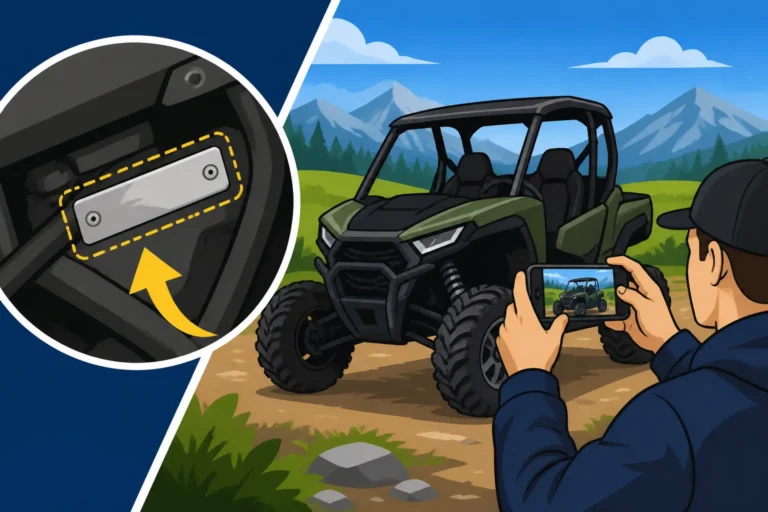
While a physical copy of your registration and insurance is legally required, having digital backups is a fantastic secondary precaution. Take clear, well-lit photos of all your essential documents – your driver's license, OHV registration, and insurance card – and store them on your smartphone. You can also email them to yourself or save them to a cloud storage service like Google Drive or Dropbox. This isn't a substitute for the physical copies, but it can be a lifesaver if your physical documents are lost, damaged beyond recognition, or if you simply misplace them temporarily.
In some situations, an officer might accept a digital copy in a pinch if you can immediately follow up with the physical document, but don't count on it as your primary compliance method. However, having these digital images can be invaluable for reference when making an insurance claim, reporting a lost item, or communicating details to an emergency contact. It's also useful for keeping records of other important documents, like a bill of sale you might have generated using a platform like LawDepot when you bought or sold your machine, which could be helpful in proving ownership should questions arise later.
| Document Type | Legal Requirement | Recommended Storage Method | Why It Matters |
|---|---|---|---|
| OHV Registration | Yes | Waterproof pouch in secure compartment | Proof of legal operation, ownership |
| Proof of Insurance | Yes | Waterproof pouch in secure compartment | Liability coverage on public land |
| Personal ID (Driver's License) | Yes | Waterproof pouch on person or machine | Identity verification, age, emergency contact info |
| Public Lands Camping Pass | If camping (adults) | Physical or digital proof, with ID | Required for random camping in Eastern Slopes PLUZs |
| Emergency Contacts | No (Recommended) | Laminated card in ID wallet, or digital | Crucial in accident/medical emergency |
What Happens When an Officer Asks for Your Papers
Being stopped by an enforcement officer on the trail can feel daunting, but knowing what to expect can significantly reduce stress and ensure a positive outcome. Officers are there to enforce regulations, but they're also there for public safety and often provide assistance. Approaching the interaction with respect and preparedness is key.
The Standard Request: What to Expect
When an officer approaches, whether it's Fish and Wildlife, RCMP, or a local bylaw officer, they will typically identify themselves and state the reason for the stop. This could be a routine check, a response to a complaint, or an observation of a traffic violation (even off-highway, rules apply!). The most common requests will be for your personal identification, your OHV's registration, and proof of insurance. They might also ask to see your [Alberta Public Lands Camping Pass] if you are in a designated area and random camping.
Your best approach is to cooperate respectfully. Keep your hands visible, and don't make any sudden movements. Inform the officer where your documents are located before reaching for them. For example, "My wallet is in my left jacket pocket, and my machine's papers are in the waterproof case under the seat. May I retrieve them?" This courtesy goes a long way. They may also ask about your route, destination, or if you've seen anything unusual. Answer truthfully and calmly. This is also a good time to remember that your machine needs proper equipment like [Alberta Requires a Spark Arrestor] and working lights, as they might perform a quick inspection.
If You Don't Have Your Papers Handy
Let's be honest, sometimes things get forgotten or misplaced. If you're stopped and realize you don't have all your required documents, it's natural to feel a pang of anxiety. The worst thing you can do is lie or try to evade the request. Be honest with the officer about what you have and what you don't. Explain the situation clearly and politely. They may be able to verify some information using their internal systems, but this is not guaranteed, especially in remote areas with limited connectivity.
In such cases, the officer will typically issue a ticket for the specific infraction – for example, [Alberta Penalties for No Camping Pass] or riding without registration or insurance. They might also give you a specified period, often 24 or 48 hours, to produce the missing documents at a police station or registry office, potentially leading to the ticket being dropped or reduced if you can prove you actually had the valid papers at the time of the stop. However, this is at their discretion and isn't a guarantee. In some serious cases, particularly for repeat offenders or if there's suspicion of theft, your machine could be seized.
Understanding Potential Consequences
The consequences of not carrying your papers can range from minor inconvenience to severe penalties. At the very least, you'll likely receive a fine. These fines are designed to be a deterrent and can be substantial enough to make you rethink forgetting your documents next time. For instance, being unable to produce proof of insurance can lead to a significant fine and potentially even a vehicle seizure, as discussed earlier.
Beyond the immediate financial hit, there's the lost time and the frustration. Dealing with a ticket, potentially having to go to court, or retrieving an impounded machine all eat into your valuable time and energy. It can also strain your relationship with enforcement agencies. The rules around OHV use in Alberta are designed for safety and to manage access to public lands responsibly. By making sure you carry all your required documents, you're not just avoiding a ticket; you're contributing to a safer, more organized riding community and ensuring that these incredible natural spaces remain accessible for everyone to enjoy. It's about being a responsible steward of the land and a respectful participant in the riding community.
Disclaimer
This article is for general informational purposes only and does not constitute professional advice. Laws, prices and regulations vary by location and change over time. Consult a qualified professional for guidance on your specific situation.