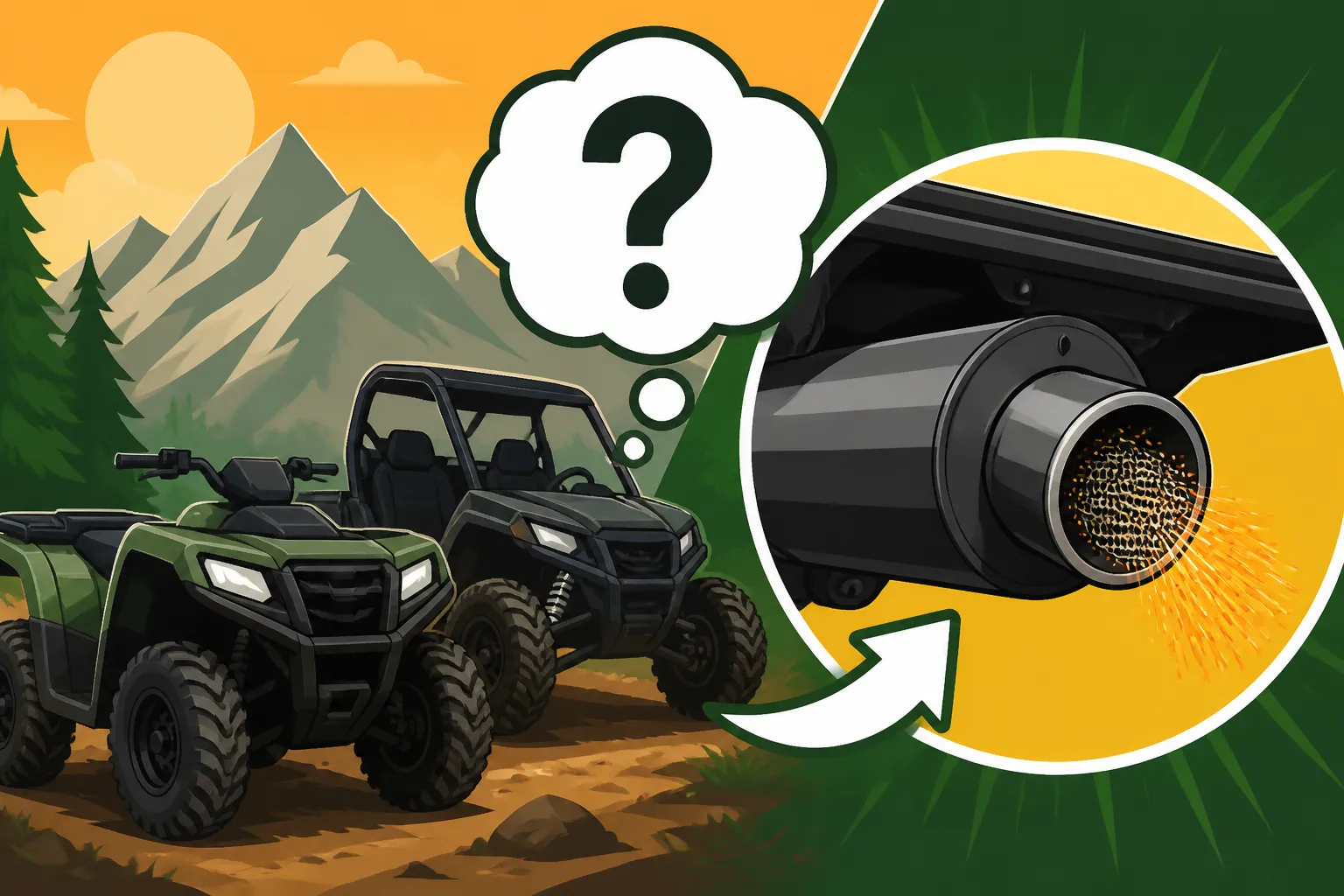
Does Your Quad Need a Spark Arrestor in Alberta?
The thrill of carving through Alberta's diverse landscapes on your ATV or UTV is unmatched, but it comes with a vital responsibility: protecting our beautiful natural environment. One often-overlooked but absolutely critical component for safe and legal off-road riding is the spark arrestor. Many riders don't fully grasp why this small device is so important, or how to ensure their machine is compliant. This guide will clarify Alberta's requirements for spark arrestors, explain their crucial role in preventing wildfires, and show you exactly how to make sure your off-highway vehicle is ready for the trail.
Understanding the "Why": The Purpose of a Spark Arrestor in Alberta
When you're out enjoying the vast public lands, winding through forests, or climbing over foothills, the last thing on anyone's mind is usually the exhaust system of their quad. However, what comes out of that exhaust pipe can have devastating consequences if not properly managed. This is where the spark arrestor comes in, acting as a silent guardian against one of nature's most destructive forces: wildfire.
Preventing Wildfires: The Primary Role
The internal combustion engines that power our ATVs and UTVs are incredible machines, but they operate by burning fuel at very high temperatures. A byproduct of this process, especially in two-stroke engines or poorly maintained four-strokes, can be tiny, incandescent carbon particles or "sparks" expelled from the exhaust. While these sparks might seem small and harmless, in Alberta's frequently dry conditions, they are anything but.
Imagine riding through a stretch of dry grass in late summer, or kicking up dust on a parched trail in the spring. A single hot carbon particle landing on that tinder-dry vegetation is all it takes to ignite a fire. These fires can spread with terrifying speed, destroying vast tracts of forest, wildlife habitat, and even threatening homes and communities. A spark arrestor is specifically designed to trap these hot carbon particles within the exhaust system, cooling them before they can exit into the atmosphere. It's a proactive measure, a simple barrier that can prevent a catastrophic event, allowing us to enjoy our sport without unintentionally putting our wilderness, or even our fellow riders, at risk.
Protecting Our Forests and Fellow Riders
Beyond the immediate danger of ignition, the importance of a functioning spark arrestor extends to the broader ecological and community well-being. Our provincial parks, public land use zones (PLUZs), and forestry roads are home to incredible biodiversity, from towering pines to delicate wildflowers, and countless species of wildlife. A wildfire doesn't just burn trees; it obliterates entire ecosystems, displacing animals, contaminating water sources, and leaving behind a scarred landscape that takes decades, if not centuries, to recover.
Furthermore, these public spaces are shared by many. Hikers exploring serene trails, campers enjoying a peaceful evening, and even other off-highway vehicle users all rely on the safety and integrity of these areas. The knowledge that every rider is doing their part to prevent fires fosters a sense of shared responsibility and community. No one wants to be the person responsible for destroying a favourite trail or a cherished camping spot. By ensuring your machine is equipped with a functional spark arrestor, you're not just complying with the law; you're actively contributing to the preservation of these invaluable natural assets for everyone, now and for future generations.
Navigating Alberta's Legal Requirements for Spark Arrestors
It's one thing to understand the environmental reasons behind using a spark arrestor, but it's another to grasp the legal framework that mandates their use in Alberta. The province takes fire prevention incredibly seriously, and these regulations are enforced to protect our natural resources and public safety. Ignoring them isn't just irresponsible; it can lead to significant penalties.
The Law of the Land: What the Regulations Say
In Alberta, if you plan to operate your off-highway vehicle (OHV) on any public land, which includes designated trails, forestry roads, [Crown Land as the Registration Trigger], and even highway ditches (yes, [Why a Highway Ditch Counts as Public Land]), you are legally required to have a functional spark arrestor. This isn't a suggestion or a guideline; it's a specific requirement under Alberta's Off-Highway Vehicle Regulation. The intention is clear: to minimize the risk of human-caused wildfires.
This means that whether you're heading out for a casual afternoon ride, embarking on a multi-day backcountry adventure, or using your machine for work on public land, your exhaust system must be equipped with an approved and properly maintained spark arrestor. Riders often ask if this applies to every type of OHV, and the answer is a resounding yes—quads, dirt bikes, side-by-sides, and even some snowmobiles (depending on the season and area) must comply. The law is in place to protect Alberta's beauty, and understanding its reach is the first step toward compliance.
What Makes a Spark Arrestor "Legal"?
Simply having something in your exhaust system isn't enough to meet Alberta's legal standard. A legal spark arrestor must be effective at trapping sparks and generally meet recognized engineering standards. While you might not see a specific "Alberta Certified" stamp, the expectation is that it complies with reputable standards, such as those set by the U.S. Forest Service (USFS). Most new machines sold in Canada come equipped with factory-installed spark arrestors that meet these requirements.
Crucially, the spark arrestor must be in good working order. This means it shouldn't have any holes, be heavily corroded, or be so clogged with carbon that it's ineffective. Furthermore, modifying your exhaust system in a way that bypasses or removes the spark arrestor is illegal. Many aftermarket performance exhausts are designed for closed-course racing and might not include a spark arrestor, making them non-compliant for public land use. If you're ever in doubt, check your owner's manual or consult with a powersports dealer to confirm that your specific setup aligns with what [Alberta Requires a Spark Arrestor]. Be aware that [Alberta Bans Modified Exhausts] that don't meet these requirements, so keep your machine as close to stock or with certified components as possible.
Penalties for Non-Compliance
Riding without a legal spark arrestor in Alberta can lead to more than just a stern warning; it carries tangible penalties. An officer who pulls you over for an equipment check, perhaps at a staging area or during a patrol in a Public Land Use Zone, will routinely look for a spark arrestor. If your OHV is found to be non-compliant—meaning it lacks one, has a damaged one, or is equipped with an unapproved modified exhaust—you could face a significant fine.
The financial cost of a ticket can quickly overshadow any perceived benefit of not having a spark arrestor. Beyond the immediate fine, there's the inconvenience and stress of dealing with a legal infraction. In serious cases, or if your machine is deemed particularly unsafe, officers have the authority to issue a [Alberta Vehicle Seizure for No Insurance] or other serious infractions, which would be an absolute nightmare for any rider. Moreover, if your non-compliant machine were to cause a wildfire, the civil liabilities and legal repercussions could be astronomical, far outweighing the cost of ensuring your equipment is up to snuff. It's a risk simply not worth taking when a small bit of prevention goes such a long way.
How to Ensure Your ATV or UTV is Compliant
Ensuring your OHV meets Alberta's spark arrestor requirements is a straightforward process that should be a regular part of your pre-ride routine. It's about proactive maintenance and informed decisions, not just hoping for the best when you hit the trails. Taking these steps not only keeps you legal but also contributes to the safety of our shared outdoor spaces.
Checking Your Machine: Manufacturer and Aftermarket
For most modern ATVs and UTVs, a spark arrestor comes standard from the factory. It's usually integrated into the muffler or the very end of the exhaust system. To confirm its presence, check your owner's manual, which will often have diagrams detailing the exhaust components. You can also visually inspect the muffler: look for a small, fine mesh screen at the end of the exhaust pipe or an internal baffle system designed to trap sparks. Manufacturers typically mark their factory-installed spark arrestors as compliant.
However, if you own an older machine, have replaced your original exhaust with an aftermarket system, or purchased a used OHV, verification is paramount. Not all aftermarket exhaust systems include a spark arrestor, especially those marketed for "performance." These may be designed for closed-course racing where fire risk isn't a primary concern. If you've installed an aftermarket exhaust, check its specifications carefully to ensure it's "spark arrestor equipped" or "USFS approved" (or similar Canadian standard). If you're unsure, consult a reputable powersports dealer or mechanic; they can quickly tell you if your setup is legal for public land use in Alberta.
Maintenance and Inspection: Keeping it Effective
A spark arrestor is a wear item, and like any part of your machine, it requires periodic inspection and maintenance to remain effective. Over time, carbon deposits from the engine's combustion process can build up on the screen or baffles of the spark arrestor. This buildup not only makes the arrestor less effective at trapping sparks but can also restrict exhaust flow, potentially impacting your engine's performance.
Before each riding season, or regularly throughout the year, make it a habit to perform a quick visual inspection. Look for any holes, tears, or significant damage to the screen. If it's a removable type, take it out and clean it thoroughly with a wire brush to remove carbon buildup. Be cautious when handling a recently run engine, as exhaust components will be extremely hot. A clean, intact spark arrestor is a functional one, and this simple maintenance step is crucial for compliance. Think of it as part of your regular [Alberta Equipment Checks by Officers] preparation.
What to Do If You Don't Have One (or Need a Replacement)
If, after checking your machine, you discover it doesn't have a spark arrestor or the existing one is damaged and ineffective, do not operate your OHV on public land. Riding without one is a direct violation of Alberta's regulations and poses an unacceptable fire risk. Your immediate step should be to acquire and install an approved spark arrestor.
The good news is that replacement spark arrestors or compliant exhaust systems are readily available. You can visit your local powersports dealership, which will have OEM (Original Equipment Manufacturer) parts or approved aftermarket options. They can also assist with proper installation, ensuring the device functions correctly and safely. When dealing with any legal documentation or agreements related to your OHV, such as a bill of sale or an agreement to lend your machine, a resource like LawDepot can provide templates to formalize these arrangements. While LawDepot isn't for physical parts, it can help ensure other aspects of your ownership are clear. Taking the time to properly equip or repair your spark arrestor is a small investment that offers huge returns in terms of safety, legality, and peace of mind.
Beyond Compliance: Best Practices for Responsible Riding
While a compliant spark arrestor is a mandatory starting point, true responsible riding in Alberta's beautiful backcountry extends beyond just meeting the minimum legal requirements. It's about fostering a culture of safety, environmental stewardship, and respect for our shared natural spaces. By adopting a few best practices, we can all help ensure the trails remain open and safe for generations to come.
Carrying the Right Gear for Fire Safety
Even with a perfectly functioning spark arrestor, being prepared for the unexpected is a hallmark of a responsible rider. Embers, hot exhaust components touching dry grass, or even a carelessly dropped cigarette (though no responsible rider would do this) can all spark a fire. That's why carrying basic fire-fighting gear on your machine is a smart move, especially during dry conditions.
Consider outfitting your ATV or UTV with a small, accessible fire extinguisher (rated for A, B, and C fires). A sturdy shovel is also invaluable for digging a fire break or smothering embers. Even a large, water-filled spray bottle or a small collapsible bucket can make a difference in containing a nascent fire. Make it a habit to regularly scan the ground behind and around your machine, particularly after stopping in dry areas, to quickly spot any smoldering embers. These tools, combined with heightened awareness, provide an extra layer of protection, allowing you to potentially act quickly before a small problem becomes a major disaster.
Staying Informed About Fire Bans and Conditions
Alberta's weather can be unpredictable, and fire conditions can change rapidly from one day to the next. What might be safe to ride through one week could be a tinderbox the next. It is absolutely essential for every rider to check the current provincial wildfire status and any local fire bans or restrictions before heading out for a ride. The Alberta Wildfire website is your best friend here; bookmark it and check it often. [Alberta Fire Ban Lookups] are easy to do online.
During periods of extreme fire risk, provincial or municipal authorities may issue fire bans that restrict or even prohibit OHV use in certain areas. [Alberta Off-Highway Vehicle Bans in Fire Season] are not uncommon. These bans are put in place for our collective safety and the protection of the environment, regardless of whether your machine has a spark arrestor. Respecting these bans is non-negotiable. It demonstrates your commitment to responsible recreation and helps to prevent irreversible damage to our landscapes. A well-informed rider is a safe and responsible rider.
Community and Shared Responsibility
Riding off-highway vehicles in Alberta is a privilege, not a right, and maintaining that privilege requires a collective effort from the entire riding community. Each of us plays a role in fostering a positive image for OHV enthusiasts. By diligently adhering to spark arrestor requirements, staying informed about fire bans, and practicing general trail etiquette, we contribute to a reputation of responsibility that helps ensure continued access to our favourite riding areas.
Furthermore, spread the word! Educate your riding buddies, family, and new riders about the importance of spark arrestors and fire safety. Share what you know about Does Your Quad Need a Spark Arrestor in Alberta?. A strong, informed community is our best defence against both preventable accidents and potential restrictions on riding access. Remember, whether you're dealing with equipment compliance or formalizing agreements for private land access, resources are available. For example, when you need a clear, professional agreement for something like riding on a farmer's field (with permission, of course!), or if you're selling your machine and want proper documentation, services like LawDepot can help you generate legally sound documents that protect all parties involved, ensuring that even the administrative side of your OHV life is handled responsibly. It's all part of being a good steward of both your machine and the land.
Spark Arrestor Compliance Checklist
| Aspect | Check | Notes for Riders |
|---|---|---|
| Presence | Is there a spark arrestor installed on your exhaust system? | All OHVs on public land in Alberta require one. |
| Certification | Is it factory-installed, USFS-approved, or equivalent standard? | Look for markings on the muffler or consult your owner's manual. |
| Condition | Is the screen/baffle free of holes, tears, or damage? | A damaged arrestor is ineffective and non-compliant. |
| Cleanliness | Is it free from excessive carbon buildup? | Carbon buildup reduces effectiveness and can restrict engine performance. Clean regularly. |
| Modifications | Has the exhaust system or arrestor been modified? | Unauthorized modifications often render the spark arrestor ineffective and are illegal. [Why a Modified Muffler Can Cost You a Ticket] |
| Pre-Ride Check | Do you include the spark arrestor in your pre-ride equipment inspection? | Make it a habit before every ride, especially during dry seasons. |
| Fire Ban Awareness | Have you checked current fire bans/restrictions for your riding area? | Even compliant machines are restricted during fire bans. Check Alberta Wildfire status before you go. |
Disclaimer
This article is for general informational purposes only and does not constitute professional advice. Laws, prices and regulations vary by location and change over time. Consult a qualified professional for guidance on your specific situation.