Will a Handwritten Bill of Sale Register a Quad?
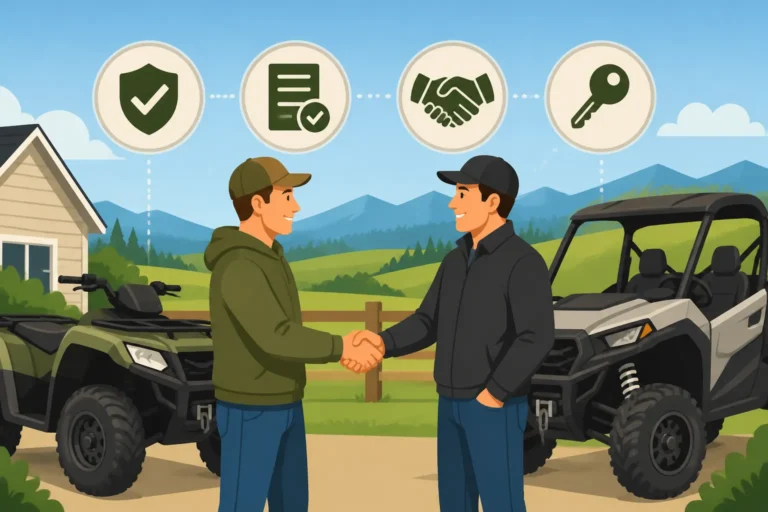
Buying an off-highway vehicle (OHV) privately in Alberta often involves a handshake and a handwritten bill of sale, leaving many riders to wonder if that informal document will actually be enough when it comes time to register their new quad or side-by-side. It’s a common point of anxiety, especially when you’re eager to hit the trails. This guide will demystify the requirements for registering an OHV in Alberta, focusing specifically on how a handwritten bill of sale is viewed by registry agents and what you need to ensure a smooth process.
The Core Requirement: Proof of Ownership
When you walk into an Alberta registry agent's office to register your OHV, their primary concern, beyond ensuring all your personal identification is in order, is verifying you are the rightful owner of the machine. This isn't just bureaucratic red tape; it's a critical step in preventing fraud, ensuring proper transfer of ownership, and keeping accurate records for safety and legal purposes. Without clear proof that the machine legally belongs to you, the registry simply can't process the registration. They need a verifiable paper trail.
Why Paperwork Matters to the Registry
Think of the registry agent as a gatekeeper protecting against stolen vehicles or disputed ownership. They operate under the regulations of Alberta's Traffic Safety Act and the Off-Highway Vehicle Regulation, both of which mandate clear processes for vehicle registration. The paperwork you provide, including your bill of sale, acts as a legal instrument proving that the previous owner willingly transferred possession and title of the OHV to you. It confirms that the machine isn't stolen, that there are no outstanding liens (though this is a separate check you should always do before buying), and that the seller had the right to sell it in the first place.
Imagine a scenario where an OHV is reported stolen, but the new owner has a flimsy, incomplete bill of sale. It becomes incredibly difficult for authorities to trace the machine back to its rightful owner or to prosecute those responsible for the theft. This is why thorough and clear documentation is so vital for everyone involved, from the buyer and seller to law enforcement and the registry. It’s all about maintaining integrity within the system and protecting owners.
What Makes a Bill of Sale Legally Sound
Whether it's typed or handwritten, a legally sound bill of sale needs to contain specific pieces of information to be acceptable for OHV registration in Alberta. These details ensure there’s no ambiguity about the transaction. First and foremost, it must clearly identify both the buyer and the seller. This means full legal names and current addresses for both parties. Without this basic information, the document lacks credibility, as it's impossible to confirm who was involved in the transaction.
Next, the bill of sale must thoroughly describe the OHV itself. This includes the make, model, year, and crucially, the Vehicle Identification Number (VIN). The VIN is like the machine’s DNA; it’s unique and essential for identification. If the VIN is missing or incorrect on the bill of sale, it's a major red flag for the registry. The document should also state the purchase price of the OHV, the date of the sale, and be signed by both the buyer and the seller. These elements collectively form a legally binding contract that demonstrates a legitimate transfer of ownership. You'll find that these requirements are quite consistent, whether you're handling [Alberta Private Sale Paperwork] or buying from a dealership.
Is a Handwritten Bill of Sale Acceptable?
This is the million-dollar question for many private sales, and the good news is: yes, generally, a handwritten bill of sale can be accepted for OHV registration in Alberta. However, and this is a big "however," it absolutely must meet the standards for completeness and clarity that a printed document would. The fact that it's handwritten doesn't automatically disqualify it, but it certainly puts more onus on you and the seller to ensure every detail is perfect.
Yes, But With Caveats
While a handwritten bill of sale can be perfectly valid, the biggest challenge often lies in legibility and ensuring all necessary information is included. A hastily scrawled note on a napkin, missing critical details like the VIN or the seller's full address, will almost certainly be rejected by a registry agent. They aren't trying to be difficult; they're simply adhering to provincial regulations designed to protect everyone involved in the transaction. If the information is unclear, incomplete, or looks suspicious, they have every right to refuse the registration until proper documentation is provided.
It’s not uncommon for folks to call up their local registry office after a private sale, a little anxious, asking, "Will a handwritten bill of sale register a quad?" The answer they usually get, and what I want to impress upon you, is that the content and clarity are far more important than the format. If it’s clear, comprehensive, and signed, you’re likely in good shape. But if it's vague or missing key data, you'll be facing a trip back to the seller, if you can even find them. This highlights why good communication and attention to detail during the sale are paramount.
Best Practices for a Handwritten Bill of Sale
To ensure your handwritten bill of sale passes muster, treat it as seriously as you would any other legal document. First, make sure the handwriting is clear, neat, and entirely legible. If the registry agent can't read it, they can't process it. Use a dark pen, not a pencil, and avoid corrections or scribbled-out sections if possible. If you must make a correction, both the buyer and seller should initial it.
Second, be exhaustive with the details. Include the full legal names, addresses, and phone numbers for both the buyer and seller. For the OHV, list the make, model, year, and the entire VIN. Also, clearly state the purchase price and the exact date of the sale. Have both parties sign and print their names beneath their signatures. While not always mandatory, having a third-party witness sign the document can add an extra layer of credibility, though it's not a common practice for most private sales. It’s also wise to make copies for both the buyer and seller, even if it's just a quick photo with your phone for immediate backup. Many riders find useful templates on sites like LawDepot, which can guide you to include all necessary fields, even if you ultimately handwrite the information. A structured template, even filled out by hand, often prevents overlooking crucial details.
What to Do If Your Handwritten Bill of Sale is Lacking
It happens to the best of us: you're excited about your new machine, the sale is done quickly, and later you realize the bill of sale isn't as perfect as it should be. Don't panic, but know that you'll likely need to take some additional steps to get your OHV registered. The key is to be proactive and understand what fixes are possible.
Common Issues and How to Fix Them
One of the most frequent problems is a missing or incorrect VIN on the bill of sale. The VIN is paramount for registration, as it's the unique identifier for the machine. If it's missing, you'll need to contact the seller and ask them to provide a corrected bill of sale with the full VIN. You can typically find the VIN stamped on the frame of the OHV, often near the front wheels, under the seat, or on the lower frame rails. Take a clear photo of it for your records. If the seller is unreachable or uncooperative, you might be in a very tough spot, potentially needing to seek legal advice. For new machines, the Manufacturer's Statement of Origin (MSO) would provide this information, but that's usually only for brand-new sales from a dealer.
Another issue can be incomplete seller information. If the seller's full legal name or address isn't on the bill of sale, the registry agent won't be able to verify their identity or the legitimacy of the transfer. Again, reaching out to the seller for a revised document is your first step. It underscores why verifying the seller's ID (like a driver's license) and getting all their contact information at the time of sale is so important. Missing signatures from either party is also a critical flaw. Without both signatures, the document isn't a legally binding agreement and won't be accepted. You must get both parties to sign. Sometimes, if the purchase price is missing, it can also complicate things, especially for calculating any applicable federal GST (Alberta has no provincial sales tax). Always ensure the price is clearly stated. If you're dealing with a situation where you truly have [Alberta Registration Without a Bill of Sale], the path becomes significantly more complex, often requiring statutory declarations or court orders, which are much more involved.
Alternative Proof of Ownership
In certain rare or complicated scenarios, if a standard, complete bill of sale (handwritten or otherwise) isn't available, other forms of documentation might be accepted as proof of ownership. For a brand-new OHV purchased from a dealer, you'll receive a Manufacturer's Statement of Origin (MSO) or a New Vehicle Information Statement (NVIS). These documents serve as the initial proof of ownership before the first registration. If you've inherited an OHV, you might need to present the will, probate documents, or a letter from the estate's executor demonstrating your legal right to the machine. Check out [Alberta Registration After the Owner Dies] for more on this.
In very specific cases, if there's a court order granting you ownership, that can also serve as proof. However, for the vast majority of private sales, a properly executed bill of sale is the expected and required document. These alternative proofs are typically for unique circumstances and generally don't apply when you simply bought a used quad from a neighbour with an incomplete handwritten note. Always call ahead to your chosen registry agent if you suspect your documentation isn't standard; they can often provide specific guidance on your unique situation.
The Registration Process with Your Bill of Sale
Once you've got your handwritten bill of sale perfected, clear, and complete with all the necessary information, you're ready for the final step: heading to the registry. This part should be straightforward if all your ducks are in a row.
Preparing for Your Registry Visit
Before you even step out the door, gather all your necessary documents. You'll need your complete and legible handwritten bill of sale. Make sure you have valid government-issued photo identification, like your driver's license, as the registry agent will need to verify who you are. If you plan to ride your OHV on public land, which includes most designated trails and even highway ditches, you'll also need to have proof of valid liability insurance. Alberta requires [Alberta Requires Insurance on Public Land] for OHVs operating anywhere off private property.
It's a good idea to bring your policy number or an insurance card showing that your OHV is covered. The registry agent may ask for it, and you'll definitely need to be able to [Alberta Proof of Insurance on Demand] if an officer stops you later. Some people like to make copies of everything they're submitting, just for their own records. Familiarize yourself with the costs, as [What Alberta OHV Registration Costs] includes more than just the base registration fee; there are service charges as well. A handy checklist of documents can be found in [Alberta Registration Paperwork Checklist].
What to Expect at the Registry
When you arrive at the registry, you’ll present your documents to the agent. They will carefully review your handwritten bill of sale, cross-referencing the information with your ID and verifying the VIN. This is where the clarity and completeness of your document really pay off. If everything looks correct, the agent will enter the OHV's details into the provincial system. They'll also check for any liens on the machine; it's always best to have done your own lien check beforehand, as a registered lien can prevent the transfer of ownership until it's resolved.
Once the details are processed and the fees are paid, you'll receive your OHV registration certificate. This document is your official proof that the OHV is registered in your name. You'll also be issued an OHV license plate, which you must attach to your machine according to [Alberta Plate Placement on a Machine]. Unlike in years past, Alberta no longer issues stickers for plates, as [Alberta Dropped Plate Stickers in 2021]. You'll then be all set to hit the trails, provided you have your [Printing a Certificate Before You Ride] and proof of insurance handy!
Here's a quick comparison to help you weigh your options for a bill of sale:
| Feature | Handwritten Bill of Sale | Template-Based Bill of Sale (e.g., from LawDepot) |
|---|---|---|
| Pros | Immediate, no need for printer/computer, simple. | Clear, professional, ensures all key fields are included. |
| Cons | Can be messy, easy to miss details, illegibility issues. | Requires access to computer/printer, may need minor adjustments. |
| Acceptance | Yes, if complete, clear, and legible. | Yes, generally preferred due to completeness. |
| Risk of Rejection | Higher if information is incomplete or unreadable. | Lower, as it guides you to fill in all necessary data. |
| Ease of Use | Good for quick, on-the-spot transactions. | Excellent for ensuring comprehensive legal documentation. |
| Legal Strength | Equal to a template if all legal elements are present. | Often perceived as more formal and reliable. |
Remember, the goal is a smooth registration. If you ensure your handwritten bill of sale covers all the bases discussed here, you should have no problem getting your OHV registered and out enjoying Alberta's incredible landscapes.
Disclaimer
This article is for general informational purposes only and does not constitute professional advice. Laws, prices and regulations vary by location and change over time. Consult a qualified professional for guidance on your specific situation.