Insuring a Machine the Day You Buy It
You've just bought a shiny new (or new-to-you) ATV or UTV in Alberta, and the excitement is palpable. You're probably already dreaming of hitting the trails, but hold on a moment – getting your machine insured the very day you buy it is not just a smart move, it's often a legal necessity that many riders overlook. This guide will walk you through securing immediate insurance, explaining why it's crucial and how to make the process as smooth as possible, so you can ride with peace of mind.
Why "Day One" Insurance for Your ATV or UTV is Non-Negotiable in Alberta
It's tempting to think about insurance after the papers are signed and the quad is in your driveway, but in Alberta, that thinking can lead to a world of trouble. From a legal standpoint to protecting your hard-earned investment, having insurance lined up for the moment of purchase is paramount.
The Immediate Legal Requirement for Public Land Use
Here in Alberta, the rules are pretty clear: if your off-highway vehicle (OHV) touches any public land, you need proper insurance. This isn't just for designated trails in a Public Land Use Zone (PLUZ); it includes the highway right-of-way, which means ditches, service roads, and even unpaved county roads if they're not explicitly opened by a local bylaw. Many new owners, eager to test out their machine, might take a quick spin down a gravel road or across a field that borders public land, unknowingly putting themselves at risk.
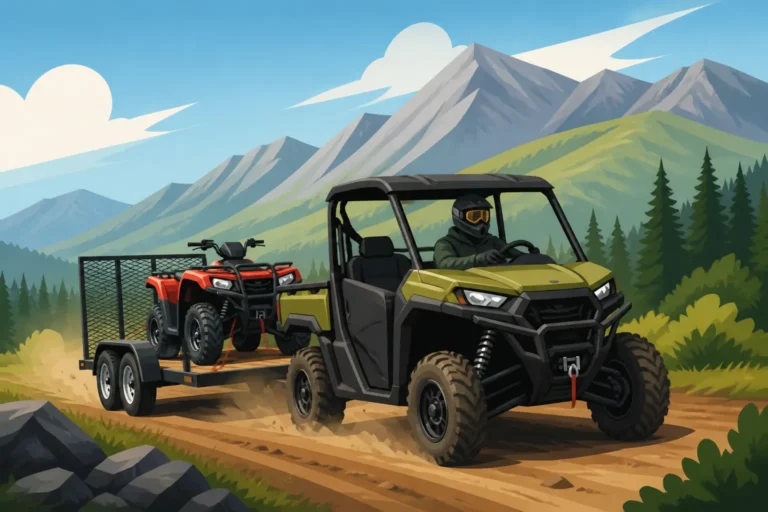
Imagine the scenario: you've just picked up your new side-by-side from the dealership. You're heading home, but the sheer excitement leads you to pull into a staging area for a quick photo or to adjust your new trailer. If an officer happens to be there and asks to see your papers, you'll need to show proof of insurance right then and there. This isn't just a suggestion; it's a legal obligation under the Traffic Safety Act and Off-Highway Vehicle Regulation. Failing to produce valid insurance can lead to significant fines and, in serious cases, even the seizure of your brand-new machine. It’s a harsh reality, but knowing [Alberta Requires Insurance on Public Land] is the first step to avoiding a really bad day. The moment that machine is yours, its liability rests solely with you.
Protecting Your Investment from the Moment of Purchase
An ATV or UTV is a substantial investment, whether you're buying it brand new off the showroom floor or a well-maintained used model from a private seller. Just like a new car, the financial responsibility for that machine transfers to you the moment the sale is finalized. The seller's insurance policy, if they even had one, will typically cease at the point of sale. This leaves a critical gap if you haven't secured your own coverage.
Consider this: you've just bought a pristine quad. As you're loading it onto your trailer, the ramp slips, and the machine tips, causing damage. Or perhaps you're making a quick stop for gas on the way home, and a moment of inattention leads to a minor fender bender in the parking lot. Without immediate collision coverage, any damage to your machine comes straight out of your pocket. Even worse, theft is a real concern for OHVs. If your machine is stolen from the dealership lot after you've paid for it but before you've driven away, or from your driveway on the first night, a comprehensive policy ensures you're not left with nothing but a financial loss. Don't let the euphoria of a new purchase blind you to the very real and immediate need to protect that asset.
Shielding Yourself from Unforeseen Liabilities
Beyond protecting your own machine, immediate insurance is your shield against potential financial ruin from liability claims. Alberta's OHV rules are strict about public land riding, and that includes who is responsible when things go wrong. If you are operating an OHV on public land and cause damage to property or, tragically, injure another person, you are personally liable for those costs. These can quickly escalate into hundreds of thousands, if not millions, of dollars.
Imagine pulling your newly acquired side-by-side into a popular staging area. You're backing it off the trailer, a bit unfamiliar with its weight and dimensions, and accidentally clip the parked truck beside you, causing significant body damage. Or, you're trying out a new feature on your quad in your rural driveway, and it lurches, striking a pedestrian walking by on an adjacent public easement. These scenarios, though hopefully rare, underscore the absolute necessity of liability coverage from the second you take possession. It's not just about covering your mistakes; it's about protecting your entire financial future from the potentially devastating impact of a lawsuit.
Navigating the Insurance Process on Purchase Day
Getting your OHV insured doesn't have to be a last-minute scramble. With a little planning, you can ensure you have coverage in place the moment you become the proud owner, whether you're buying from a dealer or a private seller.
Gathering Essential Information Before You Buy
The key to a smooth insurance process is preparation. Before you even finalize the purchase, make sure you have all the necessary details about the machine you intend to buy. The most critical piece of information is the Vehicle Identification Number (VIN). This unique 17-character code is like the machine's DNA and is required by all insurance companies to accurately identify the vehicle and provide a quote. You should get this from the seller as early as possible, ideally when you're first seriously considering the purchase.
Beyond the VIN, you'll need the make, model, year, and engine size (cc) of the OHV. Knowing whether it's new or used, and its approximate purchase price, also helps insurers provide an accurate estimate. For private sales, it's also a good idea to have a draft bill of sale ready. A well-structured bill of sale, like those available through LawDepot or similar services, not only protects both buyer and seller but also provides crucial documentation for insurance and future registration. This information allows your insurance provider to generate an accurate quote and prepare the necessary policy details ahead of time.
Proactive Communication with Insurance Providers
Don't wait until you're standing at the dealership counter, pen in hand, or shaking a private seller's hand, to think about insurance. This is a common pitfall. Instead, contact your current auto insurance provider before you commit to the purchase. Many riders assume their existing auto policy will automatically cover a new OHV, but this is almost never the case for the dedicated coverage required for riding. Be clear that you are acquiring an off-highway vehicle and need a separate, specific OHV policy.
Most reputable insurance companies in Alberta can provide a quote and even set up a policy to activate at a specific date and time, coinciding with your planned purchase. By calling them a few days or even a week in advance, you can compare quotes, ask questions about coverage options, and ensure everything is in place for the day you pick up your machine. This proactive approach means you can literally drive (or trailer) your new machine away with full confidence that you are legally covered and financially protected. Have your driver's license handy, as your personal driving record will also be a factor in the quote.
Understanding Binders and Temporary Coverage
Even with proactive planning, sometimes things move quickly on purchase day. If your full insurance policy isn't immediately finalized, many insurance companies can issue what's called a "binder" or temporary certificate of insurance. This is a crucial document. A binder serves as immediate proof that you have coverage in place, even if the formal policy documents haven't been printed or mailed yet. It confirms that your insurance is effective as of a specific date and time.
This temporary proof is exactly what you need if you are stopped by an enforcement officer and asked for your [Alberta Proof of Insurance on Demand]. It prevents any questions about whether you are riding legally. Be sure to confirm with your insurance agent how long this binder is valid (typically 30 days or until the full policy is issued), and what steps you need to take to finalize the complete policy. It’s your safety net for that critical window between purchase and full policy activation, ensuring you don't face penalties or unforeseen liabilities during your first few weeks of ownership.
Key Policy Considerations for Your Newly Purchased OHV
Choosing the right insurance policy for your ATV or UTV involves more than just getting the cheapest rate. It's about understanding what different coverage types offer, knowing what factors affect your premium, and recognizing the specific nuances for new versus used machines.
Decoding Common OHV Insurance Coverage Types
When you talk to your insurance broker, they'll discuss several types of coverage, each designed to protect you in different situations.
- Liability Coverage: This is the absolute foundation of any OHV insurance policy and is the minimum legally required for riding on public land in Alberta. Liability coverage protects you financially if you are at fault for an accident that causes injury to another person or damage to their property. Without it, you are personally responsible for these costs, which can be astronomical. Think of it as protecting everyone else from you and your machine.
- Collision Coverage: This pays for damages to your own ATV or UTV if it's involved in an accident with another vehicle, an object (like a tree or rock), or if it rolls over. This is particularly important for new, expensive machines where repair costs can be significant. If you’ve financed your OHV, your lender will almost certainly require you to carry collision coverage.
- Comprehensive Coverage: This coverage is your shield against non-collision incidents. It covers things like theft, vandalism, fire, hail damage, falling objects, and damage from animals. For a machine stored outdoors, or one that's a frequent target for thieves, comprehensive coverage offers invaluable peace of mind. Combine this with collision, and you have "full coverage" that protects your machine from most eventualities.
- Special Add-ons: Depending on your machine and how you use it, you might consider add-ons for accessories (like winches, plows, or upgraded suspension that exceed standard coverage limits) or even specific coverage for trailers you use to haul your OHV. Discuss these options with your broker to tailor the policy to your specific needs.
Factors Influencing Your Premium
The cost of your OHV insurance premium is not a one-size-fits-all figure. Several factors come into play, and understanding them can help you manage your costs.
- Machine Type and Value: Generally, the more expensive or powerful your machine, the higher the premium. For example, a high-performance side-by-side with multiple seats will likely cost more to insure than a smaller, entry-level ATV. [Alberta Insurance for a Side-by-Side] typically costs more than [Alberta Insurance Cost for an ATV] due to these factors.
- Your Riding History and Demographics: Your past driving record, including any traffic violations or previous claims (even on your auto policy), will influence your OHV rates. Age and years of riding experience can also be factors.
- Location: Where you live and where you primarily store and ride your machine can affect rates. Areas with higher theft rates or more frequent accidents might have higher premiums.
- Deductibles: This is the amount you agree to pay out-of-pocket before your insurance kicks in for a claim. Choosing a higher deductible typically lowers your premium, but means you pay more upfront if you have an incident.
- Security Features and Storage: Some insurers offer discounts for machines stored in locked garages, or those equipped with anti-theft devices. Be sure to ask your broker about any potential discounts you might qualify for.
New vs. Used Machines: Different Insurance Nuances
Whether you're buying new or used significantly impacts your insurance needs and considerations.
- New Machines: When buying a new ATV or UTV from a dealer, you’ll typically have very clean documentation, including a Manufacturer's Statement of Origin (MSO) which proves the machine's initial ownership. [What a Manufacturer's Statement of Origin Proves] is essential. For a new machine, full coverage (collision and comprehensive) is almost always recommended due to its high value and the rapid depreciation it undergoes in the first few years. If you've financed the purchase, the lender will almost certainly demand full coverage to protect their interest.
- Used Machines: For used machines, the documentation can be a bit more varied. A clear bill of sale is critical, especially from a private seller. Ensure the VIN on the bill of sale matches the machine exactly. While liability insurance is still a must, you might weigh the cost-effectiveness of collision and comprehensive coverage for an older, less valuable used machine. For instance, if a machine is 15 years old and worth only a few thousand dollars, paying a high premium for comprehensive might not be the best use of your money, as the payout would be minimal after a deductible. However, never skimp on liability; its cost is usually relatively low compared to the financial protection it offers.
Here's a quick look at the immediate steps to securing coverage:
| Key Action for Day-One Coverage | Description | Benefit for Immediate Protection |
|---|---|---|
| Gather Info Pre-Purchase | Obtain VIN, make, model, year, engine size from the seller. | Allows for accurate quotes; necessary for policy creation. |
| Contact Insurer Proactively | Call your existing auto insurer or an OHV specialist before buying. | Get quotes, understand options, and prepare for policy activation on purchase day. |
| Secure Proof of Coverage | Request a binder or temporary certificate upon purchase. | Provides immediate legal proof of insurance, preventing fines and seizures if stopped. |
| Finalize Full Policy | Complete any remaining paperwork or payments after the purchase. | Establishes long-term, comprehensive protection for you and your machine. |
Avoiding Common Insurance Missteps When Buying Your OHV
Even with the best intentions, it's easy to fall into common traps when insuring a newly purchased off-highway vehicle. Being aware of these missteps can save you headaches, fines, and potentially significant financial losses.
The Myth of Automatic Auto Insurance Coverage
This is perhaps the most widespread and dangerous misconception among new OHV owners. Many people assume that their existing car or truck insurance policy will automatically extend to cover their new ATV or UTV. While your auto policy might offer very limited liability coverage if you're involved in an accident while trailering your OHV, it almost certainly does not cover you for riding the machine itself, especially on public land. An OHV is a distinct class of vehicle with its own unique risks, and as such, requires its own dedicated insurance policy.
Thinking your truck insurance covers your quad for a ride down a county road is a recipe for disaster. If you get stopped by an enforcement officer and you only have your auto policy details, you will be considered uninsured for OHV operation. This could lead to tickets for riding unregistered (if also unregistered), fines, and the potential seizure of your machine. Always clarify with your insurance provider that you need a specific OHV insurance policy for your ATV or UTV. Don't leave it to chance; call them and get the details in writing.
The Critical Role of Proper Documentation, Especially in Private Sales
When buying an OHV, especially from a private seller, the documentation you receive is crucial for both registration and insurance purposes. A clear, comprehensive bill of sale is non-negotiable. This document should include:
- The full names and addresses of both the buyer and seller.
- The date of the sale.
- The make, model, year, and most importantly, the VIN (Vehicle Identification Number) of the OHV.
- The agreed-upon purchase price.
- Signatures of both parties.
Services like LawDepot offer templates for bills of sale that can help ensure all necessary information is included. Without this clear proof of ownership, registering your machine can become a bureaucratic nightmare. Even if you manage to register it, an insurance company might hesitate to provide coverage or process a claim without solid evidence that you are the rightful owner. For new machines, ensure you receive the Manufacturer's Statement of Origin (MSO) as this document is vital for its first-time registration. Don't accept vague or incomplete paperwork; it's a red flag that could cause trouble down the road. [Will a Handwritten Bill of Sale Register a Quad?] might be accepted, but a thorough, typed one is always better.
Understanding Public vs. Private Land Riding and Insurance Needs
Another area of confusion stems from where you plan to ride. If you own a vast parcel of private land and your OHV will never leave that property, and that property is entirely fenced or otherwise secured from public access, you might theoretically not be legally required to carry OHV insurance in Alberta. However, this is a very narrow exception, and relying on it carries immense risk.
Consider these scenarios: What if a friend or family member rides your machine on your private land and has an accident? Without liability coverage, you could be facing a personal injury lawsuit. What if your "private" land has an easement, a public access road, or even a ditch that's considered part of the municipal right-of-way? The moment your tires touch that "public" strip, even inadvertently, you fall under the full force of Alberta's OHV regulations, including the requirement for insurance. [Alberta Registration Before Riding a Ditch] is just one example of how easily private land riding can bleed into public land requirements. The safest, most responsible approach is to always carry a proper OHV insurance policy with adequate liability coverage, regardless of where you primarily intend to ride. It protects you from the unexpected and ensures you're ready for any adventure Alberta's beautiful landscapes offer.
Disclaimer
This article is for general informational purposes only and does not constitute professional advice. Laws, prices and regulations vary by location and change over time. Consult a qualified professional for guidance on your specific situation.