A Young Alberta Rider on Too Much Machine
A Young Alberta Rider on Too Much Machine
Choosing an ATV or side-by-side for a young rider is not a matter of picking the smallest engine number on a dealer’s spec sheet. The real test is whether the rider can control the machine, use its safety equipment properly, and ride within Alberta’s rules. Here’s how to judge fit, understand supervision requirements, and set limits before the first ride.
Alberta’s age rules are a starting point, not a safety test
Alberta’s rules for riding an off-highway vehicle depend partly on where the machine is being used. On public land, riders under 14 generally need close supervision by an adult. A rider who has turned 14 may be able to ride without that supervision, but being old enough under the rules does not establish that a particular ATV or UTV is a safe match.
Check the rules for the specific place you plan to ride. A municipality, land manager, or other authority may have additional restrictions, and road access is not automatic. Alberta ATV Age Requirements gives an overview of the age question; Alberta Rules for a 12-Year-Old Rider and Alberta Rules for a 14-Year-Old Rider cover those ages in more detail. For supervision, see Alberta Rules for a Supervising Adult and Close Supervision of a Young Rider.
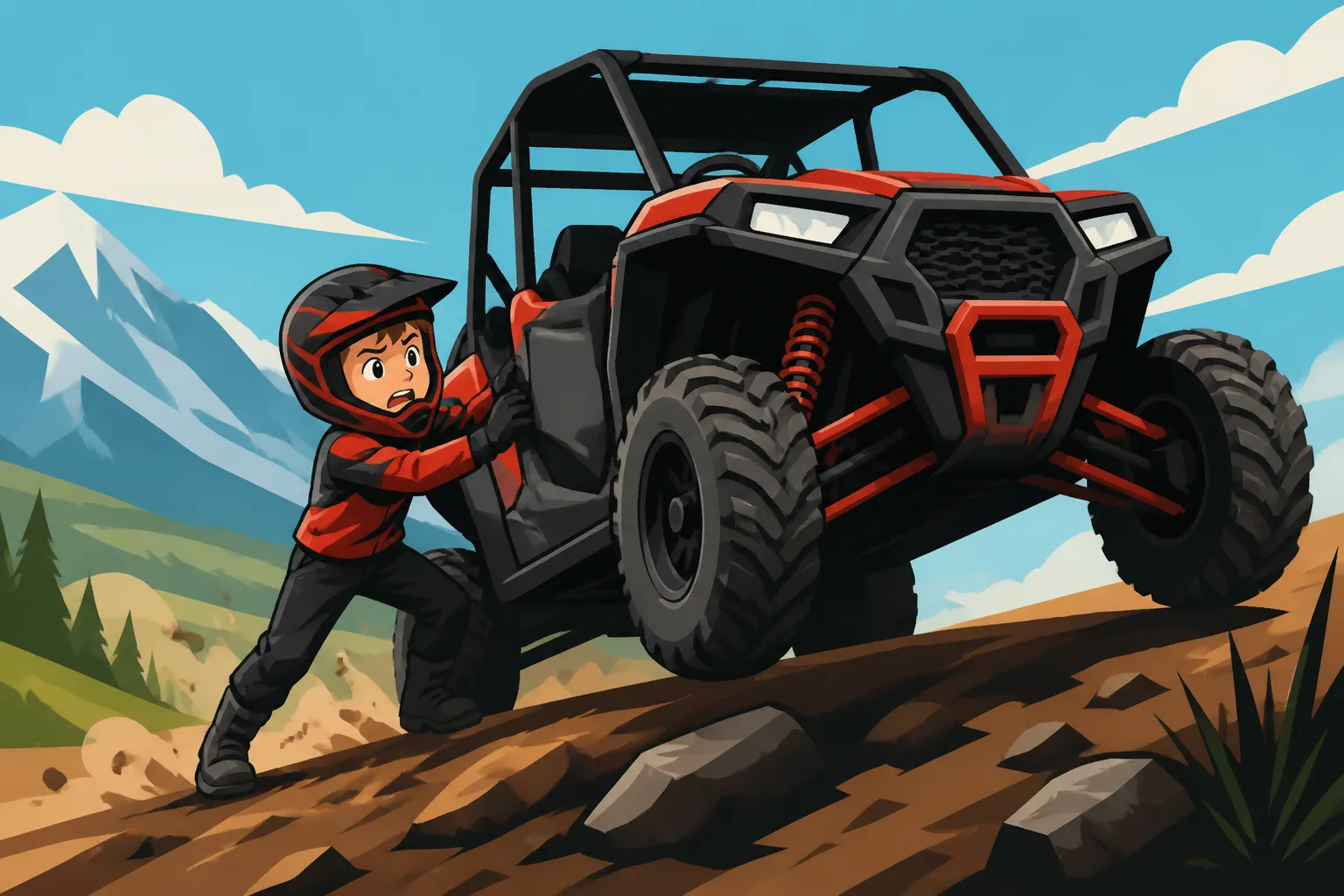
The important practical distinction is this: legal eligibility and physical readiness are separate questions. A young person may meet an age rule and still lack the strength, reach, judgment, or experience to manage a particular machine. An adult supervising a child should be prepared to say no to a machine that is too large or powerful for that rider, even if the child is enthusiastic and the rules permit the ride.
Supervision also means more than being somewhere nearby. The adult should be able to watch the rider, communicate clearly, and intervene if the situation becomes unsafe. A child on a machine well ahead or out of sight is not receiving useful close supervision. Read What Alberta Means by Close Supervision to understand the idea more fully.
Rules can also differ between public land and private property. Do not assume that permission to ride on private property removes every safety obligation, or that a machine allowed on one route can be taken onto a road or another public area. Review Alberta Rules for Riding Private Land and Alberta ATV Road Rules: Bylaws Decide when the planned ride involves different land types or routes.
Judge the rider-machine fit, not just the engine size
Engine displacement is an easy number to compare, but it cannot tell you whether a young rider can control the whole machine. Two models with similar engine sizes may differ in weight, throttle response, braking, seat height, steering effort, suspension, and how they handle on uneven ground. A larger machine can be difficult to stop, turn, or recover from even when it feels manageable on a smooth, level driveway.
Start with the manufacturer’s age guidance and operating instructions for the exact model. Treat that guidance as a minimum screening tool, not as a guarantee that every rider of that age is ready. If the manufacturer says a machine is intended for older or more experienced operators, do not try to work around that warning by limiting the throttle and assuming the problem is solved.
Before riding, check whether the young person can do all of the following while seated in the normal operating position:
- Reach and operate the throttle and brake controls without stretching or shifting awkwardly.
- Keep a stable grip on the handlebars or steering wheel.
- Sit in a balanced position and move their body as needed without losing control.
- Place their feet securely on the footrests, or keep them properly positioned and restrained in a UTV seat.
- See the path ahead and understand the controls and indicators.
- Stop the machine smoothly and quickly under controlled practice conditions.
If the rider cannot reach a control, cannot hold a stable position, or has to lean dangerously to steer, the machine does not fit. A youth helmet that is too large, loose gloves, or boots that interfere with the controls can make a marginal fit worse.
| What to assess | A safer sign | A reason to choose a different machine or wait |
|---|---|---|
| Reach and posture | The rider reaches controls and sits balanced | They stretch, slide forward, or cannot keep their feet in place |
| Throttle and brakes | They can use each control smoothly and stop on cue | They jerk the throttle, cannot brake confidently, or confuse controls |
| Steering and handling | They can turn and keep a steady line at low speed | They struggle to turn, correct a wobble, or manage the machine’s weight |
| Judgment | They follow instructions and maintain a safe pace | They rush, ride beyond the group, or ignore stop signals |
| Protective equipment | Helmet and other gear fit securely | A helmet shifts, clothing catches, or footwear affects control |
A test on flat ground is useful but limited. It cannot demonstrate readiness for mud, ruts, slopes, water, loose gravel, or a crowded trail. Begin with simple conditions, and do not use a challenging trail as the place to find out whether a child can handle a machine.
Consider experience and behavior as well as size. A cautious young rider who listens and follows instructions may be better prepared for gradual practice than a physically bigger rider who treats speed as a goal. Neither size nor confidence alone proves readiness.
Choose a machine and practice plan that leave room for mistakes
For a young operator, a suitable machine is one the rider can control at low speed without relying on an adult to correct every movement. A smaller, less demanding model is often easier to learn on, but the exact fit still matters. The aim is not to make the machine exciting; it is to make its controls predictable and its response manageable.
Do not treat a speed limiter as a substitute for the right machine, correct training, or supervision. A limit can reduce top speed, but it does not make a heavy ATV easier to steer or stop, and it does not prevent a rider from making a poor decision. Use any manufacturer-provided settings as directed, and continue to match the machine to the rider’s physical ability and experience.
A sensible learning progression might look like this:
- Explain the controls before starting. Show the rider how to start, stop, shift if applicable, use the brakes, and shut the machine down. Agree on a clear stop signal.
- Practice stationary and at walking speed. Let the rider get comfortable with the controls in an open, level area away from traffic, people, and obstacles.
- Work on smooth stops and wide turns. Keep practice short. Increase difficulty only when the rider can repeat the basics calmly and reliably.
- Add terrain gradually. Introduce gentle changes in surface or slope one at a time. Avoid obstacles that require speed, aggressive body movement, or a recovery from a likely tip-over.
- Stay close and keep the ride short. Fatigue, excitement, and discomfort can reduce judgment. End the practice before the rider becomes tired or starts taking risks.
For ATVs, the rider should learn how body position affects balance and handling, but practice must stay within the manufacturer’s instructions and the rider’s ability. A young rider should not be encouraged to stand or shift weight in a way they cannot manage safely.
A UTV has a different set of risks. Its steering wheel may seem familiar, but its size, weight, turning behavior, and ability to carry passengers can create a false sense of security. The operator must be able to reach the controls, stay properly seated, and use the seat belt. Confirm the machine’s passenger limit and ensure each occupant has a proper seating position and restraint. A passenger is not a substitute for an adult supervisor, and a child should not ride in a position the manufacturer does not designate for passengers.
Never let a young person operate a UTV simply because an adult is riding along. The operator still needs to meet the applicable rules, understand the vehicle, and be physically capable of controlling it. Similarly, do not assume that an adult can safely supervise from a separate machine if the child is too far away to see or respond promptly.
Make rules explicit before starting: no racing, no passing the supervising adult, no riding out of sight, and stop when signaled. Set a pace that allows the least experienced rider to stay in control. If the young person ignores those conditions during practice, end the ride rather than trying to manage the behavior at higher speed or on more difficult terrain.
Gear, checks, and clear stop conditions
Protective gear must fit the young rider, not merely be available. On public land, Alberta’s helmet rules apply, subject to the rules and any specific exemptions. Check Alberta Helmet Law Explained and Alberta Equipment Required on Public Land before heading out. A helmet should be the correct size, fasten securely, and stay in place when the rider moves their head. A helmet that shifts or blocks vision is not a good fit.
A product listing alone is not proof that a helmet meets Alberta’s requirements. If shopping through Amazon or another retailer, inspect the helmet’s label and product information, confirm that its approval standard is accepted under current Alberta rules, and make sure the seller’s sizing and return options work for a proper fit. Do not buy a helmet on the assumption that an adult size can be made suitable by tightening the strap.
Also consider eye protection, gloves, long sleeves, long pants, and sturdy footwear suited to the machine and riding conditions. Gear should protect without interfering with control: loose cuffs or laces, for example, should not catch on moving parts or controls. Check that a child can put the equipment on correctly and keep it fastened throughout the ride.
Before each outing, inspect the machine with the young rider. A short check is also a useful way to teach that riding begins with preparation, not just starting the engine. Look at:
- Brakes, throttle return, steering, tires, and visible damage.
- Fuel or battery condition and any controls the manufacturer says to check.
- Helmet fit, fasteners, protective clothing, and footwear.
- For a UTV, seat belts, seating positions, and any required rollover protection.
- The route, weather, expected conditions, and a plan to stay together.
An adult should take over or end the ride if a control feels wrong, a safety restraint does not work, the rider is uncomfortable, or the terrain is beyond the rider’s demonstrated ability. Stop as well if the child becomes tired, upset, distracted, or unwilling to follow directions. These are not signs to push through; they are reasons to pause, return to easy ground, or call it a day.
Be especially cautious when the ride changes unexpectedly. A dry path can become slippery, visibility can drop, and other riders or vehicles can appear. If the young rider cannot maintain a controlled pace or follow the agreed route, move to a safe stopping place and reassess. Do not let pressure from friends, a group schedule, or a long drive to the riding area make the decision for you.
The most useful test is repeatable control: the young rider can handle the machine gently, stop when asked, stay within sight, and follow the rules without constant correction. If those conditions are not met, choose a smaller or easier machine, provide more practice in a controlled setting, or wait. A conservative decision protects the young rider and makes it more likely that riding remains enjoyable.
Disclaimer
This article is for general informational purposes only and does not constitute professional advice. Laws, prices and regulations vary by location and change over time. Consult a qualified professional for guidance on your specific situation.