Required in Winter Too
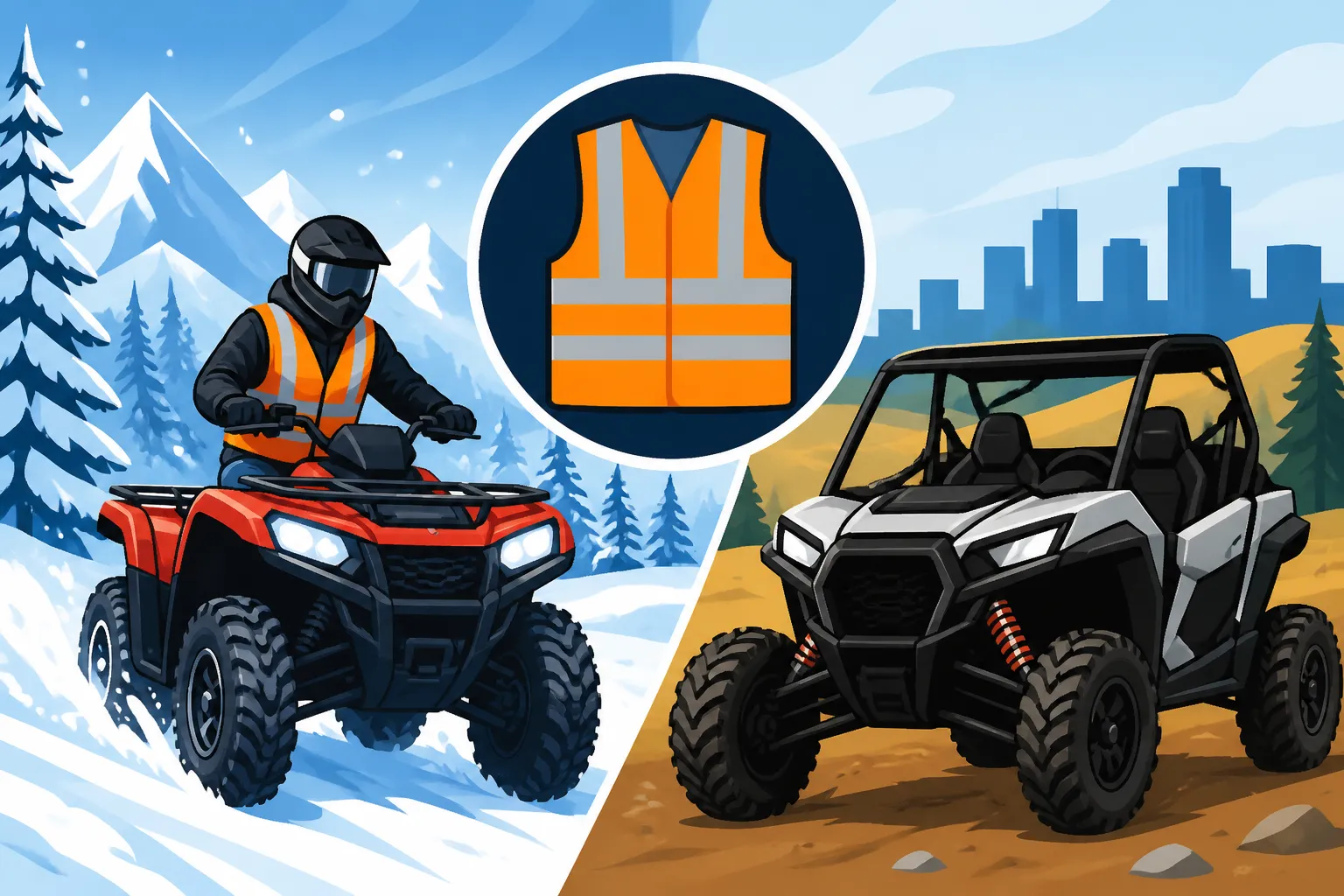
Alberta’s Public Lands Camping Pass is not just a summer requirement. If you camp overnight in a designated public-land area where the pass applies, winter camping counts too—even if you arrive by ATV, UTV, snowmobile, or truck. The key is to separate the camping pass from vehicle registration and riding rules, then confirm that the pass applies to your exact destination.
What “required in winter too” means
The pass requirement is tied to overnight camping in covered public-land areas, not to warm weather or a particular kind of vehicle. If you pitch a tent, stay in a camper, or otherwise camp overnight in an area where the pass is required, the season does not by itself make you exempt.
That matters for riders who treat a winter trip as a day ride with an unplanned overnight stop. A pass that was not needed for the ride itself may still be needed once you camp. The same distinction applies in summer: the camping pass is about camping, not a general permit to operate an ATV or UTV.
The pass applies in specified areas of Alberta public land, including parts of the Eastern Slopes and other designated regions. It does not mean every public-land campsite in the province is covered, and it does not automatically apply to every campground. Before setting out, check the current official map and rules for the exact location. Boundaries, access conditions, and seasonal closures can affect what is allowed at a particular site.
| Situation | Is the camping pass the main issue? | What to check |
|---|---|---|
| Riding for the day without camping | Usually no | Registration, insurance, trail access, and local rules |
| Camping overnight in a covered public-land area | Yes | Pass coverage, who needs a pass, and camping limits |
| Staying at a developed campground | Not necessarily | The campground’s booking and fee rules |
| Camping outside a covered area | Not necessarily | Local land-use and camping rules |
| Riding in winter without camping | Usually no | Vehicle requirements, route access, and winter closures |
The pass does not open a closed road or trail, grant permission to cross private land, or replace required OHV documents. For riding requirements, see Alberta Registration Before Riding Crown Land and Alberta Requires Insurance on Public Land. For the pass itself, Alberta’s Public Lands Camping Pass explains the broader program.
How to check whether your winter destination is covered
Start with the place you plan to sleep, not just the trailhead or staging area. A route may pass through different land types, and a popular staging area does not tell you whether an overnight camp farther along the route is covered by the pass requirement.
Check the official public-land information for the exact zone or camping location. Look for the pass boundary, permitted camping areas, seasonal restrictions, and any local notices. A map downloaded before leaving is useful because mobile service can be unreliable in backcountry areas. If you are unsure whether a site is inside the covered area, ask the responsible land office before travelling rather than relying on a general description of a region.
Also distinguish between random camping and a designated or developed campground. They can have different rules and booking requirements. A public-lands camping pass should not be assumed to cover a campground fee, reserve a site, or authorize camping in a place where camping is otherwise prohibited. Check the rules for the specific campground or recreation area.
For visitors, a home-province vehicle registration or out-of-province plate does not settle the camping-pass question. The pass relates to camping in covered Alberta public-land areas, while vehicle reciprocity and insurance are separate issues. Riders staying for a short trip can review Alberta Visitors Under 30 Days and Alberta Reciprocity for Visiting Riders, then confirm camping requirements for the destination.
Before winter travel, check for closures and access limits as well as the pass boundary. Snow can hide signs, make a route difficult to identify, or encourage riders to use an unofficial track. A route visible on a phone map is not automatically open to motorized use. Review Checking a Zone Before You Go and Alberta Trails Closed in Winter when planning a ride.
Buying and carrying the right pass
The Public Lands Camping Pass is associated with a Wildlife Identification Number, or WIN, Card. If you do not already have one, allow time to obtain it before trying to buy a pass. Details on how the card works are covered in Alberta’s WIN Card Explained and Why You Need a Wildlife Identification Number First.
Use the official purchase channel and read the pass conditions carefully. Confirm the start and expiry dates, the area it covers, and who in your camping party needs an individual pass. Do not assume that one pass purchased by the driver covers every adult in a group. Requirements can depend on the pass type and current program rules, so verify them when you buy. Does Every Adult in Camp Need Their Own Pass? explains the per-person question.
Keep proof accessible during the trip. If the program provides a digital record, save it where you can retrieve it without cell service, and consider carrying any required printed or other proof as well. A screenshot may help you locate purchase information, but do not assume it is accepted as proof unless the current instructions say so. Details about showing a pass on a phone are in Showing Your Camping Pass on a Phone App.
Buying a pass does not complete the rest of your winter-trip preparation. Check that the vehicle is registered where required, that insurance is in place, and that you have the documents needed for the ride. Carry them in a way that keeps them readable and accessible in cold or wet conditions. An officer may ask for proof of compliance with applicable rules; What to Show an Officer on Alberta Public Land covers the kinds of documents to think about.
Plan the ride and the overnight stop separately
A winter outing can involve several different permissions and practical checks. Treat the ride, the camping location, and the vehicle as separate parts of the plan. That prevents a common mistake: assuming that a camping pass makes a route legal, or that a registered machine allows an overnight camp anywhere.
- Choose the route and overnight location. Confirm that motorized use is allowed on the route and that camping is allowed at the proposed site.
- Check the camping-pass boundary. Verify whether the overnight location is in a covered area and whether each adult in the party needs a pass.
- Review seasonal conditions. Look for closures, snow-related restrictions, and current fire or land-use notices. Winter access can change, and a route that was open on a previous trip may not be open now.
- Check vehicle requirements. Confirm registration, insurance, equipment, and any rules that apply to the specific area. A camping pass does not replace those obligations.
- Prepare for limited service. Save maps and proof of purchase before leaving, and make sure the group knows where the permitted route and campsite are.
Winter conditions make this separation especially useful. Snow can obscure trail markers and campsite boundaries, while short daylight hours leave less time to solve a navigation or access problem. Carry a map you can use offline, and have a backup plan if the intended site is closed or unsafe. Avoid treating tracks left by other riders as proof that a route is open.
If you are staying at a developed campground, check its own rules before you go. The site may have separate fees, reservations, or winter operating limits. If you are random camping, check the rules for the particular public-land area, including any distance limits, duration limits, or restrictions on where a vehicle may be parked. Alberta Random Camping Rules Explained and Alberta Camping Limits in One Spot are useful starting points, but the current rules for the location should guide your decision.
The practical takeaway is simple: the pass requirement does not take a winter break, but it only applies where and when the program says it does. Confirm the campsite’s location, carry the required proof, and handle vehicle and trail rules separately. That approach is more reliable than assuming either that every winter camp needs a pass or that winter travel is automatically exempt.
Disclaimer
This article is for general informational purposes only and does not constitute professional advice. Laws, prices and regulations vary by location and change over time. Consult a qualified professional for guidance on your specific situation.