Alberta Penalties for No Helmet
Alberta’s helmet rules can turn a casual ATV or UTV ride into an unexpected ticket if a rider or passenger is not wearing an approved helmet. The key is knowing when the rule applies, what the commonly cited fine covers, and how to avoid confusing a helmet that looks suitable with one that meets Alberta’s requirements.
When Alberta Requires an OHV Helmet
Alberta generally requires people operating or riding as passengers on an off-highway vehicle on public land to wear an approved helmet. That can include ATVs, quads, dirt bikes and side-by-sides. A helmet rule is not limited to fast riding or difficult trails: if your ride is in a place where the requirement applies, plan to wear one even at low speed.
Public land is broader than a maintained recreational trail. Depending on the location, a ride on a public-land route, staging area or other open area may be covered. A route’s appearance does not tell you whether it is private land, public land or a highway under the law. Rules for riding a ditch, road or other right-of-way can involve separate restrictions as well. Check the local route rules before riding, and see Alberta ATV Helmet Law Explained for a closer look at the general helmet requirement.
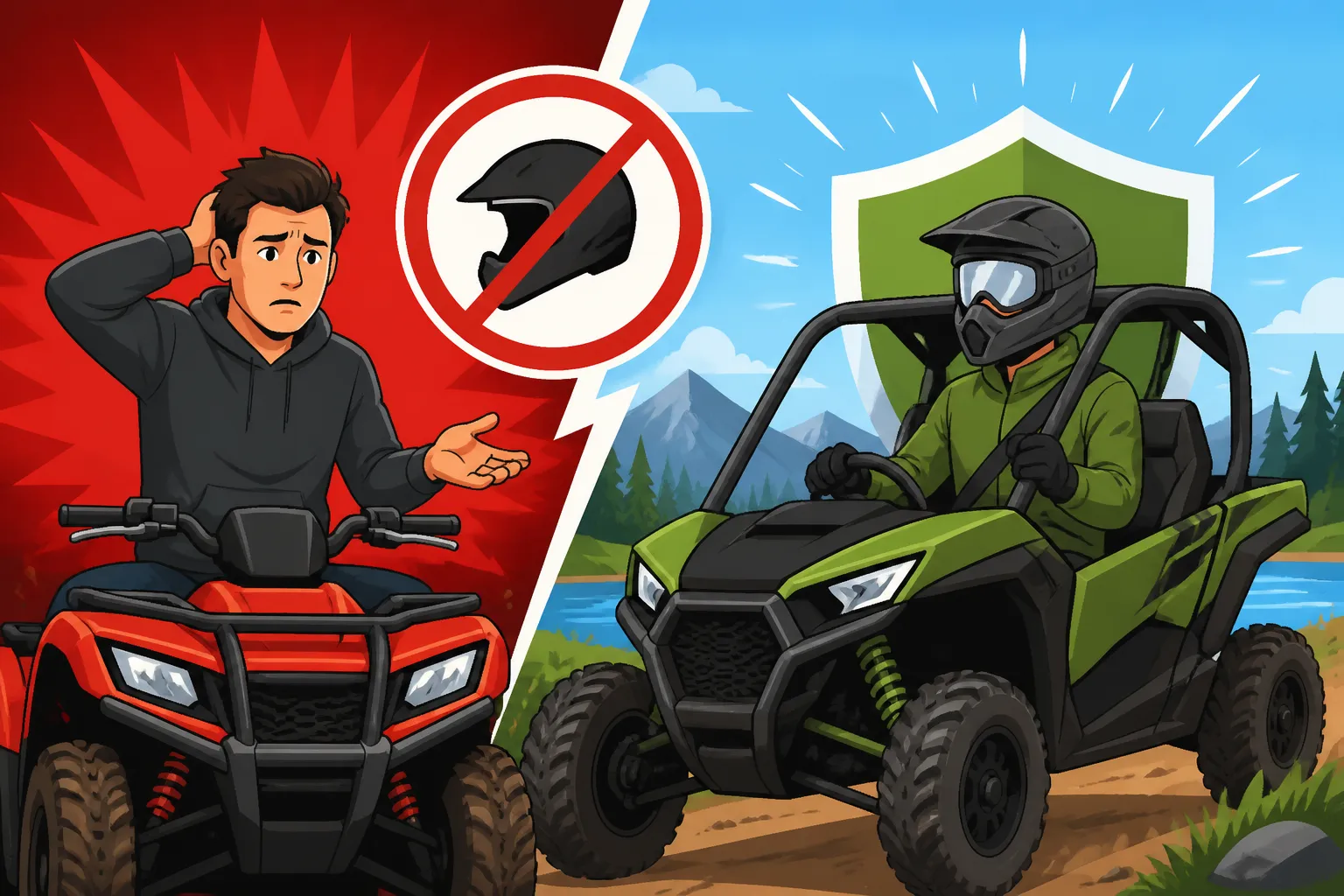
A helmet should be fastened and worn properly, not simply carried on the machine or resting loosely on the rider’s head. A helmet that comes off in a fall offers little protection and may not satisfy the requirement. The same practical rule applies to a passenger: do not assume the driver’s helmet covers the person riding behind them.
| Situation | What to keep in mind |
|---|---|
| Riding an ATV on public land | Wear a properly fastened helmet that meets an approved standard |
| Carrying a passenger | The passenger needs their own compliant helmet |
| Riding a side-by-side | Do not assume a roof, cage or seat belt automatically replaces a helmet |
| Riding only on private property | The public-land requirement may not apply, but other rules and safety risks still matter |
| Relying on an exemption | Confirm that the specific exemption fits the rider, machine and activity |
Helmet requirements and exemptions can be more specific than a quick summary can cover. For example, Alberta has limited exemptions tied to particular circumstances, and they should not be treated as blanket permission for anyone to ride without a helmet. Read Alberta Helmet Exemptions Explained if you believe an exception may apply. For passengers, also check Alberta Rules for Passengers on a Quad and Do You Need a Helmet in a Side-by-Side?.
A vehicle’s design does not, by itself, settle the helmet question. A side-by-side’s rollover protection structure, doors or seat belts may affect how the machine is operated, but riders should not assume those features remove the helmet requirement. Verify the rule for the machine and situation before setting out.
What the No-Helmet Penalty Means
The commonly cited Alberta fine for a helmet violation is $93. That amount is associated with the ticket, not a general estimate of every possible consequence. Fine schedules and enforcement details can change, so check the current official information or the amount printed on a ticket. Alberta Helmet Fine Amount covers the fine question in more detail, while Alberta Helmet Fines and How They Are Issued explains the enforcement context.
A ticket is a provincial offence matter, not a reason to treat the rule casually. The consequences can depend on what the officer alleges, who was riding, the circumstances and the options shown on the ticket. If a passenger is not wearing a helmet, do not assume only the driver could be affected. Read the ticket carefully to see who is named and what response process applies.
The fine also does not capture the main risk: a helmet violation often means someone is riding without important head protection. A low-speed fall, a collision with another machine or a sudden stop can cause serious injury. The fact that a trail seems easy or the ride is short does not make an unhelmeted trip safe.
An officer may check compliance during a stop or while dealing with another issue on public land. Helmet checks can happen alongside questions about insurance, registration, equipment or whether the route is open to OHVs. Carrying the right paperwork does not make an unapproved helmet acceptable, and a helmet does not resolve unrelated violations. See Alberta Officer Checks at a Staging Area for the kinds of checks riders may encounter.
If you receive a ticket, use the instructions and deadlines printed on it. The available options may include paying or disputing the ticket through the stated process. Do not ignore it or assume a verbal explanation has changed the deadline. If you plan to dispute the allegation, keep relevant information, such as photos of the helmet label, the machine and the riding location, and follow the formal process described on the ticket.
Choosing a Helmet That Meets the Rule
A helmet can look substantial and still fail to meet the legal standard. Check for the certification or approval marking required for Alberta OHV use rather than relying on the product name, appearance or a seller’s broad description. Alberta’s recognized standards are a separate question from whether the helmet fits well, is comfortable or is advertised for motorsports. Start with Alberta CSA Helmet Standards and Buying a CSA-Approved Helmet Before an Alberta Ride when checking what to look for.
Inspect the helmet itself, not just the packaging or online listing. The label should be present and readable, and the helmet should be in sound condition. A cracked shell, damaged liner, missing strap or loose buckle can make a helmet unsafe even if it originally carried an approved marking. If a helmet has taken a significant impact, do not assume it remains protective because the damage is hard to see.
When shopping, verify the exact model and standard before buying. Listings on Amazon and other marketplaces can combine product versions, use generic wording or show images that do not match the item shipped. Check the manufacturer’s information and the physical certification label when it arrives. If the label or model details do not match what you expected, resolve that before riding rather than hoping an officer will accept the listing as proof.
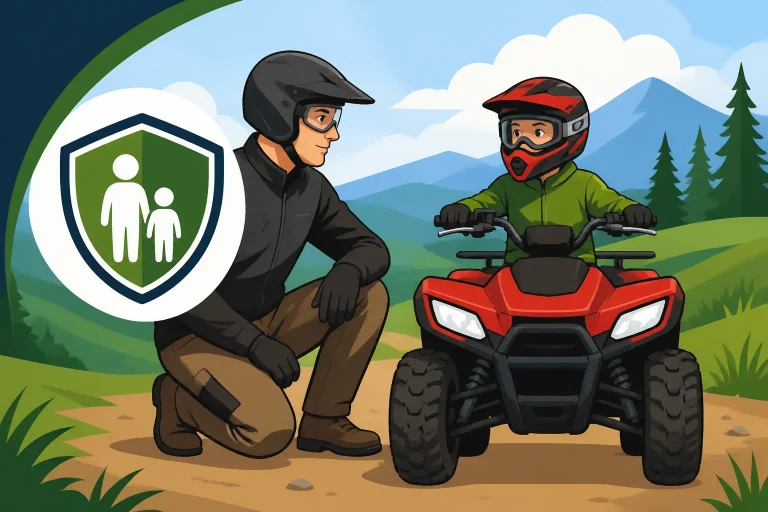
Fit matters just as much as the marking. A helmet should sit securely, remain stable when the rider moves their head and have a chin strap that fastens properly. Do not buy one for a child to “grow into” if it moves around now. A passenger needs a helmet that fits them too; sharing a helmet that is the wrong size or cannot be adjusted safely is not a good workaround.
It can help to check everyone’s gear before leaving the staging area. Confirm each rider has a helmet, the certification label is intact, the chin strap works, and the helmet fits the person who will wear it. That simple check is easier than trying to borrow equipment at the trailhead or explain a missing helmet during an enforcement stop.
Exemptions, Private Property and What to Do Before Riding
Some Alberta helmet exemptions apply only in defined circumstances. They are not a general choice riders can make because the trip is short, the machine is slow or the rider is experienced. If an exemption is relevant, confirm the exact conditions and keep in mind that a rule applying to one rider or activity may not apply to another person on the same machine.
Private property is different from public land for some OHV rules, but “private” should not be guessed from the look of the ground. A trail crossing a ranch, lease or work area may have separate ownership and access conditions. Permission to be on land does not automatically settle every safety or legal requirement. If the ride leaves private property or connects with a public route, check what applies along the entire route.
Before a ride, use this short checklist:
- Identify whether the planned route is public land, private property or a highway/right-of-way, and check the rules for each part.
- Confirm that every rider and passenger has a helmet with a marking that meets Alberta’s applicable standard.
- Check fit, condition and the chin strap; replace damaged or questionable gear.
- Review any exemption carefully rather than assuming it applies.
- Make sure passengers are allowed on the machine and that each person has the required safety equipment.
- If stopped or ticketed, follow the instructions on the ticket and verify current requirements through an official source.
The safest approach is straightforward: wear a properly fitted, approved helmet whenever the law requires one, and have passengers do the same. It reduces the chance of a ticket and provides meaningful protection in a crash. For related rules on equipment and riding locations, see Alberta Equipment Required on Public Land and Alberta Rules for Riding Crown Land.
Disclaimer
This article is for general informational purposes only and does not constitute professional advice. Laws, prices and regulations vary by location and change over time. Consult a qualified professional for guidance on your specific situation.