Is a Voluntary Rider Course Worth the Money?
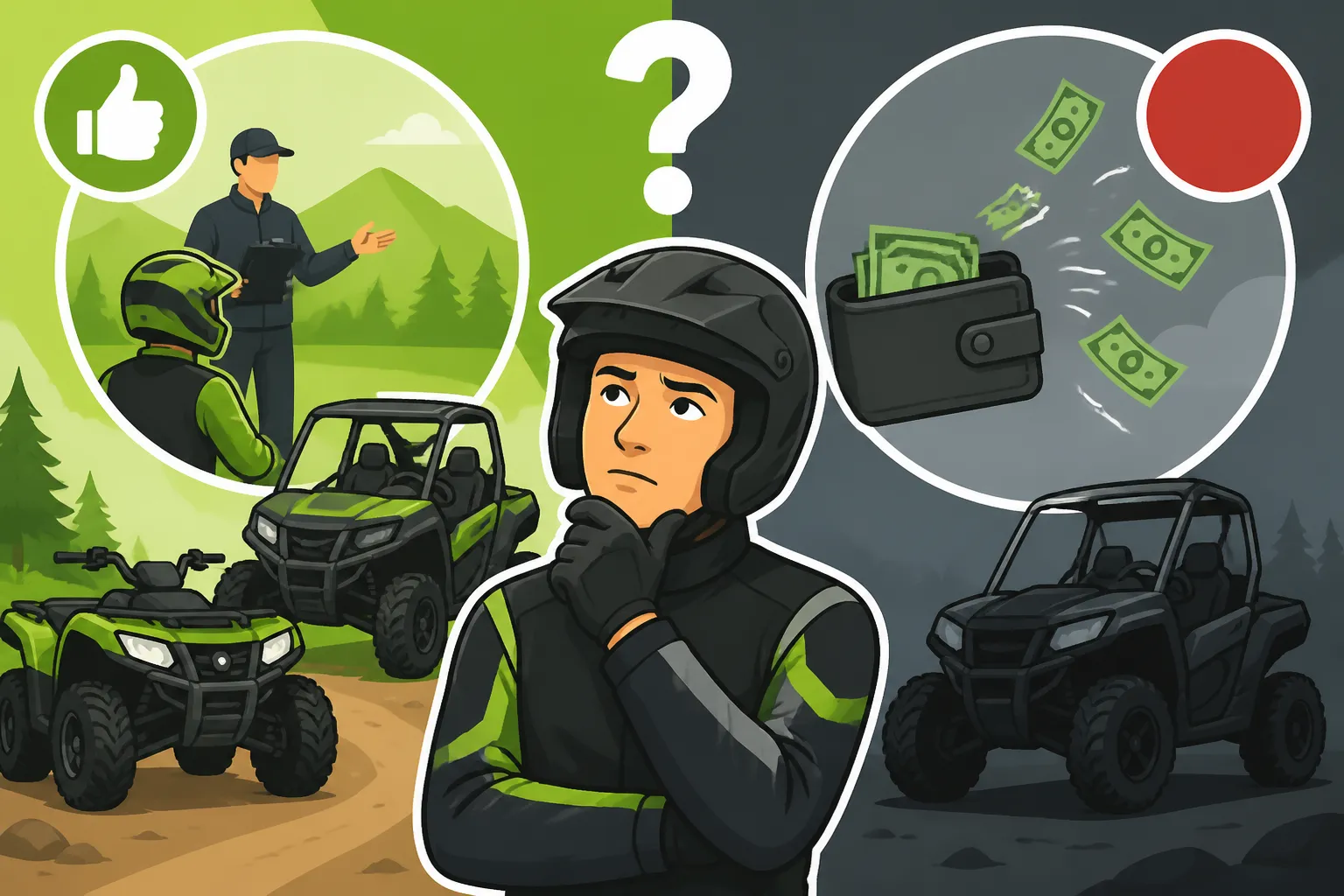
A voluntary rider course can feel like an optional expense when you already know how to operate a quad or side-by-side. In Alberta, the useful question is not whether training is required, but whether it could help you ride with better control, make safer decisions and avoid costly mistakes. Here’s how to weigh the course against your experience, riding plans and budget.
What a voluntary rider course can teach
Alberta does not require every recreational ATV or UTV rider to complete a safety course before riding. That does not mean training has no value. A course can provide structured practice and feedback that’s hard to get from watching videos or learning informally from friends. For the legal distinction, see Alberta Has No Mandatory Safety Course.
Course content and format vary. Some programs are built for young riders, while others suit adults who are new to off-highway vehicles or want a refresher. A provider may cover machine controls, pre-ride checks, basic handling, braking, turning, hills, obstacles, passenger safety and decisions about when not to proceed. Ask what the specific course includes rather than assuming every provider teaches the same skills.
The main advantage is guided practice. A rider can learn, for example, how changing body position affects stability, why speed matters when cornering, and how to choose a safer line over uneven ground. An instructor can spot habits that a rider may not notice, such as keeping a thumb on the throttle while braking, looking down at the front tires, or approaching a slope without considering a safe exit.
Training can also make the difference between understanding a rule in theory and applying it on a ride. A course may discuss protective gear, riders’ limits, machine capacity and common hazards. But it is not a substitute for checking the rules that apply to a particular place. A course instructor may not cover every local restriction, road bylaw, land closure or permit requirement.
| A course may help with | It does not automatically provide |
|---|---|
| Basic controls and handling practice | Permission to ride on a particular road or trail |
| Feedback on riding habits | A licence or exemption from applicable laws |
| Pre-ride inspection routines | Registration, insurance or other required documents |
| Awareness of common hazards | A guarantee against crashes or injuries |
| Confidence with foundational skills | A universal insurance discount or certification recognized everywhere |
For Alberta riding, legal preparation is a separate task. Requirements can depend on where you ride, the machine, your age and the type of land. Before setting out, review Alberta Rules for Riding Crown Land and check local restrictions. If you’re not sure what papers you should have with you, What to Show an Officer on Alberta Public Land is also relevant.
When the cost is likely to be worthwhile
A course is more likely to be worth paying for if it addresses a real gap in your experience. The decision is less about whether you are a “beginner” and more about whether you can safely handle the situations you expect to encounter.
You are new to riding
A new rider may understand how to start and steer a machine but still have little practice with braking, turns, slopes or uneven ground. Training offers a chance to build those fundamentals in a controlled setting before attempting more demanding terrain. This can be especially useful if you are moving from a smaller youth machine to a larger quad or learning to operate a side-by-side.
Experience with cars, motorcycles, snowmobiles or farm equipment can help, but it does not make every off-highway riding skill automatic. An ATV can shift beneath the rider, and the machine’s handling depends on the surface, slope, load and speed. A side-by-side has different controls and occupant-protection considerations. A course should be relevant to the type of machine you intend to ride.
You will ride with children or less experienced passengers
Training can help an adult plan for the whole group rather than focusing only on personal riding skill. That may include choosing a suitable route, setting expectations, recognizing when a young rider is tired or overwhelmed, and keeping the group within each rider’s ability.
However, a course does not change legal age, supervision or passenger rules. Those need to be checked separately. See Alberta Supervision Rules for Young Riders for information about supervision, and Alberta Rules for Passengers on a Quad for passenger considerations. Always follow the machine manufacturer’s seating and capacity guidance as well.
You plan to ride challenging or unfamiliar terrain
A rider who mostly uses flat, familiar private land may have different training needs from someone planning trips through mud, hills, rocks or remote trails. If your plans involve tougher terrain, look for a course that includes practical exercises relevant to those conditions. Ask whether you will practice skills on the type of machine you ride and what the training environment is like.
A course is not a ticket to tackle harder routes. Confidence can grow faster than judgment, especially after a short session. Keep choosing routes that match your current ability, and build up gradually. For trail planning, Alberta Trail Difficulty Ratings can help you think about whether a route fits your group.
You have been riding for years but never received feedback
Time in the saddle can improve familiarity without correcting every habit. A refresher may be useful if you have not ridden for a long period, have changed machine types, or want an instructor to assess your approach to routine manoeuvres. It can also help a group of friends agree on shared safety practices instead of relying on different assumptions.
A course may be less useful if it spends most of its time on material you already know and offers little hands-on practice. Ask about the lesson plan and experience level before booking. A basic introductory program may be a poor fit for an experienced rider seeking advanced terrain skills.
How to decide whether a specific course is a good buy
Treat the course as a service you are comparing, not simply a certificate to collect. The best choice is one that suits your machine, experience and goals, and gives enough practical instruction to justify the cost.
- Define what you want to improve. Be specific: perhaps you want better low-speed control, safer hill decisions, confidence on a new machine or instruction for a young rider. A clear goal makes it easier to judge whether the course is relevant.
- Ask what the course covers. Request the outline, including how much time is spent practicing, what riding skills are taught and whether the course is designed for beginners or experienced riders.
- Confirm the machine and equipment arrangements. Find out whether participants use their own machine or one supplied by the provider. Ask what protective equipment is required, whether any equipment is provided, and what happens if your machine is not suitable for the exercises.
- Check instructor qualifications and class setup. Ask about the instructor’s relevant training and experience, the number of participants, and how feedback is provided. A smaller group may allow more individual attention, but the actual teaching format matters more than a group-size claim alone.
- Read the cancellation and weather terms. Outdoor instruction can be affected by conditions, closures or other safety concerns. Understand how rescheduling, cancellation and refunds are handled before paying.
- Compare the full cost. The course fee may not be the only expense. Consider travel, equipment you need to bring, time away from work and any machine transport costs. Provider fees and included items can change, so confirm current details directly with the course organizer.
- Check what the certificate means. Ask whether you receive a completion record and where it is recognized, if recognition matters to you. Do not assume a course completion document replaces a legal requirement, qualifies you for a benefit or proves that you can safely ride every kind of terrain.
Alberta options may be offered through safety councils and other training providers. Alberta Courses Through Safety Councils and Taking the Canada Safety Council’s Rider Course are useful places to start researching. Verify current course availability, content and eligibility directly with the provider.
A course’s value is not measured only by whether you receive a certificate. Consider whether it gives you practical instruction you can apply repeatedly. If the class includes useful drills, clear feedback and decision-making practice, the benefit may continue long after the session. If it is mostly a lecture and you already know the material, another format may serve you better.
When a course may not be the right next expense
Voluntary training is not automatically the highest-priority purchase for every rider. If you already have solid foundational skills and mainly need to confirm your ride is legal and properly equipped, spend time on those practical checks first. Registration, insurance where required, helmets, machine condition and location-specific rules are separate responsibilities. See Alberta Insurance Requirements on Public Land and Alberta Equipment Required on Public Land when preparing for a public-land ride.
A course may also be a poor fit if the provider’s program does not match your machine or riding goals. A basic course for new riders may not offer much to someone looking for advanced instruction. Conversely, an advanced session can be overwhelming or unsafe for a rider who has not mastered basic controls. Ask before enrolling rather than assuming any course will meet your needs.
If cost is a concern, consider whether you can find an appropriate lower-cost training option, a youth-focused program, or a short refresher rather than a full course. You can also improve preparation by studying the owner’s manual, learning the machine’s controls and limits, checking equipment before each ride, and practicing basic manoeuvres in a safe, permitted area. These steps are helpful, but they are not the same as an instructor watching and correcting your technique.
Do not use informal advice from a friend as the sole measure of readiness. A companion may be an excellent rider but may not know how to teach safely, recognize a developing problem or explain why a particular manoeuvre works. Likewise, completing a course should not be treated as proof that a rider is ready for every route or condition.
For many riders, the decision comes down to the likely benefit. If you are new, returning after a long break, changing machine types, or responsible for less experienced riders, a relevant course can be a sensible investment in skill and judgment. If you are experienced and the course offers little new practice, your money may be better spent on a more tailored refresher or other safety needs. Either way, keep training and legal preparation separate: a course can help you ride more competently, but it does not replace checking Alberta’s rules for the machine and place you plan to ride.
Disclaimer
This article is for general informational purposes only and does not constitute professional advice. Laws, prices and regulations vary by location and change over time. Consult a qualified professional for guidance on your specific situation.