Fourteen Days and Then Move
Alberta’s public-land camping limit can be easy to misread when you arrive with an ATV or side-by-side and plan to ride from camp. The key is that camping duration applies to your camping unit and location, while riding rules apply separately. Here’s how to understand the stay limit, the required move, and the permits and checks to sort out before you settle in.
How Alberta’s 14-day camping limit works
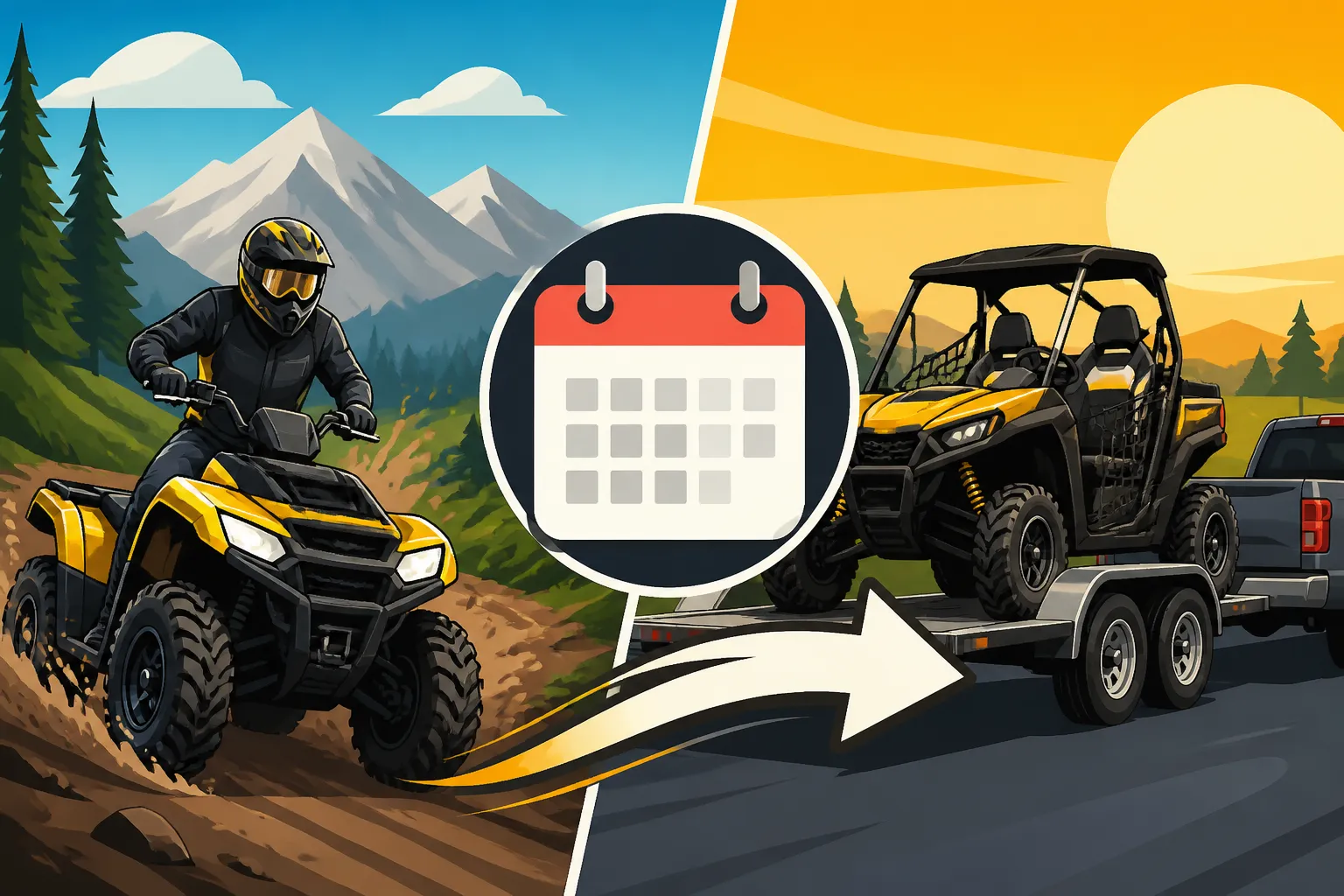
According to the Government of Alberta, campers may stay in the same location for a maximum of 14 days. After that, they must move their camping unit at least 1 km away for a minimum of 72 hours.
That means the rule is about where your camping unit is situated and how long it remains there. It is not simply a limit on how many days you can spend camping somewhere in Alberta. Once you reach the maximum stay at a location, the required move is specific: relocate at least 1 km and remain away from the original location for at least 72 hours.
| Camping rule | What it means | Source |
|---|---|---|
| Maximum stay at the same location | 14 days | Government of Alberta |
| Required distance after the maximum stay | At least 1 km from the previous location | Government of Alberta |
| Minimum time away from the previous location | 72 hours | Government of Alberta |
| Camping pass for overnight stays | Campers aged 18 and older need a Public Lands Camping Pass | Government of Alberta |
These are separate requirements. Moving your camping unit does not replace the requirement to have a camping pass, and having a pass does not extend the time you can remain in one location. For a wider overview of where the limit fits with other rules, see Alberta Camping Limits in One Spot and Alberta Random Camping Rules Explained.
What counts as moving
The rule refers to moving your camping unit at least 1 km from the place where you stayed. In practice, plan the move around the unit itself, not just a short ride away from camp or a change in where you park your ATV. If your camper, trailer, or other camping setup has not been moved the required distance, riding elsewhere during the day does not satisfy the move requirement.
After relocating, the camping unit must remain away from the original location for the full minimum period. A quick trip out and back, or shifting the setup only a short distance, does not meet the stated distance and time requirements. The detail matters because it is possible to move camp and still misunderstand how long to stay away.
If your group is using several separate camping units, make a plan for each one rather than assuming that moving one vehicle changes the location of the entire camp. When the layout or site boundary makes it unclear how to measure the distance, check the current guidance with the relevant public-land authority before relying on an estimate.
The practical option is to choose a new camp location clearly beyond the minimum distance, keep a record of when you moved, and avoid returning to the original location until the required period has passed. For more on that specific part of the rule, see Moving a Kilometre Away and Staying Gone Seventy-Two Hours.
The rule applies even when you are riding
An ATV or side-by-side can make it tempting to treat camp as a flexible base: ride out, find another spot, and come back to the same camp. But the camping limit concerns the camping unit’s location, not where the machine has travelled. A day ride away from camp does not itself move the camp.
Likewise, riding to another area for a while does not turn the original location into a new one. If you are approaching the limit, plan a genuine relocation of your camping setup and account for the time you must remain away. If the new spot is in a different recreation area or managed zone, check whether camping is allowed there and whether it has separate conditions.
The camping rule also does not grant permission to ride wherever you choose. Camp location, vehicle access, and trail use are different questions. Check the applicable land-use rules and route before riding from camp; Alberta OHV Trails: Riding Public Land explains the public-land riding context.
Camping passes and choosing a legal place to stay
The Government of Alberta requires campers aged 18 and older to obtain a Public Lands Camping Pass for overnight stays. The pass requirement and the 14-day limit work together: the pass addresses the camping authorization, while the duration rule governs how long you may remain in one location.
Do not assume that having a pass means every open-looking area is an appropriate campsite. Public land includes places with different access and use conditions, and a nearby trail, road, or staging area is not automatically a camping site. Before you unload, confirm that camping is permitted at the location and whether the area has designated sites or other restrictions.
Some Public Land Recreation Areas, or PLRAs, are located where people gather for day use, random camping, or trail access. The Government of Alberta describes PLRAs as small areas used to help manage high recreational use on public land; some may have limited amenities such as information kiosks, signs, or camping facilities. Do not assume every PLRA provides camping space or that its amenities remove the need to follow the applicable rules.
Most PLRAs are located within Public Land Use Zones, according to the Government of Alberta. A zone’s trail and camping conditions may affect your plans, so check the area information before setting out. You can also review Alberta Public Lands Camping Pass for pass-related information and Checking a Zone Before You Go for a useful way to think about confirming where you intend to ride.
Keep camping and riding permissions separate
A camping pass is not an OHV registration, an insurance policy, or permission to ride a closed route. Those requirements address different parts of your trip. According to the Government of Alberta, OHVs used on public land must be registered and insured, and must have a licence plate, working headlight and taillight, and a proper muffler with a spark arrestor.
Rules can also vary depending on whether you are travelling on a designated trail or elsewhere on public land. The Government of Alberta says motorized users on provincial trails, except snow vehicle users, must stay on the trail tread. Provincial trails have separate use rules, so review the route and any current closures rather than treating a camping location as permission to explore every nearby track.
If you are visiting Alberta with a machine registered elsewhere, keep the visitor rules in mind too. The Government of Alberta requires out-of-province visitors to carry proof of residency and to produce valid proof of insurance if an enforcement officer asks. Visitors staying in Alberta for more than 30 consecutive days must follow Alberta’s registration and licensing requirements. See Alberta Visitors Under 30 Days if your trip crosses that boundary.
Plan the move before your camp reaches the limit
Leaving the relocation until the last moment can turn a straightforward rule into a rushed choice. A campsite may be busy, weather can make access harder, and a suitable alternative may not be close to the place you intended. Build the move into the trip plan while you still have options.
A simple approach is to:
- Choose the initial location carefully. Confirm that overnight camping is allowed there and check whether the area has designated sites or restrictions.
- Track your arrival date. Keep a note of when the camping unit was set up so the group is not guessing as the stay approaches its maximum.
- Identify a possible next location. Check that it is at least 1 km from the original location and that camping is allowed there.
- Plan the time away. The camping unit must stay away from the original location for at least 72 hours after the required move.
- Keep the pass and vehicle documents accessible. A camping pass does not replace the registration and insurance required for an OHV ride.
The relocation plan should be about the camping unit, not only the ride. If you are travelling with a trailer, camper, or other setup, decide how it will be moved and where it will go. If a group has multiple units, make sure everyone understands which units are moving and where they will stay. Clear coordination can prevent one part of the group from treating a ride to a new area as though the camp has relocated.
Consider the route to the new location as well. A destination that is far enough away for the camping rule may still be inaccessible or unsuitable for your vehicle. Check road and trail access, seasonal restrictions, and the conditions at the destination before moving a loaded setup. If maps are part of your plan, georeferenced maps can be used offline on mobile devices through the Avenza mobile app, according to the Government of Alberta. Save the information before losing service, and do not treat a map as a substitute for checking current closures.
Keep a simple record
A note of the original location, the date you arrived, and the date and destination of your move can help your group follow the rule consistently. A map pin or written description can also reduce confusion if different drivers are handling the move. This is practical recordkeeping, not a special permit or a replacement for official instructions.
For a visit that spans several locations, track each camp separately. Reaching the limit at one location does not mean you must stop travelling, but you do need to meet the relocation requirement before returning to that original location. If you are uncertain about a boundary, distance, or whether the next place permits overnight use, confirm before moving rather than relying on a guess.
A final pre-trip check for ATV and side-by-side campers
The stay limit is only one part of a public-land trip. Before leaving, check both the camping side and the riding side so that the group does not arrive with a plan that works for one but not the other.
For camping, confirm that the location permits overnight stays, obtain the required Public Lands Camping Pass if applicable, and plan the move at least 1 km away after the maximum stay. According to the Government of Alberta, campers aged 18 and older need the pass, and the stay at one location is limited to 14 days before the required move for at least 72 hours.
For riding, confirm the designated route and current access conditions. The Government of Alberta requires public-land OHVs to be registered and insured, with a visible licence plate, working headlight and taillight, and a proper muffler and spark arrestor. Riders must also wear a Canadian Standards Association-compliant helmet when riding on public land. If the group includes young riders, check the supervision rules before departure; the Government of Alberta says off-road drivers on public land must be at least 14 unless closely supervised by an adult aged 18 or older.
Use this short checklist before setting up:
- Is overnight camping allowed at the intended location?
- Does each adult camper who needs one have a Public Lands Camping Pass?
- Is the group tracking how long the camping unit has stayed there?
- Is the next location at least 1 km from the previous one?
- Can the camping unit stay away from the previous location for at least 72 hours?
- Are the OHVs registered, insured, and equipped as required?
- Have you checked the trail designation, access, and current conditions?
For documents, maps, and route details, keep what you need available offline where possible. A paper copy or downloaded record can be useful when service is unreliable. The aim is not to carry every piece of trip information in one place, but to make sure the person moving camp and the people riding know the plan.
If the local conditions or the meaning of a site boundary are unclear, ask the appropriate public-land authority before the trip. The relocation rule is simple when the original location, minimum distance, and time away are all clear. Planning those details early leaves more room to enjoy the ride and less chance of having to improvise a move.
Sources
- Government of Alberta — Motorized recreation on public land | Alberta.ca (checked November 3, 2026)
- Government of Alberta — McLean Creek Off-Highway Vehicle PLUZ | Alberta.ca (checked November 3, 2026)
- Alberta.ca — Port obligatoire du casque pour les véhicules hors route | Alberta.ca (checked November 3, 2026)
Disclaimer
This article is for general informational purposes only and does not constitute professional advice. Laws, prices and regulations vary by location and change over time. Consult a qualified professional for guidance on your specific situation.