Finding the CSA Label Inside Your Helmet Shell
Navigating the world of off-highway vehicle (OHV) riding in Alberta is exhilarating, but it comes with a crucial responsibility: ensuring your gear meets the legal safety standards. One of the most common headaches riders face is trying to confirm their helmet is up to snuff, especially when it comes to finding that elusive certification label. It's not always obvious where manufacturers tuck away those tiny stickers, and a quick glance often leaves you scratching your head. This guide is here to cut through the confusion, helping you confidently locate the Canadian Standards Association (CSA) label or other accepted certifications inside your helmet, so you can ride with peace of mind, knowing you're fully compliant with Alberta's rules.
Why Helmet Certification Matters in Alberta
Riding an ATV or UTV in Alberta offers unparalleled freedom, but it's not a free-for-all when it comes to safety gear. The province has clear expectations, particularly regarding head protection. It’s not just about avoiding a ticket; it’s about protecting your most valuable asset when you're out on the trails or exploring the backcountry.
The Legal Requirement for OHV Helmets
In Alberta, wearing an approved helmet is not optional when operating an off-highway vehicle on public land. This isn't just a suggestion from a safety organization; it's the law. Specifically, the Off-highway Vehicle Regulation, under the Traffic Safety Act, mandates helmet use. This rule has been firmly in place since May 15, 2017, and applies to virtually all riders on public lands, whether you're ripping through a Public Land Use Zone (PLUZ) like McLean Creek or just crossing a highway ditch. You can learn more about this by reading [Alberta Helmets Required Since May 2017]. Failing to comply can lead to fines and, more importantly, put you at severe risk of serious injury.
This legal requirement isn't just about having a helmet; it's about having an approved helmet. An approved helmet is one that meets specific safety standards. These standards ensure that the helmet has been rigorously tested to withstand impacts, penetration, and provide adequate coverage. Without that certification, a helmet might look the part, but it might not offer the protection you truly need if things go sideways on the trail. It's a critical distinction that many new, and even some experienced, riders sometimes overlook.
Understanding CSA Standards for Rider Safety
When we talk about "approved" helmets in Alberta, the Canadian Standards Association (CSA) is one of the primary certifications referenced. The CSA Group is a not-for-profit standards organization that develops and publishes standards in various fields, including safety. For helmets, their standards ensure a certain level of impact absorption, penetration resistance, and retention system strength. If you see a CSA label, it means the helmet has passed these stringent tests. This is a big deal because it takes the guesswork out of knowing if your helmet can actually perform when it matters most.
The CSA standard isn't just some arbitrary benchmark; it's rooted in extensive research and testing designed to minimize head injuries in real-world scenarios. A CSA-approved helmet is built with specific materials and construction techniques to dissipate energy from an impact, protecting your skull and brain. It’s a mark of quality and reliability that tells you the helmet is designed for the kinds of forces it might encounter during an OHV incident. Getting a CSA-approved helmet is a foundational step in safe riding, and you can dive deeper into these requirements by checking out [Alberta CSA Helmet Standards].
The Consequences of Riding Without a Certified Helmet
Ignoring Alberta's helmet law, or riding with a helmet that isn't properly certified, comes with a stack of potential problems, both legal and personal. On the legal side, if an officer stops you on public land and your helmet doesn't bear an approved certification label, you could be facing a fine. We're not talking about a slap on the wrist either; the fines for non-compliant helmets can be substantial. For instance, [Alberta's $93 Non-CSA Helmet Fine] is a common ticket amount, but the costs can add up quickly if other infractions are present.
Beyond the financial hit, the more severe consequence is the risk to your personal safety. A non-certified helmet simply hasn't proven it can protect you. In an accident, a helmet without proper certification might crack, fail to absorb impact effectively, or even come off, leaving your head vulnerable. This isn't just about scrapes and bruises; we're talking about potentially life-altering traumatic brain injuries. No one wants to end a great day of riding with a trip to the emergency room, or worse. So, taking the time to confirm your helmet's certification is an investment in your health and your continued ability to enjoy the sport.
Where to Look for the CSA Label Inside Your Helmet
Finding that certification label can sometimes feel like a scavenger hunt. Manufacturers often place them in discreet locations to keep them protected from wear and tear, but this also makes them tricky to spot if you don't know where to look. Don't worry, it's usually there; you just need to be a bit methodical.
Common Locations and How to Find Them
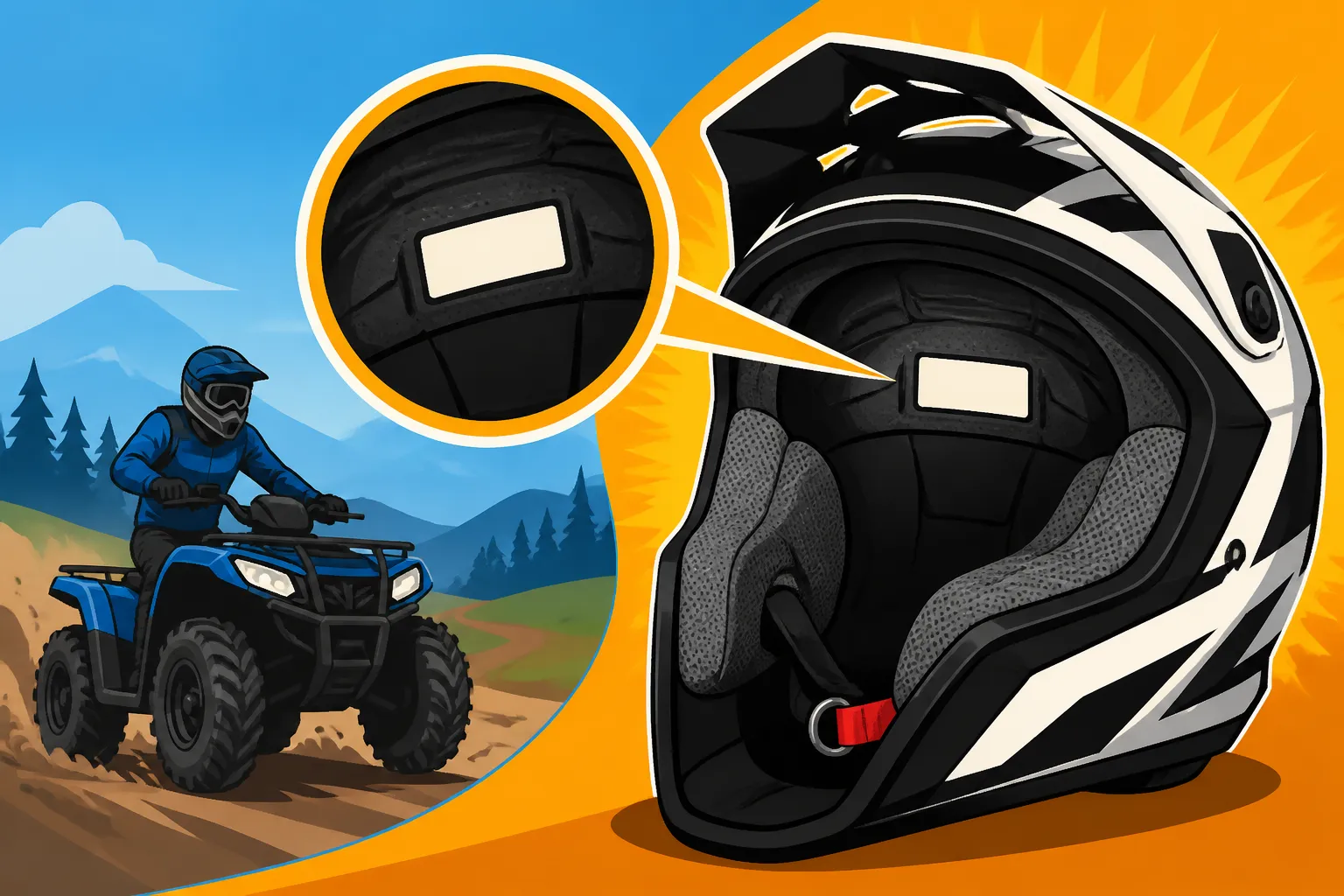
Most often, you'll find the CSA label, or other certification labels, sewn onto the chin strap, either near the buckle or where the strap attaches to the helmet shell. Sometimes it's printed directly onto the fabric of the strap itself. Another very common spot is on a small sticker or tag that is either sewn into the liner near the ear pads or tucked away on the back of the neck roll. You might need to gently peel back a piece of the liner, or lift an ear pad, to expose it. Be careful not to pull too hard or damage the liner in your search.
If your helmet has a removable liner, you might find the label printed directly on the EPS (Expanded Polystyrene) foam shell underneath the fabric. This is less common for certification labels, which are typically visible without disassembling the helmet, but manufacturer information or care instructions might be here. Always check around the base of the helmet, near the rim, and along the entire length of the chin strap. Some helmets have a small label on the outside, near the bottom edge, but for a CSA standard, it's almost always inside. This quest is part of the process when you're preparing for a ride, just like making sure your machine is fueled up or checking the condition of your tires. For guidance on buying a compliant helmet, see [Buying a CSA-Approved Helmet Before an Alberta Ride].
What the CSA Label Actually Looks Like
The CSA label itself is usually a small, rectangular tag, often white with blue or black text. It will clearly state "CSA" followed by a specific standard number, like "CAN3-D230-M85" or a more recent iteration. It might also include the year of the standard. It’s important to look for this specific identifier, not just any random tag inside your helmet. Manufacturers will also include other information, such as the helmet's size, date of manufacture, and material composition, but the key is that CSA standard mark.
Sometimes, the label might be part of a larger sticker that also lists other certifications, like DOT or ECE. The presence of the CSA mark is what you're primarily looking for for Alberta compliance. It won't be a large, flashy graphic; it's a functional piece of information, designed to be read when needed. Knowing what to look for makes the search much quicker and less frustrating. You're looking for an official stamp, not just a brand logo.
Dealing with Worn or Missing Labels
What happens if you can't find the label, or if it's so faded and worn that it's unreadable? This is a common problem, especially with older helmets or those that have seen a lot of use and sweat. If the label is illegible or missing entirely, your helmet, unfortunately, will not meet the legal requirements in Alberta. An officer needs to be able to visually verify the certification, and if they can't, it's the same as not having a certified helmet at all. This is where the frustration really sets in for many riders.
In such a situation, your safest and most compliant option is to replace the helmet. It’s an investment, but it’s an essential one for both legal compliance and your personal safety. A worn label can also be a sign that the helmet itself is older and its protective capabilities might be compromised. Helmet materials degrade over time, even without visible damage. Manufacturers generally recommend replacing helmets every 3-5 years, regardless of outward appearance. This is a hard truth for many, but your brain is worth more than the cost of a new helmet.
Beyond CSA: Other Accepted Helmet Certifications
While CSA is a key standard in Canada, Alberta's regulations are actually quite practical and inclusive, recognizing that many high-quality helmets are manufactured and certified to equally rigorous international standards. This flexibility allows riders a wider choice while still ensuring top-tier safety.
Exploring Snell, ECE, and DOT Standards
Besides CSA, Alberta accepts several other widely recognized helmet safety standards. These include:
- DOT (Department of Transportation): This is a mandatory standard for helmets sold in the United States. The DOT certification (FMVSS 218) means the helmet meets minimum performance requirements for impact absorption, penetration resistance, and retention system strength. It's often found on helmets specifically designed for the North American market.
- ECE (Economic Commission for Europe): The ECE 22.05 (and now 22.06) standard is internationally recognized and used in over 50 countries. It's known for being a very comprehensive and strict standard, often involving more rigorous testing than DOT. Helmets certified to ECE are common for both on-road and off-road riding globally.
- Snell: The Snell Memorial Foundation is a private, non-profit organization that performs more stringent, voluntary helmet testing than the DOT standard. A Snell certification (e.g., M2020) is often considered the "gold standard" by many riders, indicating a helmet that exceeds minimum legal requirements. Snell-certified helmets are often favoured by competitive racers.
These standards are all designed to protect against head injuries, each with its own specific testing protocols and benchmarks. For a detailed look at some of these alternatives, you might find [Snell and ECE Alternatives] helpful.
Why Alberta Accepts Multiple Standards
Alberta’s decision to accept multiple reputable helmet standards reflects a practical understanding of the global market for safety equipment. Helmets are imported from around the world, and many highly protective models are not specifically CSA certified but are still incredibly safe. By accepting DOT, ECE, and Snell, the province ensures that riders have access to a broad range of quality helmets without compromising on safety. The core principle is that the helmet must be certified to a recognized safety standard, ensuring it has undergone rigorous testing by an independent body.
This multi-standard approach also acknowledges that different types of riding, and different rider preferences, might lean towards helmets certified under one standard over another. Whether you choose a helmet with a DOT, ECE, or Snell label, the important thing is that it clearly displays one of these approved certifications. It removes unnecessary barriers for riders who might have purchased a helmet out-of-province or from an international retailer, as long as it meets a recognized safety benchmark.
What to Do If Your Helmet Has a Different Label
If you've found a label in your helmet, but it's not CSA, DOT, ECE, or Snell, you need to verify if that specific standard is accepted under Alberta's OHV regulations. While the mentioned certifications are the most common and widely recognized, there might be other less common but still accepted standards. The best course of action is to consult the Alberta government's official resources or speak with a local registry agent. They can provide the most current and accurate list of accepted certifications.
If your helmet only has an unfamiliar or unlisted certification, or no legible certification at all, then it's time to invest in a new one that clearly displays one of the accepted standards. Don't take chances with an unverified helmet. Your safety, and your wallet (considering potential fines), depend on having proper head protection. Just as you ensure your machine has all the required equipment, like a spark arrestor, checking your helmet's specific certification is a crucial step before hitting the trails. You can find more information about required equipment by consulting [Alberta Equipment Required on Public Land].
| Certification | Country/Region | Key Focus | Typical Placement | Recognition in Alberta |
|---|---|---|---|---|
| CSA | Canada | General safety (impact, penetration, retention) | Chin strap, liner | Yes (Primary Canadian Standard) |
| DOT | USA | Minimum performance for impact, penetration, retention | Back of helmet, inside liner | Yes |
| ECE | Europe (Int'l) | Comprehensive safety (impact, abrasion, retention) | Chin strap, liner | Yes |
| Snell | USA (Voluntary) | High-level performance, exceeds minimums | Inside liner, EPS foam | Yes |
Maintaining Your Helmet and Its Certification Information
Finding and verifying your helmet's certification is a critical first step, but it's just one part of ongoing helmet safety. Proper maintenance not only extends the life of your helmet but also helps ensure its protective qualities remain intact, and that its vital certification label stays readable.
Keeping Your Helmet's Interior Intact
The interior of your helmet, where the certification labels are typically found, is crucial for both comfort and safety. Over time, sweat, dirt, and general wear can degrade the padding and the liners. Many modern helmets have removable and washable liners, which is a fantastic feature. Regularly cleaning these according to the manufacturer's instructions helps prevent deterioration and keeps the interior fresh. When cleaning, be gentle around any labels or printed information to prevent them from fading or tearing. If your helmet doesn't have a removable liner, you can spot clean with a mild soap and water solution, being careful not to soak the internal components.
Beyond cleaning, ensure you handle your helmet with care. Avoid tossing it onto hard surfaces or letting it get banged around in your truck bed. Store it in a helmet bag when not in use. Small impacts, even if they don't seem significant, can compromise the integrity of the EPS foam liner, which is vital for absorbing energy. Taking care of your helmet, including its interior, means it will be there to protect you, and its certification will remain legible for when an officer needs to verify it.
When It's Time for a New Helmet
Knowing when to replace your helmet is just as important as knowing where to find its certification. Helmets have a finite lifespan, even if they haven't been in a major crash. Generally, manufacturers recommend replacing helmets every 3 to 5 years from the date of manufacture. The materials in the helmet, particularly the EPS foam and the adhesives, can degrade over time due to exposure to UV light, chemicals (from cleaning products, fuel, etc.), and simply the aging process. This degradation means the helmet may not perform as effectively in an impact.
You should always replace your helmet after any significant impact, even if there's no visible damage. Helmets are designed to absorb energy by deforming internally, and this deformation might not be apparent from the outside. Once a helmet has taken a hit, its ability to protect you in a subsequent impact is severely compromised. Look for cracks in the outer shell, frayed straps, or if the padding feels significantly more compressed. If you're ever in doubt about your helmet's condition, err on the side of caution and get a new one. Your head protection is not an area to cut corners.
Accessories That Complement Helmet Safety
While helmets are the primary piece of safety gear, other accessories can indirectly support your helmet's longevity and overall riding safety. For instance, a quality windshield or full enclosure for your UTV can protect your helmet from flying debris, branches, or mud, reducing the likelihood of minor scuffs or impacts that might eventually lead to premature replacement. Brands like SuperATV offer a range of robust windshields and roofs designed to withstand the rigours of off-road riding, providing an extra layer of protection for both you and your gear.
Additionally, secure storage solutions, whether they're cargo boxes or racks, can ensure your helmet is safely stowed when not in use, preventing it from rolling around or falling out of your vehicle. SuperATV also manufactures accessories like storage boxes that can help you keep your gear organized and protected. Maintaining your OHV with quality components, whether it's ensuring your brakes are in top shape or your steering system is solid, contributes to a safer ride overall, reducing the chances of an accident where your helmet's protection would be critically tested. Just as you want your helmet to be certified, you want your machine to be reliable, and investing in durable parts for your ATV or UTV can significantly enhance that reliability.
Disclaimer
This article is for general informational purposes only and does not constitute professional advice. Laws, prices and regulations vary by location and change over time. Consult a qualified professional for guidance on your specific situation.