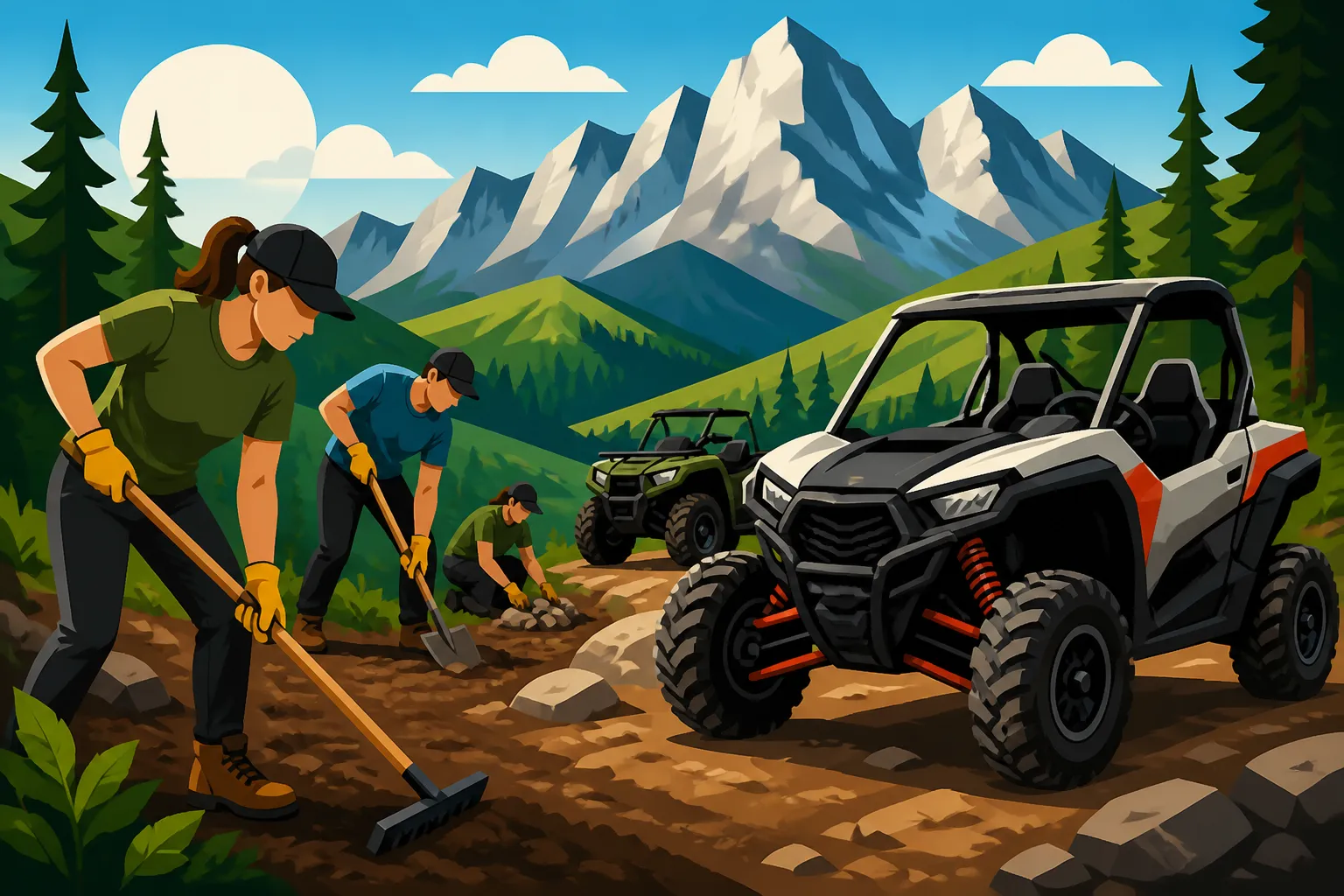
Alberta Trail Volunteer Days
Alberta’s trails do not stay rideable by themselves. Brush grows in, signs go missing, and a hard rain can leave drainage problems that get worse with every passing machine. If you want to help care for the places you ride, this guide explains what Alberta ATV and UTV volunteer days involve, how to find a suitable opportunity, and what to bring.
What Alberta Trail Volunteer Days Usually Involve
A volunteer day might mean clearing brush, picking up litter, checking signs, or helping a local club prepare a trail for the season. The work is practical, often outdoors for several hours, and usually organized around a specific area or task. You don’t need to be a mechanic or trail-building expert to contribute, but you should be ready to follow the organizer’s safety instructions.
Common trail care tasks
Brush clearing is one of the jobs riders often picture first. Volunteers may trim back vegetation that has grown into an established trail, improving visibility and helping riders stay on the intended route. Organizers typically identify where work is appropriate and what tools can be used. Don’t assume that cutting or moving vegetation is permitted just because a trail looks overgrown.
Other tasks may include collecting litter, replacing or straightening signs, reporting damaged infrastructure, and helping with authorized drainage work. A blocked culvert or a section of trail that channels water can become a much larger maintenance problem if it is ignored. For these jobs, the club or land manager should provide clear instructions about the location, method, and limits of the work.
Some volunteer days focus less on tools and more on observation. Participants may help document trail conditions, flag hazards for the organizer, or support a club event. If you’re new, asking for a task that doesn’t require specialized equipment is completely reasonable. Reliable help with cleanup or sign checks can be valuable even if you’ve never done trail work before.
Who organizes volunteer days
Local OHV clubs, trail groups, and organizations involved in trail management may coordinate work parties. The Alberta Off-Highway Vehicle Association and local clubs are useful places to start when you’re looking for ways to get involved. A club may manage or support trails in one area, while another group works elsewhere, so it helps to ask about the location and the kind of work planned rather than assuming every event is open to every machine or rider.
For a better sense of how clubs and trail management fit together, read [AOHVA and Alberta Trail Management] and [Alberta OHV Clubs Worth Joining]. You can also look into [What a Trail Manager Does Under the Trails Act] to understand why maintenance work needs coordination and authorization.
A volunteer day is not permission to create a new trail or change an existing one. Public land can have specific rules about where vehicles may travel and what work is allowed. If a route is closed, unofficial, or unclear, don’t try to “fix” it independently. Ask the organizer or relevant land manager before doing anything that alters the trail.
How to Find a Volunteer Opportunity and Choose the Right One
The easiest way to find a suitable volunteer day is to contact a club connected to the area where you ride. Look for announcements on the club’s own communication channels, and ask whether people need to register, what the meeting point is, and whether tools or protective equipment are supplied. Event details can change, so confirm them directly with the organizer before setting out.
Ask these questions before you sign up
A few practical questions can prevent a frustrating morning at the trailhead:
- Where does the group meet? Get a clear location and directions. A staging area can be easy to miss, especially when the last stretch is on a forest road.
- What work is planned? Cleanup, brushing, sign work, and drainage tasks can require different clothing and tools.
- What should you bring? Confirm whether the group supplies tools, gloves, eye protection, and any other job-specific gear.
- Can you bring an ATV or UTV? Some tasks may involve riding to a work site, while others may not need machines at all.
- Is the work suitable for beginners or families? Ask about the expected physical effort, terrain, and age requirements rather than guessing.
- What happens if conditions change? Rain, snow, wildfire restrictions, or a closure may affect access or the work plan.
These questions are especially useful if you’re travelling from Calgary, Edmonton, Red Deer, or another community to help near an area such as McLean Creek or the Iron Horse Trail. A long drive is disappointing when the meeting point, access route, or event plan was misunderstood.
| Volunteer task | What it may involve | What to confirm |
|---|---|---|
| Litter cleanup | Collecting waste along a designated section | Bags, disposal plan, and gloves |
| Sign checks | Looking for missing, damaged, or hard-to-see signs | Which signs to inspect and how to report issues |
| Brush work | Clearing vegetation from an authorized trail edge | Approved area, tools, and protective gear |
| Trail condition checks | Noting erosion, drainage concerns, or hazards | How observations should be recorded |
| Event support | Helping with setup, directions, or cleanup | Start time, assigned role, and who to contact |
Pick an area you can realistically support
It’s tempting to choose a volunteer day in a famous riding area simply because you already know it. But the most useful opportunity may be the one you can return to. A club that sees you more than once can help you learn its safety routines and understand what needs attention from season to season.
If you ride near the Eastern Slopes, ask groups working in that region what kinds of support they need. If your usual trips are farther north, a local club near Swan Hills or Rocky Mountain House may be a better fit. Don’t assume a named riding area has a volunteer event scheduled; contact the relevant organization and ask what’s actually available.
Before travelling, review the route and land-use information for the area. [Alberta Trail Maps Worth Downloading] can help you prepare, while [Reading a Public Land Trail Guide] and [Checking a Zone Before You Go] are useful reminders to confirm where riding is allowed. A mapping app such as onX Offroad can help you orient yourself and plan navigation, but it shouldn’t replace current official information or the organizer’s directions.
What to Bring and How to Work Safely
A volunteer day may feel more casual than a long backcountry ride, but it still calls for preparation. Trail work can mean uneven ground, changing weather, sharp branches, lifting, and time away from your vehicle. Pack for the job you’ve agreed to do, not just for the forecast you saw before leaving home.
Dress for the work, not only the ride
Wear sturdy footwear with good traction, long pants, and gloves suited to the task. Eye protection is important when working around brush or debris. Alberta weather can shift quickly, so bring layers and rain protection even when the morning looks clear. Carry drinking water and food, especially if the work site is a distance from the staging area.
If tools are involved, ask the organizer what is appropriate and whether tools are supplied. Avoid bringing powered equipment unless the group specifically requests it and explains how it will be used. A tool that seems helpful can create a hazard or damage the trail when used in the wrong place.
If a machine is part of the day, confirm where it may be ridden and how it will be used. It might be needed to carry supplies or reach a work area, but that does not mean you can ride anywhere nearby. Stay with the group’s plan, respect closures, and avoid widening the trail or creating new tracks while getting to the job site.
Follow the organizer’s plan and speak up
At the start, listen for the work boundaries, emergency plan, and instructions for reporting problems. If a task feels beyond your experience or physical ability, say so. It is better to ask for a different assignment than to improvise with unfamiliar tools or push through pain and risk an injury.
Work at a steady pace and take breaks. Trail care is often more effective when people communicate than when everyone rushes to finish. If you spot a hazard outside the assigned area, report it to the organizer rather than leaving the group or trying to deal with it alone. For more on responsible riding habits, see [Alberta Trail Etiquette Locals Expect].
Conditions may change during the day. A trail that looked manageable at the meeting point can be muddy, slippery, or damaged farther along. Follow any temporary instructions about access, and don’t ride around a barrier simply to reach another section. [Alberta Trail Closures After a Storm] offers useful context for why a route may need to stay closed until it can be assessed.
How to Make Your Contribution Count After the Event
A volunteer day is a good starting point, but trail care is ongoing. A short follow-up can help the club keep track of what was completed, what remains, and whether a reported issue needs attention from someone with the right authority or equipment.
Share useful observations
After the work, tell the organizer what you finished and what you noticed. Be specific: name the section, describe the issue, and explain whether it appeared to change during the day. If you took photos for the club, follow its instructions for sending them. Avoid posting sensitive details or encouraging people to visit a location that is closed or vulnerable.
If you’re not sure whether an issue is important, report it without trying to diagnose it. For example, you can say that water is crossing a trail or that a sign is difficult to read. Let the club or land manager decide what action is appropriate. Clear observations are often more useful than a guess about the cause.
Trail groups may rely on grants and organized support to do work that volunteers cannot complete alone. [Alberta Trail Funding for Clubs] explains why funding can matter alongside volunteer effort. A cleanup day may make a visible difference immediately, while repairs to drainage or infrastructure may need planning, permissions, and additional resources.
Build a lasting connection with a local group
If you enjoyed the day, ask how to hear about future work parties or whether the club needs help with non-field tasks. Some people are happiest using hand tools outdoors; others are better at organizing supplies, helping with an event, or sharing local trail knowledge. There is no single “right” way to contribute.
It’s also fine to start small. Join one event, learn how the group works, and decide whether you want to take on more. A dependable volunteer who shows up occasionally and follows the plan can be more helpful than someone who overcommits and disappears when the weather turns.
Most importantly, treat volunteer work as care for a shared place, not as a way to earn special access. Follow the same rules after the event as before it, stay on open routes, and encourage fellow riders to do the same. That steady respect is part of what keeps Alberta’s riding areas usable for the next group.
Disclaimer
This article is for general informational purposes only and does not constitute professional advice. Laws, prices and regulations vary by location and change over time. Consult a qualified professional for guidance on your specific situation.