Alberta OHV Clubs Worth Joining
Finding an Alberta ATV or UTV club can be harder than it sounds: one group may focus on trail cleanups, another on family rides, and some organize events only occasionally. The right club can help you meet riding partners, learn local access rules and contribute to the trails you use. Here’s how to find a good fit and what to check before joining.
Start with Alberta’s provincial OHV network
Use AOHVA as a starting point
The Alberta Off-Highway Vehicle Association, or AOHVA, is a useful first stop if you’re looking for organized OHV riding and trail-stewardship opportunities. It’s a provincial association rather than a single local riding club, so it can help you understand how organized riding groups fit into Alberta’s broader trail network. For newcomers, that distinction matters: a provincial organization may offer information and connections, while a local club is more likely to arrange rides or volunteer days close to home.
Look for current information about affiliated clubs, local events and ways to get involved. If a group’s social page hasn’t been updated in a while, that doesn’t automatically mean it’s inactive, but it’s a good reason to contact the organizers before paying dues or planning a trip around an event. Ask whether the club is currently accepting members, where it usually rides and whether gatherings are open to newcomers.
AOHVA is also a useful place to learn about the relationship between riding and trail management. A club’s work might include helping maintain a riding area, sharing information about closures or encouraging responsible trail use. Read [AOHVA and Alberta Trail Management] for more context, and remember that joining a club doesn’t give you special permission to ride on closed land or restricted trails.
Look for a local club that matches where you ride
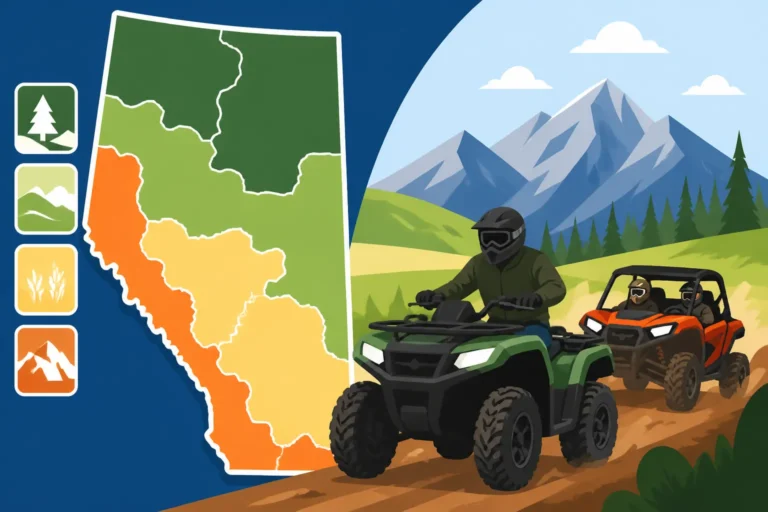
Alberta is large, and a club’s location can make a real difference to how often you participate. A rider in Edmonton may be more likely to attend a local meeting or group event than one held near Calgary. Likewise, someone who regularly stages near McLean Creek will have different practical questions from a rider planning trips around the Iron Horse Trail or northern Alberta riding areas.
Start by searching for OHV groups in your own region, then confirm that their activities line up with your usual destinations. A group that rides in the foothills may be a strong fit if you’re interested in McLean Creek or nearby public-land areas. If you prefer rail trails or longer point-to-point outings, look for members who plan those kinds of trips. Browse [Alberta OHV Trails: Riding Public Land] and [Alberta Trail Maps Worth Downloading] to get a clearer sense of the areas and trail types you want to explore.
Don’t assume a club’s name tells the whole story. Some groups are organized around a town or region but welcome riders from farther away. Others may focus on a particular machine type, riding style or volunteer project. A short message to the club can clarify whether its events are practical for you to attend and whether it welcomes the kind of ATV or side-by-side you ride.
Treat social groups as a lead, not a substitute for a club
Local social media groups can be excellent for hearing about informal rides, trail conditions and community events. They can also help you discover which clubs people in your area are active in. But an online group isn’t necessarily a formal club, and a post inviting people to ride doesn’t confirm that a route is open or that the person organizing it has checked local requirements.
Before following a group ride, ask where the route is, what machines are suitable and whether the organizer has checked for closures or local restrictions. Riders sometimes use the same trail name to mean different places, so a vague reference such as “the Ghost” may not be enough to plan safely. A mapping tool such as onX Offroad can help you review routes and save information for trip planning, but it should be used alongside official land-use guidance and current local notices—not as proof that a route is open.
If a group shares a route, check the details before you leave home. Confirm the staging area, parking arrangement, expected ride length and whether the route includes difficult terrain. For public-land trips, review [Alberta’s Public Land Use Zones Explained] and [Checking a Zone Before You Go] as part of your preparation.
Choose a club for the riding life you want
Family and beginner-friendly groups
A welcoming club can make the first few group rides feel much less intimidating. New riders often worry about slowing everyone down, bringing the wrong gear or not knowing the usual trail etiquette. A good organizer will explain the plan before the ride, set realistic expectations and make it clear whether the route suits beginners or young riders.
Ask about group size, pace and stopping habits. A family outing may include more breaks and a shorter route than a long day of technical riding. Find out whether the group expects every rider to arrive with a machine that is ready for the terrain, and whether the organizer has a plan if someone needs to turn back. These details are more useful than a general claim that an event is “beginner-friendly.”
If children will ride, check age, supervision and passenger requirements before attending. Club membership doesn’t replace legal obligations, and a family-friendly event doesn’t necessarily mean every machine or rider is suitable for every route. You may also want to review [Alberta Trails for Kids] and [Alberta Supervision Rules for Young Riders] before choosing an outing.
Trail stewardship and volunteer groups
Some riders join a club mainly because they want to help keep riding areas in good shape. Volunteer activities can include trail cleanups, maintenance days, event support and education about responsible riding. You don’t have to be an experienced mechanic or trail builder to contribute; clubs may need help with check-in, communications, safety support or simple cleanup tasks.
Ask what a typical volunteer day involves and whether you need to bring tools or equipment. If you have limited time, ask whether there are shorter tasks or occasional events rather than assuming every volunteer commitment requires a full day. Showing up consistently for small jobs can be more helpful than signing up for a major project and discovering the schedule doesn’t work for you.
Stewardship also gives you a chance to meet riders who know an area well. They may be able to explain why a route is closed, how weather affects a trail or where riders should avoid damaging soft ground. Learn more about [Alberta Trail Volunteer Days] and [Alberta Trail Etiquette Locals Expect] before deciding how you’d like to get involved.
Event-focused and social riding groups
If what you want most is company on the trail, look for groups that organize regular rides, poker runs or seasonal gatherings. These events can be a comfortable way to meet people without committing to every club activity. They’re also a chance to see how a group manages pace, communication and safety before you decide whether to become a member.
Ask how rides are organized. Is there a lead rider and a sweep at the back? Are riders expected to stay together, or does the group use designated meeting points? What happens if someone has a mechanical problem or needs to leave early? A clear plan doesn’t guarantee a trouble-free day, but it helps prevent confusion when the group is spread along a trail.
If you’re trying an event for the first time, arrive early enough to introduce yourself and ask questions. Tell the organizer honestly about your experience and machine. A suitable group will help you understand what to expect rather than pressuring you to ride beyond your comfort level. For ideas on what organized outings can look like, see [Alberta Poker Runs and Club Rides] and [Alberta Group Ride Planning].
Compare clubs before you join
Check the practical details
Before joining, find out how the club communicates with members and how often it organizes activities. A club might post announcements through a website, email list or social media page. If you don’t use the platform where updates are posted, you could miss event changes or arrive at a staging area after plans have shifted.
Ask whether membership is open to all OHV riders or aimed at a specific machine type or riding style. Some events may suit ATVs but not larger side-by-sides, or vice versa. Confirm whether guests can attend a ride before joining, whether there are volunteer expectations and what the membership process involves. For any fees or membership conditions, check directly with the club because details can change.
| What to check | Why it matters | A useful question to ask |
|---|---|---|
| Home region and usual riding areas | Determines whether you can attend often | Where do members usually ride? |
| Machine types | Some routes or events may not suit every OHV | Are ATVs and side-by-sides both welcome? |
| Ride pace and difficulty | Helps you choose outings that match your experience | How do you describe the typical ride? |
| Event communication | Makes it easier to get updates and avoid missed changes | Where are ride details and cancellations posted? |
| Guest policy | Lets you try the group before committing | Can I attend one event as a guest? |
| Volunteer expectations | Clarifies how members support the club | Are members expected to volunteer regularly? |
| Local access awareness | Helps you understand how the club handles closures and permissions | How do you confirm routes are open before a ride? |
Pay attention to how the group handles safety and access
A club’s attitude toward land access is an important part of deciding whether it’s a good fit. Responsible organizers should take closures seriously, respect private property and avoid presenting a trail as open simply because someone has ridden it before. If you’re unsure about a route, ask how the organizer checks access and whether the ride will stay within the permitted area.
Notice how the group talks about equipment and preparation, too. A thoughtful organizer will communicate what riders should bring, explain any machine suitability concerns and encourage people to ride within their ability. They should also be comfortable with a rider choosing to stop or turn around. A group that treats caution as a weakness may not be the right community for you.
Before heading out, check the relevant public-land information and save useful maps for offline reference. onX Offroad can be one tool for reviewing and organizing route information, while official land-use notices remain essential for confirming restrictions. [Alberta Trail Closures After a Storm] is also worth reading if you ride in areas where weather can quickly affect trail conditions.
Make your first club ride easier
Contact the organizer with specific questions
A short, friendly message can tell you a lot about whether a club is a good fit. Rather than asking only whether the group is “active,” explain what you ride, where you usually go and what kind of outing you’re looking for. For example, you might say you’re new to the area, ride a two-seat ATV and are hoping to join a moderate-paced day trip near your region.
Ask about the next event, how long it usually lasts and whether the route is suitable for your experience. If you’re bringing a passenger or a young rider, mention that up front. The organizer can then tell you whether the event is appropriate and what requirements you should check. It’s better to ask before the ride than to discover at the staging area that the route or group pace is a poor match.
You can also ask what happens if the weather changes or the event is cancelled. Plans may shift because of conditions, access issues or other practical concerns. Check the club’s preferred communication channel on the day of the ride, and don’t rely on an old event post as confirmation that the outing is still happening.
Prepare for the day without overcomplicating it
For a first ride, focus on the basics: a mechanically sound machine, required safety gear, enough food and water, and a way to communicate with the group. Confirm your fuel plan and whether there are services near the staging area. In remote places, don’t assume you’ll have reliable cell coverage or be able to buy supplies once you arrive.
Tell someone outside the group where you’re going and when you expect to return. Save the meeting point and route details before leaving, and bring any required documents or equipment. If you’re unfamiliar with the area, follow the group’s instructions about staying together and regrouping at marked stops. A mapping app such as onX Offroad may help you keep route information handy, but don’t let a phone screen distract you while riding.
After the outing, thank the organizer and share a quick note about what worked well or what you’d like to try next time. You don’t have to decide immediately whether to join. One ride can help you judge the group’s pace, communication and approach to trail access. If it feels like a good fit, ask how to become involved; if not, use what you learned to find a club that better matches your riding style.
Disclaimer
This article is for general informational purposes only and does not constitute professional advice. Laws, prices and regulations vary by location and change over time. Consult a qualified professional for guidance on your specific situation.