Alberta OHV Camping and Staging Areas
Finding a place to camp near an Alberta OHV trail can be harder than choosing the trail itself. A staging area may offer parking but no overnight camping, while nearby public land can have its own access rules, seasonal closures, and camping requirements. This guide explains how to plan a practical ATV or side-by-side trip, choose a base, and avoid arriving with the wrong setup.
Understand the Difference Between Staging and Camping
What a staging area is for
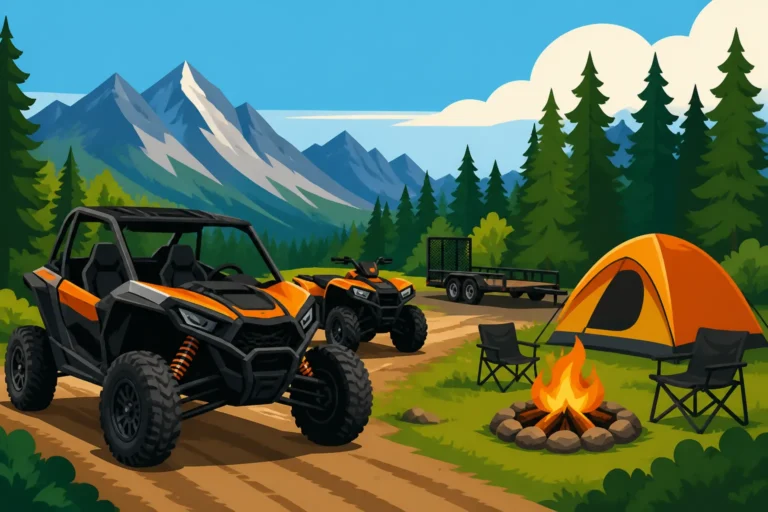
An OHV staging area is a place to unload, park, prepare your machine, and access nearby riding routes. Depending on the location, it may have room for trucks and trailers, a trailhead, toilets, or other basic facilities. Don’t assume every staging area has all of these amenities—or that it is intended for overnight use.
Treat staging as the start or end of your ride, not automatically as a campsite. A parking lot can be busy, exposed, and unsuitable for tents or overnight vehicle parking. Look for site-specific signs and current land-use information before deciding to sleep there.
This distinction matters when you’re travelling a long way. You might find a suitable place to launch near McLean Creek or the Ghost Public Land Use Zone, but still need to arrange camping somewhere permitted. Planning for both the ride and the overnight stay prevents a frustrating late-day search after you’ve unloaded.
What an OHV camping area can mean
“Camping near an OHV area” can refer to several different arrangements: a developed campground, a designated camping node, an authorized random-camping area, or a private campground within driving distance of a staging site. These options are not interchangeable. Each can have different rules about where you can park, how long you can stay, and whether your machine may be ridden from the campsite.
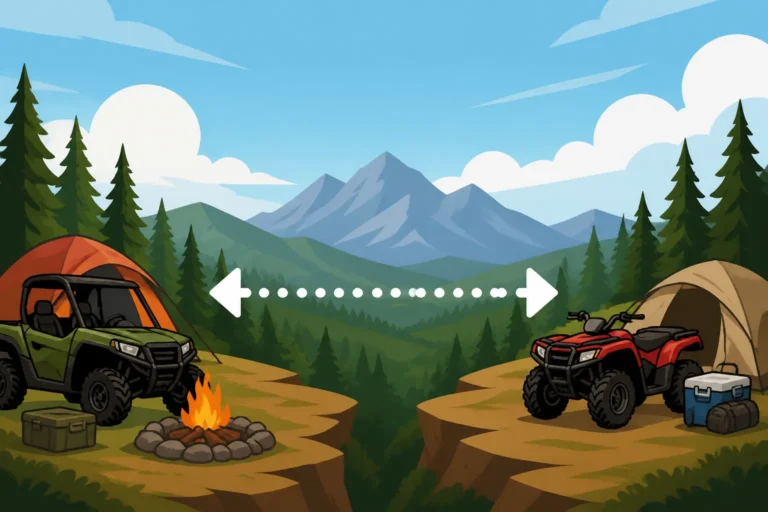
A campground being close to a trail does not necessarily mean the trail is open to OHVs from its entrance. You may need to trailer your machine to a staging area rather than ride between the campground and the trail system. Confirm the connection before planning your route.
If you’re comparing places to stay, note the exact name and location of the campsite as well as the staging area you intend to use. A map pin described as “near the trail” may lead to a road, a closed route, or a location on land with different access rules. The planning advice in [Alberta OHV Camping Rules] is not a URL format required here, so internal references should be plain titles: [Alberta Random Camping Rules Explained].
Choose a Base That Fits Your Trip
Developed campgrounds near riding areas
A developed campground can make a family or group trip easier because it may offer clearly marked sites, toilets, potable water, or a more predictable place to park. Amenities vary, and a campground’s own rules may restrict trailers, vehicle movement, generator use, or the number of machines at a site. Read the facility information rather than relying on an old review or a photo.
Think about the daily routine, not just the distance on a map. If your campground is a considerable drive from the staging area, you’ll be loading and unloading each day. If it is close, you still need to confirm that the legal route between the two is open to your type of machine.
For a busy weekend, a nearby campground may fill before you arrive, or may require advance arrangements. Have a backup option that does not depend on parking overnight at the staging lot. If your group includes children, older relatives, or people who need reliable washroom access, prioritize those practical needs alongside trail proximity.
Random camping and designated nodes
Random camping on public land is not a free-for-all. The land manager may limit camping to particular areas, require you to use a designated node, or impose restrictions that change with conditions and closures. Check the rules for the specific public land area you plan to visit, rather than assuming that a spot used by another rider is available to everyone.
A campsite that looks open may be on a sensitive surface, close to a facility, or outside an area where camping is allowed. Choose durable ground and follow signs, barriers, and posted directions. Avoid creating new tracks to reach a more convenient flat patch; repeated traffic can damage vegetation and soil.
Camping rules and OHV riding rules are separate questions. Permission to camp in an area does not mean you can ride every cutline, road, or open-looking trail nearby. Read [Alberta Random Camping Rules Explained] alongside the area’s OHV trail information, and check whether the route you want to ride is designated and open.
| Base option | Best suited to | What to confirm |
|---|---|---|
| Developed campground | Families and riders who want established facilities | Reservations or availability, machine and trailer rules, route to staging |
| Designated camping node | Riders seeking an authorized public-land option | Whether camping is permitted there, access conditions, stay limits |
| Authorized random-camping area | Self-sufficient groups comfortable with fewer amenities | Current land rules, permitted location, distance requirements |
| Private campground or lodging | Groups who prefer a managed base | OHV access policy, parking, trailer space, daily transport needs |
| Staging area | Unloading and starting a ride | Whether overnight parking or camping is explicitly allowed |
When a staging area is a better base for the ride
Even if you camp elsewhere, choosing the right staging area can make your days smoother. Consider the size of your towing vehicle and trailer, whether your group can unload safely, and how much space you need to turn around. A small pullout that works for one pickup may be difficult for several trucks with long trailers.
Arriving early can help when popular lots become crowded, especially on a clear weekend. Make room for other users, park within marked spaces where provided, and avoid blocking gates, access roads, or emergency routes. If the staging area is busy, a tidy setup makes a difference for everyone trying to unload.
Check the starting point for facilities, but pack as though they may be unavailable. Bring drinking water, food, basic repair supplies, and a plan for waste. For details on the kinds of public-land routes and facilities found in the area, Alberta OHV Camping and Staging Areas is a useful topic to explore alongside the specific trail guide for your destination.
Match the Area to Your Riding Plans
McLean Creek and the Kananaskis region
McLean Creek is a well-known OHV destination southwest of Calgary, and its popularity makes advance planning especially useful. Before heading out, identify the staging area you intend to use, check the latest area information, and confirm which trails are appropriate for your machine. A trail network can include routes with different conditions and levels of difficulty.
Do not assume camping is allowed at the staging area simply because riders gather there. Decide separately where your group will stay overnight and how you’ll get machines between that location and the trailhead. If your plan involves a campground, confirm its access and parking rules directly.
The wider Kananaskis region has multiple land uses and access requirements. A Kananaskis Conservation Pass may apply to eligible vehicles using certain areas, but don’t assume that it is an OHV trail permit or that it replaces other requirements. Review [Alberta Kananaskis Conservation Pass Rules] and the specific location details before setting out.
The Ghost Public Land Use Zone and nearby foothills
The Ghost area offers a large, varied landscape, but the combination of roads, trails, camping locations, and changing conditions can make it easy to misunderstand what is open. Choose a route using current land information, not just a line on an older map or a track shared by a friend. A route that looks connected may cross a closed or undesignated section.
Plan your campsite and ride as separate parts of the trip. Some camping locations may be designated, while other places may not be appropriate or permitted. You should also check whether an intended campsite is close enough to the trail system for your group’s needs without relying on an unapproved connection.
Phone coverage can be inconsistent in foothill and backcountry areas. Save the relevant map or trail guide for offline use before leaving a service area, and carry a backup way to navigate. Tools such as onX Offroad can help riders review routes and keep offline map information available, but a mapping app does not replace official closure notices or posted signs. Explore [Ghost PLUZ Riding in Alberta] and [Ghost PLUZ Camping Nodes in Alberta] as starting points for more location-specific planning.
Other riding regions and rail trails
Alberta has riding opportunities beyond the Calgary-area foothills. The Iron Horse Trail, areas near Rocky Mountain House, and northern riding zones each have different access patterns, surfaces, and nearby services. A rail trail may involve long distances between communities, while a forested area may have rougher routes and fewer reliable services. Choose a trip that fits your group’s experience and machine range.
Research the route and overnight plan together. If the riding area is spread out, staying in a community or established campground may simplify fuel, supplies, and meals. If you’re aiming for a remote base, confirm that the camping location is permitted and that you can reach the intended staging area legally.
Avoid assuming that one region’s rules apply everywhere in Alberta. Trail designation, seasonal restrictions, camping access, and local bylaws can differ. [Alberta OHV Trail Map Downloads] and [Public Land Use Zones by Region] can help you identify the right area to research before committing to a destination.
Check Rules Before You Camp or Ride
Confirm land access and trail status
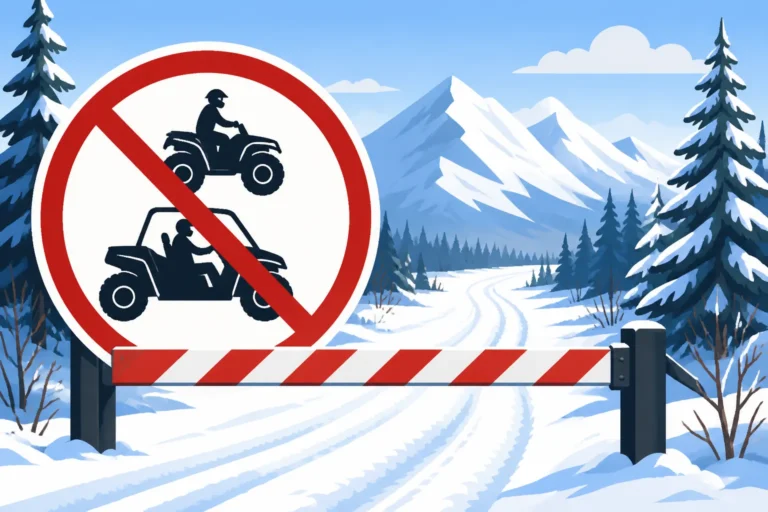
A route shown on a map is not automatically an authorized OHV route. Check the current information for the land area and follow signs at access points. Closures may be related to seasonal restrictions, road work, fire risk, wildlife, or other land-management decisions. If a route is signed closed, don’t ride around the barrier to reach the next section.
Confirm the rules for both the campsite and the riding area. The fact that an area is public land does not guarantee that camping or OHV use is permitted at every point. Likewise, a campsite being open does not make nearby roads or trails open to machines.
For a trip involving several routes, write down the names of the staging site, riding area, and overnight location. That makes it easier to verify that each part of the plan is covered by the relevant guidance. [Checking a Zone Before You Go] is a helpful related topic when you’re sorting out public-land access.
Understand camping passes and other requirements
Some public-land camping requires a camping pass, while other locations may have different arrangements or restrictions. Check whether the particular land you plan to camp on is covered, who needs a pass, and how it must be carried or shown. Don’t purchase a pass on the assumption that it grants permission to camp anywhere or ride any trail.
A pass for camping is not the same thing as permission to operate an OHV. You may also need to meet machine-registration, insurance, equipment, and riding requirements for your planned route. Confirm those separately so that one document doesn’t create a false sense that every requirement is covered.
The details matter when your trip crosses between different land types or jurisdictions. Keep records of what you checked and save relevant information to your phone, but be prepared to follow posted directions if conditions change. For a closer look at the camping requirement, see [How to Buy an Alberta Camping Pass].
Check local restrictions and seasonal closures
Local access rules can apply to roads and areas near a trail system. A public road, highway ditch, or municipal route is not automatically open to OHVs. Before riding from a campsite or lodging, check whether a legal connection exists between that location and the designated riding area.
Seasonal restrictions may also affect your choice of base. Wet ground, snow, fire conditions, wildlife considerations, or trail maintenance can change what is available. A route that was open during a previous visit may not be open on the weekend you plan to go.
A simple phone call or review of the relevant municipal and land-management information can prevent a long detour. If the route includes a town, county road, or highway crossing, pay particular attention to local rules. [Alberta ATV Road Rules: Bylaws Decide] explains why riding permission can depend on the municipality or route involved.
Plan the Campsite, Trailer, and Daily Routine
Make sure your rig can fit
A campsite that suits a tent may not work for a truck and long trailer. Check the site’s parking arrangement, turning space, surface, and any restrictions on vehicle length or number of vehicles. If a group is travelling in several rigs, confirm that everyone can park without blocking access or spilling into an unsuitable area.
Think through the unloading process. You may need room to lower ramps, move machines, secure gear, and keep children clear of traffic. If the only available space is tight, one person can guide the driver while another watches for pedestrians and other vehicles.
At a staging area, use the designated parking layout and leave room for other trailers to manoeuvre. Avoid leaving equipment spread across a shared access lane while the group has lunch or sorts out a repair. A little preparation at home—such as checking trailer lights and organizing tie-downs—can make unloading much calmer.
Pack for a site with limited services
Remote or basic camping means carrying more of what your group needs. Plan for drinking water, food storage, lighting, warm layers, rain gear, first aid, and safe disposal of waste. Don’t assume there will be potable water, garbage bins, fuel, or cell service at the campsite or staging area.
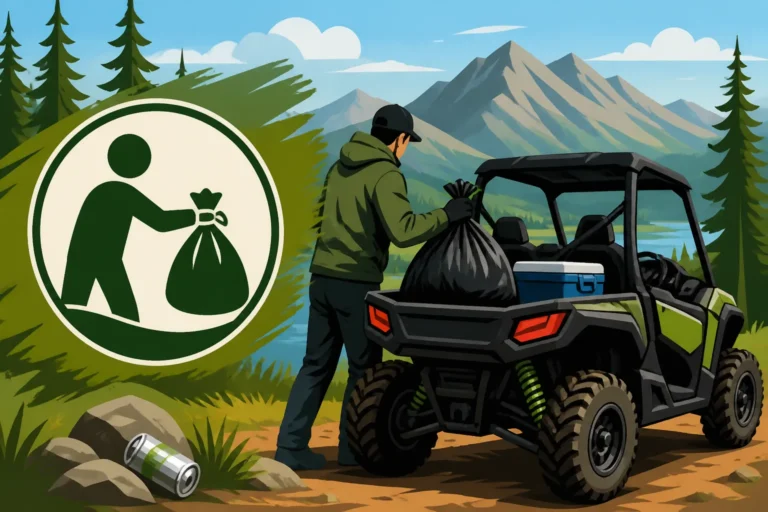
Keep food and waste managed so they don’t attract wildlife. Follow local instructions for food storage, fires, and waste; take your garbage away if no disposal facilities are available. If you plan to have a campfire, check restrictions before lighting it and keep a way to fully extinguish it.
For the ride itself, bring tools and basic supplies suitable for your machines, including equipment for a puncture or minor breakdown. A group that is camping in a remote area should also agree on a communication and check-in plan. Alberta OHV Camping and Staging Areas may be a useful related topic when comparing what to expect at different kinds of access points.
Build a realistic daily schedule
A good itinerary includes more than riding hours. Add time to drive to the staging area, unload, check equipment, review the route, and return before dark. On a full day, a slow repair or an unexpected detour can change your return time, so avoid planning a route that leaves no margin.
Set a turnaround time, especially if the group includes inexperienced riders or children. Agree on what to do if someone gets separated, a machine has a problem, or weather makes the route uncomfortable. A simple plan is more useful than assuming everyone will have enough phone coverage to coordinate.
Fuel range is another practical constraint. Estimate the route conservatively, and don’t assume that fuel is available close to a remote trailhead. If the group has machines with different ranges, plan around the one with the shortest practical range and make sure everyone understands where the ride will stop.
Keep the Trip Safe and Low Impact
Prepare machines and riders before unloading
Before leaving home, check tires, controls, brakes, lights, fuel, and basic fasteners. At the staging area, do a second walk-around and make sure loads are secure. A short equipment check can catch an obvious problem before it becomes a breakdown on a remote route.
Choose trails that suit the least experienced rider and the least capable machine in the group. A route that feels easy to one rider may be tiring or intimidating to another, especially if it involves mud, rocks, water, or steep slopes. Agree that anyone can speak up if they want to slow down or turn back.
Carry and use the safety equipment required for the riding conditions and applicable rules. Keep required paperwork accessible, and make sure the group knows where it is. [What to Show an Officer on Alberta Public Land] offers another useful prompt for checking what riders should be ready to produce.
Protect campsites and trails
Stay on designated routes and avoid widening a trail around mud or obstacles. Riding around a wet section can create several new tracks and damage vegetation. If a route is too difficult or conditions are deteriorating, turning back is usually better than trying to force a new path.
At camp, use the intended site and avoid cutting trees, moving barriers, or making new vehicle tracks. Leave gates as you found them and keep a respectful distance from other campers, nearby homes, livestock, and wildlife. Noise travels farther than many riders expect, particularly in a quiet valley or after dark.
Pack out what your group brings in, including food scraps and small pieces of broken gear. A clean campsite is not just courteous; it helps keep access acceptable for the next visitors. For more about staying on authorized routes, see [Staying on the Trail Tread].
Have a backup plan for closures and bad weather
Weather can make an otherwise manageable route unsafe or unpleasant. Heavy rain can turn soft ground into deep mud, while snow or ice can hide trail hazards. Check conditions before leaving and be prepared to shorten or cancel a ride rather than risking a stuck machine or damaged trail.
Keep an alternate activity or destination in mind. If a trail is closed, don’t assume the closure is temporary or ride around it. A nearby community, a different authorized area, or a day spent at camp can be a much better option than improvising on unfamiliar land.
Share your itinerary with someone who is not on the ride, particularly if you’ll be out of cell range. Include the riding area, expected return, and what the group will do if plans change. This basic step gives someone outside the group a clearer picture if you don’t check in as expected.
Use a Pre-Trip Checklist
Confirm the essentials before departure
A short checklist can catch the mismatch that causes the most frustration: camping booked in one place, staging planned in another, and no legal or practical way to move between them. Verify the overnight location, parking, machine access, and route to the staging area as separate items.
Review the latest access information close to your departure. Save maps and key details offline, and note any restrictions that could affect your route. If you’re using onX Offroad or another mapping tool, treat it as a planning aid and compare the route with official information and signs on the ground.
Make sure each rider understands the plan. Tell the group where the vehicles will be parked, how the ride is expected to unfold, and what to do if someone needs to stop. A quick conversation before unloading can prevent confusion later.
A practical departure checklist
- Confirm the exact riding area, staging location, and overnight site.
- Check that camping and overnight parking are allowed at the place you selected.
- Review trail status, local restrictions, seasonal closures, and any relevant pass requirements.
- Confirm trailer access, parking space, and the route between camp and staging.
- Save maps and essential information for offline use.
- Check machines, trailers, tie-downs, lights, fuel, and safety gear.
- Pack water, food, first aid, tools, weather layers, and waste bags.
- Share the itinerary and expected return time with someone outside the group.
- Agree on a turnaround time and a plan for breakdowns or changing conditions.
- Recheck signs and instructions when you arrive.
A checklist is most valuable when it reflects the actual trip. A family using a developed campground will have different needs from a self-sufficient group camping at an authorized public-land location. Adjust the list to your machines, experience, group size, and the facilities you’ve confirmed rather than relying on assumptions.
Disclaimer
This article is for general informational purposes only and does not constitute professional advice. Laws, prices and regulations vary by location and change over time. Consult a qualified professional for guidance on your specific situation.