Winter Machines Under 453 Kilograms
A winter ride can go sideways before the engine even starts if your ATV or side-by-side is too heavy for the route you planned. In Alberta, some winter riding areas have machine-weight limits, and the commonly referenced threshold is 1,000 pounds, or roughly 453 kilograms. This guide explains what that limit may mean, how to check whether your machine qualifies, and how to plan a safer ride.
What the 453 kilogram winter limit means
Why weight restrictions matter in winter
A machine that feels manageable on dry ground can leave a much deeper track in snow or soft ground. That can make a narrow trail harder to pass, increase damage to the trail surface, and create problems for other riders. Winter limits are one way land managers can reduce those impacts and keep particular routes usable.
The 453-kilogram figure is commonly used as a rounded reference for a 1,000-pound limit. Those numbers are close, but they are not mathematically identical: 1,000 pounds is about 454 kilograms. If your machine is close to the stated threshold, don’t rely on a quick conversion or an online listing to decide that it qualifies. Confirm the exact wording and measurement method for the area you plan to ride.
A weight limit is not automatically an Alberta-wide rule for every trail or every winter ride. It may apply to a specific riding area, route, season, or type of machine. For example, riders researching winter access around McLean Creek should check the area-specific information for [McLean Creek's Winter Weight Limit in Alberta] and the broader overview of [Alberta Machines Under 1,000 Pounds in Winter]. A rule that applies at one location should not be assumed to apply everywhere.
Which machine weight should you check
Start with the manufacturer’s specifications for your exact make, model, and year. A model name alone may not be enough: equipment packages, accessories, and model-year changes can affect the listed weight. If the manufacturer lists several figures, note which one is the vehicle’s dry, curb, or operating weight rather than guessing which number a local rule uses.
The important question is not just “How heavy is my ATV?” It is “How does this area define the weight limit?” Some rules may refer to the machine itself, while a rider may be tempted to include or exclude cargo, passengers, fuel, or accessories. Don’t make that call for yourself when the vehicle is near the limit. Ask the relevant land manager or area contact how the rule is applied and what documentation they accept.
A practical check looks like this:
- Find the exact model and year on the registration, identification label, or manufacturer documentation.
- Locate the manufacturer’s weight specification and record the wording used.
- Compare that figure with the exact limit in the area guidance.
- If the machine is close to the limit, or the guidance does not explain which weight figure counts, contact the area manager before unloading at the trailhead.
- Keep a copy or photo of the relevant specification with your ride paperwork in case you need to explain what you checked.
Don’t assume that a machine qualifies because it looks compact, has a short wheelbase, or is marketed as a recreational model. Conversely, a machine that appears substantial may still fall within a particular limit. The published specifications and the local rule matter more than appearance.
How to check whether a winter route allows your machine
Confirm the area rule and the route rule
Begin by identifying the exact riding area, not just the nearest town or staging area. Alberta’s riding areas can have different land designations, seasonal conditions, and access rules. McLean Creek, for instance, has its own trail and area information; a useful starting point is [McLean Creek: Alberta's Best Known OHV Area]. For a wider understanding of how designated areas work, review [Alberta's Public Land Use Zones Explained].
Then check whether the restriction applies to the whole area or only to certain routes or conditions. A winter weight limit may be one part of the access picture, but it does not necessarily mean every trail is open. Seasonal closures, temporary restrictions, weather damage, and local direction can change what is rideable. A trail shown on an older map is not a guarantee that it is open on the day you arrive.
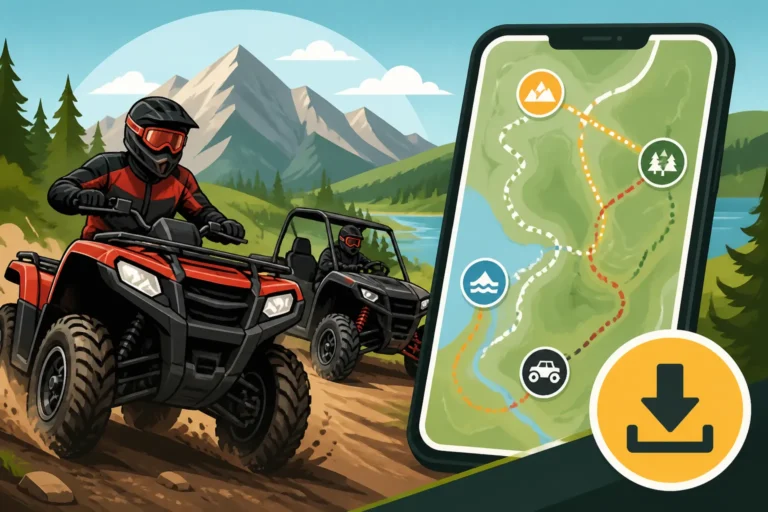
Digital maps can make it easier to compare routes and understand where a trail goes. onX Offroad can be useful for planning and keeping track of a route, especially when you want to review the general layout before heading out. Treat any mapping app as a planning aid, not the final word on legal access or current closures. Check official land or area information too, and review [Alberta OHV Trail Map Downloads] for additional mapping options.
Before setting out, verify:
- The current winter access rules for the specific riding area
- Whether the weight limit applies to your intended trail
- Any seasonal or temporary closures
- The machine types allowed on that route
- Whether local conditions have made a route unsafe or impassable
- Any separate registration, insurance, or equipment requirements
If information conflicts, pause and get clarification rather than choosing whichever map or post is most convenient. That small check can save a long drive to a staging area only to discover your machine cannot use the route.
What to do if your machine is close to the limit
When a published weight figure is close to the threshold, a vague answer is not much help. Call or contact the appropriate area office and describe the exact model, year, and manufacturer-listed weight. Ask which weight figure the rule uses, whether accessories change the assessment, and whether there is a particular document you should carry.
This is especially important for side-by-sides, touring models, and machines fitted with winches, plows, storage boxes, heavy bumpers, or other add-ons. The base model specification may not describe the machine as you actually use it. If the rule is measured using the machine’s equipped or operating weight, those additions could matter. Do not remove safety equipment or essential gear simply to try to meet a limit unless the area manager confirms what is permitted.
If you cannot confirm that your machine qualifies, choose a route where its weight is clearly allowed, or postpone that ride until you have reliable information. An uncertain interpretation is a poor foundation for a winter trip, particularly when access rules are area-specific and the trail may be remote.
Planning a safe winter ride in Alberta
Prepare for snow, cold, and changing trail conditions
Winter riding is harder on both the rider and the machine. Cold can affect batteries, starting, tire pressure, and how quickly you lose body heat after stopping. Snow can hide ruts, branches, rocks, drainage dips, and trail edges. A route that looks straightforward on a map may take much longer when the surface is soft or visibility drops.
Check the forecast and local trail information close to departure. If a storm has passed through, look for updated access notices and information about damage or closures. The guide [Alberta Trail Closures After a Storm] is a useful reminder that conditions can change the ride plan even when a route was open earlier. In the field, turn around if snow depth, ice, poor visibility, or trail damage makes continuing unsafe.
Pack for a delay rather than assuming the ride will go exactly to plan. Bring warm layers, gloves, water, food, a first-aid kit, a charged phone, and a way to communicate if you lose cell service. Tell someone where you are going and when you expect to return. A map app such as onX Offroad can help you review your intended route, but download or save what you need before entering an area with weak signal and carry a backup navigation option.
A sensible winter routine includes:
- Check the machine before loading it, including tires, brakes, lights, battery, and fuel.
- Confirm your route, closures, and machine eligibility.
- Ride with a partner where possible and agree on a turnaround time.
- Keep a pace that lets you respond to hidden obstacles and changing traction.
- Stop and reassess when conditions differ from what you expected.
Check registration, insurance, and equipment separately
Meeting a winter weight limit does not replace the other requirements for riding on public land. Before you leave, confirm that your machine’s registration is appropriate for the planned use and that you have the required proof with you. If you are riding Crown land, review [Alberta Registration Before Riding Crown Land] rather than assuming that private-property use or storage arrangements settle the question.
Insurance is another separate check. Review [Alberta Insurance Requirements on Public Land] and carry proof in a form you can produce during the ride. Requirements may depend on where and how you ride, so don’t treat a weight-compliant machine as automatically ready for public land.
Also inspect required safety equipment and any area-specific rules. A winter outing does not excuse a machine with poor lighting, an unsuitable exhaust, or another equipment issue. For example, riders should understand [Alberta Spark Arrestor Rules] and check that the relevant equipment is present and working. Make sure lights are clean and visible through snow and grime, and secure loose cargo so it cannot shift on uneven ground.
| Before the ride | What to confirm | Why it matters |
|---|---|---|
| Machine weight | Exact model, year, specification, and local measurement rule | A machine near the threshold needs a clear answer, not a guess |
| Area access | Winter rules, permitted routes, and current closures | Access can vary by area, trail, season, and conditions |
| Registration | Correct registration and paperwork for the planned use | Weight eligibility does not satisfy registration requirements |
| Insurance | Required coverage and proof carried with you | Public-land requirements are a separate consideration |
| Equipment | Lights and other required safety equipment | Snow, darkness, and poor visibility make working equipment especially important |
| Ride plan | Route, weather, communication, and turnaround plan | Winter conditions can extend a short outing or force a change of plans |
Common mistakes to avoid
Treating a map as permission to ride
A route line on an app can be useful, but it does not necessarily show whether a trail is currently open, whether a weight restriction applies, or whether a seasonal closure is in effect. onX Offroad may help you understand the route layout and plan navigation, but compare that information with official area guidance before riding. The same caution applies to screenshots saved months ago or advice from a rider who visited under different conditions.
Another common mistake is planning around the staging area rather than the specific trail. A staging area may serve routes with different rules. Confirm that your machine is allowed on the route you intend to use, not simply that there is a place to unload nearby.
Assuming “under 453 kilograms” is a universal pass
A machine below a commonly quoted threshold may still be restricted by a separate closure, route designation, or local rule. A machine above it may be permitted somewhere else. The limit is a detail to verify within the full set of rules for the area, not a blanket permission slip for winter riding across Alberta.
It is also easy to overlook small practical details when focused on the weight question: a registration certificate left at home, missing insurance proof, a dead phone, or a route plan that depends on a closed trail. Check each requirement on its own. If the official information is unclear, ask before you go and keep the answer with your trip notes.
Finally, don’t force a ride when conditions no longer make sense. A heavy snowfall, icy slope, hidden obstacle, or machine problem can turn a planned loop into a recovery job. Winter rides are more enjoyable when the group is willing to shorten the route, turn back, or choose another day.
Disclaimer
This article is for general informational purposes only and does not constitute professional advice. Laws, prices and regulations vary by location and change over time. Consult a qualified professional for guidance on your specific situation.