Three Low-Pressure Tires Required
A machine with three tires may look like an ATV, but tire count alone does not tell you where it can ride in Alberta. The phrase “three low-pressure tires required” is about vehicle design and classification—not a blanket pass to use every trail. This guide explains what the wording means, why it matters, and what to check before heading out.
What three low-pressure tires required means
It describes a vehicle’s design, not a trail permission
“Three low-pressure tires required” can sound like Alberta requires every rider to have a three-wheeled machine. That is not the practical takeaway. The phrase refers to characteristics used to describe or classify certain off-highway vehicles. It does not mean that you must remove a tire from a four-wheeler, or that a three-wheeled machine is automatically permitted on every public trail.
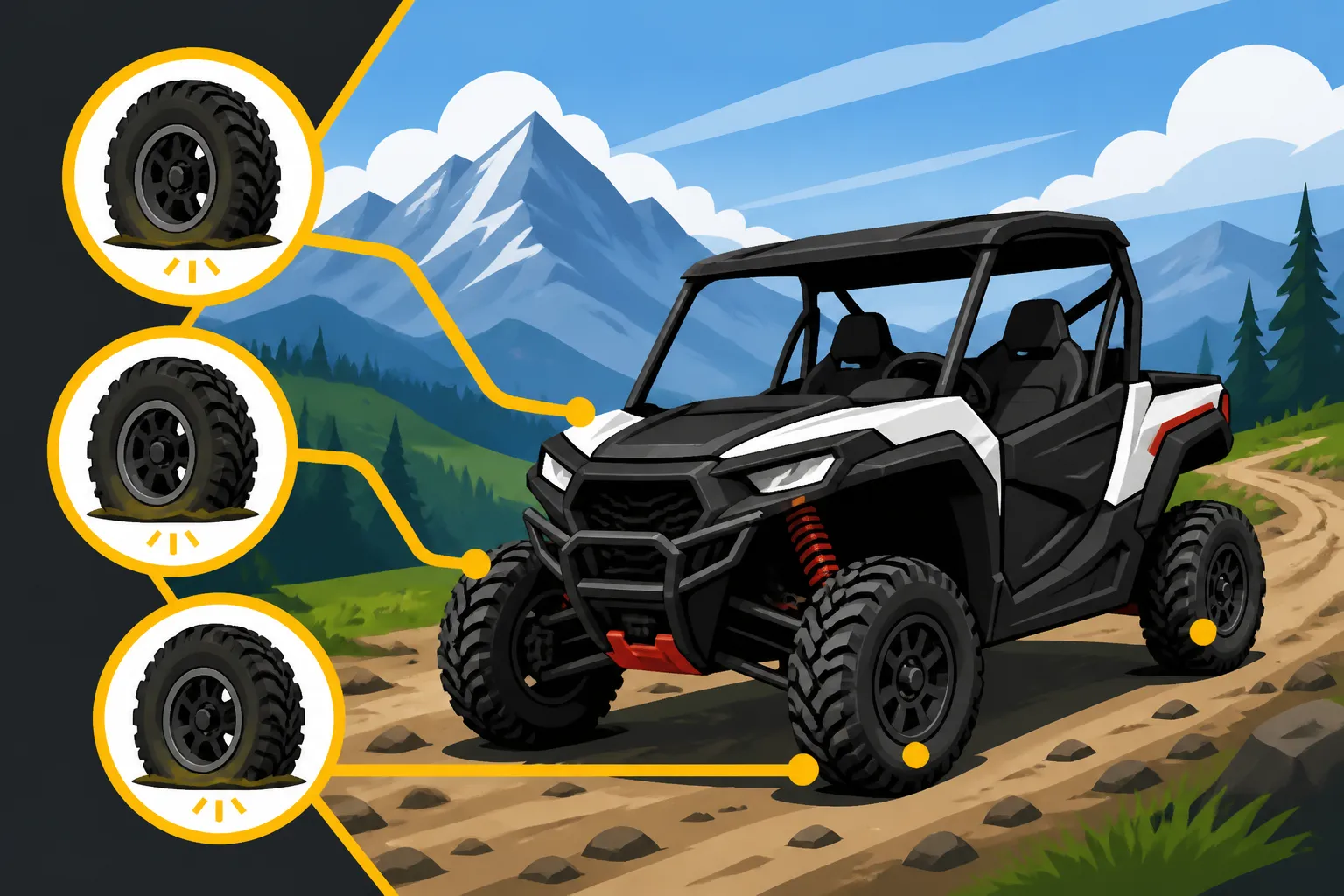
Low-pressure tires are designed for off-road travel. Their wider footprint and lower operating pressure can help a machine move over uneven ground, but they do not determine whether a particular route is open. A trail may have restrictions based on vehicle type, dimensions, weight, seasonal closures, or local land-use rules.
That distinction matters when you are planning a ride. A machine can qualify as an off-highway vehicle and still be prohibited from a specific trail or area. Start with the vehicle’s registration and manufacturer information, then confirm the rules for the exact riding area. [Alberta's Public Land Use Zones Explained] is a helpful starting point for understanding why public-land access depends on location.
Three tires does not mean exactly three tires
The word “required” can be misleading if read as a direction to count exactly three tires. In everyday riding, ATVs commonly have four tires, while some older or specialized machines have three. The phrase is better understood as a design threshold that may describe a vehicle class—not a universal tire-count rule for all Alberta riders.
For example, a rider looking at a three-wheeler in a barn or at an auction might wonder whether it is legally an ATV. The number of tires is relevant, but it is only one part of the picture. The machine’s design, intended use, documentation, and applicable definitions all matter. If the paperwork is unclear, check the vehicle information with a registry agent before relying on an assumption.
The same caution applies to modified machines. Changing tires, suspension, or other components does not necessarily change the vehicle’s legal classification, and it does not automatically make a machine suitable for every trail. Before purchase or a first ride, review [Alberta Equipment Required on Public Land] and the rules for the intended riding area.
Tire pressure is a setup choice, not proof of compliance
Low-pressure tires are associated with off-road vehicles, but the phrase does not tell you what pressure to use for a particular machine. Tire pressure depends on the tire, load, terrain, and manufacturer guidance. Too much pressure can reduce traction on some surfaces; too little can increase the chance of tire damage or a bead coming loose.
Imagine preparing for a muddy ride near McLean Creek. Lowering pressure may seem like an easy way to gain traction, but the right setup depends on the tire and machine. Follow the manufacturer’s recommendations, consider the terrain, and make adjustments cautiously. Tire pressure does not replace required lights, a spark arrestor, insurance, or registration where those apply.
A useful rule of thumb: treat vehicle classification, machine setup, and trail access as three separate questions. Answering one does not answer the other two.
How vehicle type affects where you can ride
Public-land access is determined area by area
Alberta’s public riding areas are not all governed by one simple “ATVs allowed” rule. Public Land Use Zones, designated trail systems, local closures, and seasonal conditions can affect access. A route that permits a quad may have different rules for a larger side-by-side, and a trail open in one season may be restricted in another.
This is why planning only from a general map can lead to a frustrating surprise at the staging area. You may have hauled the machine from Calgary or Edmonton, unloaded, and only then discovered that the trail is closed or the vehicle category is not allowed. Check the official area guidance before you leave, and look for route-specific notices and closures.
For a broader overview of the difference between public land and riding routes, see [Alberta OHV Trails: Riding Public Land]. If you are considering a side-by-side, check [Alberta Trails That Allow Side-by-Sides] rather than assuming that permission for an ATV includes every UTV.
Vehicle size and weight can matter as much as tire count
Trail rules may distinguish between machines by more than their wheels. Width, weight, and vehicle category can all affect access. In some places, designated trails are intended for certain vehicle sizes, while other routes may have restrictions that prevent larger or heavier machines from using them.
This is especially worth checking for winter rides. Snow, thawing ground, and trail damage concerns can lead to specific limits. A machine that fits comfortably on a summer route may not be allowed during a winter restriction period. Before planning a cold-weather trip, read [Designated Trails by Vehicle Size] and [McLean Creek's Winter Weight Limit in Alberta].
A side-by-side owner, for instance, should not assume that a route shown as an ATV trail will accommodate the machine’s full width. Check the stated vehicle limits and the access information for the exact area. When a trail guide is unclear, contact the relevant land manager or local trail organization rather than relying on the machine’s tire count as a clue.
| What you are checking | Why it matters | Where to verify |
|---|---|---|
| Vehicle classification | Determines how the machine is described in paperwork and rules | Registration documents and manufacturer information |
| Tire design and condition | Affects off-road handling and whether the tires suit the machine | Owner’s manual and tire specifications |
| Trail vehicle limits | A route may restrict vehicle type, width, or weight | Official area guidance and trail notices |
| Seasonal access | Closures and limits may change between summer and winter | Current land-manager information |
| Required equipment | Public-land riding can have separate equipment rules | Alberta public-land and OHV requirements |
How to check before riding
Confirm the machine’s classification and documents
Before riding a new, used, or modified machine, make sure you know how it is identified in its paperwork. Check the registration certificate, vehicle identification number, manufacturer details, and any sale documents. If the vehicle is older or the description is inconsistent, do not assume that an informal label such as “trike,” “quad,” or “UTV” settles its legal status.
This is particularly important when buying a machine without complete paperwork. A seller may describe it by appearance or use, while registration records use a different vehicle category. If the documents raise questions, ask a registry agent what information is needed to establish or update the registration. [Alberta Registry Agents and OHV Paperwork] covers the paperwork side of that process.
Keep registration and insurance information accessible when you ride where they are required. A phone photo can help you remember the details, but check whether you need to carry or produce specific documents in a particular form. Do not treat a tire configuration as a substitute for registration or proof of insurance.
Check the route, not just the map pin
Use maps to plan, but verify access with official information for the riding area. Apps such as onX Offroad can help you inspect routes and prepare a trip, especially when you want to compare possible routes before leaving home. Treat any app as a planning aid, not the final authority on current closures, land status, or vehicle restrictions.
Before riding, confirm the Public Land Use Zone or trail system, the route’s vehicle limits, seasonal restrictions, and any active closures. This matters around places such as the Ghost PLUZ and McLean Creek, where knowing the specific trail or access point is more useful than knowing only the general region. If you use onX Offroad, compare what you see there with official trail and land-management information.
Download or save what you need before entering an area with unreliable cell service. A route can look straightforward at the kitchen table, then become harder to follow when you are on the trail and the signal disappears. A second map source and a clear turnaround plan can prevent a minor navigation issue from becoming a long, stressful day.
Use a simple pre-ride checklist
A few minutes of checking can prevent the common mistake of arriving with a machine that cannot use the planned route. Before loading up, work through these steps:
- Confirm how the machine is classified in its registration and manufacturer documents.
- Inspect the tires for damage and set pressure according to the manufacturer’s guidance and the day’s conditions.
- Check that the intended riding area is open to your vehicle type and size.
- Review seasonal restrictions, trail closures, and local notices.
- Confirm required registration, insurance, and equipment for the ride.
- Save the route and relevant official information for use offline.
- Tell someone where you are going and when you expect to return.
For example, if you are taking a three-wheeler to a public riding area, first clarify the machine’s documentation, then verify that the particular route permits that vehicle. If you are taking a wide UTV, focus on route width and vehicle limits as well as general access. In neither case does the phrase “three low-pressure tires required” settle the trail question by itself.
Common misunderstandings to avoid
Assuming the tire rule is an access rule
The most important distinction is that a vehicle-design description is not the same as permission to ride. Even if a machine meets the relevant definition, the trail may be closed, limited to a different vehicle class, or subject to seasonal restrictions.
A rider who sees “ATV permitted” on a broad area description should still look for route-level details. A trail network can include different surfaces and restrictions, and an open zone does not necessarily mean every road, trail, or cutline within it is open to motorized use. [Checking a Zone Before You Go] can help you make that step part of your normal trip planning.
Treating an app or an old map as the final word
Maps and apps are useful, but trail conditions and access rules can change. An older screenshot may show a route that has since been closed, while a map layer may not explain a local vehicle restriction. Use onX Offroad or another mapping tool to orient yourself and build a route, then confirm the rules through the official information for the area.
This habit is especially valuable before a longer trip. If you are towing from Red Deer toward the eastern slopes, for instance, finding out about a closure at home is much easier than discovering it after unloading at a staging area. Save the relevant information, check for updates close to departure, and be prepared to adjust your plan.
Overlooking conditions and responsible riding
Legal access is only part of a good ride. Wet ground, spring thaw, fire restrictions, active work, and wildlife can all affect whether a route is sensible that day. A route may be technically open but still vulnerable to damage after heavy rain or unsafe due to poor visibility and changing conditions.
Stay on designated routes, respect posted signs, and turn around if the trail becomes unsafe or unsuitable for your machine. Tire choice and pressure can help with control, but they do not make a fragile surface durable or an unsuitable route appropriate. Check [Alberta Trail Closures After a Storm] when weather has been poor, and plan to leave the area as you found it.
Disclaimer
This article is for general informational purposes only and does not constitute professional advice. Laws, prices and regulations vary by location and change over time. Consult a qualified professional for guidance on your specific situation.